How Galicia Uses Veo to Find Hidden Football Talent Across 300km of Mountains
Frederik Hvillum
.jpg)
By giving scouts across its rural communities a shared video platform, the Real Federación Gallega de Fútbol built a youth football development system that competes with Spain’s biggest urban regions. Without the budget or the geography to match.
“A player that a scout might have looked at six months ago could be almost a different player six months later. Development is so varied.”
That observation comes from Lalo Suárez, Head of Analysis and Scouting at the Real Federación Gallega de Fútbol. He’s not talking about the occasional late bloomer. He’s describing a structural problem that, for years, meant talented kids in Galicia’s smaller towns were routinely missed. Seen once by a scout, assessed on that single impression, and never followed up.
This challenges one of grassroots football’s oldest assumptions: that watching a player live is enough to judge their potential.
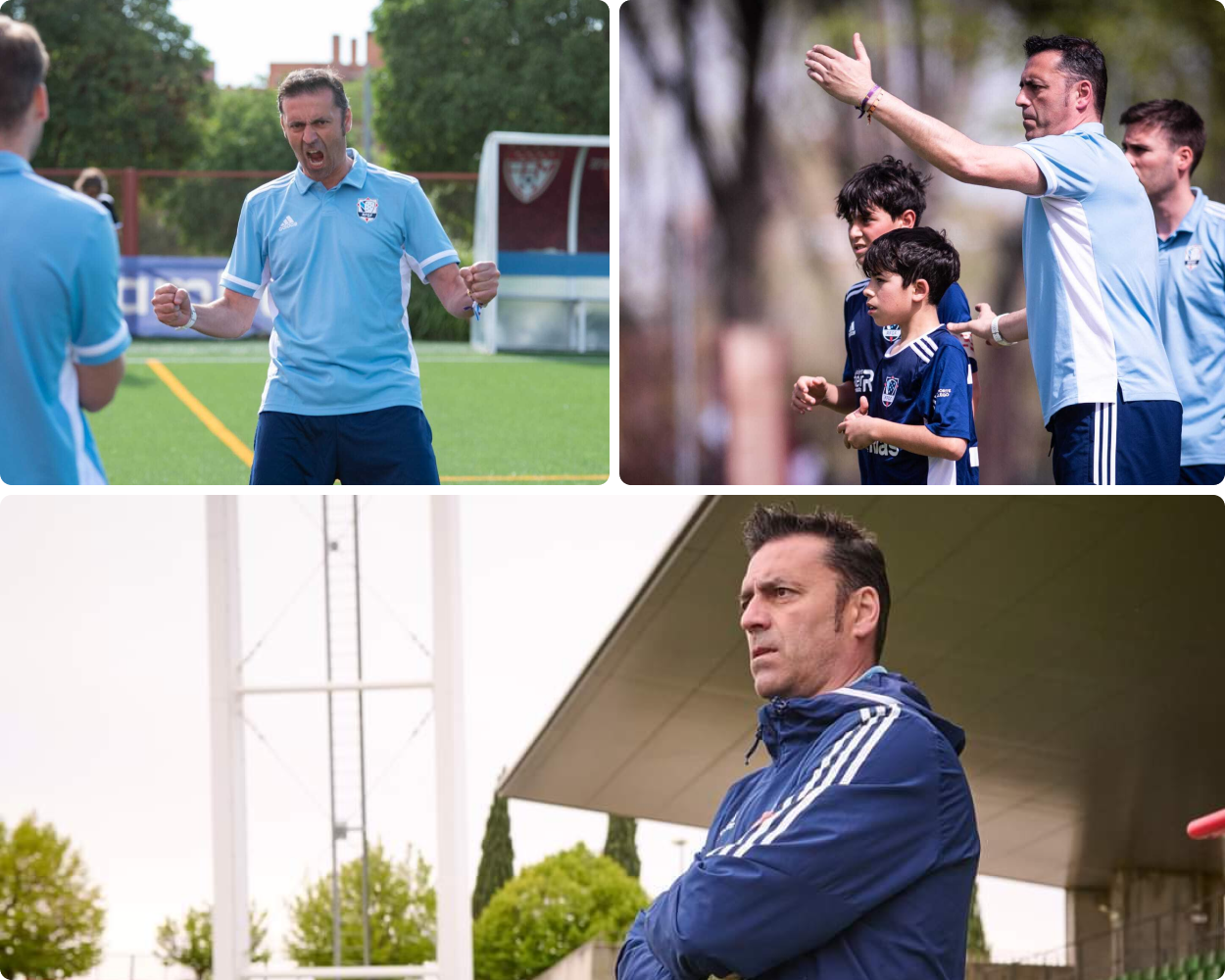
Suárez has spent 25 years in football, first as a third-division player before a serious knee injury ended his playing career and sent him into coaching. Today he balances three roles at once: head coach of Galicia’s U12 and U14 regional teams, scouting director for the federation, and sports director at Sagrado Corazón.
The Real Federación Gallega de Fútbol covers one of Spain’s most geographically complex regions. The northwest corner of the country, where green mountains meet the Atlantic, Galicia has no dominant urban center. Its football clubs are spread across hundreds of small towns and villages, many separated by significant distances through mountainous terrain.
That geography created a real problem for talent identification. Getting scouts to every relevant game, in every comarca, consistently enough to track how players develop over time, was simply not possible with traditional methods. The federation needed a different approach.
The Problem With Watching a Player Once
Before video, Galicia’s scouting relied almost entirely on in-person visits. Scouts would travel to matches, watch a player for 90 minutes, file a report, and move on. If a player had a bad day, or was still finding their feet at 12 years old, they could slip through without a second look.
“Galicia is very dispersed, with teams scattered everywhere,” Suárez says. “We might only see a player in person for one or two matches.”
That limitation hit late developers hardest. A technically gifted kid who physically matures later than his peers looks like a weak prospect at 13. A player still learning positional discipline can look lost until suddenly, at 14, the game clicks. If you only see them once, you judge them on that moment, not on their trajectory.
The federation also couldn’t easily track which positions a player might suit better than the one they were playing for their club. “Sometimes you see a player in a certain position, and through player development video analysis you discover characteristics that allow you to adapt them to other positions,” Suárez says. That kind of insight requires watching someone multiple times, from different angles, without the pressure of real-time live assessment.
Without a way to follow players continuously, Galicia was competing against Madrid and Cataloña, regions with far denser populations and far more scouts, on unequal terms.
How Veo’s Automated Match Filming Built a Scouting Pyramid
The federation’s answer was to build a pyramid. Each comarca in Galicia maintains its own regional selection with dedicated coaches and technical staff. Over the past two years, the federation has given all of those coaches Veo cameras and platform access, creating a network of local scouts who can record matches and share footage directly with the federation.
“We’re using Veo, giving them access to cameras so they can analyze players and send us reports through a simple Google Form about standout players, not just from their selection but from others as well,” Suárez explains.
→ See how Veo’s AI sports camera works for video scouting and talent identification
The structure does two things at once. It gives the federation eyes across the full breadth of Galician football, including in towns where a senior scout could never justify a 90-minute drive for a single match. And it creates development pathways for coaches, many of whom use the comarca system as a stepping stone toward roles with the senior regional teams. “I came from county selections,” Suárez says. “My assistant coach also came from counties. The women’s coaches are from counties. Everyone moves up from counties.”
The same structure covers football, futsal, and beach football, with Veo cameras now standard across all three disciplines.
How Veo Works for Grassroots Football Scouting
Veo’s AI sports camera films matches autonomously, with no operator needed. The camera tracks the ball and the play automatically using built-in AI, covering the full pitch from an elevated position on a standard tripod. Footage uploads to the Veo platform after the match, where coaches and scouts can review it, clip specific moments, and share it with others in their network.
For a regional football federation like Galicia’s, that means a comarca coach can film a match on a Saturday, upload it automatically, and have federation staff in another province reviewing specific player clips by Sunday morning. Individual player tracking lets scouts click on any player and generate a full reel of every touch and movement they made during the match. What would take a dedicated analyst hours of manual work happens in seconds.
Veo is used by more than 40,000 clubs across 100+ countries, with over 4 million matches filmed on the platform. For regional federations with dispersed geographies and limited staff, the automated match filming model means systematic video scouting becomes possible without hiring a full analysis department.
Competing With Spain’s Biggest Regions
The practical impact shows up clearly in how the federation uses footage for opponent preparation. Galicia’s regional teams now arrive at national championships having analyzed their opponents in depth. That was impossible when video coverage was inconsistent.
“It’s not the same to arrive at Madrid or Cataloña and lose 1-0 or be right there or even draw or win, as we’ve done on several occasions against Andalusia and others,” Suárez says. “It gives us that extra bit, knowing a little more about opponents and even about ourselves.”
Individual player tracking has changed preparation at the individual level too. “If a left back wants to see what the forward or winger he’ll face is like, you offer them those clips showing that player in different phases of play,” Suárez says.
The federation won the UEFA Region’s Cup in their first year using the technology. They were the only team at the tournament with comprehensive video analysis. The competition has since caught up. “Now, almost everyone brings Veo to regional and territorial competitions,” Suárez says. But the model Galicia built remains a template other regional football federations are studying.
Major clubs in the region, including Celta Vigo and Deportivo La Coruna now use Veo across their youth systems. That creates an unexpected benefit for the federation: a ready-made library of footage to request. “We can say, ‘Hey, do you mind lending us a match, we want to watch,’ and there’s always good willingness,” Suárez says. “The growth is bidirectional.”
Suárez is clear that the goal was never purely competitive. “More than winning, we believe in fostering, being alongside the clubs, participating, giving visibility to Galician grassroots football,” he says.
But visibility cuts both ways. When every match in every comarca gets recorded, players in Galicia’s most remote towns have the same chance of being seen, properly and repeatedly, as players in the region’s larger cities. Geography stops being a filter that works against them.
For a federation that genuinely believes development matters more than early selection, that’s the real outcome. The pyramid of scouts, the shared platform, the continuous footage. It all points toward the same thing. A player doesn’t have to be in the right place on the right day to get noticed. They just have to keep getting better.
Frequently Asked Questions
Does the AI sports camera need a trained operator at each match?
No. Veo Cam 3 films autonomously using AI-powered follow-cam technology. A coach sets it up before the match and collects it afterwards. No camera operator is needed during the game, which is what makes it practical for distributed networks of local coaches across a region.
Can coaches share Veo footage with scouts and staff outside their club?
Yes. Recordings set to public on the Veo platform can be shared via a direct link with no Veo account required to view them. Federation staff can review footage from multiple comarcas without attending any of the matches in person.
Can a regional football federation follow players across a large geography without travelling to every match?
Yes. Galicia’s federation distributes Veo cameras to local coaches across their comarcas, who film matches and upload footage to the Veo platform. Central staff can then review players remotely, build clip libraries, and track development over multiple matches without in-person scouting visits for every game.
How does video scouting help identify late-developing players?
Traditional in-person scouting often produces a single snapshot of a player’s ability on a given day. Video scouting allows federations to build up footage of the same player across multiple matches over weeks and months, tracking how they develop rather than judging them on one impression. This is especially valuable for late developers who may look unimpressive at 12 or 13 but show significant progression by 14 or 15.
What does automated match filming cost for a grassroots federation or club?
Veo operates on a hardware-plus-subscription model. The Veo Cam 3 is a one-time camera purchase, with an annual subscription giving access to Veo Editor, cloud storage, and sharing tools. For federations deploying multiple cameras across a network, Veo offers enterprise-level pricing and support. The best starting point is to book a consultation with Veo directly to get a quote tailored to your setup.

Do you have any questions about Veo?
We have the answers, so don’t hesitate to get in touch
.jpg)


.jpg)