Wolves Academy Are Developing The Next Generation
Frederik Hvillum

Wolves Academy analyst Jacob Pitt explains how video analysis shapes player development from U9 to U14, and why five minutes of footage is all they need.
Every game played by every Wolves Academy team from under-9s upwards gets filmed and coded. Jacob Pitt leads that work across the under-9s to under-14s at the Category One academy. He organises the filming for the youngest age groups, runs team and individual video sessions with the 13s and 14s, and helps out with the 15s and 16s.
His approach to academy football video analysis rests on a few simple rules. Keep the videos short. Balance the good clips with the bad. Link every clip to what the coach is working on that week. And let young players see what the best players in the world do in the same situation.
From weekend filming to leading six age groups
Pitt studied sport science at Birmingham City University. In his second year he landed a placement at West Bromwich Albion, filming games at weekends and coding the odd match on a Monday. He stayed for two years, then moved to Wolves to do a master's through the University of Worcester while working almost full-time across the 9 to 18 age groups.
Wolves took him on full-time after the master's in a role covering the 9 to 12s. For the last season and a half he has led analysis for the whole 9 to 14 phase.
"For the 9 to 12s it's primarily organising the filming of games with part-time staff that work under me. With the 13s and 14s it's more actual team sessions and individual sessions with the players each week, making sure all training and games are filmed," says Pitt.
How does video analysis change as players get older?
At Wolves, the under-13s mark the point where video analysis turns tactical. Before that, the focus is technique.
Each player from under-9 to under-12 has an individual learning plan with two technical targets per season. Analysts clip every moment linked to those targets from each game. Coaches then add the clips to the player's playlist on the club's online platform and comment on them.
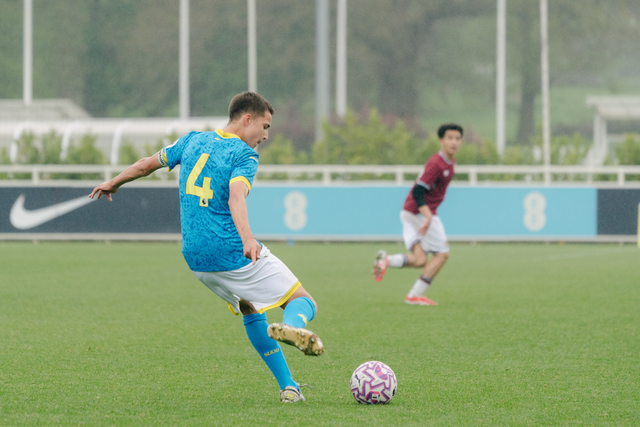
"We wouldn't do any tactical stuff. But we do code every single game at a younger age group, which I think is a bit different to other football clubs," says Pitt.
From under-13 upwards, each player works to four targets covering the technical, tactical, psychological and physical corners. Team video sessions begin, and the under-12s get a few towards the end of the season to prepare them for the move to 11-a-side.
How the Wolves phase system shapes every clip
From under-13 to under-16, Wolves splits the game into four phases. Build the attack, finish the attack, begin the press and defend the box. Coaches work in blocks, focusing on one phase for several weeks, and the analysis follows the same structure.
During a block on building the attack, post-match analysis concentrates on phase one. Coaches can also ask for anything else they spotted, such as set pieces conceded or players failing to track back in defensive transition.
Pitt codes games live with objective buttons that match the phase the team is working on. Years of working with the same coaches mean he knows which moments they will want.
"When I get in on the Monday, the clips are already there basically. So it doesn't take me that long to put it down to a session," he says.
Why should youth football videos stay under five minutes?
Pitt starts with a long list of clips from each game. He cuts it down on his own first, then reviews the shortlist with the coach. The target is a video under five minutes.
"If it's over five minutes, they're going to lose concentration," says Pitt. "So I'm trying to find clips, me and the coach, that really enable us to hit a lot of points in the video, and we can ask them a lot of questions to keep the engagement for the lads."
Questions keep players involved in the session. A short video with the right clips teaches more than a long one they stop watching.
Balancing positive and negative clips
Pitt and the coaches choose the mix of clips as carefully as the clips themselves. Too many positives and players stop learning. Too many negatives and they switch off.
Last season gave him two groups that needed opposite approaches. One group was going through a big intake of new players and losing games. Pitt and the coach deliberately picked out more positive clips each week.
"By giving them these positive clips and what they've actually done well in the game, I think it really helped them buy into what we wanted them to do, and it really showed an improvement in results," says Pitt.
The other group won almost every week. With them, the job was to keep players grounded. That group reached several big tournament finals.
"It's important not to just give them positive clips all the time. There's always stuff to improve," he says.
Learning from the first team and the Premier League
When the first-team principles are settled, Wolves' first-team analysts put together packages of best-practice clips. The academy uses them regularly, alongside clips from other Premier League clubs and top football worldwide.
For high-potential players, these clips feed into individual sessions. Pitt remembers one player who struggled to receive the ball on the half-turn and took too many touches.
"I showed him some Florian Wirtz clips of when he received it on the half-turn and played one or two touches, and I really saw an improvement in his game from those clips," says Pitt. "It shows the lads that if they're doing it at the top level, this is what I've got to do."
He needs no more than three or four clips to make the point. The pathway works. Last season Jerome Abbey became the youngest player to appear for Wolves in the Premier League while still in the under-16s. Pitt had worked with him in the younger age groups.
When should academies start opposition analysis?
Wolves keeps opposition analysis out of the younger age groups. The 13s and 14s play friendlies against Category One and Category Two clubs through the Premier League games programme, plus competitions such as the Albert Fielding Cup and tours abroad. Results matter less than development.
"At our age groups we're just focusing on ourselves and how we can develop as a team. We don't want to overcomplicate it for them," says Pitt.
Weekly opposition analysis starts properly at under-18 level, when the league phase begins.
How Veo supports video analysis at Wolves Academy
Veo is an AI-powered sports camera that records matches and training sessions automatically. You set it up on a tripod at the side of the pitch and the camera follows the play by itself, so no one needs to operate it.
After the game, the footage uploads to the Veo platform. Analysts and coaches review the full match, clip key moments, tag them and share them with players. For an academy that films every game from under-9 upwards, that removes the need for a camera operator at each fixture.
At Wolves, coaches of the youngest age groups prefer Veo for a specific reason.
"The coach would much prefer to use Veo at the younger age groups just because it's closer to the pitch, so they can see the technical aspect of the game more. It works a lot better for him," says Pitt.
For individual learning plans built on technical targets, that closer view shows every touch, body shape and first contact.

FAQs
At Wolves Academy, players from under-9 have their games filmed and clipped against two individual technical targets. Tactical team sessions start at under-13, with a few introduced at the end of the under-12 season to prepare players for 11-a-side.
Wolves keeps videos for its younger age groups under five minutes. The analyst and coach choose clips that cover several points at once and ask players questions throughout to keep them engaged.
Both. A struggling team needs more positive clips to rebuild confidence. A winning team needs clips of what they can improve to stay grounded. The right balance depends on the group.
Wolves Academy uses best-practice clips from its own first team, other Premier League clubs and top players worldwide. Three or four clips of a top player doing the right thing can change how a young player approaches the same situation.
At Wolves, weekly opposition analysis starts at under-18. Younger age groups focus on their own footage and development.

.jpg)