He Came From the Bronx. He Built a Kingdom Through Soccer.
Frederik Hvillum

Ali Bamba Sylla built Bamba Sports from nothing in the Bronx. Today it is the home of African soccer in New York City, and the kingdom keeps growing.
Ali Bamba Sillah did not set out to build a soccer organization. He set out to find a space where his community could play. When he could not find one, he built it himself.
The Bronx is basketball country. Every two or three blocks there is a court, and growing up there, basketball is just what you played. But for Bamba and the kids around him, the game they actually loved was soccer, and soccer cost money, required access, and happened somewhere else.
There were leagues around. There were clubs. But you would show up and feel like something was missing. Like you were not quite welcome in the way you needed to be. Like the space had not been made for you.
So Bamba made it himself.
From the motherland to the streets of New York
Bamba Sports began with a single annual tournament near Yankee Stadium in the Bronx. No budget. No facility. Just a call going out to every talented player in the community who had never had a proper stage to play on.
"We came from nothing. The financial aspect was really tight for us. So when people hear Bamba Sports or come visit us, it is just different. It is not just kicking the ball. There is a whole kingdom behind it," Bamba says.
That kingdom is Bamba Sports, and today it is what he describes as the home of African soccer in New York City. Gambians, Ghanaians, Guineans, Nigerians, Togolese. First-generation families who moved to the United States not speaking the language, not knowing where to go, figuring everything out from scratch. Their children grew up loving a sport that the city had not quite made room for them to play.
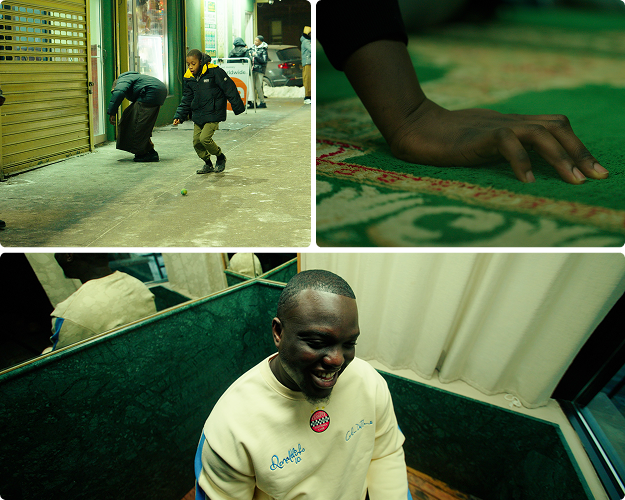
The tournament grew. Then it kept growing. Then it became something harder to contain than a single annual event.
Building the space nobody else built
Early on, KidSuper FC was one of the few clubs that opened its doors. Colm Dillane created a space where young players from the community could come in, train, and compete without running into a financial barrier at the door. For some of them it was the first time they had played in an organized setting.
"KidSuper FC was one of the few clubs that created a space for our young talents. At some point, you might just think it is an African club. We have talents. Our young kids played there, and it just started to give us that space, that sense of home, of being able to feel present."
That sense of presence mattered, Bamba explains. African soccer comes with a different style of play, a different energy. The culture is backed up by community in a way that is visible, loud, and real. The AFCON is not just a tournament. It is a feeling. And that feeling was not something you could manufacture inside a club that had not been built for it.
What KidSuper gave Bamba Sports was a door. Bamba walked through it and kept building.
A kingdom is not just tournaments
Bamba Sports now runs annual summer tournaments, a community club team, Black FC, competing in the Cosmo League at the D1 level, and youth programs across the Bronx. But the organization's purpose has never been purely about developing players for professional pathways.
"Success is very big and broad. Whichever way it comes in, that is what this space was created for. It is for unity, for opportunity, for growth, for guidance. Playing locally, playing professionally, getting a college scholarship. We want to be able to tell that story."
The streets of the Bronx in summer are rough. Kids get lost. Bamba watched that happen and decided that soccer could be a substitute, a reason to be somewhere other than the block.
"It is not like these kids do not want to be good or do not want to be successful. They just need a guide. Help them see a clearer future. That is what Bamba Sports is about,” he says.
Every event is built intentionally around community. Wherever the organization goes, the community travels with it. A tournament on Wall Street draws the same energy as one at Yankee Stadium, and the people who encounter it for the first time ask the same question: Who are these people, and where did this come from?
The energy is real, and you cannot buy it
That question has been asked of Bamba his whole life, in different forms. What is this? How do you explain it? He finds the words difficult, not because the answer is unclear to him, but because what he is describing does not compress easily into a sentence.
"Football is a form of expression that we use to express ourselves. Through that, it shows our identity, our culture, what we are about, how we celebrate, how we interact, and how we socialize. The energy is authentic. You cannot create it. It just comes with it."

The movement, as he describes it, is bigger than the Bronx and bigger than New York. Anywhere in the world you find first-generation families, you find this. From the motherland to the streets. Soccer is doing what soccer does, which is building community across every distance.
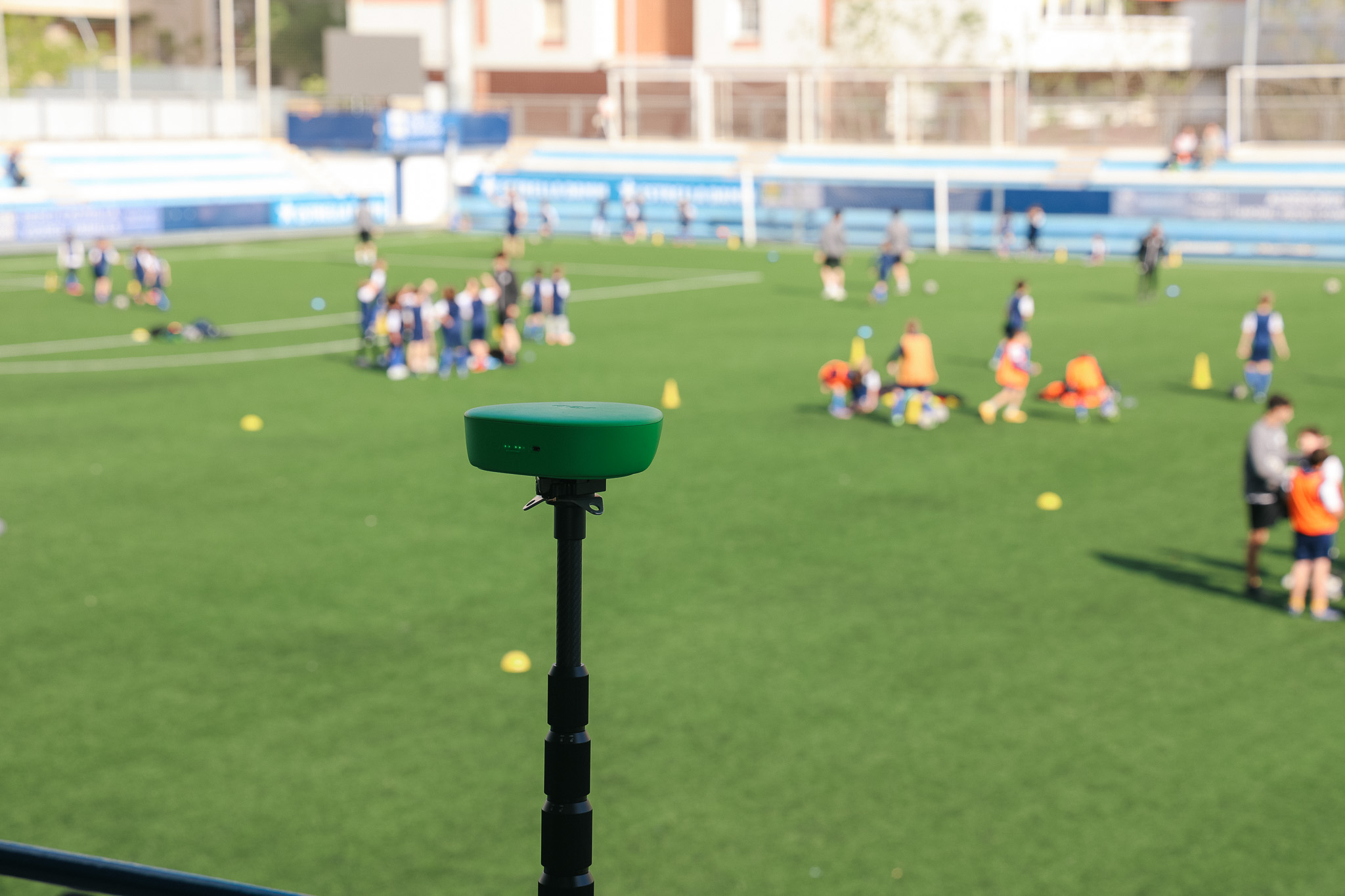
Veo has been part of how those moments get captured and shared. Games that would otherwise disappear are on record now, visible to the players who played them and the community that showed up to watch. For kids who have never seen themselves on a screen before, that visibility carries its own meaning.
"We have so much talent in our communities that has just been hidden. With Bamba Sports, we wanted to create that space to broadcast that, to show that to the world."
The kingdom is still being built. Black FC is climbing. The summer tournaments keep growing. And somewhere in the Bronx, a kid is putting on a number ten shirt for the first time and feeling exactly what Bamba felt when he first saw that.


%20(1).jpg)