How Football NSW Uses Video Analysis to Identify the Next Youth Players
Frederik Hvillum

Phil Myall, Boys Player Development Manager at Football NSW, explains how AI-powered video analysis is transforming talent identification and player development across the state.
Football in Australia produces talented players at every level. The challenge has never been finding them. The challenge is seeing them.
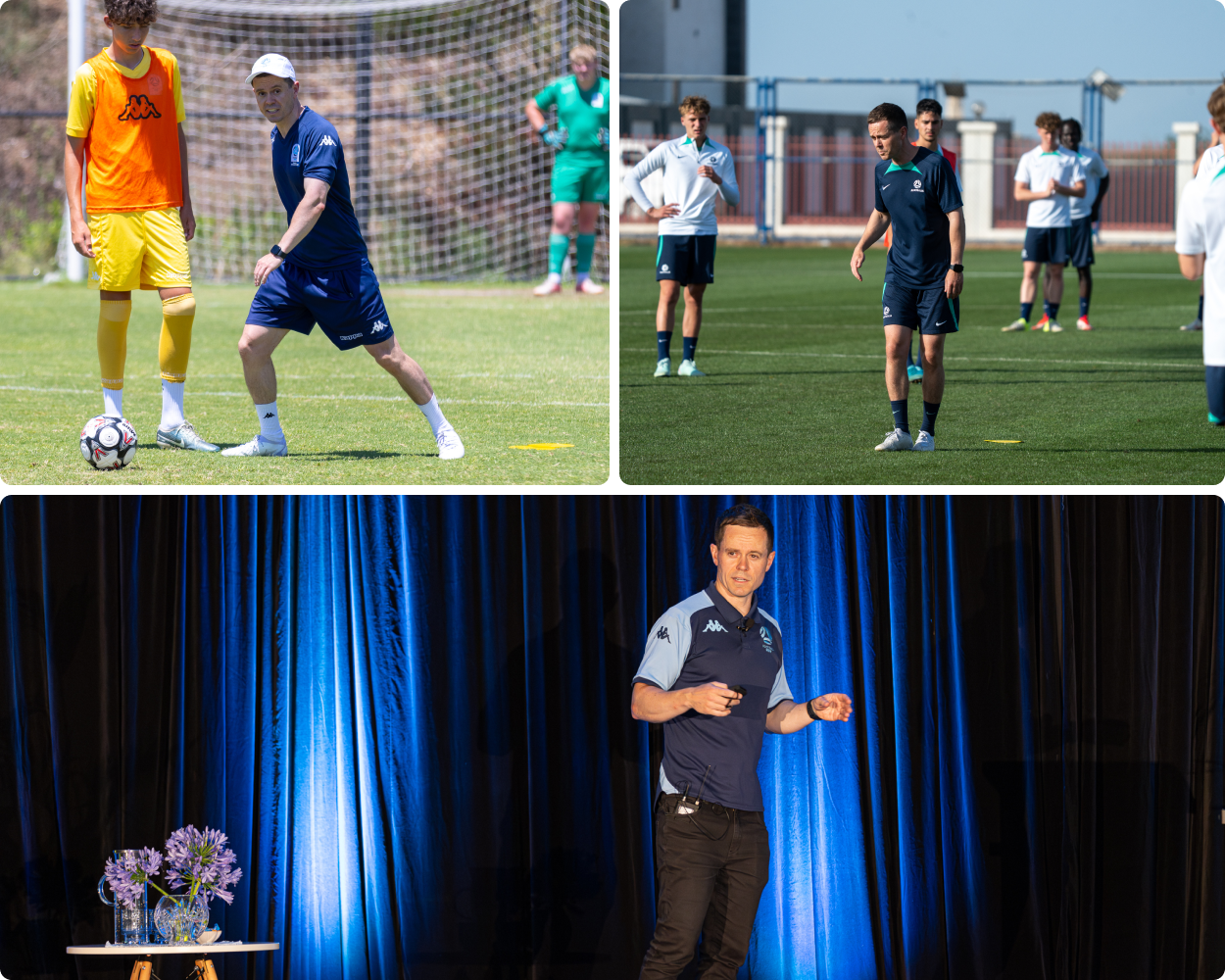
Phil Myall oversees the Boys Player Development Program at Football NSW, the governing body for football across New South Wales. His work sits at the intersection of talent identification and player development, managing state team selection for the Under-15s and Under-16s while recommending players to national squads at Under-17 and Under-20 level. The players he tracks are not yet in elite academies. Many of them never were.
That is exactly the point.
"We're kind of like a safety net," Myall says. "It helps support those players who are outside the traditional pathways in those teenage years."
The program he runs, called the Talent Support Program, exists because early selection is an imperfect science. The players identified as the best under-13s are not always the best under-18s. Development is non-linear. Talent appears late. The TSP is designed to keep a wider net in the water.
Video analysis is how the net actually works.
What is the Football NSW Talent Support Program?
The Talent Support Program, or TSP, operates outside the traditional elite pathway structure. It supports players aged 14 to 16 who have not yet been identified by league-based academies. The program runs in parallel with those pathways, allowing Myall and his staff to track and monitor a broader player pool and benchmark them against players who are inside the system.
The TSP serves a practical function. At youth level, late developers and players from underrepresented regions can disappear from the radar before they are ready to show what they are capable of. The TSP creates a mechanism for those players to be seen, assessed, and, where appropriate, elevated into state or national consideration.
For the program to work, consistent and comparable footage across different clubs, regions, and environments is essential. That is where video technology becomes a structural requirement rather than a convenience.
How does video analysis support talent identification in youth football?
Before implementing Veo, Football NSW relied on a different video provider. The footage quality was inconsistent, particularly in evening matches, and sharing clips across staff and players was cumbersome. As Myall puts it, "it wasn't easy to share among staff, players, and so on."
The practical consequence of that limitation extended beyond inconvenience. Talent identification at scale requires the ability to compare players across different contexts and make those comparisons quickly. Poor footage, or footage that is difficult to distribute, introduces friction into a process that already depends on judgment under uncertainty.
The shift to Veo changed the workflow at a fundamental level. Footage is now uploaded automatically via Wi-Fi as games conclude, meaning players and coaches can review matches the same evening they are played. "The games are often available to watch for the players and myself by the time I get home," Myall explains. "So straight away, players can use it to self-reflect, coaches can use it to reflect on individual performances, and then look ahead to the next game."
For the full guide on setting up a camera to capture footage at this standard, see how to film youth matches.
How does AI-powered player tracking improve the assessment process?
One of the most significant workflow changes for Football NSW has been the use of automated player spotlight features within the platform. Rather than scrubbing through 70 minutes of match footage to assess a single player, Myall can access a condensed clip sequence focused entirely on that individual.
"Using the spotlight just saves a lot of time having to go through all the game footage," he says. "I can click a player's spotlight, and it comes up for me, and I can see their strengths and any areas for improvement. And then I can use that to compare against other players."
The time saving is significant. Across a program covering dozens of players in multiple regions, the ability to isolate individual performances quickly determines how thoroughly each player can be assessed. It also makes cross-player comparison, which is the core function of talent identification, far more precise.
For the players themselves, the spotlight format changes how they engage with their own footage. Myall notes that concentration is a genuine challenge at this age. "Having the Player Spotlight really helps the players in terms of concentration span, because they can actually just watch their own highlights and don't get distracted with other things. It turns a 70-minute game into a five-to-ten-minute clip, which they can really focus in on."
How does Football NSW use clips and tagging to develop coaches and players?
Beyond individual spotlights, Myall uses the clips tool to build a structured library of examples that serves a dual purpose: developing players and educating coaches. "I watch all the games," he explains. "I use the clips tool to cut either individual moments that I think are outstanding and align with our game model, or I clip moments and tag the individual players and coaches within them."
That tagging function allows him to send targeted feedback to specific individuals. A coach receives a clip of a tactical moment they handled well. Another sees an example of something they could approach differently. A player gets a sequence that illustrates a competency they are developing. The same footage generates multiple, personalised conversations rather than a single group review. "I can do those individually," Myall says, "so I can send it to individual players or individual coaches and say: have you seen this? What are your thoughts?"
How does Veo support video analysis for football federations and governing bodies?
Veo's presence across the Australian football ecosystem made adoption straightforward for Football NSW. With many clubs already using the platform, footage exchange between organisations required nothing more than sharing a link. "A lot of other clubs already have Veo," Myall says, "so the exchange between clubs and federations is really simple, just flicking across links and then adding it to your own clubhouse."
For a program that monitors players across multiple clubs and regions, the ability to access footage from partner organisations without format conversion, download, or re-upload significantly reduces the administrative load. It also means footage quality is consistent, regardless of which club recorded it.
The platform's integration with Wi-Fi infrastructure at Football NSW venues was a practical consideration too. Once the camera is set up and connected, footage uploads without further intervention. As Myall puts it simply, "as long as you leave the camera on, while you're in the venue it will start uploading straight away."
How Veo works for football federations
Veo Cam 3 is an AI-powered football camera system that captures matches and training sessions automatically, without the need for a camera operator. The camera uses computer vision to track the ball and the flow of play, producing a broadcast-quality wide-angle feed alongside an automated follow-cam view.
After a match, footage is uploaded to the Veo platform via Wi-Fi and processed automatically. Coaches and administrators can access it through a browser or the Veo app. The player spotlight feature generates individual highlight sequences for each player in a match, drawing from the full game footage. The clips tool allows users to isolate specific moments, add tags, and share directly with individuals or groups.
For governing bodies and federations, the platform supports footage sharing between affiliated clubs, meaning organisations within the same ecosystem can access and review each other's footage without switching systems. For a full comparison of automatic tracking camera options, see best auto-tracking camera for youth sports.
What does the future of video analysis in football development look like?
Myall's ambitions for video technology extend beyond what the platform currently provides. The next step, as he describes it, is the integration of objective data alongside visual footage in a single environment. "If we can then add actual objective data alongside those clips and have it all in one place where you can just compare," he says, "that would be excellent."
Beyond aggregation, he sees potential in configurable analysis frameworks that align with specific development models rather than generic codes. "It's good having a generic code," he adds, "but if we can code according to clubs' development models, that's first class."
The direction he describes reflects a broader shift in how governing bodies at state and national level are beginning to think about talent pathways. Video has moved from an optional supplement to the identification process to a structural component of how players are tracked, benchmarked, and developed from the earliest stages of their career.
For Football NSW, the question is no longer whether to use video analysis. The question is how much more it can do.
Can't make it to the match? Veo Live lets any club stream live to parents who can't be there. Setup guide, platform options, and everything you need to get started.Best Camera to Live Stream Youth Sports.

FAQs
The Talent Support Program is a Football NSW initiative that identifies and develops players aged 14 to 16 who are outside traditional elite pathways. It operates alongside academy structures to ensure talented late developers and regional players are not overlooked during critical years of development.
AI tracking tools like Veo Analytics 2 generate individual player data and highlight sequences from full match footage automatically. This allows coaches to assess individual players quickly without reviewing entire games, and to compare players across different matches and contexts more efficiently.
Federation coaches use video footage to observe players across multiple matches, build clip libraries aligned with their game model, and share targeted feedback with individual players and coaches. Footage shared across affiliated clubs through a common platform reduces administrative burden and ensures consistent footage quality across regions.
Yes. Where multiple clubs within an ecosystem use Veo, footage can be shared between organisations by sharing a link directly to the Veo clubhouse. This removes the need for downloading, format conversion, or re-uploading footage between parties.
Coaches and program managers are looking toward integrations that combine visual footage with objective performance data in a single interface, and analysis frameworks that can be configured to reflect specific club or federation development models rather than generic coding systems.

%20(1).jpg)