Youth Football Possession Drills: A Coaching Guide
Frederik Hvillum
The best possession drills for youth football coaches. Rondos, keep-away games, and possession under pressure, with age guidance and coaching cues for each drill.
Possession in football is not an end in itself. Teams that keep the ball without purpose, circulating it laterally and backwards without creating problems for the opposition, are not playing well. They are avoiding risk. The possession drills that develop the best players are the ones that teach teams to keep the ball with a purpose: to move opponents out of position, to create space, and to transition into attack at the right moment.
This guide covers five possession drills for youth football coaches, progressing from basic rondo work to possession with directional intent and transition into attack. Each drill includes coaching cues, age guidance, and notes on what video reveals that live coaching misses.
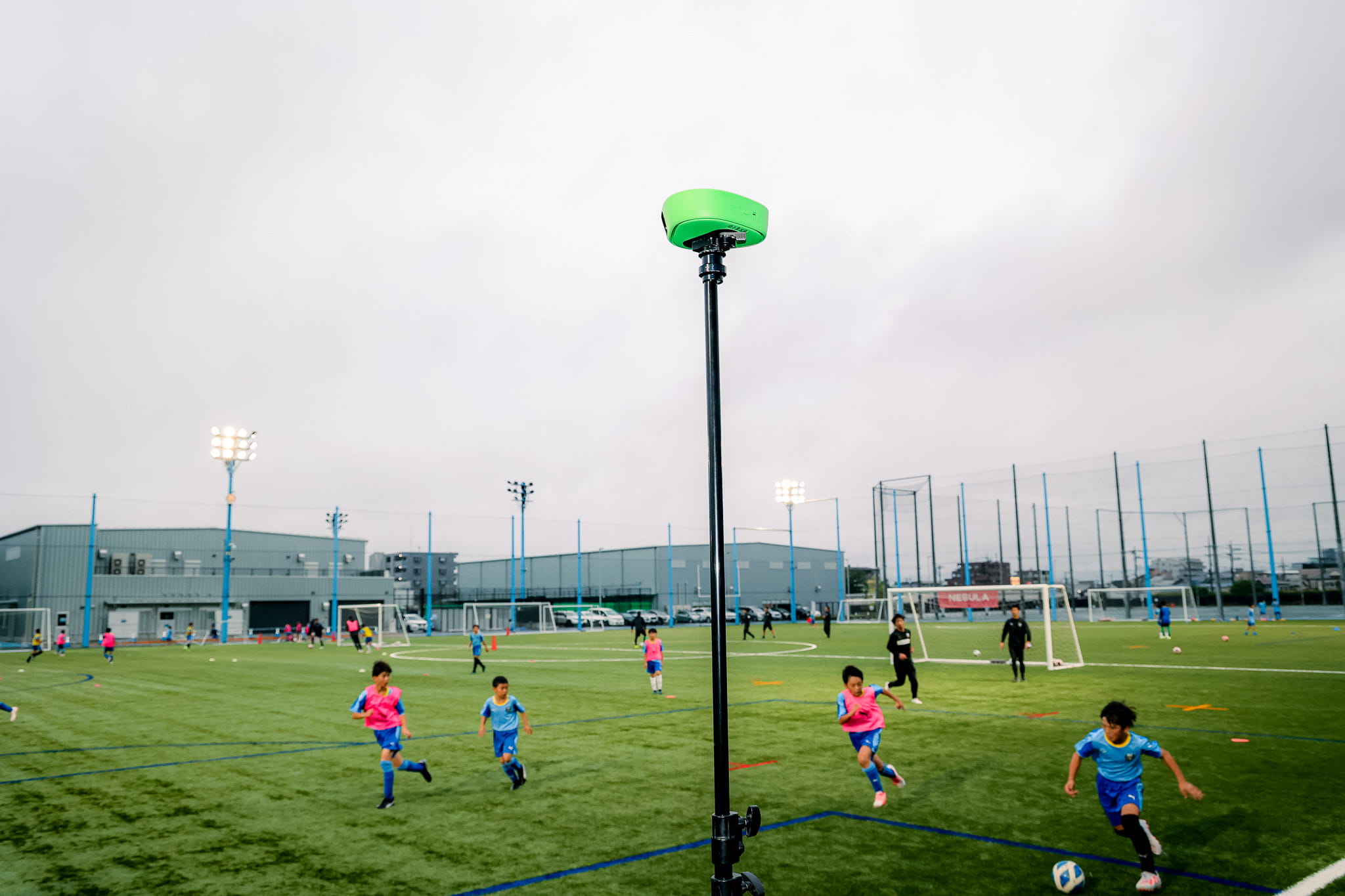
Film possession drills with Veo Cam 3
Veo Cam 3 sets up in under 2 minutes and records your full session automatically. Review team shape, support angles, and transition moments the same evening.
What possession drills actually develop
The three habits possession drills build are: moving before the ball arrives, creating support angles on both sides of the ball carrier, and recognising when to keep possession and when to play forward. All three are decision-making habits as much as technical ones, which means the drills need to have defenders in them to be useful. Possession drills without pressure develop technical fluency but not the game intelligence that makes possession meaningful.
For the passing fundamentals that underpin these possession drills, see football passing drills. For how these drills fit into a complete session, see youth football training drills.
Drill overview
The drills
Drill 1: 5v2 rondo
Five players form a circle approximately 10 metres across. Two defenders work inside. The five outside players keep possession using one or two touches. When the defenders win the ball or force it out, the player who gave it away and the player who played the ball that was intercepted swap into the middle. Run continuously for 10 minutes.
Coaching cue: "Play away from pressure. When a defender moves toward one side of the circle, the ball should move to the other side immediately. Two defenders cannot cover a circle of five players if the ball moves quickly enough."
What to watch on video: Whether players move before receiving or only after. Players who stand still in the rondo make the job harder for the ball carrier. The footage shows movement patterns across the full circle, which is impossible to track accurately from the sideline when watching a single player.
Drill 2: Possession keep-away
Two teams of equal numbers play in a 25x20 metre area with no goals. One team keeps possession; the other presses to win it. When the pressing team wins the ball, they immediately become the possession team. Count consecutive passes: a team that completes 10 consecutive passes wins a point. First to five points wins the round. Reset and play again.
Coaching cue: "Spread out. Possession is easier when the defending team has more ground to cover. If your team is bunched together, you are doing the defenders' job for them."
Age note: Appropriate for all ages with size adjustments. At U6 to U8, reduce to 3v1 in a smaller area and count five consecutive passes as a point. The key principle at this age is spatial awareness: players who learn to spread the pitch early carry that habit into every format they play.
See team shape from above
More than 40,000 clubs across 100 countries use Veo to store and share footage, with over 4 million matches filmed on the platform (Veo internal data, 2026). Veo Cam 3 captures the full training area so you can review team shape, support angles, and pressing organisation in detail.
Drill 3: End zone possession
Set up a 30x20 metre area with a 3-metre end zone at each end. Two teams play possession in the main area. A team scores a point by successfully passing the ball into a teammate who is standing in the opposition end zone, who must control it there. The end zone player cannot be entered by defenders. After scoring, possession restarts from the middle.
Coaching cue: "Keep the ball until the end zone player is free. Forcing the ball forward when the end zone is covered gives possession away. Use the width to move the defence and create the pass."
Age note: Introduce at U10. The end zone format gives possession a clear purpose without the complexity of goals and finishing, which keeps the focus on the quality of possession rather than on the end product.
Drill 4: Overload possession game
Set up a 30x25 metre area with two teams of four and two neutral players who always play with the team in possession, creating a 6v4 overload. The possession team uses their numerical advantage to keep the ball and switch play; the defending team presses to win possession and immediately use the neutrals on their side. Every time the ball changes hands, the neutral players switch sides. Run for 12 minutes.
Coaching cue: "Find the free player. In a 6v4 there is always someone free. If your team is losing the ball in this drill, it is because you are not finding the free player quickly enough."
What to watch on video: How quickly the possession team identifies and uses the free player after each pass. Teams that circulate the ball without scanning for the overload take more passes to advance the ball than necessary. The footage from above shows the free player's position relative to where the ball goes, which is the most useful information for coaching the overload concept.
Drill 5: Possession to transition
Set up a full pitch with two teams. One team keeps possession in their own half against a passive defending team. On the coach's signal, the possession team must transition the ball into the opposition half within 5 seconds and attempt to score. The defending team becomes active as soon as the signal is given. Reset after each attempt. Run 12 repetitions.
Coaching cue: "Transition starts before the signal. The players without the ball should already be in forward positions so that when the signal comes, the ball can move forward immediately. If you are still setting up your position after the signal, you have lost the moment."
Age note: Introduce at U12. The transition drill requires players to read a cue and shift their mental and physical orientation simultaneously from defensive to offensive, which is a significant cognitive step. At U10, simplify by giving the possession team a longer time window (8 to 10 seconds) before the defending team becomes active.
What video reveals in possession drills
The most important information in possession footage is not what the ball carrier does. It is what the players without the ball do. Support angles, movement before receiving, and the positioning of players in the overload are all happening off the ball and are nearly impossible to monitor from the sideline when coaching a full group.
Coaches using Veo Cam 3 review possession footage after sessions. Clips showing a player arriving at the receiving position just after the ball rather than before it, or a possession team circulating the ball without using the free player in an overload, become the starting points for the next session.
For a guide that covers the tactical concepts that are appropriate at each age group, how to introduce them practically, and how video analysis helps coaches identify whether tactical instructions are actually being applied in match situations, read our youth football tactics for coaches.
Review off-ball movement after every session
Veo Cam 3 records automatically. Full session footage ready to review the same evening.

FAQs
The 5v2 rondo builds the movement and quick passing habits that underpin all possession play. The keep-away game develops team shape and spatial awareness. The end zone format adds directional purpose without the distraction of finishing. All three should feature regularly in youth football sessions at U8 and above.
Start with rondos where the numerical advantage is significant (5v2 or 4v1) so that players experience what successful possession feels like before the pressure increases. Gradually reduce the overload as players develop. The coaching focus at early stages should be movement before receiving and body orientation on the catch. Possession quality improves faster when players know where they are playing before the ball arrives.
Introduce basic rondos and keep-away from U6 with simplified formats: 3v1 in a small area, counting five passes as a point. The concept of keeping the ball against a defender is accessible at this age even without tactical understanding. Add directional possession formats like the end zone game from U10. Add transition drills from U12.
The most common cause is receiving with a closed body shape, which means the player cannot play forward without an extra touch. The second most common cause is not having a support angle before the ball arrives, which means the ball carrier has fewer options than necessary. Both are coachable habits that improve quickly with the right drills and consistent coaching cues.
Yes, particularly for off-ball movement and team shape. These are nearly impossible to assess accurately from the sideline because the coach's attention is drawn to the ball. Footage from above shows the positions of all players simultaneously, which reveals support angles, spacing, and movement patterns that are invisible from a ground-level view. Teams that review possession footage regularly develop better collective habits than teams that receive only verbal feedback.

%20(1).jpg)