Youth Quarterback Drills for Footwork, Ball Security and Reads
Frederik Hvillum
Five quarterback drills for youth football: drop-back footwork, grip and release, pocket movement, progression reads, and ball security. Coaching cues for U8 to U14.
The quarterback position develops differently from every other position in youth football. A receiver can improve through repetition alone. A QB needs footwork, timing, decision-making, and ball security working together before a single pass matters. Coaching a young quarterback without addressing these fundamentals first produces a player who can throw accurately in practice and falls apart under pressure.
This guide covers five youth quarterback drills that build the foundations of the position: drop-back footwork, grip and release, pocket movement, progression reads, and ball security. Each drill includes coaching cues, age guidance, and what coaches can see in video review that live coaching cannot catch.
Film your QB sessions with Veo Cam 3
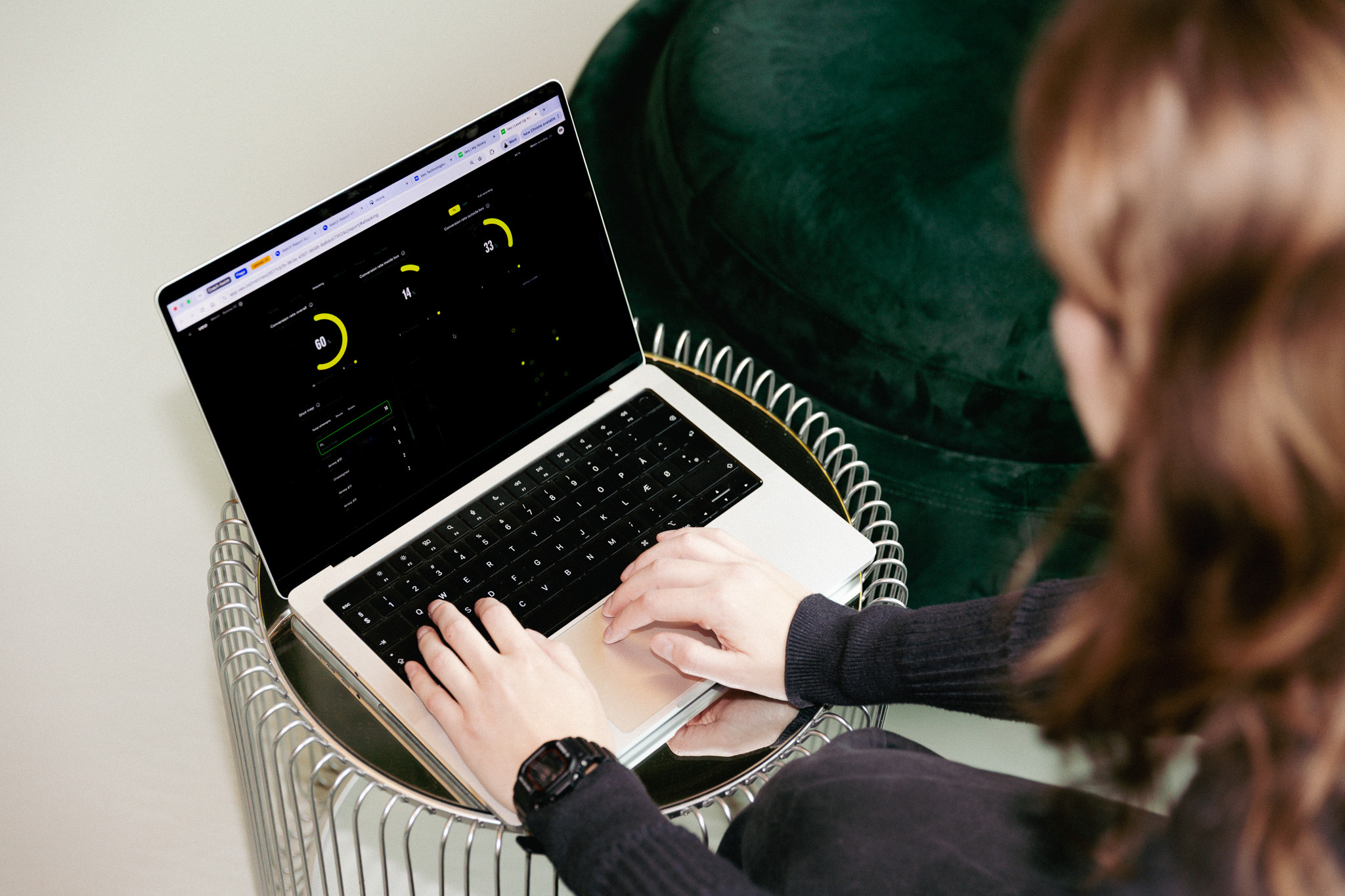
Footwork, release point, and pocket movement are nearly impossible to coach accurately from the sideline. Veo Cam 3 captures the full pocket from a fixed angle so you can review mechanics in slow motion after practice.

The three foundations of youth quarterback development
Before any drill, a QB coach needs to establish three physical habits. These are not advanced techniques. They are the starting point that every other skill builds on.
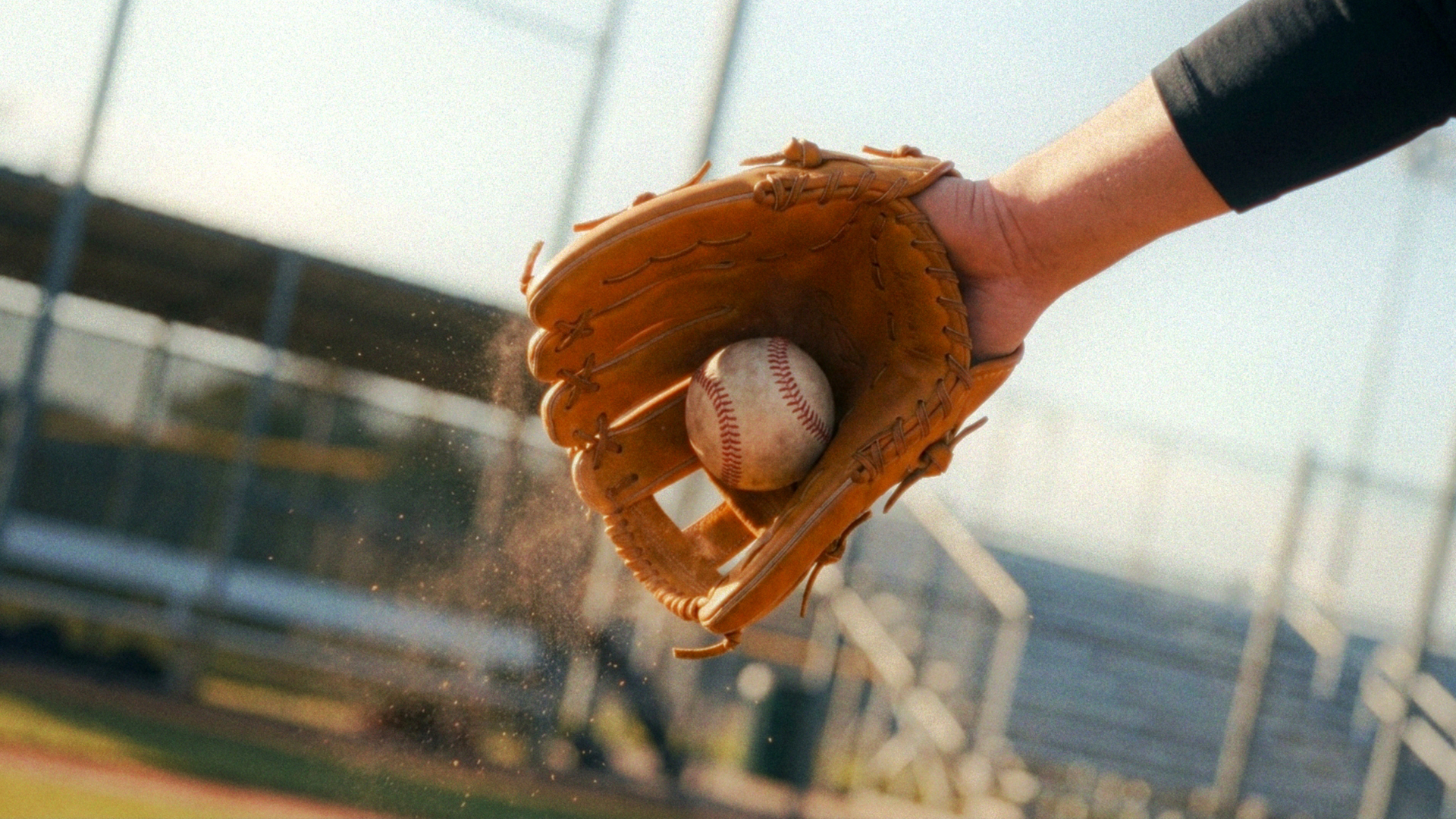
- Grip. The ball sits across the fingers, not the palm. The index finger goes near the back of the ball, the middle and ring fingers on the laces, the pinkie and thumb underneath for support. A palmed grip reduces spin rate and accuracy. Correct the grip at the start of every single session until it is automatic.
- Stance. Feet shoulder-width apart, slight bend in the knees, weight on the balls of the feet. A QB standing flat-footed cannot move quickly or generate power through the throw. Check stance before every drop-back.
- Eyes. Eyes go to the target, not to the rush. This is the hardest habit to build because pressure creates a natural instinct to look at the defender. Drill it explicitly and early.
Drill overview
The drills
Drill 1: Drop-back footwork progression
The QB takes a 3-step, 5-step, and 7-step drop from under centre without throwing. Focus entirely on footwork: the first step is a short jab step back with the throwing-side foot, then quick steps back finishing with weight transferred to the front foot at the top of the drop. Run each drop 10 times before moving to the next. No ball required initially.
Coaching cue: "At the top of the drop, your weight should be forward, not back. If you are leaning away from the line of scrimmage when you throw, the ball goes high."
What to watch on video: Weight transfer at the top of the drop. Live coaching shows the QB from the front or side. Video from directly behind shows whether the hips are open or closed at release point.
Drill 2: Grip and release drill
QB stands 5 yards from a wall or net and throws at a target marked at chest height. 20 throws per session focused entirely on grip and release point, not velocity. The goal is a consistent spiral with the index finger pointing toward the target at the finish of the throw. A coach stands behind and slightly to the side to watch the release point.
Coaching cue: "Your index finger should point at the receiver at the end of the throw. If you are pulling the ball across your body, you will see it. If you are finishing with the palm up, the ball goes high."
Age note: Use a youth-size ball for players aged 8 to 11. Forcing a young player to throw a full-size ball before their hand is large enough creates compensations in grip that are hard to undo later.
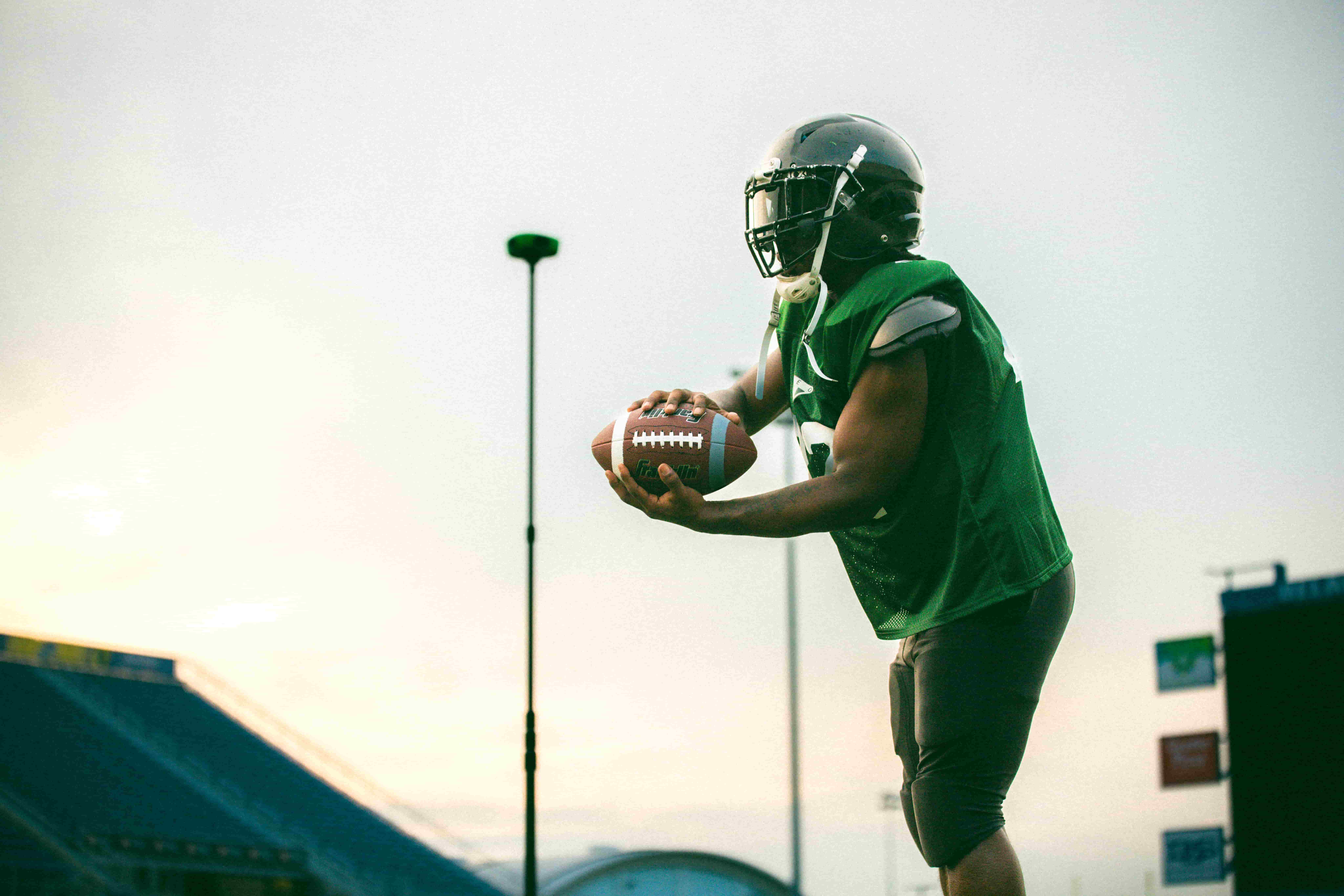
See your QB mechanics from a new angle
More than 40,000 clubs across 100 countries use Veo to store and share footage, with over 4 million matches filmed on the platform (Veo internal data, 2026). Veo Cam 3 captures the full pocket so you can review footwork, release point, and ball security in slow motion.
Drill 3: Pocket movement drill
Set up a pocket with four cones in a 5x3-yard rectangle. Two pass rushers (or coaches) apply pressure from the edges while the QB drops back, moves within the pocket (slide right, slide left, step up), and delivers to a receiver running a short route. The QB must keep their eyes downfield through the movement and not scramble outside the pocket.
Coaching cue: "Slide into the pocket, not away from it. When the edge rushes, your first move is up, not sideways."
What to watch on video: Whether the QB's eyes stay downfield through the pocket movement. Video from the end zone angle shows this clearly. Live coaching almost never catches it because the coach's focus moves to the rush.
Drill 4: Progression reads
Three receivers run routes simultaneously. QB takes a 5-step drop and reads left to right: first receiver (primary), second receiver (secondary), third receiver (checkdown). The QB throws to the first open receiver. No pre-determined correct answer. A defender is placed on the primary receiver for some reps to force the QB to move to the second read.
Coaching cue: "Read before you take the drop, not after. By the time you finish your 5-step, you should already know whether your first receiver is open."
Age note: Introduce progression reads at U12 and above. Younger QBs do not yet have the processing speed to read a defense in real time. For U8 to U11, use a single receiver and teach the QB to look the receiver off before throwing.
Drill 5: Ball security under pressure
QB drops back with the ball in two hands (not one). A pass rusher closes from the front while the QB goes through a 3-step drop and delivers quickly. The focus is on not exposing the ball when the rusher arrives. A common mistake with young QBs is holding the ball away from the body in the windup, which makes it easy to strip. Teach the QB to keep the ball tucked until the windup begins.
Coaching cue: "Two hands on the ball until you start your windup. The strip happens when you hold the ball away from your body waiting to throw."
What video review adds to quarterback coaching
Quarterback mechanics are unusually hard to coach by eye. The relevant details happen in fractions of a second and in parts of the body the coach is not watching. When a QB throws high consistently, the problem is usually at the top of the drop (weight back) or at the release (palm up at finish) rather than in the arm action the coach is focused on.
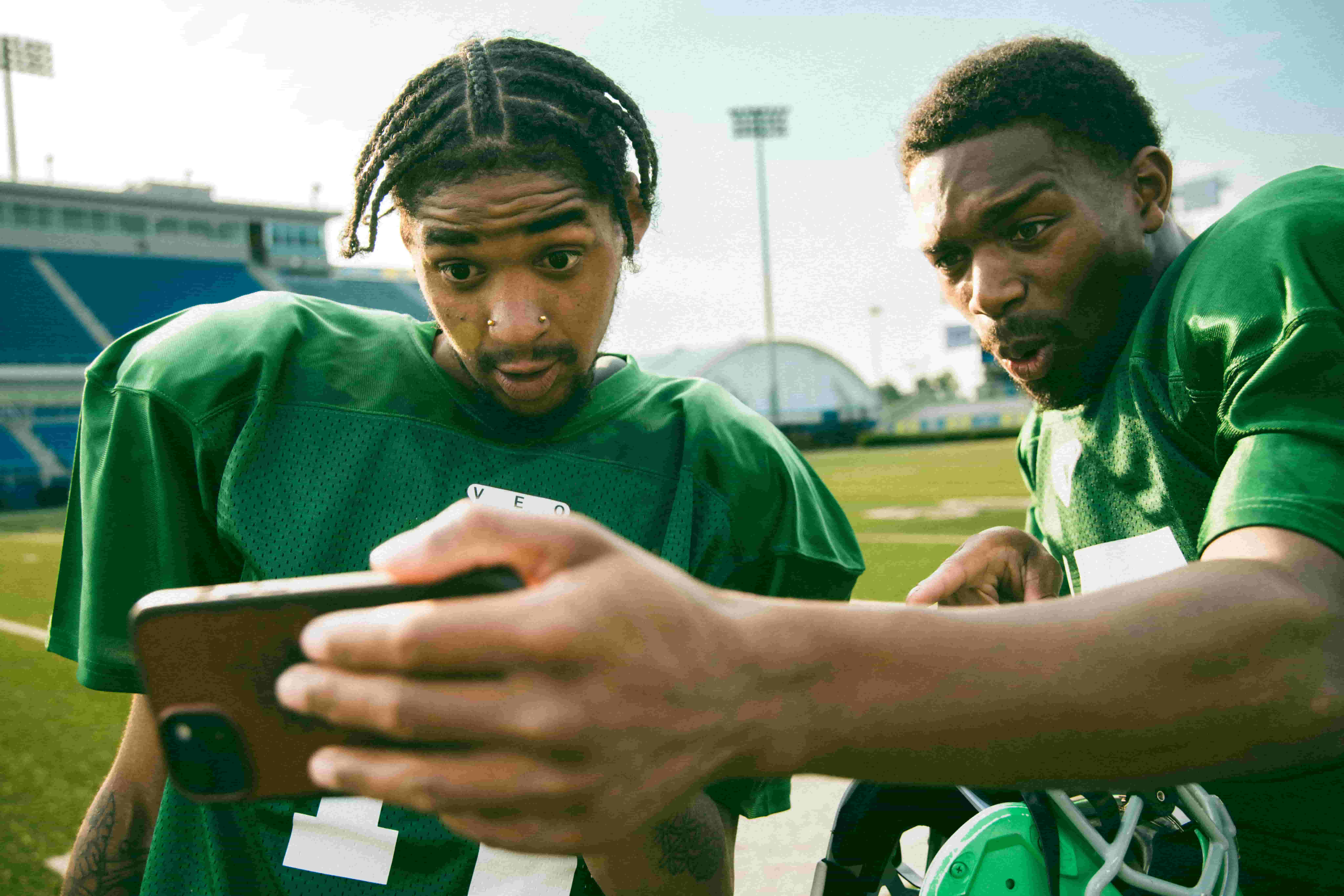
Coaches using Veo Cam 3 position the camera at the end zone or behind the QB to capture the full pocket. After practice, a 30-second slow-motion clip of the drop-back and release shows the coach exactly where the mechanics break down. For QBs aged 12 and above, watching their own footage builds the kind of self-awareness that accelerates development.
For how to structure a session that gives your QB enough repetitions alongside the rest of the team, see the youth football receiver drills. Working with receivers on timing and route recognition is among the most effective QB development tools available.
Quarterback development by age group
U8 to U10
Grip, stance, and release point. Nothing else. A QB at this age who throws a clean spiral with consistent release is ahead of where they need to be. Do not introduce drop-back footwork until the grip and release are automatic. Use a youth-size ball and keep throws short (under 10 yards).
U11 to U12
Add drop-back footwork and pocket movement. The 3-step drop is enough at this age. Single receiver routes with the QB working to look the receiver off before throwing. Introduce ball security under pressure in controlled drill situations.
U13 to U14
All five drills are appropriate. Progression reads can be introduced with two reads before moving to three. Video review is particularly valuable at this age because QBs have enough game experience to connect what they see on video to what they felt during the play. A brief 10-minute film session after practice where the QB watches three or four of their own drops builds self-correction faster than any coaching cue.
For QB development in a no-contact format, see the guide to coaching flag football, which covers the same decision-making and timing concepts in a game format ideal for younger age groups.
Review QB mechanics in slow motion
Veo Cam 3 captures the full pocket automatically. See footwork, release point, and ball security in detail after every session.
.jpg)

FAQs
hej
.jpeg)