Football Recording Equipment: What Every Coach Needs in 2026
Veo
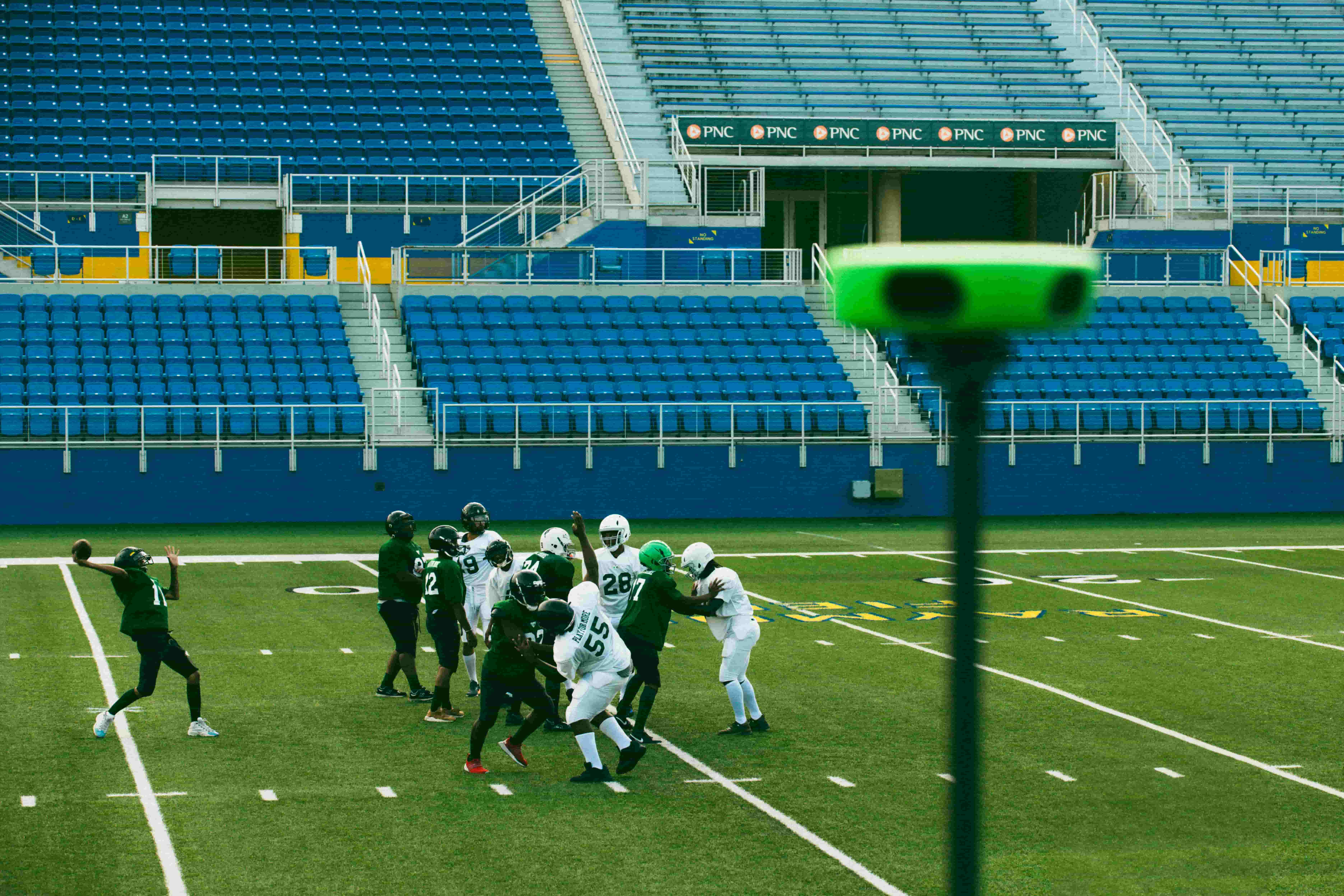
The complete football recording equipment guide for 2026. Camera options, tripod setup, sideline vs end zone positioning, and how Veo Cam 3 gives every program automatic film review.
Film review has been part of football coaching at every level from high school to the NFL for decades. The technology that makes it accessible to any program has changed significantly in the past five years. A setup that once required a dedicated camera operator, expensive hardware, and hours of manual editing now takes under 2 minutes to deploy and produces footage that uploads automatically after the game.
This guide covers everything a football coach or program administrator needs to know about recording equipment in 2026: what to use, where to position it, how the setup has changed, and what the footage is actually worth for coaching and player development.
What football recording equipment do you actually need
The list is shorter than most coaches expect. The shift from traditional video setups to auto-tracking cameras has eliminated the need for a camera operator, a separate recording device, manual file transfer, and video editing software. The Veo platform handles upload, organisation, and sharing automatically after each session.
Camera position: sideline vs end zone
Camera position is the most consequential decision in football recording. The same game looks completely different from the 50-yard line sideline versus the back of the end zone, and the coaching value of each angle is different.
Sideline at the 50-yard line
The standard position for football film review. A camera elevated at the 50-yard line captures:
- Full formation width. Both offensive and defensive formations are visible from sideline to sideline. Pre-snap alignment, motion, and defensive shifts are all in frame.
- Play development across the field. Route trees, blocking schemes, and defensive coverage all unfold in a single wide view.
- Both sides of the ball simultaneously. A single camera at the 50 covers both teams without any panning or zooming.
Setup: Extend the tripod to maximum height. Position directly at the 50-yard line on the team sideline or press box side. Confirm both end zones are visible in the Veo app preview before pressing record.
Best for: Formation analysis, coverage recognition, blocking scheme review, and general game film.
End zone elevated
A camera at the back of the end zone elevated gives a perspective that the sideline camera cannot replicate:
- Route depth and spacing. Receiver routes look completely different from behind. The depth of cuts, spacing between routes, and route-run precision are clearer from the end zone than the sideline.
- Blocking assignments. Offensive line blocking angles and linebacker gap assignments are significantly more visible from behind the line of scrimmage.
- Red zone execution. For red zone film review specifically, the end zone position gives the clearest view of spacing and coverage in a compressed area.
Setup: Tripod at the back of the end zone, elevated as high as possible, angled slightly downfield. For Veo Cam 3, confirm in the app preview that the line of scrimmage and at least 15 yards of the field are visible.
Best for: Route running, blocking technique, red zone coverage, and individual player assignments.
Programs with resources for two cameras use both angles simultaneously. For most programs starting with one camera, the sideline at the 50 provides the most complete single-angle view for coaching film review.
More than 4 million football sessions filmed with Veo
More than 40,000 clubs across 100 countries use Veo to store and share footage, with over 4 million matches filmed on the platform (Veo internal data, 2026).
.jpg)
How Veo Cam 3 changed football recording
The traditional football recording setup at high school level required a parent or student to operate the camera from the press box or stands throughout the game. The footage was recorded on a memory card, downloaded manually after the game, and shared via a file transfer service or USB drive. Coaches typically reviewed film 24 to 48 hours after the game.
Veo Cam 3 compressed that workflow to a single evening. The camera sets up at the 50-yard line in under 2 minutes and runs unattended for the entire game. After the final whistle, the coach stops recording in the Veo app and connects the camera to Wi-Fi. Footage uploads automatically and is available for review within a few hours, including both the full-field panoramic view and the AI-generated follow-cam.
Three specific changes that matter for football programs:
- No operator dependency. Football coaches already have full sidelines. Adding a camera operator to the logistics of a game day is a recurring problem. Veo Cam 3 removes the operator entirely.
- 4K 60fps image quality. Football moves fast and the details matter. 60 frames per second gives coaches the ability to pause and review individual frames without the motion blur that makes 30fps footage difficult to analyse for technique and assignment precision.
- Same-evening review. Coaches who review film the night of the game arrive at Monday practice with specific, recent evidence for every correction they make. The same-evening turnaround changes how quickly adjustments translate from film room to field.
Tripod setup for football
The tripod is the second most important piece of equipment after the camera. Three things matter:
- Height. The higher the camera, the wider the field coverage. A tripod that extends to 6 feet or more at the 50-yard line covers both end zones on a standard 100-yard field. A tripod limited to 5 feet loses coverage at the end zones.
- Stability. Football is an outdoor sport filmed in all conditions. A lightweight tripod that moves in wind or gets knocked by sideline activity produces unusable footage. Use a tripod with a wide leg stance and lock all joints securely before leaving the camera unattended.
- Quick setup. The tripod should extend and lock in under 60 seconds. On busy game days, setup time matters. Practice the setup sequence so it takes the same amount of time every game.
Recording compliance at high school and college level
Most state athletic associations have rules about where cameras can be positioned during games. Common restrictions include:
- Press box access. Some venues require cameras in the press box. Confirm whether sideline tripod setups are permitted at away venues before game day.
- Opponent footage sharing. Some associations have rules about sharing footage with opponents before a rematch. Check your state’s athletic association guidelines if you film and share footage regularly.
- Drone restrictions. Some venues prohibit drone filming. Veo Cam 3 is a tripod-mounted camera and is not subject to drone restrictions.
For a detailed look at camera options and pricing for football programs, see best video camera for football games. For sport-specific features and program case studies, visit the Veo football page.

FAQs
Yes, provided the system has been designed or validated for youth sport. Systems built primarily for professional football may struggle with the clustering and unpredictable movement patterns of younger players. Veo Go is designed for youth and grassroots sport and handles youth match conditions reliably.
Yes. Pitching mechanics happen too quickly for accurate live assessment. Arm path, elbow height, stride direction, and balance point position are all visible in slow-motion footage from a side or front angle. Pitchers who watch their own delivery alongside a mechanical model make corrections faster than those who receive only verbal feedback. A single slow-motion clip showing elbow drop at the release point is more effective than multiple sessions of verbal coaching on the same issue.
Route running involves details that are nearly invisible at full speed: the angle of the plant foot, the height of the shoulder through the break, where the eyes go when finding the ball. Video in slow motion makes all of these visible. A receiver who watches their own break technique on video learns faster than one who receives only verbal feedback.

%20(1).jpg)