How Rugby Video Analysis Builds Player IQ: Lessons from a National Champion Coach
Frederik Hvillum
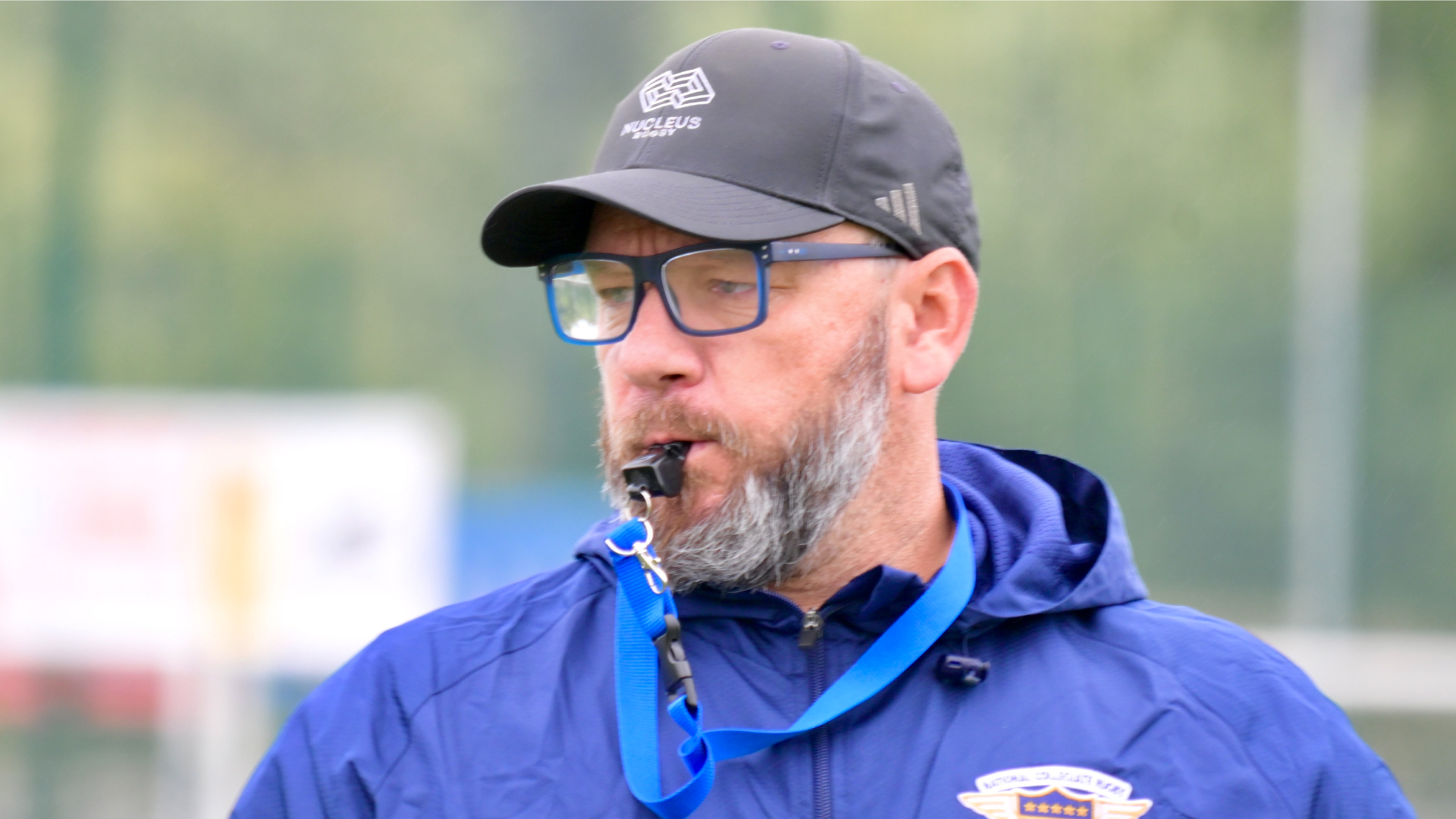
Emil Walton built a national-champion rugby program at the University of Louisville using video analysis. Here is how he trains player IQ, connects out-of-state parents, and turns film into a coaching edge.
Rugby video analysis gives coaches and players a shared language that words alone cannot provide. Emil Walton, head coach of the University of Louisville rugby program and former analyst for the USA Eagles national team, has spent close to a decade proving that point on the practice field and in the film room. Under his direction, Louisville grew from six players and a bag of dirty balls into a program producing Major League Rugby athletes and conference titles. Video has been at the centre of that transformation.
This article covers how Walton uses rugby video analysis to train player intelligence, connect a geographically dispersed community, and build a team culture where honest self-assessment is a competitive advantage.
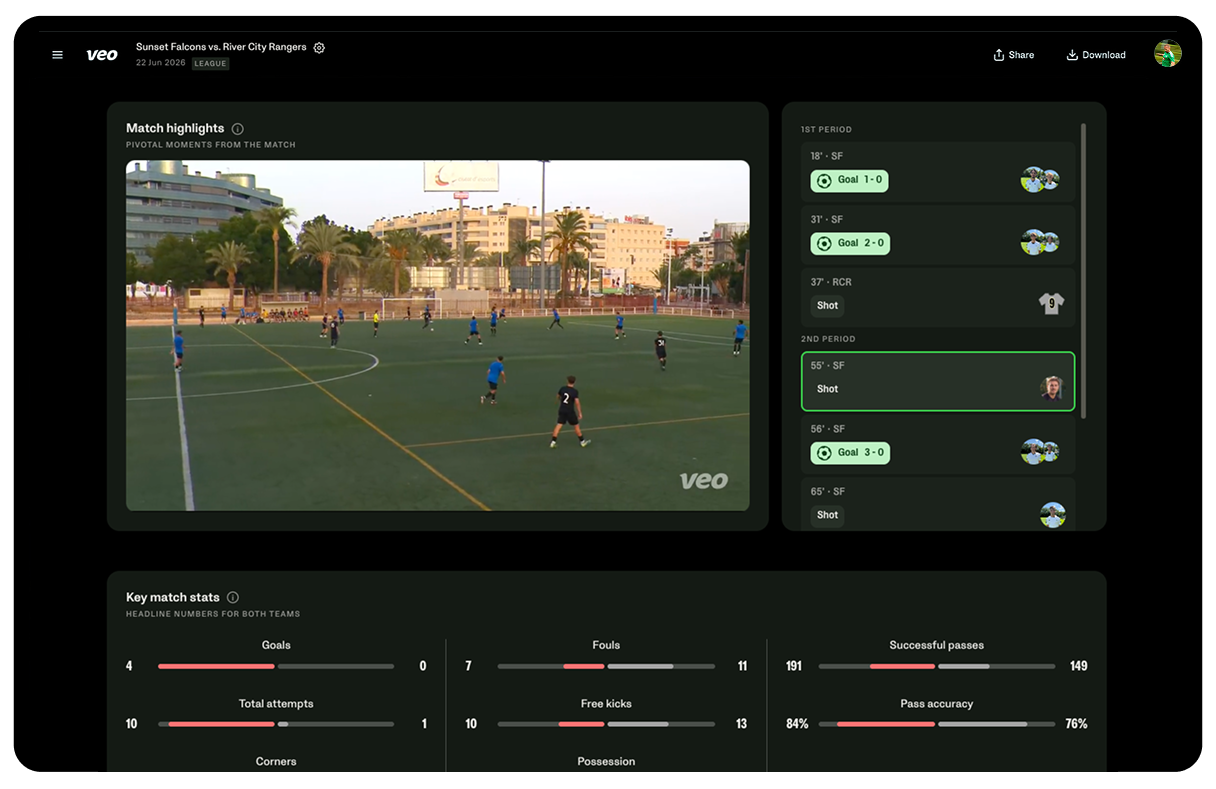
Capture every try, scrum, lineout and conversion automatically with our rugby camera system.
See how Veo's AI camera system works for rugby.
How did a college club team build a national championship culture?
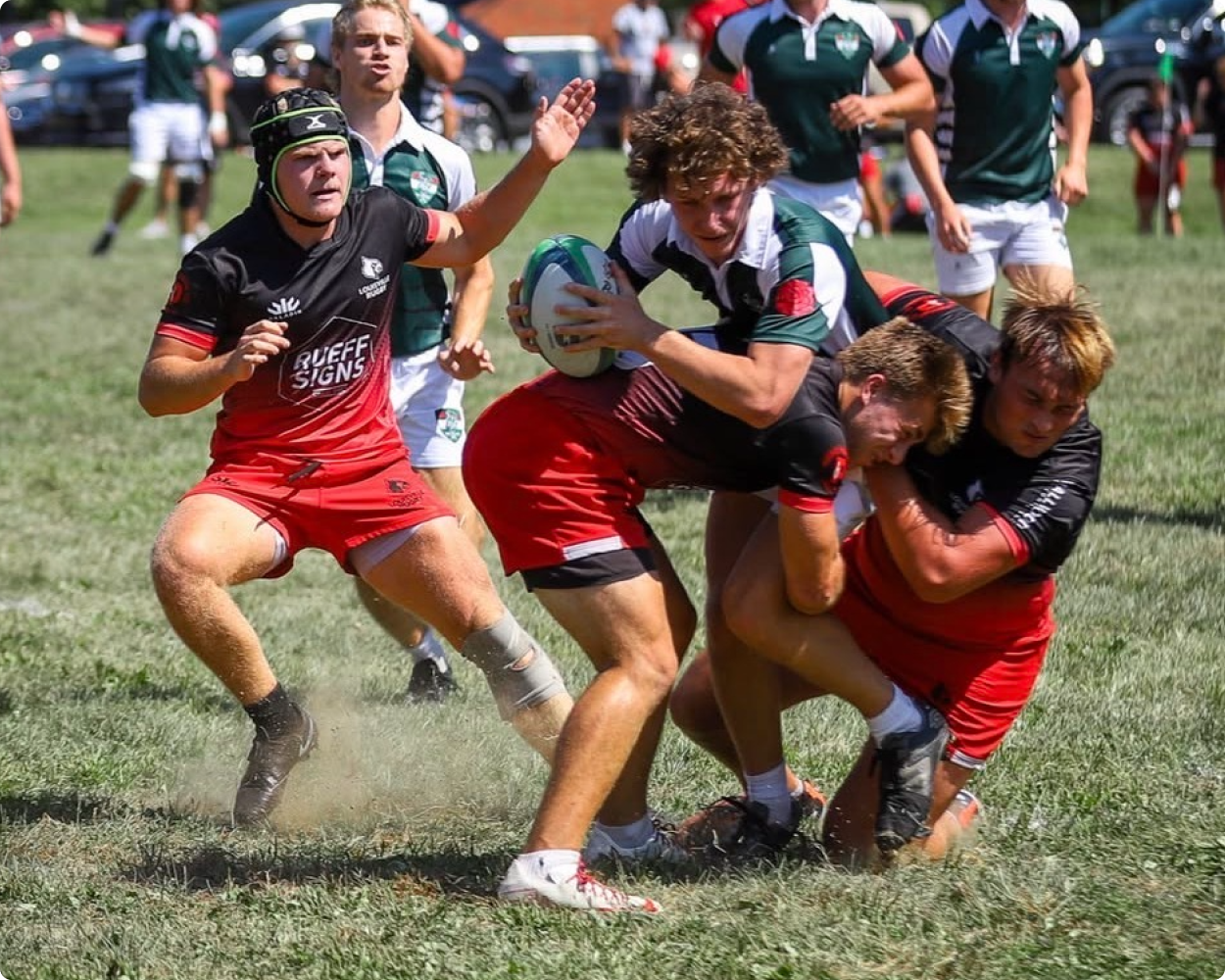
When Walton took over the Louisville program around 2016, it was a self-funded club team that had largely dissolved after an earlier iteration faded around 2010. Rugby carried a stigma on campus that limited university investment and made recruitment difficult. The first training session had six players, a bag of dirty rugby balls, and two broken pads.
Walton ran the club as closely to a professional environment as his budget allowed, with one clear philosophy at the centre of everything.
Emil Walton: "My main philosophy was just kind of like player development over everything, and then if we do a really good job at that, then the wins is merely a byproduct of that."
That philosophy, combined with deliberate character selection, drove results. The program has since produced numerous Major League Rugby players, won conference titles, and competed for national honours. Walton also served as a scout and academy coach for an MLR franchise before returning full-time to Louisville when that franchise relocated.
Why does rugby video analysis improve player intelligence faster than verbal instruction?
Walton is direct about the limitation of verbal coaching. When a player makes a technical error, the gap between what they think they did and what they actually did can be significant. Film closes that gap immediately.
Emil Walton: "I can tell a player to clean the rock like this 20 times, and how these kids are, they'll argue and say, 'well, I've been doing it the right way.' But then you go in the film, and you're like, well, technically you didn't do it the right way."
The deeper benefit is the development of pattern recognition. Walton assigns specific analytical tasks to groups of players before each film session. One group might count how often an opposing number 10 attacks the gain line. Another might track how a rival scrum-half sets tempo. Those tasks force players to watch with purpose rather than passively.
Emil Walton: "It now incentivises them to start looking at the game differently. So you give them a task and say, I want you to look at how many times their number 10 attacks the game line. That's all. That's all you look at. You're not going to look at anything else. And what happens is it starts making them more interested in the technical aspects of the game."
The results go beyond what Walton assigns. One player spotted a lineout trigger in an opposing team's footage that Walton had missed. That kind of player-driven discovery, he says, is the real signal that the approach is working.
What are bulletproof sessions and how do they build team culture?
Every Monday, Louisville holds what Walton calls a bulletproof session. The name is deliberate.
Emil Walton: "We come in and I say, alright boys, put on your invisible bulletproof vests. The only rule we have is no shooting each other in the head, but we're going to take some chest shots. And it's for the coaches as well. When we're in our film session, even the coaches get critiqued. Why did you make this substitution? Why did you do this?"
Direct critique at that level creates a risk of deflation. Walton counters it with what he calls memalytics: a video compilation of players' funniest on-field mistakes, set to memes, played at the end of every session.
Emil Walton: "I don't want to go onto the field after that with this animosity where everyone's pistol-fit at each other. So we always end our film session with memalytics. It's just a way to make fun, just understanding that mistakes are going to happen, and it's what we do when we walk out this door."
The combination of unflinching analysis and deliberate lightness has become a defining element of Louisville's identity. Players develop ownership over their development because they are given both the tools and the permission to assess themselves honestly.
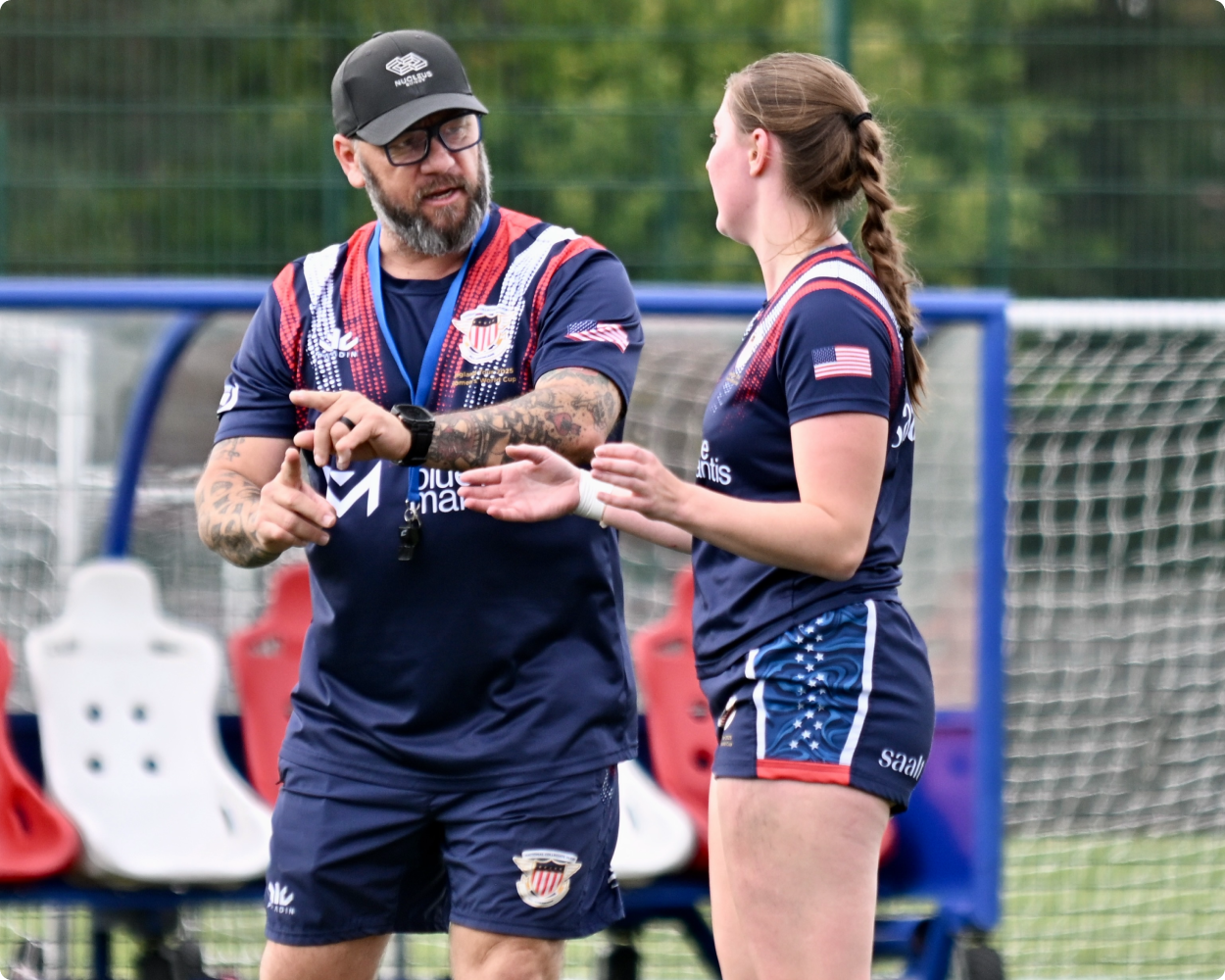
The approach travels. On the 2025 Women's All-American tour to England, Walton joined as an assistant coach and brought the same method to a group of players who had never played together.
Sophia Vojta, Marketing Manager at National Collegiate Rugby: "We initially brought the Veo along simply to record matches for fans at home and capture highlights for social media. Emil saw a bigger opportunity. He used the system to record practices, analyze footage, and apply the data to accelerate the team's development. In just five days, he helped turn a select group of strangers into a well-organized, cohesive side ahead of their first match. His film review sessions were clear, insightful, and immediately applicable on the training field. And, true to his word, he always closed each review with a blooper reel that kept the group laughing and connected."
How does Veo support rugby coaching and community connection?
Louisville's first Veo camera arrived through a parent donation. Around 90 per cent of the program's players come from out of state, and the constant demand for a live feed had reached a point where Walton needed a practical solution.
Emil Walton: "Honestly, it was more out of necessity for keeping the parents happy. But on the flip side, to me, it gave me a good database that I can pull film from and actually create those highlights for the players and make sure that those are in a folder for them when they need it."
Veo is an AI-powered sports camera that films matches and training sessions autonomously, tracking the action without a dedicated camera operator. The camera mounts on a tripod and uses computer vision to follow the game, producing full-length footage automatically uploaded to a cloud platform accessible to players, coaches, and families.
For Walton, the community function and the coaching function are inseparable. Full-match footage gives scouts a complete picture that highlights cannot. When Walton was scouting players for an MLR academy, full-game film was the standard request.
Emil Walton: "We can actually have a full perspective of the player's performance. We want to see them make mistakes. We want to see them make those errors. And it's not so much the errors that bothers us, it's more the body language after that. You really can't see that on a highlight reel."
The practical side matters too. Previous filming setups required large equipment cases and dedicated technical knowledge. Veo fits in a standard bag and sets up in minutes. Walton describes the setup process simply: mount the camera, start the app, and focus on coaching. For a program travelling to away fixtures on a limited budget, that portability changes the logistics of consistent filming.

Record, livestream and analyse – all in one platform
At Veo, our goal is to provide you with everything you need in a rugby camera system. Veo is not only a camera – it’s also an analysis tool. We know that rugby coaches and analysts are busy people, so that is why we have made every step of the Veo experience as easy as possible, from capturing the action to analysing the match.
How is rugby video analysis expanding player IQ across an entire program?
One of the more significant effects of accessible footage is what happens when players start watching teams beyond their own. Many opposing programs leave their Veo footage publicly available, which opens up a resource most clubs underuse.
Emil Walton: "Without form, or without that access of looking at other teams, you're kind of stuck in your own little microcosm of how your system works, and you don't realise that there are other systems out there that also work. What it does now is expand their IQ, in a sense where they realise there's no black and white, there's a grey area, and there might be several little grey areas, and all of them are working for that team at that instance."
Walton gives a concrete example: Louisville is a backline-heavy team built around fluid, sevens-influenced rugby. When players study a rival that plays a direct forward game, they are not looking for things to copy. They are building a broader mental model of how the sport works. That is the kind of understanding, Walton argues, that translates into faster decision-making in live play.
Walton's own trajectory reflects the same principle. Working with USA head coach Mike Friday and analyst Dave before and during the Olympics, he developed analytical skills that opened a dimension of the game beyond what coaching alone offered. Looking for patterns and understanding the game differently is, in his view, a skill that compounds over time.
What should rugby coaches consider when starting with video analysis?
Walton acknowledges that many coaches resist film analysis, either because they are unsure what to look for or because they are sceptical of its value. His view on that resistance is straightforward.
Emil Walton: "As a coach, you need to adapt with the times, whether you like it or not. I think once you know what you're looking at, even just the basics, it opens up a whole goldmine of data. You can only fix what you know is broken."
His practical framework for coaches at any level:
- Start with a specific question. Assign players one observable task rather than asking them to watch the whole match. A focused instruction produces more useful analysis than open-ended viewing.
- Film opponents as well as yourself. Public footage from opposing teams is a resource most programs underuse. Exposing players to multiple systems accelerates their tactical understanding.
- Build a review culture that players own. The bulletproof session works because players are participants in the analysis, not passive recipients of a coach's conclusions.
- Protect the atmosphere. Direct critique needs a counterweight. Walton uses memalytics to ensure sessions end with levity. The goal is honest development, not deflation.
- Think beyond the coaching room. Full-match footage serves parents, scouts, and future recruiters. Consistent filming creates a cumulative record of player development that highlights alone cannot replicate.

FAQs
Video analysis improves rugby player IQ by giving players access to patterns they cannot perceive in real time. When players are assigned specific analytical tasks, such as tracking an opponent's attacking tendencies, they develop the habit of watching the game with purpose. Over time, repeated exposure to film builds faster recognition of patterns in live play.
A club can start with a single automated camera that tracks play without a dedicated operator. Systems like Veo mount on a standard tripod and upload footage automatically to a cloud platform. No specialist technical knowledge is required, and the setup fits in a standard bag for easy transport to away fixtures.
Scouts and professional coaches use full-match footage to evaluate how players perform across an entire game, including their decision-making after errors and their body language under pressure. Highlight reels show peak moments; full footage shows character. Clubs that film consistently give their players a more complete portfolio for evaluation by higher-level programs.
Yes. Automated camera systems have made video analysis accessible to programs without large budgets or dedicated staff. Louisville's program introduced Veo through a parent donation and has used it as a core coaching tool ever since. The practical requirements are a camera, a subscription, and a consistent commitment to reviewing footage as a team.