1v1 Soccer Drills for Youth: A Complete Coach Guide
Frederik Hvillum
The best 1v1 soccer drills for youth coaches. Attacking and defending drills with age guidance, coaching cues, and notes on what video reveals that live coaching misses.
The 1v1 situation is the fundamental unit of soccer. Every phase of play, whether attacking, defending, or transitioning, reduces at some point to one player trying to beat another. Teams that are strong in 1v1 situations on both sides of the ball are consistently harder to play against than technically similar teams that are not.
This guide covers five 1v1 drills for youth soccer coaches, covering both attacking and defending skills. Each drill includes coaching cues, age guidance, and notes on what video reveals that live coaching misses.
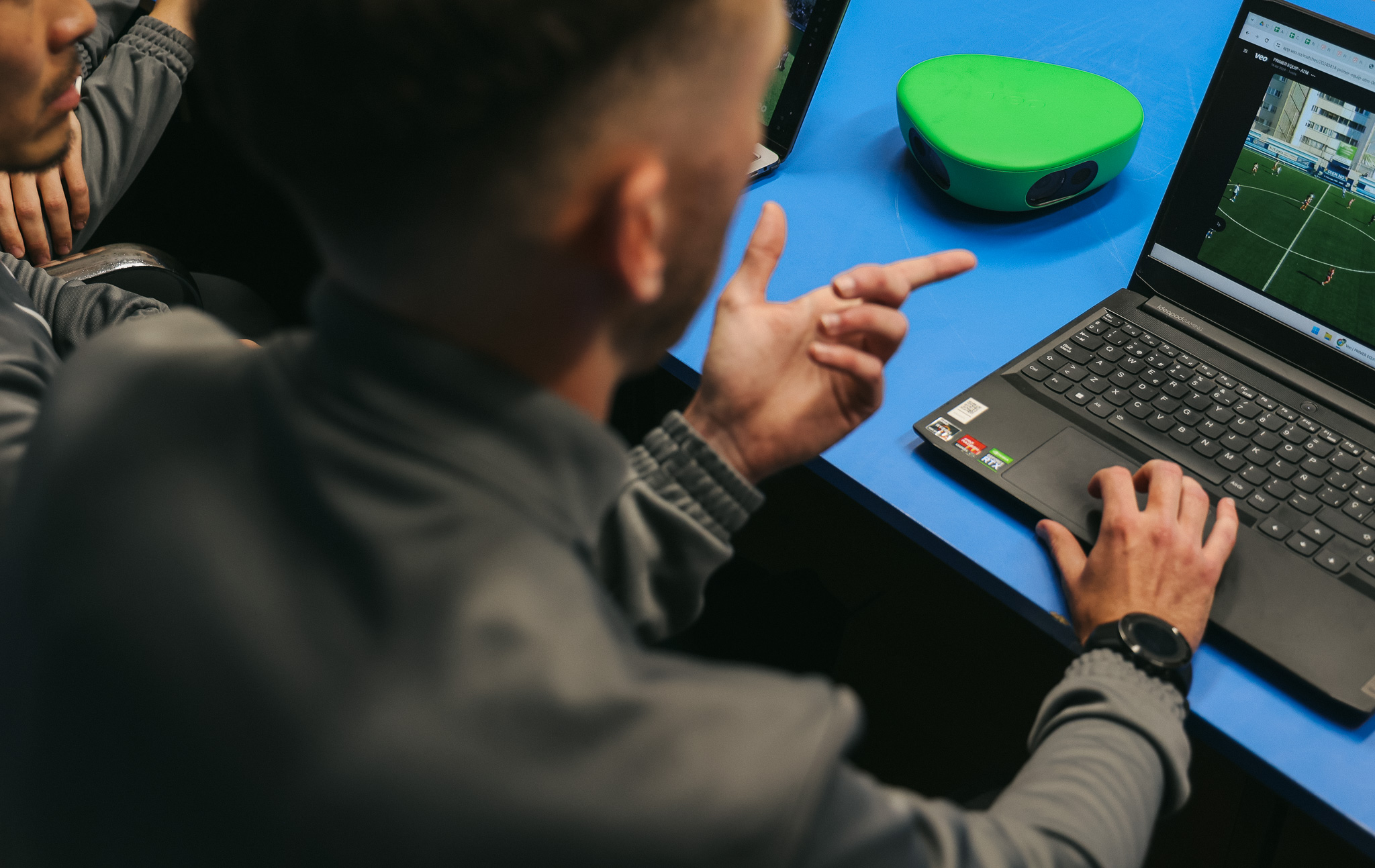
Film 1v1 duels with Veo Cam 3
Veo Cam 3 sets up in under 2 minutes and records your full session automatically. Review attacking moves, defensive body shape, and transition pressing the same evening.
What 1v1 drills actually develop
Good 1v1 drills develop decision-making as much as technique. An attacker who has five moves but cannot read when to use each of them is predictable. A defender who has correct body shape but commits to the tackle too early gets beaten. The best 1v1 drills put players in situations where the correct decision changes depending on what the opponent does, which is how the skill transfers to match play.
For the broader training session context these drills sit within, see youth soccer training drills. For passing skills that complement 1v1 work, see soccer passing drills.
Drill overview
The drills
Drill 1: Cone gate 1v1
Set up a 10x10 metre square with a cone gate (two cones, 1 metre apart) on each side. Two players start in the middle. The attacker tries to dribble through any of the four gates; the defender tries to prevent this. When the attacker scores by dribbling through a gate, or the defender wins the ball, reset and switch roles. Run for 8 minutes.
Coaching cue (attacker): "Use all four gates. If you only attack the gate in front of you, the defender only has to cover one direction. Change your angle to make the defender move."
Coaching cue (defender): "Stay central. You cannot cover all four gates by standing in front of one. Position yourself in the middle and react."
Age note: Appropriate for all ages. At U6 to U8, widen the gates to 2 metres and use a larger square. The multiple-gate format means there is never a single obvious correct answer for either player, which makes it decision-rich without requiring tactical instruction.
Drill 2: 1v1 to target player
Set up a 15x10 metre channel. A target player stands at the far end of the channel, facing the play. An attacker starts at one end with the ball; a defender starts 3 metres in front of the attacker. The attacker tries to dribble past the defender and play a pass to the target player. The defender tries to prevent the pass. If the defender wins the ball, they become the attacker and try to dribble back to the starting line. Run 10 repetitions, then rotate all roles.
Coaching cue: "The target player is your goal, not the end line. Keep your head up. A defender who is tight on you has left space behind them. Use it."
What to watch on video: Whether the attacker's head comes up after the first touch to locate the target player, or whether they keep their head down and dribble without a plan. Players who dribble with their head down in 1v1 drills do the same in matches.
See head position and decision-making in slow motion
More than 40,000 clubs across 100 countries use Veo to store and share footage, with over 4 million matches filmed on the platform (Veo internal data, 2026). Veo Cam 3 captures 1v1 duels in full so coaches can identify exactly when attackers lose their head position and defenders commit too early.
Drill 3: Defending body shape drill
Pairs work in a 5x15 metre channel. The attacker walks or slow-jogs with the ball toward the defender's goal. The defender must maintain a side-on stance, showing the attacker toward the outside of the channel, staying on the balls of their feet, and keeping 1 to 2 metres of distance. No tackling. The drill is completed when the attacker reaches the end line or the defender forces the ball out of the channel. Run 5 reps each, then switch.
Coaching cue: "Side-on means your shoulder points at the attacker, not your chest. If you are square, you can be beaten either way. If you are side-on, you have taken one option away before the attacker has touched the ball."
What to watch on video: Shoulder angle throughout the approach. Most youth defenders start side-on and gradually square up as the attacker gets closer, which is the opposite of what is needed. The footage shows this pattern clearly across multiple repetitions.
Drill 4: 1v1 with recovery run
Set up a 20x15 metre area with a small goal at each end. The attacker starts with the ball at one end; the defender starts at the opposite end. On the coach's signal, both players sprint toward the centre. The attacker tries to score; the defender tries to recover and prevent the shot. After each attempt, the roles reverse: the previous attacker drops back to defend from the far end while the previous defender becomes the attacker. Run continuously for 10 minutes.
Coaching cue (defender): "Sprint back to goal-side first. Get between the attacker and the goal before you try to win the ball. A defender who sprints at the ball carrier from the side leaves the goal open."
Age note: Introduce at U10. The recovery run requires players to transition instantly from attack to defense, which is a cognitive and physical demand that becomes relevant from this age. At U8, simplify by giving the defender a head start rather than starting both players simultaneously.
Drill 5: King of the circle
Mark out a circle approximately 10 metres in diameter. All players enter the circle with a ball each. Each player tries to kick other players' balls out of the circle while keeping their own ball inside. A player whose ball is kicked out waits outside for 15 seconds, then re-enters. Run continuously for 10 minutes. The competitive and chaotic format develops shielding, close control, and awareness under pressure simultaneously.
Coaching cue: "Use your body between the ball and the other player. You do not need to outrun them. You need to keep your body between them and the ball."
Age note: Appropriate for all ages. At U6, reduce the circle to 6 metres and allow players to re-enter immediately. King of the circle is one of the few drills that develops shielding and awareness under genuine pressure without requiring any tactical instruction, which makes it valuable at every age group.
What video reveals in 1v1 drills
The two most important things to identify in 1v1 footage are the moment the defender commits and the moment the attacker lifts their head. A defender who commits too early gets beaten before the attacker has made a move. An attacker who never lifts their head dribbles without information.
Both of these moments happen in under a second and are almost impossible to identify accurately while managing a full group of players in multiple channels simultaneously. Slow-motion footage from a side or elevated angle shows both clearly. Coaches using Veo Cam 3 identify these patterns after the session and address them at the start of the next one.
Record every 1v1 drill. Review every pattern.
Veo Cam 3 sets up in 2 minutes and records automatically. Full session footage ready to review the same evening.


FAQs
The cone gate 1v1 is the most versatile: it develops both attacking and defending simultaneously without requiring separate drill setups. King of the circle develops shielding and awareness under genuine pressure for all age groups. The defending body shape drill isolates the single most important defensive habit at youth level. All three should feature regularly in sessions alongside passing and team work.
Start with body shape before introducing any contact or competition. The defending body shape drill builds the side-on stance and correct distance management that makes every subsequent defensive skill more effective. Once body shape is consistent, introduce the 1v1 channel drill with competition. The most common defensive error at youth level is committing to the tackle too early, which is best identified from slow-motion video footage.
Yes. The two moments that determine the outcome of most 1v1 situations, when the defender commits and when the attacker lifts their head, happen in under a second and are nearly impossible to identify in real time. Slow-motion footage shows both clearly. Players aged 10 and above who watch themselves in 1v1 situations alongside a coaching cue make faster adjustments than players who receive only verbal feedback.
Start with simple 1v1 formats from U6. The cone gate drill and king of the circle work at all ages because they are self-regulating: the difficulty adjusts naturally based on the ability of the players involved. Introduce the defending body shape drill and the 1v1 to target player from U8. Add the recovery run drill from U10 when players can handle the transition demand.
Teach shielding through king of the circle rather than through a static demonstration. Players who try to shield in a competitive environment with multiple opponents learn the habit faster than players who practise shielding against a stationary defender. The key coaching cue is body between ball and opponent: teach players to feel the defender's position and move the ball to the far side of their body.

%20(1).jpg)