Soccer Camera Systems Compared: Which Is Right for Your Club? [2026]
Veo
All major soccer camera systems compared in 2026. Veo, Pixellot, Hudl Focus, Trace, Spiideo, and XBotGo evaluated on tracking, setup, platform, and coaching value for soccer clubs.
Soccer has more automatic camera options than any other team sport. The market has expanded rapidly since 2020, and most clubs evaluating their options for the first time face a confusing landscape of overlapping claims: every system advertises AI tracking, automatic recording, and coaching analysis. The differences between them are real and consequential, but they are buried in technical language that most coaches do not have time to parse.
This guide compares seven soccer camera systems on the factors that determine week-to-week coaching value: tracking approach, full-field recording, setup time, platform capability, and which type of program each system actually suits. For a focused look at what to look for in an automatic tracking camera for soccer, see best tracking camera for soccer.
The soccer camera used by 40,000+ clubs worldwide
Set up in under 2 minutes. No operator. Full-field footage plus AI tracking ready the same evening.
%20(1).jpg)
What separates soccer camera systems from each other
Most automatic soccer cameras do the same basic thing: they record the game without a human operator and produce a tracked video that follows the ball. What separates them is what they record and what they do with the footage afterwards.
Three questions cut through the marketing language:
- Does it record the full field, or only what it tracks? Wide-angle systems record the entire pitch at all times. Pan-tilt-zoom systems physically follow the ball and only record what the tracking algorithm points at. Full-field recording preserves the panoramic view for coaching analysis of team shape, defensive positioning, and off-ball movement. PTZ systems do not.
- How long does setup take? A camera that takes 10 to 15 minutes to set up will be skipped on the days when time is short. The fastest systems set up in under 2 minutes. This matters more than most buyers realise before the third session of a tournament weekend.
- What is the coaching platform like? Raw video is only as useful as the tools built around it. A camera that delivers a video file without annotation, clipping, and sharing tools requires coaches to use separate software to do the work that a good platform handles automatically.
Soccer camera systems compared
System by system: Soccer-specific breakdown
Veo Cam 3
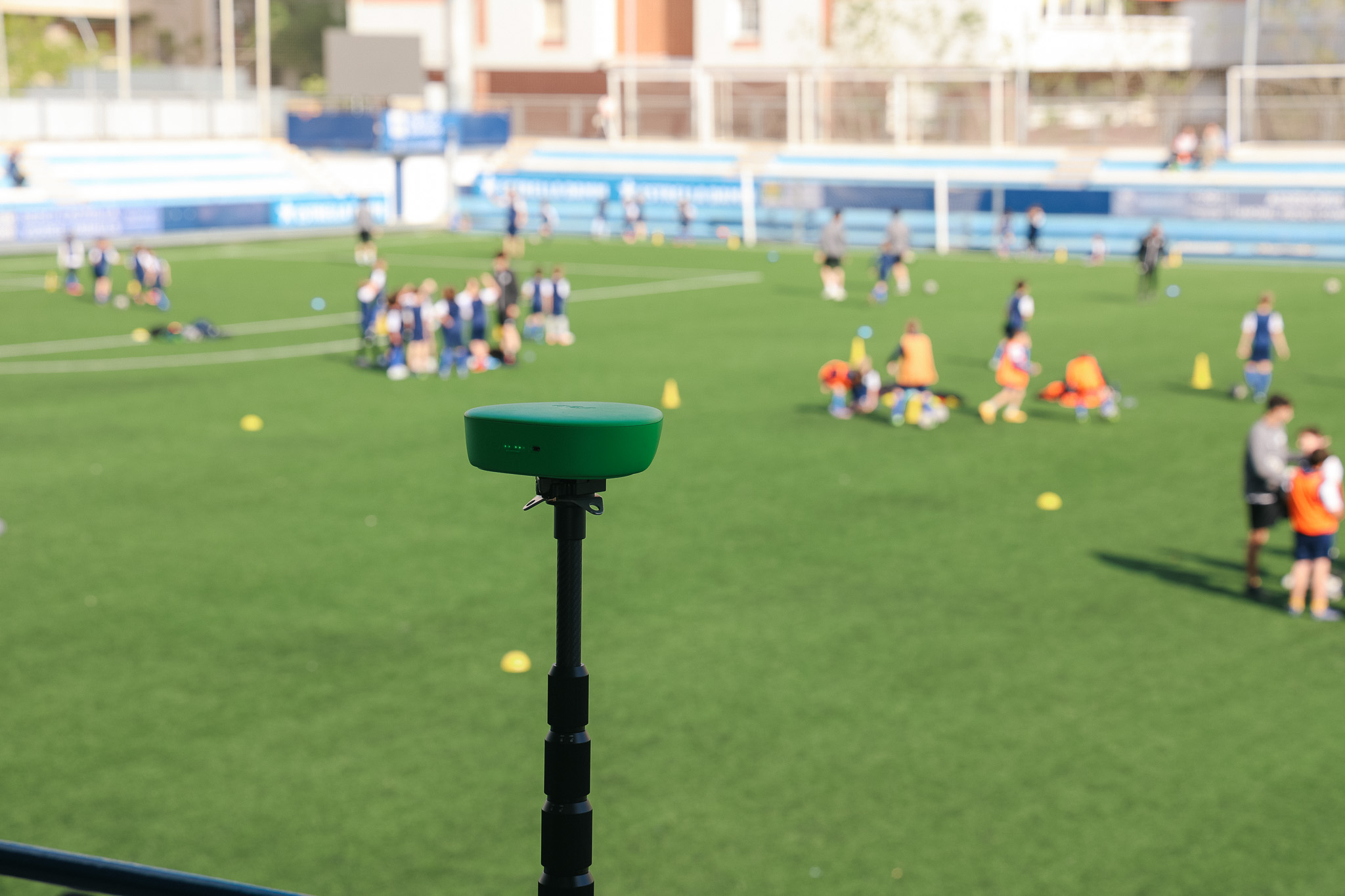
Veo Cam 3 is the most widely used soccer camera at club level globally. It records a 180-degree full-field view throughout the match and generates a tracked follow-cam view after upload. Both views are available in the Veo Editor alongside annotation tools, clip creation, player tagging, and direct sharing.
For soccer specifically, the panoramic view is where most coaching analysis happens. Reviewing a defensive line’s positioning, a team’s pressing triggers, or the spacing of an attacking set piece all require the full-field view. The follow-cam view is used for player highlights, individual technique review, and recruiting reels.
- Setup time: Under 2 minutes. Halfway line, elevated as high as possible, Bluetooth connection, record.
- Image quality: 4K at 60fps. The only soccer camera system in this comparison filming at 60 frames per second. Slow-motion review of tackles, first touches, and technique is significantly cleaner at 60fps than at 30fps.
- Live streaming: Available via the Veo Cam 3 5G version using a SIM card. No hotspot required.
Veo Go
Veo Go uses two iPhones mounted on a tripod alongside the Veo app to deliver the same wide-angle full-field recording and AI tracking as Veo Cam 3. The tracking quality, image output, and platform are equivalent. The difference is hardware: Veo Go requires two compatible iPhones rather than a standalone device.
Veo Go is also the camera of choice for parents who want to film their child's games without standing on the sideline with a phone. Set it up before kick-off and every goal, assist, and key moment is captured automatically. For families with children playing youth sports, Veo Go builds a library of memories that lasts long after the season ends.
- Best for: Individual coaches and travel teams that want full-field recording and the Veo platform at lower hardware cost. Clubs already using iPhones that want to avoid an additional device.
Pixellot Air NXT
Pixellot Air NXT uses multiple lenses to capture a panoramic view of the full pitch without motorised tracking. The system is widely used at league and federation level because of its OTT streaming platform, which allows leagues to distribute games to subscribers and generate broadcast revenue.
For individual clubs, Pixellot is more expensive and slower to set up than Veo, and the coaching analysis tools are less developed. Its primary advantage is in the broadcasting and streaming infrastructure, which individual clubs typically do not need.
- Best for: Leagues, federations, and facilities that want to build a broadcast presence and distribute games to paying audiences.
Hudl Focus Flex
Hudl Focus Flex is the most expensive system in this comparison and the hardware is large and heavy, making it less practical for clubs that move between venues. The software pricing is opaque: the system requires an existing Hudl subscription, and the combined cost of hardware and platform is significantly higher than any other option here. Pan-tilt-zoom tracking means no full-field recording, so coaching review of set piece shape, pressing organisation, and team positioning is not possible.
- Limitations: Pan-tilt-zoom only, no full-field recording. Bulky hardware. Most expensive system at around $1,999 hardware cost plus opaque subscription pricing. 1080p image quality.
- Best for: Only relevant for clubs with a very large budget where price is not a consideration and they are already fully committed to the Hudl platform.
Trace
Trace is a soccer-specific system whose business model has changed multiple times, creating uncertainty about long-term platform stability. The system suits programs that film occasionally and do not depend on consistent high-quality footage for coaching or development. For clubs that film regularly, the image quality and platform depth are not comparable to Veo.
- Limitations: Soccer-specific only. Multiple business model pivots raise questions about platform stability. Image quality is not sufficient for regular coaching analysis or player development.
- Best for: Only relevant for clubs that film occasionally and for whom video quality is not a priority.
Spiideo
Spiideo is a cloud-native video analysis platform with strong presence in college soccer, particularly in Scandinavia and increasingly across the US collegiate market. The platform’s analysis tools are well developed, and the cloud-native architecture means footage is accessible from anywhere without manual upload steps.
The price point and institutional focus make Spiideo primarily relevant to college programs, national federation academies, and professional clubs. For youth clubs and amateur programs, the cost and complexity exceed what most programs need.
- Best for: College soccer programs, national academies, and professional clubs with institutional budgets and existing data infrastructure.
XBotGo Falcon
XBotGo Falcon delivered the worst video quality of any system in independent testing. Tracking is highly inconsistent and the camera regularly misses the ball, which means it also misses critical highlights. At the level of play where image quality and tracking reliability matter for coaching and player development, XBotGo Falcon is not a viable option.
- Limitations: Pan-tilt-zoom only, no full-field recording. Worst image quality in this comparison. Highly inconsistent tracking that frequently loses the ball and misses key moments. Not suitable for player development at any meaningful competitive level.
- Best for: Only relevant at very low competitive levels where filming consistency and image quality are not requirements.
What's the best camera for your team to record soccer games?
Imagine you could walk into a Best Buy and check out the different cameras. Sadly, you can't get your hands on these soccer camera systems so this video shows you what each camera is like.
For the complete step-by-step guide to setting up a camera for soccer match recording, see how to record soccer games. For sport-specific features and club case studies, visit the Veo soccer page.

FAQs
Veo Cam 3 is the most widely used soccer camera system at club level globally, used by more than 40,000 clubs across 100 countries. It records the full field at all times, generates a tracked follow-cam view after upload, sets up in under 2 minutes, and requires no operator.
Both systems record the full field using wide-angle lenses. The main differences are setup time (Veo under 2 minutes, Pixellot 10 to 15 minutes), coaching platform depth (Veo’s Editor is more developed for individual club use), and streaming infrastructure (Pixellot’s OTT platform is designed for league broadcasting). Veo Cam 3 also records at 4K 60fps compared to Pixellot’s 30fps.
Yes. Veo Cam 3 and Veo Go are used across all youth age groups from U6 through to adult amateur level. The camera covers standard youth pitch sizes from a single halfway line position. More than 40,000 clubs globally use Veo, with the largest user base in youth and amateur soccer.

%20(1).jpg)