Youth Baseball Batting Cage Drills: A Coach Guide
Veo
The best batting cage drills for youth baseball coaches. How to structure cage time, what to work on at each age, and how video review accelerates hitting development.
Batting cage time is the most concentrated hitting development opportunity available to youth baseball coaches. Without fielders to rotate, base runners to manage, or game situations to navigate, cage sessions allow coaches to focus entirely on swing mechanics, pitch recognition, and contact quality. The problem is that most youth batting cage sessions are not structured well enough to take advantage of that focus.
This guide covers how to structure batting cage time at each age group, the five drills that produce the most improvement per session, and how video review from the cage accelerates hitting development faster than any other feedback method.
How to structure batting cage time by age
The most common error in cage sessions is using the same format for every age group. A 7-year-old taking live BP at machine speed is not developing swing mechanics. They are learning to panic. A 13-year-old working exclusively off a tee is not preparing for game situations. Match the cage format to the developmental stage, and structure the session around one or two specific coaching focuses rather than general hitting.
The five drills that make cage time count
Drill 1: Tee work with a focus point
Every cage session should open with tee work, regardless of age. Ten to fifteen swings from a tee at the beginning of a session allows the hitter to establish their mechanics before speed and movement are introduced. The key is giving the hitter a single focus point for each set: load timing, hip rotation, contact point, or follow-through. Not all four. One.
Coaching cue: "What are we working on this set? Say it out loud before you step in. If you cannot name your focus point, you are just swinging."
Drill 2: Opposite field drill
Set the tee or machine to deliver pitches on the outer third of the plate. The hitter works exclusively on driving the ball to the opposite field: right-handed hitters to right field, left-handed to left. Five sets of ten swings. The opposite field drill builds the plate coverage and contact point discipline that prevents hitters from being retired consistently on outside pitches as they progress through competitive levels.
Coaching cue: "Let the ball travel. Your contact point on an outside pitch is further back than on an inside pitch. If you are pulling outside pitches, you are committing too early."
Age note: Introduce at U10. At U8, plate coverage is less relevant than basic bat-to-ball contact. From U10 onward, opposite field discipline becomes one of the most important differentiators between hitters who develop and hitters who plateau.
See contact point and bat path in slow motion
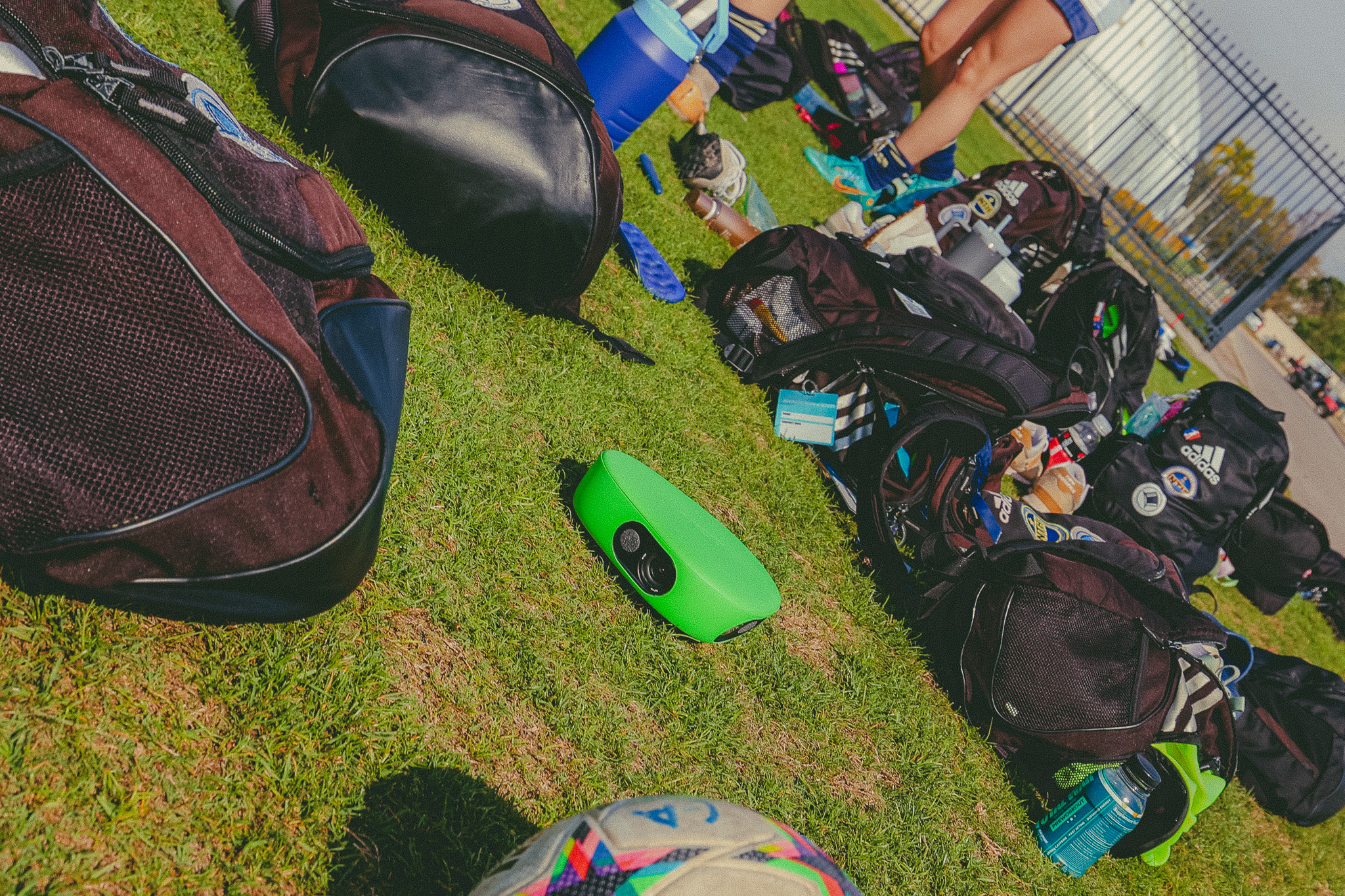
More than 40,000 clubs across 100 countries use Veo to store and share footage, with over 4 million matches filmed on the platform (Veo internal data, 2026). Veo Go captures swing mechanics from multiple angles so coaches can identify contact point errors that are invisible at full speed.
%20(1).jpg)
Drill 3: Two-strike approach drill
The hitter starts each at-bat in the cage with a count of 0-2. They must protect the plate, shorten their swing slightly, and focus on making contact rather than driving the ball. The feeder mixes locations. The coaching focus is on not expanding the strike zone while still covering pitches that catch the corners. Run five simulated at-bats per hitter.
Coaching cue: "Two strikes means you are a contact hitter until further notice. Shorten up, stay back, and put the ball in play. The home run swing is for 0-0 counts."
Age note: Introduce at U12. Two-strike hitting requires plate discipline and swing adjustment that are coachable from this age. At U10, focus on contact quality before introducing count-based situational awareness.
Drill 4: Load and stride isolation
The hitter takes their stance and performs the load and stride in slow motion on the coach's count: one (load), two (stride), three (swing). No ball. Repeat ten times focusing entirely on the timing and depth of the load and the length and direction of the stride. Then reintroduce the ball. The isolation drill corrects the two most common mechanical problems in youth hitting: no load and an inconsistent stride.
Coaching cue: "Your stride foot lands softly. It is a timing mechanism, not a weight transfer. If you are crashing forward on your stride, you have lost your weight shift before you have even swung."
What to watch on video: The position of the front foot at landing and the timing of hip rotation relative to stride foot contact. These two moments determine the quality of every swing that follows. A side-angle camera shot from even a short distance shows both clearly.
Drill 5: Situational hitting rounds
The coach calls a game situation before each pitch: runner on second, no outs; bases loaded, two outs; runner on first, need to move him. The hitter must adjust their approach based on the situation. This turns the cage from a mechanics-only environment into a decision-making environment. Run ten situational pitches per hitter with a brief discussion after each at-bat.
Coaching cue: "What is your job in this at-bat? Before you step in, tell me what you are trying to do. A hitter who knows their job is harder to get out than one who is just swinging."
Age note: Introduce at U12. Situational awareness requires game experience and cognitive development that builds from U10 onward. At U10, simplify to two situations: runner on base (contact focus) and bases empty (aggressive approach).
How to use video in the batting cage
The batting cage is the best environment in youth baseball to film hitting mechanics. The controlled space, consistent background, and repeating swing opportunities create ideal conditions for mechanical analysis. A camera positioned at a 45-degree angle behind the hitter captures load, stride, hip rotation, and contact point in a single shot. A second camera or a repositioned shot from the front shows bat path and follow-through direction.
Coaches using Veo Go set it up at the start of the session and collect footage across all hitters automatically. After the session, clips from the load and stride isolation drill or the opposite field round are shared with individual players before the next session. Players who watch their own mechanics alongside a correct model make adjustments in the next cage session that verbal feedback alone cannot produce.
For how to structure the full practice plan that these cage sessions feed into, see the youth baseball coaching tips guide. For drills that complement cage work in limited space, see indoor baseball drills and baseball outfield drills.

FAQs
15 to 20 minutes for ages 7 to 8, 20 to 25 minutes for ages 9 to 10, 25 to 30 minutes for ages 11 to 12, and up to 30 minutes for ages 13 to 14. Cage sessions longer than 30 minutes produce diminishing returns at youth level. Fatigue degrades mechanics, and players who are tired ingrain bad habits as quickly as good ones. End the session while mechanics are still clean.
Choose one or two mechanical focuses per session and communicate them clearly before the first pitch. Load timing, hip rotation, contact point, and opposite field discipline are the four most productive focuses for youth hitters. Trying to correct five things in a single session means none of them improve. One focused session produces more development than three unfocused ones.
Yes. The batting cage is the best environment in youth baseball to film hitting mechanics. The controlled space and repeating opportunities allow coaches to capture multiple swings at the same pitch location and compare them directly. Load timing, stride consistency, hip rotation, and contact point are all more accurately identified from slow-motion video than from live observation. Players who watch their own cage footage make mechanical adjustments faster than players who receive only verbal feedback.
Tee work with a specific focus point, opposite field drilling, and load and stride isolation are the three most effective mechanical drills for youth hitters in the cage. Two-strike approach and situational hitting rounds develop the decision-making habits that separate average hitters from good ones from U12 onward. Every cage session should include at least tee work and one other drill with a clear coaching focus.
Introduce coach pitch from ages 8 to 9, slow machine pitching from ages 9 to 10, and game-speed live BP from ages 11 to 12. Moving to live pitching before a hitter has consistent tee mechanics builds timing on top of a broken foundation. Tee work should remain part of every cage session at every age, even for players taking live BP, because it allows mechanical work without timing pressure.

%20(1).jpg)