Chelsea Cabarcas Made It To the Top. She Still Cannot Switch It Off.
Frederik Hvillum
.png)
Chelsea Cabarcas played for the Colombian national team. Now she is a broadcaster in New York, and still competing on a rooftop in Brooklyn.
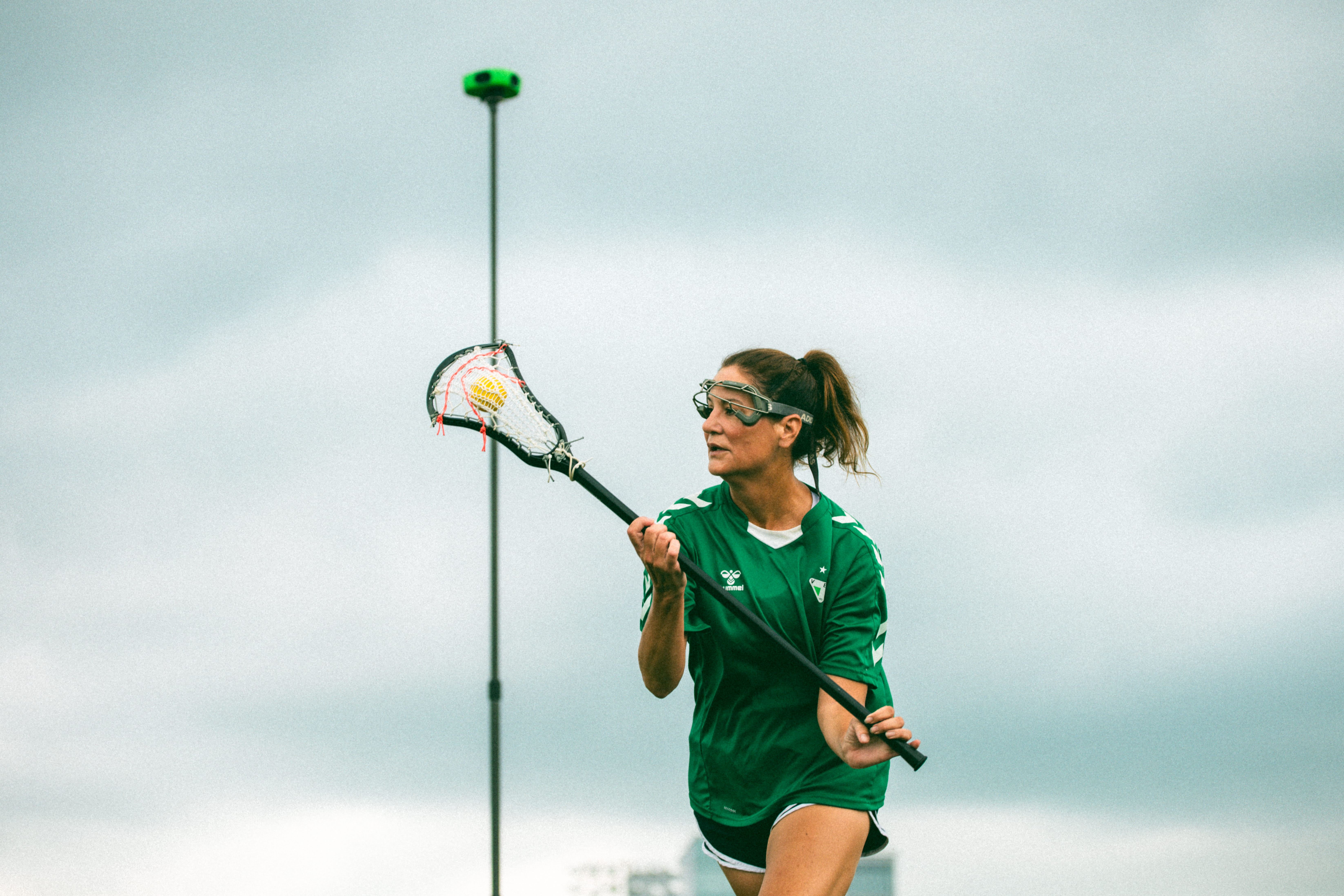
Chelsea Cabarcas grew up in Queens, played for the Colombian national team, and retired from professional soccer. Then someone asked her to play on a rooftop in Brooklyn, and she said yes.
She knew from the age of five. She wrote it in every yearbook. She wanted to play professional soccer, and she would do whatever it took.
What it took, for a girl from Queens with Colombian and Dominican parents, was an hour and twenty minutes in the car to practice. Every day. Then, a serious injury, and an hour and twenty-five minutes each way to the facility that could actually treat her properly. She would wake at four in the morning to train one of her mother's personal training clients, then drive to New Jersey, practice for three hours, rehab, and drive two hours back through traffic on the George Washington Bridge.
She made it. Colombian national team. International career in Europe and in Colombia with Junior. And now, broadcasting on Fox and ESPN, with her playing days officially behind her.
Officially.
The game you cannot leave
Chelsea Cabarcas does not play casually. That is not a personality trait she has been able to turn off. When a mutual friend put her in touch with Colm Dillane and the idea of joining the KidSuper FC team came up, her first instinct was to say no.
"I haven't played in months. I'm not going to embarrass myself."
She told her friend. He told her it would be fine. It is coed. She showed up anyway, and what she found surprised her.
.png)
"I remember watching Colm play. I was like, ‘Oh, he is good.’ Like good good. I was not expecting that at all. Playing with all these players around me that somewhat have a similar story to me, who have played overseas, makes it fun to play."
It got competitive fast, she says. Two minutes in, the laughter stops. Someone tried a bicycle kick to clear the ball from the defensive end of the field. A teammate was furious. Chelsea was not.
"I'm here for it. It's fine if you kick it one place because we're here to win and we cannot lose."
That competitiveness, she explains, is something she has not been able to switch off. When she plays, she wants to feel the same fire she felt as a professional. Anything less is not worth showing up for.
What a rooftop in Brooklyn represents
The first time Chelsea was given the address for KidSuper's rooftop field in Brooklyn, she did not know what to expect. She looked it up and did not recognise it. When she arrived and went upstairs and saw the layout, her reaction was immediate.
"This is incredible. This is genius, what you did. You are giving people opportunity and a space to play."
Native New Yorkers, she says, know these spaces exist. The indoor gyms, the rooftops, the small pockets of the city where you can play if you know where to look. What Colm built is one of those spaces, but intentional. Open. She has friends who bring their three and four-year-olds on Saturday mornings. She saw that and thought: he is even supporting the youngest ones.
For Chelsea, the rooftop carries a meaning that goes beyond access. It is the kind of space that did not exist for her when she was coming up. The facilities that could match her level were an hour and a half away. The clubs that could develop her required money her family did not always have. She got there anyway, through sacrifice that most people will never have to make. But the distance between what she needed and what was available in her own city never left her.
The game was always more than a game
Soccer was how Chelsea connected with her father. He would take her to his Saturday games in Flushing Meadow Park and let the Colombian leagues babysit her on the sideline while he played. Her mother was not impressed. Chelsea was not complaining. That was where she picked up the technical style that would eventually define her game.
When her parents separated, the car rides to her matches became the time she and her father had together. The sport held all of that.
"It was my way of feeling that connection and feeling accepted by him. For me, this game is a lot more than just a game. It is my way of life and it has been my identity my entire life."
She carried that identity to Colombia, where she had to prove she belonged despite being seen as American. She carried it to Europe. She carries it now into broadcasting, where she covers the sport that shaped everything about her.
What KidSuper gave her was a reason to lace up again in a space where that identity still meant something. Where the level was real. Where someone might try a bicycle kick to clear the ball and the whole game would stop because nobody was willing to accept anything less.
She is not retired. She is just playing on a rooftop.

%20(1).jpg)