The One Thing Grassroots Clubs Were Missing Until Now
Frederik Hvillum
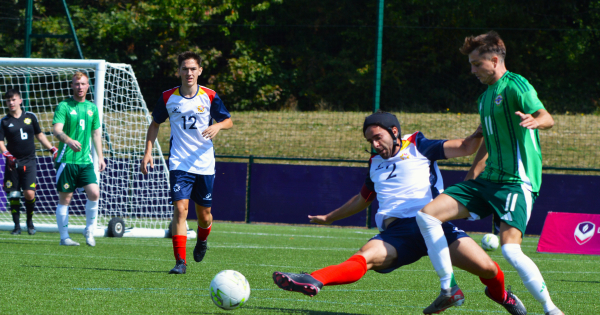
The IFCPF uses Veo footage to classify CP football players, support classifiers, and level the playing field for developing nations. Ash Hammond and Sam Turner explain how.
CP football video analysis is doing something most performance tools never get asked to do: ensuring that competition is fair at all. The International Federation of CP Football (IFCPF), the global governing body for football played by athletes with cerebral palsy, stroke, and traumatic brain injury, is using Veo footage not just to prepare teams and analyse matches, but to classify players, educate medical officials, and level the playing field for developing nations who would otherwise compete without data.
Ash Hammond is the CEO of the IFCPF. Sam Turner is the Football Director. Between them, they are leading a body that governs CP football across more than 80 countries, is preparing for a World Cup in Atlanta in October 2026, and is quietly becoming the world leader in digital classification across all of Paralympic sport.
This is how they use Veo, and why it matters far beyond the game itself.
What is CP football and how does the IFCPF work?
CP football is a modified version of association football played by athletes with cerebral palsy, acquired stroke after the age of two, or traumatic brain injury. The men's game is played seven-a-side; the women's five-a-side. Matches run for 60 minutes for men and 50 for women. There is no offside, and throw-ins can be taken one-handed underarm to accommodate players whose disability affects one side of the body.
Athletes are classified into three categories: FT1, FT2, and FT3, reflecting their level of functional impairment. In the men's seven-a-side game, every team must include at least one FT1 player on the pitch, and only one FT3 is permitted. That structure exists to ensure that teams field players with a genuine range of disability, and that competition remains fair across nations.
The IFCPF was founded ten years ago and has remained the premier Paralympic team sport federation throughout that period. This year, it hosts its World Cup at the Arthur Blank US Soccer National Training Center in Atlanta, featuring 16 men's national teams and eight women's national teams from across the world.
How does video analysis support CP football player classification?
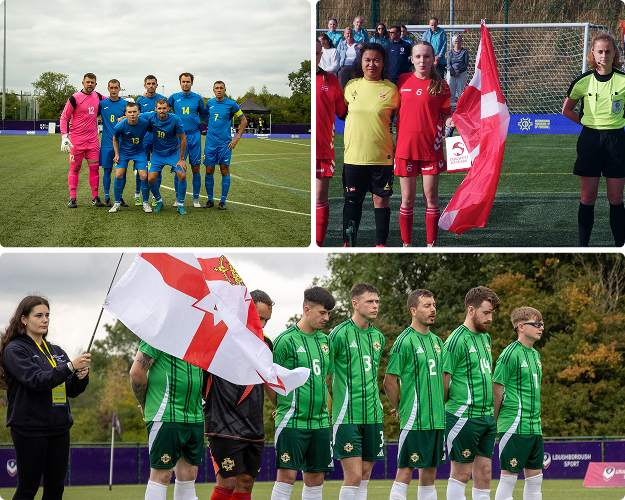
Classification is one of the most consequential processes in Paralympic sport. It determines whether an athlete can compete at all, which position they play, and how valuable they are to their national team. At the margins, the difference between an FT2 and an FT3 classification can define an athlete's entire international career.
It also creates pressure that some athletes respond to in the wrong way. Some attempt to manipulate their classification by moving differently, masking their abilities, or performing inconsistently across matches to convince classifiers they belong in a lower category. The IFCPF has been transparent about this challenge.
"I would not categorise it as a small part," Hammond says of Veo's role in addressing this. "I would most certainly categorise it as a significant part. We do have a cheating issue. We have been very honest and transparent about that. We are the leaders not only in trying to deal with it, but in putting our time, effort, and money behind trying to deal with it by utilising Veo."
The practical difference Veo has made is measurable in time. Previously, pulling together clips of a specific player across multiple matches and distributing them to classifiers around the world was a month-long process. A chief classifier would manually review footage, cut clips, and send packages to colleagues for review. Decisions that depended on that review were delayed accordingly.
"We have now got an assistant," Hammond explains. "I call up and say, get me player ten from England, three games. Fifteen minutes later, I have 20 clips of that player. I send it to my classifier, and within two hours it is on everybody's desk around the world. Within five hours I can have back a more accurate read on that player. That was a month job, even as short as two years ago. We have taken a month down to a matter of hours."
How does Veo help educate classifiers and improve consistency?
CP football classifiers are typically medical professionals: physiotherapists, doctors, and sports scientists with specialist knowledge of cerebral palsy. What they do not always bring to that role is an understanding of footballing performance, and the way that a CP athlete's disability expresses itself in match conditions is different to how it presents in a clinical assessment.
Turner describes the problem directly: "Many of our classifiers come from a medical or physio world, not so much a footballing world. Being able to get the clips and show the game, we can then educate our classifiers and get them to understand footballing performance as well as physical performance."
The movement patterns of a CP athlete striking or receiving a ball are genuinely different from those of an non-disabled player. A CP player who cannot fully open the hip to receive a ball may twist the whole body to achieve the same result. Without video evidence of these patterns across multiple matches and multiple players, classifiers are relying on a single observation under match conditions to make decisions that carry enormous weight.
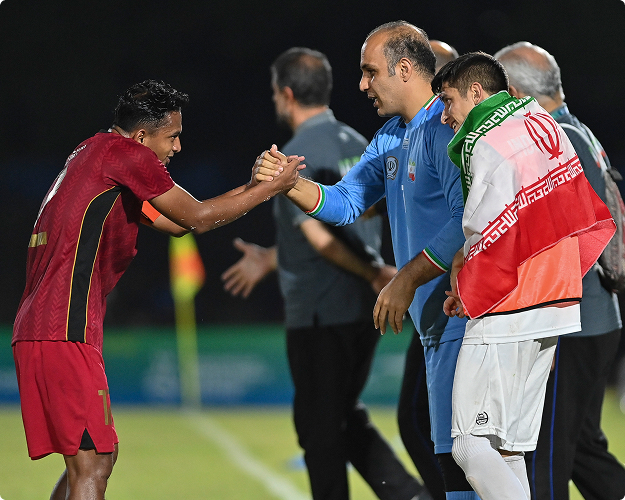
"By generating a bank of clips showing different movement patterns, we allow classifiers to make more objective, consistent, evidence-backed decisions," Turner says. "At the end of the day, it is the difference between someone having a career or not having a career, or playing in the USA shirt or the England shirt. We want to make sure our classifiers feel supported and at ease to make those decisions, backed by the information Veo provides."
How does CP football video analysis level the playing field for developing nations?
At a World Cup featuring nations with radically different resources, the gap between what a country like the USA or England brings to an event and what Kazakhstan or South Africa can access is significant. The USA will arrive in Atlanta with large staff teams, drone footage technology, and proprietary analysis infrastructure. Smaller federations arrive with their players.
Turner sees Veo as a direct instrument for closing that gap. "One of the big things about us having our own Veo was to be able to turn around to developing nations and say: you can now access the analytics and player spotlight data that the USA or England will just have as a matter of course."
When the IFCPF films every match at its World Cup, every team, regardless of their own resources, receives the same analytical access to footage of their players. The analytics, the player spotlight clips, the match data: all of it flows to every national team through the same platform. Performance on the pitch, Turner argues, should be about performance on the pitch, not about how much money a federation has in its bank account.
The same principle extends to visibility. National championships in India, Bangladesh, or South Africa happen largely unseen by the global CP football community. A girl with cerebral palsy in South Africa may not know that a national programme exists in her own country. Streaming those events through Veo changes that.
"The more that we can use a platform like Veo to raise awareness, it allows more of those young boys, young girls to know: there are clubs, there are programmes in our own country," Turner says. "You could have a whole playlist of CP football around the world. Here is South Africa. Here is India. Here is England."
What is the IFCPF's vision for CP football and the role of video in it?
Hammond grew up with football and has spent his career in it. Before leading the IFCPF, he built CP football in the United States from one city to programmes across twenty cities. The vision he started with then is the same one he holds now.
"My vision, before I even knew what the IFCPF was, was that every disability athlete with CP, stroke, or TBI had a chance to play the sport I loved as an able-bodied person," he says. "An able-bodied player has a pyramid: you play at five, you can still play walking football at sixty. That linear line exists. It does not exist for CP athletes. We want to make sure that every young girl, every young boy, has that natural pathway."
The more immediate goal is to grow the women's game from eight national teams to parity with the sixteen men's teams, within a single two-year World Cup cycle. Video is central to both ambitions.
"The fact that we can stream games relatively inexpensively means no game that we play goes unseen," Hammond says. "The visibility of the women's games is crucial, because young girls around the world are watching our women play and going, I can do that. You know, my son plays for the US. Kids with CP wear his shirt. When we go to the World Cup in October, there will be a bunch of kids in his shirt. I want a young girl around the world to do the same with one of our women's players."
Turner points to the broader horizon beyond CP football. At a UK Sport para-performance conference at Loughborough, his presentation on IFCPF's digital classification work drew immediate interest from coaches and officials across other Paralympic sports: wheelchair basketball, volleyball, athletics. The question in the room was not whether this approach had relevance to other sports, but how quickly it could be applied.
"There is no reason why you couldn't put up a Veo and use it for volleyball or wheelchair basketball," Turner says. "The fundamentals are in the technology. It is then just the application to the sport. And we are not just talking about one international federation. We have 80, 90 countries with national championships, programmes, and events. Disability is the world's largest minority group. There is a whole untapped world here."
Frequently asked questions about CP football video analysis
What is CP football and who is eligible to play?
CP football is a modified form of association football played by athletes with cerebral palsy, stroke acquired after the age of two, or traumatic brain injury. The men's game is played seven-a-side and the women's five-a-side, with modifications to throw-in rules and match duration. Athletes are classified into three categories (FT1, FT2, FT3) reflecting their level of functional impairment, which determines their role and availability within a team squad.
How is video analysis used to classify CP football players?
The IFCPF uses Veo footage to generate clips of specific players across multiple matches, which are then distributed to classifiers worldwide for review. This has reduced the classification review process from a month-long task to a matter of hours. Video evidence of how a player moves during matches provides objective data to support or challenge classification decisions, and helps identify when players may be attempting to manipulate their classification.
What is the classification system in CP football?
CP football uses three functional classifications: FT1 (most impaired), FT2, and FT3 (least impaired). In the seven-a-side men's game, each team must field at least one FT1 player and no more than one FT3. Classification is assessed by medical professionals employed by the IFCPF, who evaluate athletes before and during major events. The classification determines not just eligibility but a player's strategic value to their national squad.
How does the IFCPF use video to support developing nations?
By filming every match at its international events, the IFCPF ensures that all competing nations, regardless of their own resources, receive the same access to player analytics, spotlight clips, and match data. This directly addresses the resource gap between large, well-funded football federations and smaller national programmes. The IFCPF also uses streaming to make national championships in countries like India, Bangladesh, and South Africa visible to a global audience for the first time.
What is the IFCPF World Cup 2026 and where is it being held?
The IFCPF World Cup 2026 takes place in October at the Arthur Blank US Soccer National Training Center in Atlanta, Georgia. The event will feature 16 men's national teams and 8 women's national teams. It is hosted in partnership with US Soccer and is the premier event in CP football, held on a two-year cycle. The training centre is a new state-of-the-art facility jointly funded by Arthur Blank and other major donors, and it will be one of the first major events held there.
About the IFCPF: The International Federation of CP Football (IFCPF) is the global governing body for football played by athletes with cerebral palsy, stroke, and traumatic brain injury. Founded ten years ago, the IFCPF oversees competitions in more than 80 countries and is the premier Paralympic team sport federation in the world. The organisation is led by CEO Ash Hammond and Football Director Sam Turner.


.jpeg)