T-Ball Coaching Basics: A Practical Guide for First-Time Coaches
Frederik Hvillum
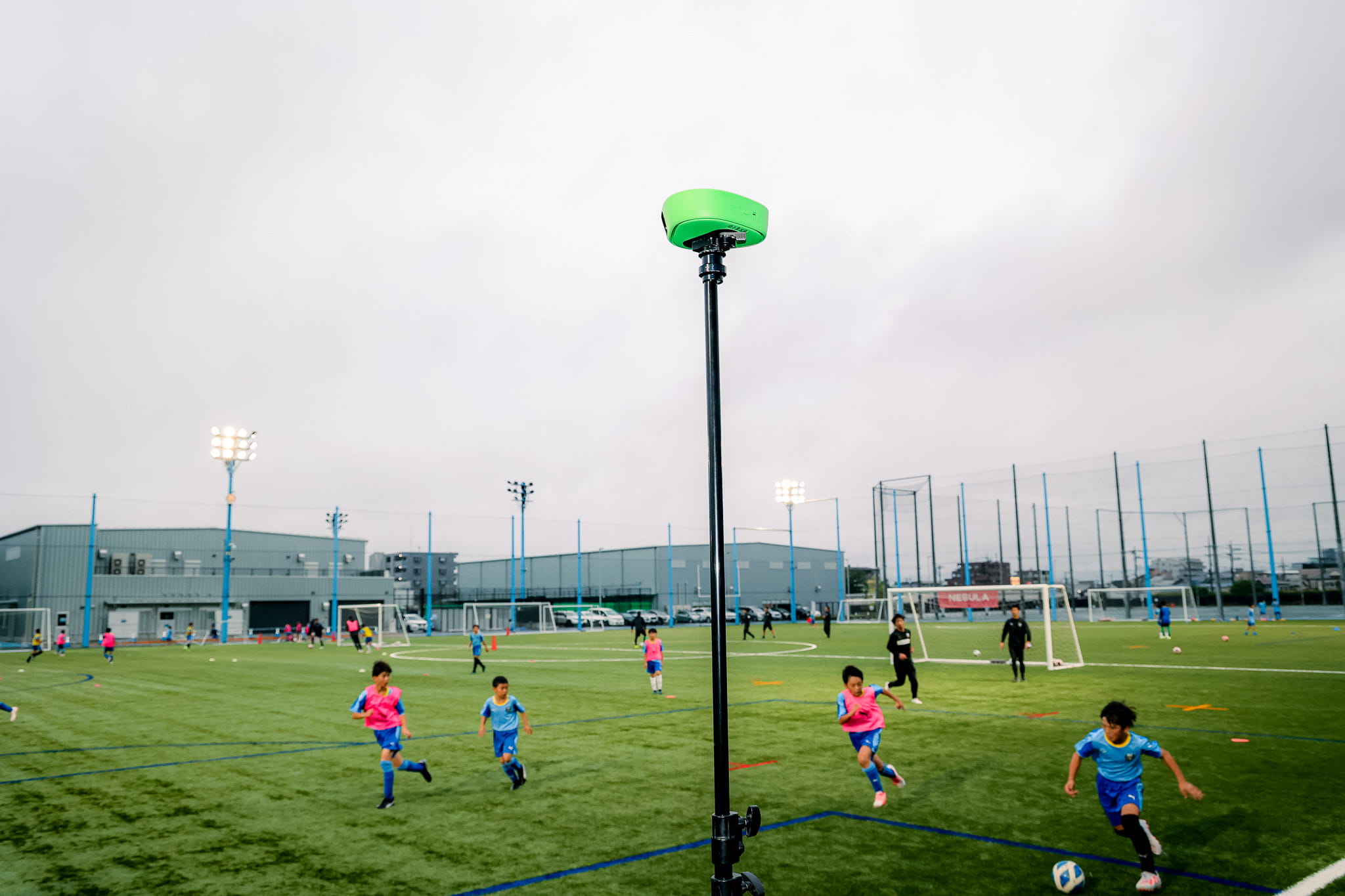
Everything first-time T-ball coaches need. Session structure, age-appropriate drills, coaching cues for 3 to 6 year olds, and how to keep early baseball fun.
T-ball is where most young athletes have their first experience of organised sport. The sessions are short, the players are between three and six years old, and the gap between what coaches plan and what actually happens is large. A well-prepared T-ball coach understands that the goal is not to develop baseball players. The goal is to give children a positive first experience of sport.
This guide covers everything a first-time T-ball coach needs: how to structure sessions, which drills work at this age, what coaching cues land with young children, and how to keep energy high for 45 minutes. For a broader look at the full youth baseball development path, see the youth baseball coaching guide.
Record your T-ball sessions with Veo Go
Set up in under 2 minutes. No operator needed. Share footage with parents the same evening.
.jpeg)
What T-ball is actually for
The purpose of T-ball is not to teach baseball. It is to give children aged 3 to 6 a positive, movement-rich experience in a team setting. Three things that matter most in T-ball:
- Keep every player moving. Waiting in line is the enemy of T-ball. Any drill where more than two players are standing still needs to be redesigned.
- Praise effort and attitude, not outcomes. A swing that misses the ball completely gets the same praise as a solid hit, provided the child swung with intent.
- End on a high. The last 5 minutes of every session should be the most fun. Players who leave happy come back.
Session structure for T-ball
A T-ball session for ages 3 to 6 should run 40 to 50 minutes maximum. Structure the time as follows:
- Arrival and free movement (5 min). Players arrive, put on helmets, grab gloves.
- Warmup game (5–8 min). Freeze tag, follow the leader around the bases, or a colour-calling game. No baseball yet.
- Skill stations (20–25 min). Rotate through two or three stations with a parent volunteer at each one. Keep rotations to 5 to 7 minutes.
- Game (10 min). Every player bats each inning, no outs, everyone runs all the way home. Score does not matter.
- Celebration and goodbye (3–5 min). High fives, team cheer, one specific praise comment per player if possible.
T-ball drills that work
| Drill | Age | Duration | Focus |
|---|---|---|---|
| Tee contact drill | 3–6 | 8 min | Swing mechanics, bat path |
| Soft toss | 4–6 | 8 min | Tracking the ball, timing |
| Base running relay | 3–6 | 10 min | Running the bases, direction |
| Fielding rollouts | 3–6 | 8 min | Ground ball handling |
| Throw and catch pairs | 4–6 | 8 min | Throwing motion, catching |
| Station rotation | 3–6 | 20 min | All skills, engagement |
Drill 1: Tee contact drill
Set the tee at waist height. Place the ball and let the player swing freely. Run 5 swings per player, then rotate. Use multiple tees simultaneously so everyone is hitting at once.
Coaching cue: "Watch the ball all the way until the bat hits it. Eyes on the ball!"
Drill 2: Soft toss
A coach or parent kneels 4 feet to the side and tosses the ball gently underhand into the hitting zone. Use a soft foam ball for younger players.
Coaching cue: "Watch the ball come to you, then swing."
Drill 3: Base running relay
Line players up at home plate. On the coach's signal, each player runs to first base and back. Make it a race between two players to keep the energy high.
Coaching cue: "Run to the bag and touch it with your foot. Keep going!"
.jpeg)
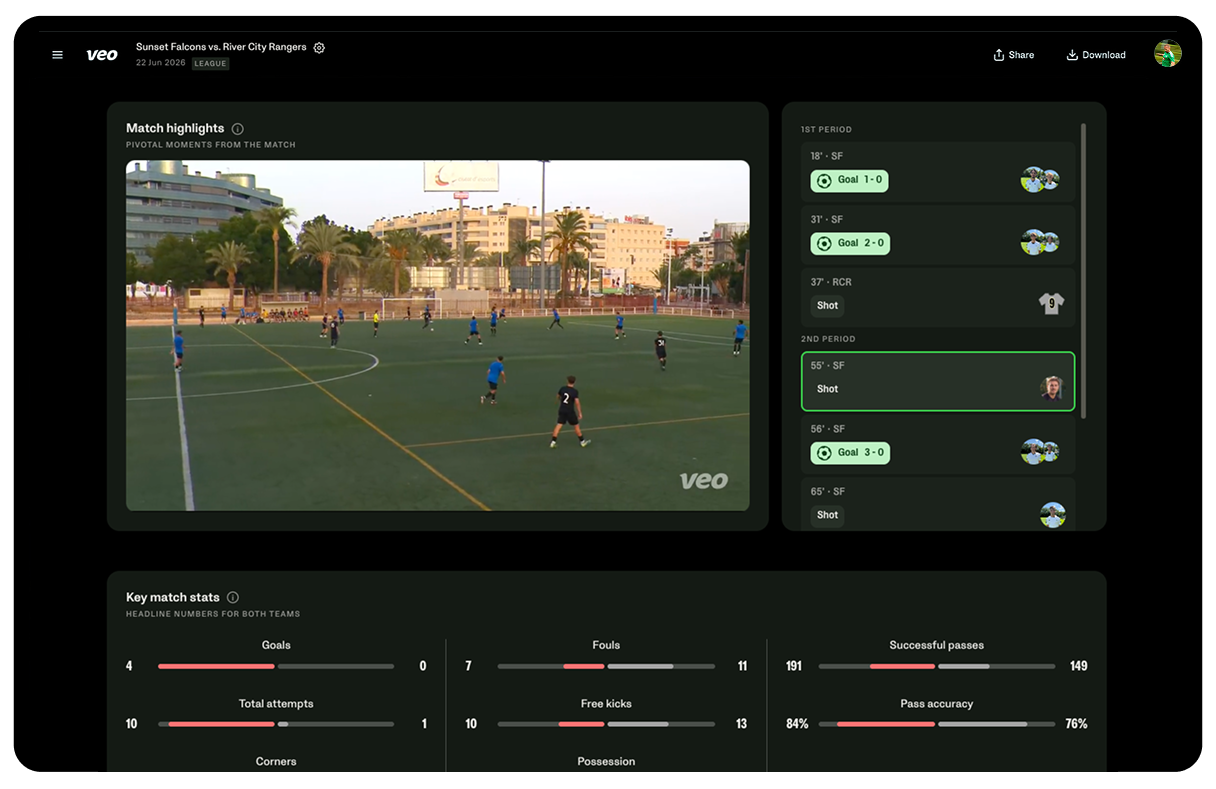
Share the session with parents through Veo Go
More than 40,000 clubs across 100 countries use Veo to store and share footage, with over 4 million matches filmed on the platform (Veo internal data, 2026). Veo Go records the full session automatically so parents who could not attend can watch their child play.
Drill 4: Fielding rollouts
A coach rolls a slow ground ball from 6 feet away. The player fields it with both hands, picks it up, and throws it back.
Coaching cue: "Bend your knees and pick it up with two hands."
Drill 5: Throw and catch pairs
Players pair up and throw back and forth from 8 to 10 feet. Use a soft foam ball. Encourage any throw that goes in the right direction.
Coaching cue: "Put your glove up and catch it with two hands."
Drill 6: Station rotation
Three stations simultaneously: tee hitting, fielding rollouts, base running. Groups of 3 to 4 rotate every 5 minutes. Every player stays active throughout the session.
Coaching cues that work with 3 to 6 year olds
- "Eyes on the ball" rather than "track the pitch"
- "Swing like you mean it" rather than "generate bat speed"
- "Bend your knees" rather than "get into an athletic stance"
- "Throw it to me" rather than "follow through toward your target"
- "Run to the bag" rather than "advance to first base"
Working with parents at T-ball
T-ball is the only level of baseball where parents are typically on the field helping run drills. A brief 2-minute parent briefing before players arrive covers: what each station requires, the coaching cues to use, and the one rule that matters most (praise every attempt, say nothing negative).
For a detailed look at how parents can support young athletes without adding pressure, see the parent guide to youth sports.
Sharing session footage with parents via Veo Go is one of the most effective ways to engage T-ball families. Parents who see their child playing feel connected to the programme even when they cannot attend every session.
Record every session for parents with Veo Go
Set up once, record automatically, share the link. Parents get the highlights without anyone needing to operate a camera.
Related reading

FAQs
T-ball is typically played between ages 3 and 6, though some programmes extend to age 7 or 8 for players who are not yet ready for coach-pitch or kid-pitch baseball. The format is designed for players who are still developing basic motor skills and do not yet have the hand-eye coordination required to hit a moving pitch consistently.
40 to 50 minutes is the right length for T-ball practice with players aged 3 to 6. Attention spans at this age are short, and session quality drops significantly past the 50-minute mark. Structure the time in short blocks of 5 to 8 minutes per activity, with transitions kept brisk to maintain energy.
The basics are a batting tee, a batting helmet, a T-ball bat, and a T-ball (softer and larger than a regulation baseball). Gloves are optional at the youngest ages but should be introduced from age 4 to 5. Bases or flat markers and a set of cones for drills complete the kit. Most youth programmes provide the tee and bases.
Keep every player active simultaneously and change activities every 5 to 7 minutes. Station rotation is the most effective format because it eliminates waiting in line. Gamify wherever possible: make the base running drill a race, count successful catches, give team cheers after each rotation. The moment more than two players are standing still, the activity needs to change.
Enjoyment. The single most important outcome of a T-ball season is that players want to come back. Children who have a positive first experience of organized sport are more likely to continue playing baseball and other sports as they get older. Technical skills matter far less at this age than how the player feels at the end of the session.

.jpeg)