Football Video Analysis: A Complete Guide for Coaches [2026]
Veo

How to use football video analysis to improve formations, route execution, defensive coverage, and individual development. How Veo Cam 3 gives every program automatic film review.
Film review has been central to football coaching longer than in almost any other sport. At the professional level, teams dedicate entire departments to video analysis. At the college level, film study is a daily practice. At high school level, the programs that compete consistently are the ones that review film every week without exception.
What has changed in the past five years is access. A setup that once required a dedicated camera operator, a press box, and hours of manual editing now takes under 2 minutes to deploy and produces footage that uploads automatically after the game. This guide covers what football video analysis reveals, how to build a review workflow that fits a high school or youth program's schedule, and how Veo Cam 3 gives every program the same film review foundation that elite programs have used for decades. For equipment specifics, see the football recording equipment guide.
Record every football game automatically with Veo Cam 3
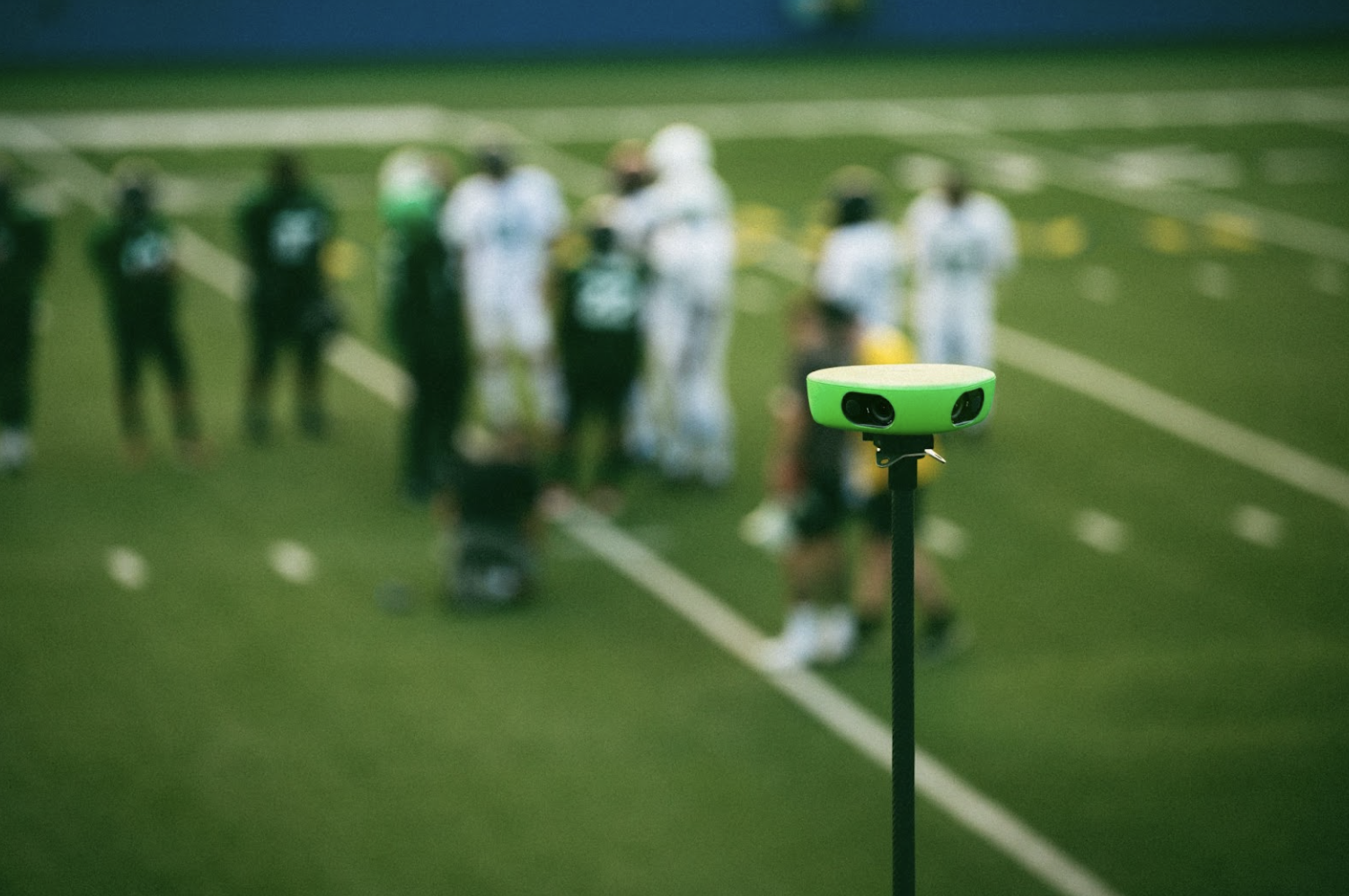
50-yard line, elevated, no operator. Full-field footage plus AI tracking. Set up in under 2 minutes.
Why two camera angles matter in football
Football is the only major team sport where the two most useful camera angles reveal fundamentally different information. The sideline view and the end zone view are not interchangeable. Each answers different coaching questions.
Sideline at the 50-yard line
The sideline view is the primary coaching angle. It shows formation width, defensive alignment, and play development across the full field. Pre-snap, a coach can see whether both sides of the offensive line are in correct splits, whether the defensive secondary is in the right coverage shell, and whether the motion adjustments the play called for actually happened. Post-snap, the sideline view shows run gap assignments, coverage rotations, and field-width route spacing simultaneously.
What the sideline view answers: Are we lined up correctly? Is our formation creating the intended structure? Are the right players in the right gaps? Is coverage rotating as called?
End zone elevated
The end zone view answers the questions the sideline view cannot. Route depth and spacing, blocking angles, and gap assignments all look fundamentally different from behind the line of scrimmage. A crossing route that appears to be at the correct depth from the sideline may be running too shallow when viewed from the end zone. A pulling guard's path is visible from the end zone in a way it simply is not from the sideline.
What the end zone view answers: How deep are routes running? Are blocking angles correct? Is the run hitting the intended gap? What does coverage look like from behind the quarterback's perspective?
Programs that can afford two cameras use both angles for every game. Programs starting with one camera should use the sideline at the 50, which covers the most coaching ground from a single position.
Football video analysis framework
What video reveals in football that live coaching cannot
Football coaches on the sideline make real-time decisions under significant cognitive load. Play calls, personnel adjustments, clock management, and player management all compete for attention during the game. Three specific areas where video reveals information that live observation consistently misses:
Pre-snap alignment errors
Most assignment errors in football begin before the snap. A linebacker who is one gap out of position, a safety who is too deep for the coverage called, a receiver whose split is too tight to execute the route. These alignment errors are invisible from the sideline during the emotional pace of a game. On film, reviewed deliberately the evening after the game, they are clearly visible before the ball is snapped.
Coaches who review pre-snap alignment consistently discover that a significant percentage of their execution problems are alignment problems. The play was not run incorrectly. Players were lined up incorrectly before it started.
Route depth and timing
The passing game depends on precise route depth and timing. A dig route that should break at 12 yards but breaks at 10 yards arrives before the quarterback's expected window. A corner route that is supposed to stem inside before breaking out gets pressed by a corner who reads it early. These timing failures are nearly invisible from the sideline but are clearly visible from the end zone angle or in slow-motion review of the follow-cam footage.
Leverage and pad level in the run game
Offensive line technique in the run game depends on pad level, hand placement, and leverage. A guard who gets his pads too high loses the drive block before it starts. A center who misses the combination block assignment leaves a linebacker free in the second level. From the sideline at game speed, these technical failures look like a run play that did not work. On film at slow speed, the exact moment and player where the run lost its structure is identifiable and correctable.
Building a film review workflow for high school programs
The most consistent film review programs at high school level share one characteristic: the review is short, focused, and happens at the same time every week. Programs that try to review everything produce less actionable analysis than programs that review one specific area per session.
Sunday evening: alignment and assignment review (30 minutes)
Watch every play using the sideline view. For each play, check pre-snap alignment before watching the play develop. Note any alignment error. After watching the play, note any assignment error. Do not try to evaluate technique at this stage. Focus only on whether players were in the right position before and after the snap. Clip the five to eight plays that best illustrate alignment and assignment patterns. These become the film room agenda for Monday.
Monday film room: team review (45 minutes)
Show the alignment and assignment clips from Sunday's review. For each clip, pause pre-snap and ask players to identify the correct alignment before showing what happened. This builds pre-snap recognition habits more effectively than showing the clip without stopping. Keep the session under 45 minutes. Players retain information from focused short sessions better than from long comprehensive reviews.
Midweek: position group technique review (20 minutes per group)
Pull individual technique clips from the end zone footage and tracked follow-cam for each position group. Offensive line coaches review blocking angles and pad level. Receivers and defensive backs review route and coverage technique. Linebackers review gap assignments and blitz execution. Share clips via direct Veo links before each position group meeting so players arrive having already seen the footage once.
For sport-specific guidance and how football programs are using Veo, visit the Veo football page.

FAQs
College coaches evaluate football recruits primarily on film. Players build highlight reels directly from Veo game footage using the Veo Editor, focusing on plays that show their position-specific skills. Offensive linemen show blocking technique and footwork. Defensive players show gap assignments and press coverage technique. Skill players show route running, blocking effort, and athletic plays. Full game film is available via a direct link for college coaches who request it after seeing the highlights.
Start with pre-snap alignment on every play: are all 11 players in the correct position before the snap? Then review assignment execution: did each player do their job on the play? Finally review technique: were players in the right pad level, leverage position, and footwork for their assignment? Most coaches discover that a significant percentage of their team's execution problems are alignment problems that could be corrected before the snap.
High school programs produce the best results with a 30-minute alignment and assignment review the evening after the game, a 45-minute team film session on Monday, and 20-minute position group technique reviews midweek. Total weekly film time of 90 to 120 minutes distributed across multiple short sessions produces more improvement than a single two-hour session. Players retain information from focused short sessions better than from comprehensive long reviews.
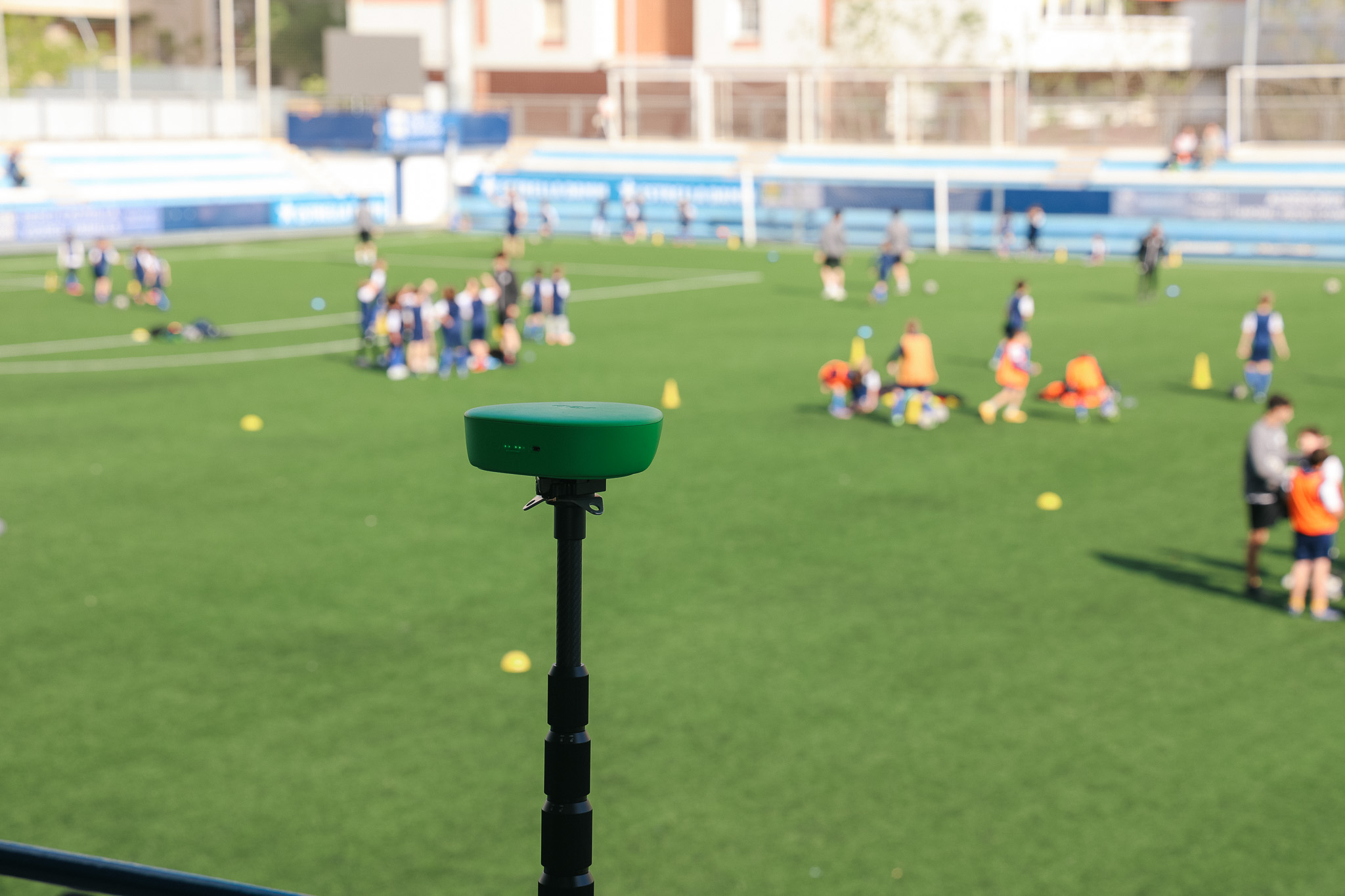
Position Veo Cam 3 at the 50-yard line on the sideline, elevated as high as possible on a tall tripod. Connect via Bluetooth in the Veo app, check that both end zones are visible in the preview, and press record. For a second angle, position an additional camera at the back of the end zone at maximum height. The camera runs unattended for the full game. After the final whistle, stop recording and connect to Wi-Fi for automatic upload.
The most effective football video analysis setup combines automatic full-field recording with a platform that supports clip creation, slow-motion review, and direct player sharing. Veo Cam 3 records the full field at 4K 60fps from the 50-yard line, generates an AI-tracked follow-cam after upload, and delivers both views through the Veo Editor. The 60fps frame rate is particularly valuable for football because slow-motion review of blocking technique, route breaks, and coverage rotations is significantly clearer at 60 frames per second than at 30fps.

%20(1).jpg)