Youth Lacrosse Goalie Drills: Build Keepers Who Win Games
Veo
Five youth lacrosse goalie drills that build stance, arc awareness, and communication. Includes a 60-minute session plan for coaches.
Youth lacrosse goalkeepers develop faster when they get structured, position-specific coaching. This guide covers five drills that build stance, arc awareness, and communication from the ground up, plus a 60-minute session plan coaches can run immediately.
What are the most important skills for a youth lacrosse goalkeeper to learn first?
Three fundamentals come before any drill work: stance, arc, and communication. A keeper who has these three in place will develop faster than one who jumps straight into shot-stopping.
Stance. Feet shoulder-width apart, weight forward on the balls of the feet, slight knee bend. Stick held with the top hand at the throat, bottom hand relaxed. The most common mistake at youth level is standing straight-legged and flat-footed. Keepers look ready, but they cannot move. Drill the knee bend into every warm-up, not just when shots are coming.
Arc positioning. The arc is the semi-circle around the crease that defines where the goalkeeper should stand relative to the cage and the ball. A keeper who holds their arc forces shooters into tighter angles. A keeper who drifts off it gives away open net. Mark the arc with cones at every practice until positioning becomes automatic.
Communication. Goalies call "ball" when they have possession, "break" when transition is on, and "man on" for close defenders behind the cage. Build this into every single drill. Silent goalkeepers at youth level become silent goalkeepers at high school level.
Film your goalkeeper sessions with Veo Cam 3
Review arc positioning, stick saves, and communication patterns after every practice.
Explore Veo Cam 3 for lacrosse →

What are the best youth lacrosse goalie drills for beginners?
These five drills form a complete foundation session. Each targets a specific skill gap common in players aged 8 to 14.
1. Wall Ball Warm-Up (10 minutes)
Goalies throw against a wall at increasing distances, focusing on quick hands and correct stick position on the catch. This builds muscle memory for stick saves before live shots arrive.
Coaching cue: "Top hand leads. Don't let the ball reach your body."
Start at 5 yards, work back to 10. Count missed catches and reset if the error rate goes above 20%.
2. Arc Walk Drill (10 minutes)
No shots in this drill. A coach stands at the top of the 12-meter fan and calls out different cage positions: left pipe, right pipe, GLE extended, top center. The goalkeeper moves to the correct arc position for each call.
This isolates arc awareness without the pressure of an incoming shot. Young goalies often understand the concept but lose it under game pressure. For a full introduction to lacrosse fundamentals, see our youth lacrosse drills for beginners guide. High-repetition arc walks build automatic positioning before shots are added.
Progression: Walk a player with a stick to simulate a shooter moving across the top. The keeper tracks and repositions in real time. Speed up over time.
3. Quick Hands Drill (10 minutes)
Stand 5 yards in front of the cage and throw at half-speed to six zones: stick side high, stick side low, off-stick side high, off-stick side low, between the legs, and hip height. The keeper makes the save and resets to ready position before the next throw.
Reset speed is the point here, not just the save. Many young goalies make the stop and drop their hands. This drill trains the immediate recovery habit.
Coaching cue: "Save, step, set. Every time."
4. Two-Shot Sequence (15 minutes)
A first shooter takes a shot from one position. Immediately, a second shooter fires from a different spot. The keeper must save or recover from the first shot and reposition for the second.
This replicates game conditions where rebounds and fast restarts happen before a goalkeeper has reset. It is the same transition speed your midfielders are training for. Start at half-pace from short distance. Increase speed and range as confidence builds.
Key adjustment for youth: Keep initial distances to 8-10 yards. The goal is the positioning sequence and recovery habit, not shot velocity.
5. Communication and Clear Drill (15 minutes)
After each save, the keeper initiates a clear. One defender stands on each side of the cage as an outlet. The goalkeeper saves, identifies which outlet is open, calls their name, and delivers the ball.
Work on overhand passes to the weak side and bounce passes through traffic. A save is only half the job. Getting the ball moving up the field quickly starts with the keeper, and building the defensive structure around them starts with youth lacrosse defense drills.
Coaching cue: "Eyes up before the ball reaches you."
How does video review improve youth lacrosse goalkeeper training?
The structural problem with coaching goalkeepers is angles. A coach on the sideline sees the back of the keeper's head, partial stick movement, and whether the ball went in. They cannot see foot position relative to the arc, whether the top hand drops before saves, or where the keeper's eyes are tracking during two-shot sequences.
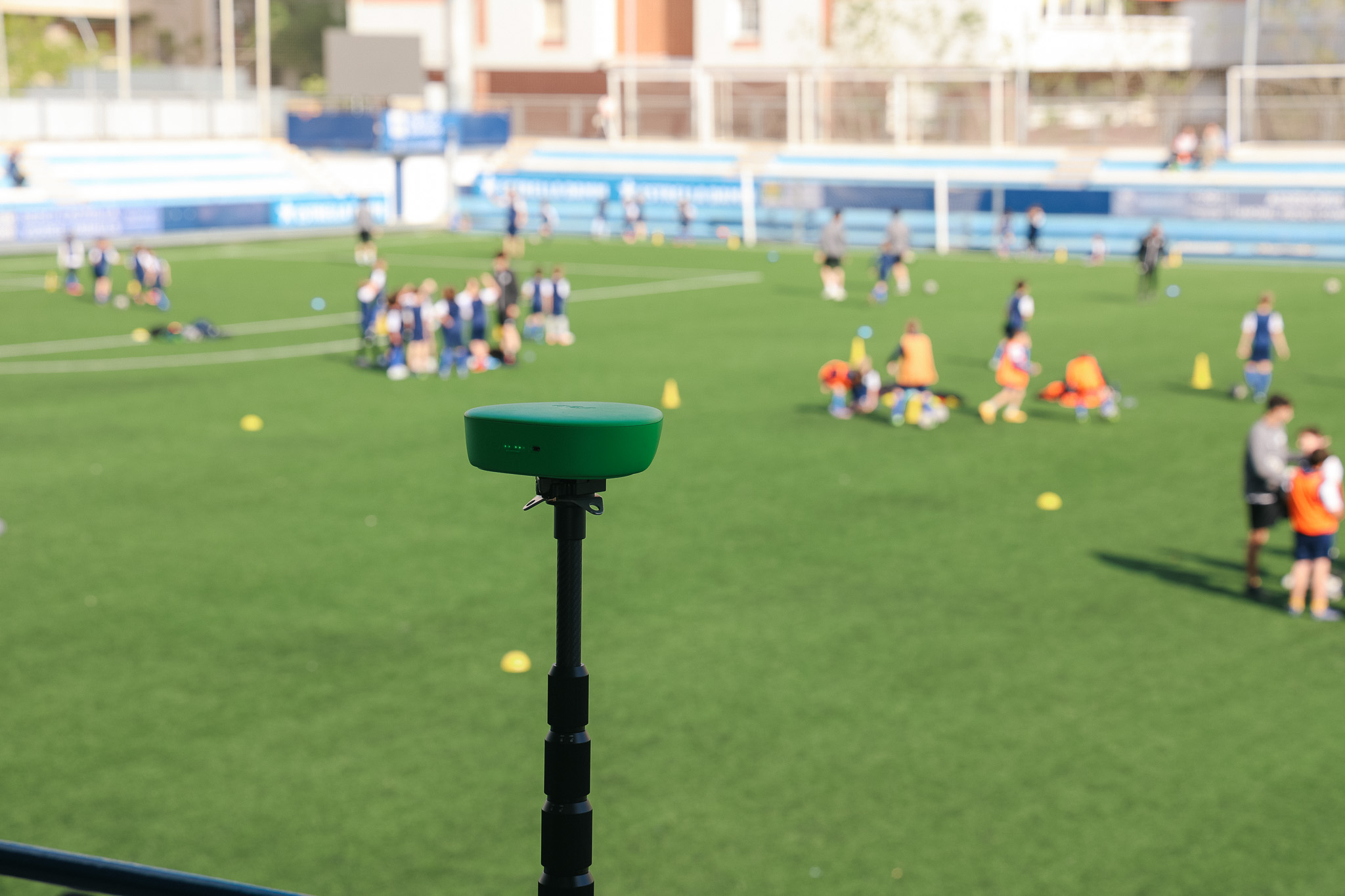
Veo Cam 3 is an AI-powered camera that captures the full lacrosse field from a single wide-angle position without a camera operator. The system tracks the ball automatically. After practice, coaches have footage of the goalkeeper in full context: arc position relative to the ball's location, movement patterns during transition, and positioning decisions before shots arrive.
The review session changes the coaching conversation. Instead of telling a keeper what they did wrong, a coach can show them the exact moment and the exact angle. More than 40,000 clubs in 100+ countries use Veo to film and review sessions across all levels of the game. Setup takes under two minutes. Place the camera, press record, run your session.
.jpg)
More than 40,000 clubs across 100 countries use Veo to store and share footage, with over 4 million matches filmed on the platform (Veo internal data, 2026)
See how Veo Cam 3 gives lacrosse coaches the footage they need to develop goalkeepers faster.
What does a good 60-minute youth lacrosse goalkeeper session look like?
This structure works as a standalone goalkeeper session or runs in parallel while field players work on their own drills. One focused goalkeeper session per week, consistently applied over a season, produces measurable improvement in positioning and communication.
What are the most common mistakes young lacrosse goalies make?
Closing eyes on shots. Near-universal at youth level. Drop shot speed significantly until the keeper stops flinching, then rebuild pace gradually.
Retreating instead of advancing. Keepers who step backward give up angle. Drill the habit of stepping forward toward the shooter.
Top hand too high. A top hand near the ball-stop limits low save range. The hand should sit at the throat of the stick.
No verbal communication. Silence is a habit formed early. Require calls on every drill from the first session.

FAQs
One structured goalkeeper block per week is the minimum. If your practice runs 90 minutes, 20-25 minutes of position-specific work, separate from team drills, produces the fastest development.
Most youth programs introduce the position from U8 or U10. Rotating players through the role at the youngest levels builds awareness across the team. By U12, players who want to specialize benefit from dedicated development sessions.
Start with drills that have no failure condition. Wall ball and arc walks are repetition-based and build feel without pressure. Introduce shot drills at low speed and short distance, increase gradually. Showing players what they are doing correctly in video review is more effective than dwelling on errors.
Yes. The wide-angle lens captures the full field in a single frame, which means you see the shooter's position and the goalkeeper's arc position at the same time. You are not just watching saves, you are watching positioning decisions in relation to where the ball is on the field.
The fundamentals are identical: stance, arc, communication, and clearing. Field dimensions and rule variations differ between programs, but the five drills in this guide apply across both. Coaches should adjust distances and pace to match the age group and physical development of their players.