Youth Lacrosse Midfield Drills: A Coaching Guide
Veo
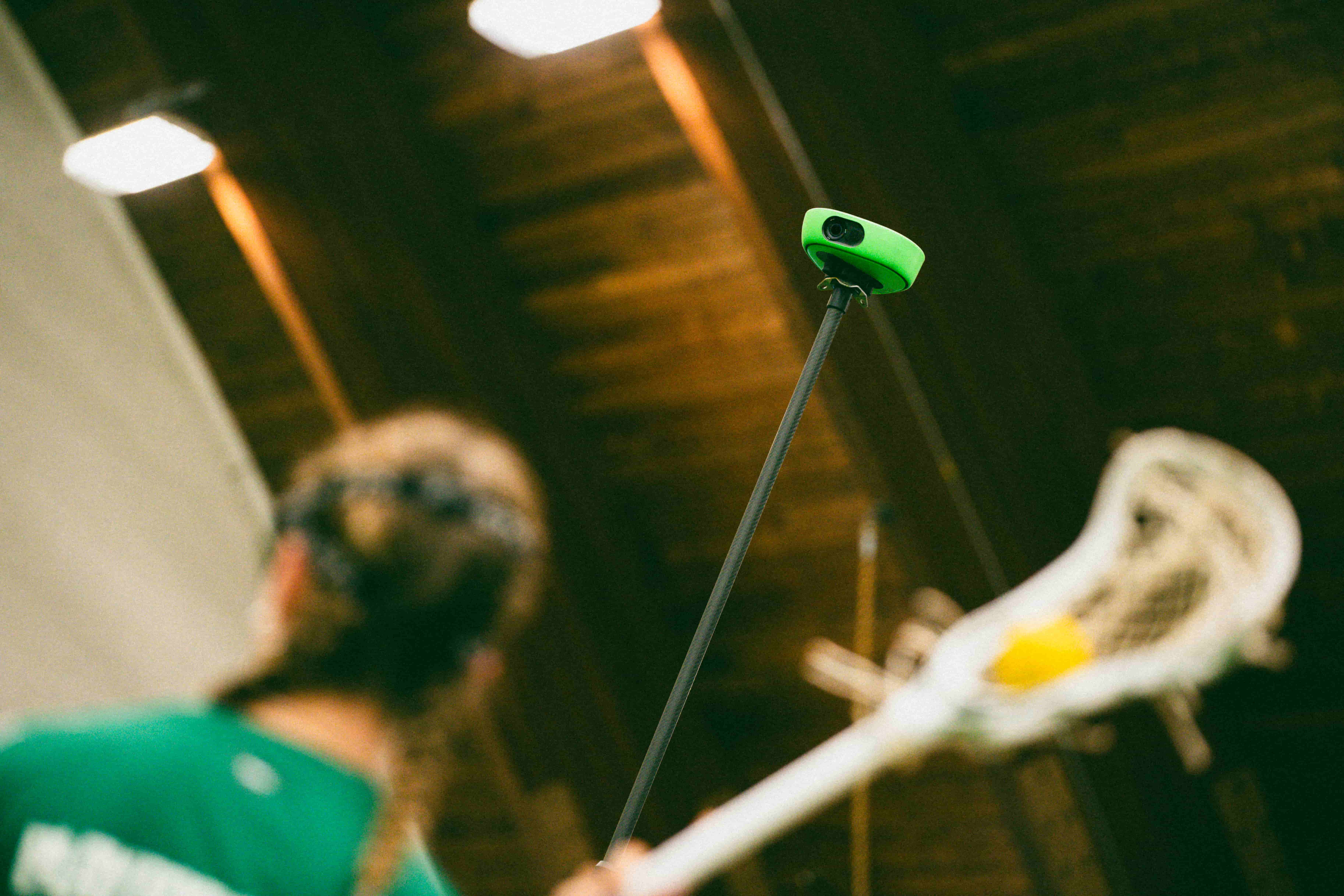
The best midfield drills for youth lacrosse coaches. Transition, dodging, passing on the run, and ground balls, with age guidance and coaching cues for each drill.
The midfield is where most lacrosse games are won and lost. Midfielders cover the most ground, participate in both offensive and defensive phases, and are involved in more transition situations than any other position. A midfield that can carry the ball at pace, dodge effectively, pass accurately while moving, and win ground balls creates more possessions and converts more of them than one that cannot.
This guide covers five midfield-specific drills for youth lacrosse coaches. Each drill targets a skill that midfielders use in every game: transition running, dodging, passing on the run, ground ball contests, and using a numerical advantage in attack.
What midfielders need that attackers and defenders do not
Midfielders play both ends of the field in every possession, which means their conditioning and decision-making demands are higher than any other position. The specific skills that separate strong youth midfielders from average ones are the ability to run at full pace with the ball under control, the ability to pass accurately while moving, and the physical and technical ability to win contested ground balls.
For players who are still developing basic stick skills, complete the foundational drills in the youth lacrosse drills for beginners guide before introducing midfield-specific work. For the defensive responsibilities midfielders share with the back line, see youth lacrosse defense drills.
Drill overview
| Drill | Age group | Duration | Primary focus |
|---|---|---|---|
| Midfield transition run | U10 and above | 10 min | Running with the ball at pace, transition from defence |
Dodge progresThe drillsDrill 1: Midfield transition runA player starts at the defensive end of the midfield zone with the ball. On the coach's signal, they run at three-quarter pace toward the attack end, cradling the ball continuously and keeping their head up. A coach or player stands at the attack end as a target. The running player must make a pass to the target before crossing the midfield line. Reset and repeat from the opposite end. Run 6 reps per player. Coaching cue: "Keep your head up. The ball is in your stick, not in your hands. If you are looking at the ball, you cannot see the defender or the pass option in front of you." What to watch on video: Head position during the run. Players who look at their stick while running in transition are identifiable immediately in the footage and are a consistent target for defenders who read their eyes. Drill 2: Dodge progressionSet up a 5x15 metre channel. A passive defender stands in the middle. The attacker approaches and executes either a split dodge (switching the stick from one hand to the other while accelerating past the defender) or a roll dodge (planting the outside foot, rolling the body away from the defender, and accelerating). The defender provides light resistance, enough to make the dodge necessary but not enough to cause a turnover. Run 5 reps of each dodge per player. Coaching cue (split dodge): "Sell the fake first. Take one step in the direction you are not going, make the defender commit, then switch hands and accelerate." Coaching cue (roll dodge): "Plant your outside foot hard. The roll starts from the foot, not the shoulders. If your foot does not plant, you cannot change direction quickly enough." See dodge timing and footwork in slow motion More than 40,000 clubs across 100 countries use Veo to store and share footage, with over 4 million matches filmed on the platform (Veo internal data, 2026). Veo Cam 3 captures dodge mechanics so coaches can identify timing errors that are invisible at full speed. .jpg) Drill 3: Passing on the runTwo players run parallel to each other at 8 metres apart, both moving in the same direction at jogging pace. They pass back and forth while maintaining their pace and spacing. After 40 metres, they turn and run back. The focus is on throwing accurately to a moving target while also moving. Run 4 lengths per pair. Progress to game pace once accuracy is consistent at jogging speed. Coaching cue: "Pass to where your teammate is going, not where they are. At jogging pace, the ball needs to lead them by half a metre. At game pace, it needs to lead them by a full metre." Age note: Introduce at U10. Passing to a moving target while moving requires players to track two objects simultaneously, which is a cognitive and motor skill that develops from this age. At U8, complete the partner passing drill from the beginners guide at a stationary position before introducing movement. Drill 4: Midfield ground ball battleTwo players line up at 5 metres on either side of a ball placed on the ground. On the coach's signal, both players sprint to the ball and contest possession. The player who scoops the ball must protect it and either pass to a target or reach a cone 10 metres away. The player who did not scoop the ball tries to dislodge it legally. Run 8 contests per pair. Coaching cue: "Get to the ball first with your body, not your stick. Use your body to create space between the defender and the ball before you scoop. A scoop without body position is easy to dislodge." Age note: Introduce at U10. Contested ground balls involve physical contact and require players to understand body positioning and legal checking. At U8, practice uncontested ground ball scooping before introducing competition. Drill 5: 3v2 midfield to attackThree midfielders start at the midfield line with the ball. Two defenders are positioned between the midfield line and the goal. The three midfielders attack against the two defenders, trying to create a scoring opportunity. The defenders try to force a turnover or delay long enough for a third defender to recover. Reset after each possession. Run 10 repetitions. Coaching cue: "Move the ball faster than the defenders can move their feet. Two quick passes opens a shooting lane. Holding the ball gives the defenders time to recover their numbers." Age note: Introduce at U12. The 3v2 requires midfielders to read defensive positioning and make quick decisions under pressure. At U10, simplify to a 2v1 to develop the same decision-making concept with fewer variables. How video supports midfield developmentMidfield play is particularly difficult to coach from the sideline because it covers more of the field than any other position. Transition runs, dodge footwork, and passing angles in the 3v2 are all easier to identify from above than from ground level. Coaches using Veo Cam 3 review midfield footage after sessions. Head position during transition runs, plant foot position in the roll dodge, and decision-making in the 3v2 all show clearly in the footage and produce faster improvement when players watch themselves than when they receive only verbal feedback.  Review midfield decisions after every session Veo Cam 3 records automatically. Full session footage ready to review the same evening.  No items found. FAQsWhat are the best defense drills for youth lacrosse? The defensive stance and mirror drill builds the body position that every other defensive skill depends on. The 1v1 channel drill develops on-ball containment. The 2v2 help defense drill develops off-ball positioning and communication. All three should be in every defensive session before slide packages or clearing drills are introduced. What are the best midfield drills for youth lacrosse? The midfield transition run builds the most important midfield habit: running with the ball at pace with the head up. The passing on the run drill develops the accuracy needed to move the ball quickly in transition. The ground ball battle develops the physical and technical habits for winning contested possessions. All three should feature in every midfield-focused session. What skills do youth lacrosse midfielders need? Midfielders need to run with the ball at pace while keeping their head up, pass accurately to moving targets, dodge effectively against defenders, win contested ground balls, and make quick decisions in transition. They also need to understand their defensive responsibilities and be able to transition mentally and physically from attack to defence instantly when possession changes. How do I teach dodging to youth lacrosse players? Start with the mechanics of each dodge at walking pace before introducing a defender. The split dodge requires a convincing fake step and a hand switch on acceleration. The roll dodge requires a hard plant on the outside foot and a body rotation away from the defender. Once players can execute both at jogging pace, introduce a passive defender who provides enough resistance to make the dodge necessary without causing turnovers. At what age should I introduce midfield-specific drills? Introduce midfield-specific drills from U10. Players need reliable cradling, catching, and basic ground ball technique before midfield work is productive. At U8, build the foundational stick skills first. From U10, add transition running, passing on the move, and contested ground balls. Add the 3v2 transition drill from U12 when players have the decision-making capacity to read the numerical situation quickly. Can video help develop youth lacrosse midfielders? Yes. Midfield mechanics are spread across a large area of the field and involve decisions that happen in under a second. Head position during transition runs, plant foot position in dodges, and passing lead distance are all easier to identify from video than from the sideline. Players who watch their own midfield footage understand their movement patterns more clearly than players who receive only verbal feedback during practice. Read our latest stories |