Coaching Youth Baseball: The Complete Guide
Frederik Hvillum
.jpg)
Everything youth baseball coaches need: practice structure, age-appropriate drills, game day preparation, and how video review accelerates player development.
Youth baseball develops skills that take years to build correctly and minutes to ingrain incorrectly. The coaches who produce the best players over time are the ones who prioritise fundamentals over winning, keep every player active during practice, and build confidence alongside technique.
This guide covers how to structure youth baseball practice, what to focus on at each age group, how to coach the three core skills of hitting, fielding, and throwing, and how video review helps coaches catch mechanical errors before they become habits.
Film your practice with Veo Go
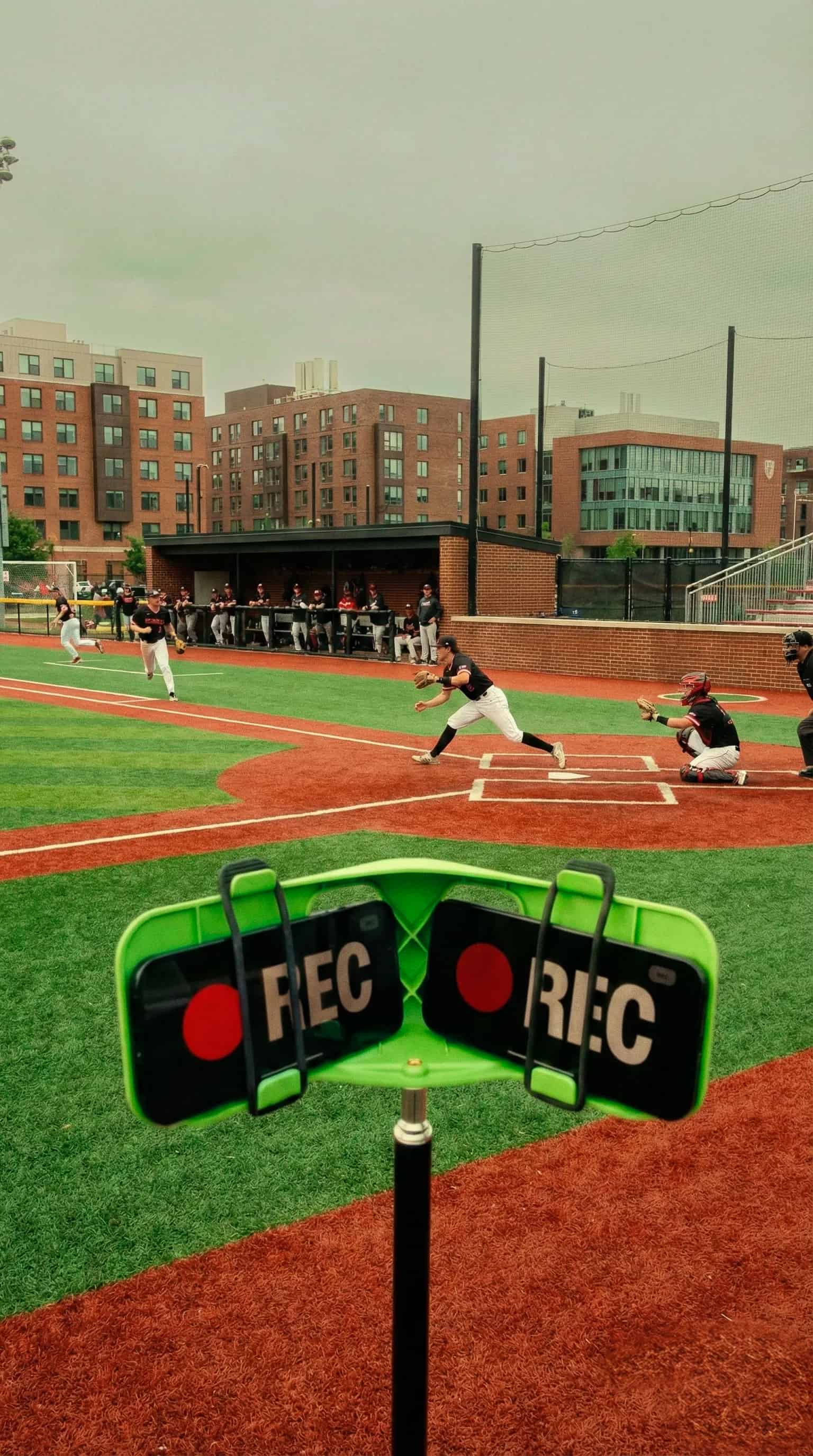
Veo Go records your full session automatically. Review hitting mechanics and fielding footwork in slow motion the same evening.
What changes as players get older
T-ball and coach pitch (ages 4 to 7)
The goal at this age is enjoyment and basic motor skill development. Every child should bat, every child should field, and no child should stand still for more than two minutes. Keep explanations short, keep movement high, and resist the urge to correct every technical error. At this age, confidence matters more than mechanics.
Kid pitch (ages 8 to 10)
Live pitching introduces real game situations for the first time. Players begin learning fielding positions, base running rules, and how to read the ball off the bat. Focus on the catch and throw routine in warmup, correct fielding footwork, and basic batting stance. Station-based practice keeps everyone active when batting and fielding groups are working separately.
Competitive youth baseball (ages 11 to 14)
Technical precision becomes meaningful. Hitting mechanics, pitching mechanics, and fielding footwork are all teachable in detail and compound quickly when drilled correctly. Video review becomes a powerful tool at this age: players who can watch their own swing or their own fielding footwork correct errors faster than players who receive only verbal instruction.
Practice structure that keeps everyone active
The most common problem in youth baseball practice is players standing in long lines waiting for a turn. Station-based practice eliminates most of that. Three stations running simultaneously means every player is active every minute of the session, and the coach can move between stations rather than supervising one drill for 20 minutes.
The three skills that matter most
Throwing mechanics
Throwing is the skill most likely to cause injury if done incorrectly and the skill most often taken for granted in youth practice. Every session should begin with a structured warmup throw: players start at 30 feet, complete 10 throws, step back to 45 feet, complete 10 more, and progress to game distance. The focus is arm circle, hip rotation, and follow-through, not velocity.
Coaching cue: "Show me your hip before you show me your hand. The throw starts with your lower half, not your arm."
Fielding footwork
Young players instinctively catch with their arms rather than their feet. The correct approach to a ground ball is to move the feet first: get in front of the ball, field it in the centre of the body, then throw. Fielding drills should always involve movement before the catch, never stationary catching from a standing position.
Coaching cue: "Feet first, glove second. If your feet are not moving, your glove is doing too much work."
Hitting mechanics
The batting stance varies between players, and that is acceptable. What does not vary is the sequence: load, stride, rotation, contact. Players who skip the load or the stride lose bat speed at contact. Tee work builds the sequence at slow speed before live pitching introduces timing pressure.
Coaching cue: "Hit through the ball, not to it. Your swing should finish over your shoulder. If it stops at contact, you lost half your power before the ball left the bat."
.jpg)
Review hitting mechanics in slow motion
More than 40,000 clubs across 100 countries use Veo to store and share footage, with over 4 million matches filmed on the platform (Veo internal data, 2026). Veo Go captures batting stance and swing sequence in slow motion so coaches can identify mechanical errors before they become habits.
Game day preparation for youth baseball coaches
Arrive early enough to walk the field. Check the condition of the infield and identify any uneven patches that might affect ground balls. Confirm your lineup the night before and have a printed copy. Give each player a specific focus for the game rather than general instructions: one hitter focuses on plate discipline, one fielder focuses on communication with teammates.
Between innings, give one coaching point only. Players process one piece of information between innings. More than one means none of them land. Save detailed analysis for after the game and for the next practice.
Using video to accelerate player development
Hitting and throwing mechanics are extremely difficult to coach accurately without video. A coach watching live sees the outcome of a swing, not the sequence that produced it. A slow-motion replay shows the load, the stride, and the contact point clearly. Players who watch their own mechanics alongside a correct model make faster adjustments than players who receive only verbal feedback.
For how to set up a camera at baseball practice, the same principles apply as in any youth sport. See how to film youth matches for the full setup guide.
Read this guide, if you're looking for baseball outfield drills.
Start filming practice this week
Veo Go sets up in under 2 minutes. Full session footage ready to share with players the same evening.
.jpg)

FAQs
Start with a throwing warmup (10 minutes), move to fundamental skill work on one focus area (20 minutes), run three simultaneous stations to keep everyone active (20 minutes), finish with a situational game or live at-bats (20 minutes), and close with a brief team talk on one coaching point (5 minutes). The key is that no player should be standing still for more than two minutes at any point.
Yes, particularly for hitting and pitching mechanics. Swing sequence, load timing, and contact point are nearly impossible to assess accurately in real time. Slow-motion video from a side or rear angle shows the full mechanical sequence clearly. Players aged 10 and above respond quickly to watching their own swing footage alongside a correct model.
At ages 4 to 7, focus on enjoyment and basic motor skills. At ages 8 to 10, introduce correct throwing mechanics, fielding footwork, and batting stance. At ages 11 to 14, develop technical precision in all three areas and introduce situational awareness: reading the ball off the bat, base running decisions, and positioning. Confidence and enjoyment should remain priorities at every age.
Use station-based practice. Three stations running simultaneously means every player is active every minute. Station 1 might be tee work, station 2 ground ball fielding, station 3 throwing mechanics. Players rotate every 6 to 7 minutes. The coach moves between stations rather than running one drill for the entire group.