How to Plan a Youth Football Practice Your Players Learn From
Frederik Hvillum

Plan a complete 90-minute youth football practice with drills, warmups, and small-sided games. Includes free session planner for coaches.
Most youth football coaches spend more time wondering what to do in training than their players spend wondering what position they play. A 90-minute session without structure falls apart in minutes. This guide gives you a complete framework: warmup, skill work, small-sided games, and cooldown, with drills at every stage that work for players aged 8 to 14.
It also covers the one habit that separates developing coaches from stagnant ones: recording sessions. When you can watch what actually happened, rather than what you think happened, your feedback sharpens fast.
The 90-minute session structure
Youth players need variety and momentum. Forty minutes on the same drill kills engagement. A well-structured session moves through four phases, each with a clear purpose:
Warmup drills for youth football (10–15 minutes)
A good warmup does three things: prepares the body, sets the tone, and gives every player a touch of the ball early. Coaches who start with passive stretching lose the room before training begins.
Drill 1: Colour gate passing
Set up six small gates (two cones, 2 metres apart) in random positions across a 20x20 area. Players pass through as many gates as possible in 3 minutes, rotating roles. Increases in difficulty by calling a colour — players must find a gate of that colour only.
Why it works: Short passes, constant movement, decision-making under light pressure. Every player is active at all times.
Drill 2: Dynamic movement pattern
Players follow a sequence of movement calls from the coach: jog, sprint, backpedal, shuffle left, shuffle right, jump. Progress to adding a ball: players dribble while completing the pattern. Keep it fast-paced with minimal downtime between rounds.
Why it works: Activates multiple muscle groups, improves body coordination, and builds listening skills. A warmup that teaches coachability alongside movement.
Skill work drills (25–30 minutes)
Skill work is where technical development happens. Players need enough repetition to feel the movement, and enough variation to stay engaged. Avoid drills with long queues: if a player stands still for more than 30 seconds, redesign the setup.
Drill 3: Receiving under pressure (passing focus)
Two teams of four in a 15x15 grid. One team passes the ball between themselves while the other tries to intercept without tackling. Focus on body orientation when receiving: players must receive with an open body, showing the next pass before the ball arrives. Rotate possession every 2 minutes.
Coaching cues: 'Show your body before the ball comes', 'Half-turn to see the whole field', 'First touch away from pressure'.
Drill 4: 1v1 defending station
Two cones 8 metres apart as a goal. Attacker starts with the ball 12 metres away. Defender must delay, show the attacker to a wide area, and prevent a shot. Rotate every 90 seconds. Pairs of three work best: one working, one resting, one observing and giving feedback to the defender.
Coaching cues: 'Stay on your toes', 'Don't dive in', 'Show them where you want them to go'.
Drill 5: Shooting combination
Player A plays a short pass to Player B, who lays it off to Player C running from depth. Player C shoots first time. Progress to adding a defender who applies passive then active pressure. Focus on the shooter's body shape over the ball: young players frequently lean back and skew shots high.
Small-sided games (30–35 minutes)
Small-sided games are where youth development actually happens. Research from US Youth Soccer and the FA consistently shows that players touch the ball more, make more decisions, and enjoy sessions more in 3v3 to 7v7 formats than in 11v11 training. For most youth sessions, this phase should be the longest.
Game 1: 4v4 with end zones
Two 4v4 teams score by dribbling the ball into a 3-metre end zone at either end of a 25x20 pitch. No goalkeepers. Forces the attacking team to create width and timing runs, forces the defensive team to maintain shape. Award two points for a ball controlled in the end zone, one point for a deflected entry. Ideal for ages 8–11.
Game 2: 5v5 with pressing triggers
Standard 5v5 with mini-goals. Coach calls a pressing trigger mid-game ('goalkeeper has it!', 'back pass!'). When the trigger is called, the team without the ball must press immediately as a unit. Award bonus points for winning the ball within 5 seconds of a trigger. Ideal for ages 11–14 learning collective defending.

Cooldown and review (10 minutes)
The cooldown is not dead time. It is the only moment in the session where you have every player sitting still and listening. Use it deliberately.
- Static stretching (4 minutes). Quadriceps, hamstrings, calves, hip flexors. Do this while talking: it gives players something to focus on while they stretch.
- Session question (2 minutes). Ask the group one question about what they practised: 'When is the right time to press?', 'What does a good first touch look like?' Let players answer each other first.
- Individual recognition (2 minutes). Name two or three players who showed something specific and positive. Specific beats generic: 'Marcus, your body shape when receiving improved a lot today' lands better than 'great session everyone.'
Preview next session (2 minutes). Tell players what they will work on next time. It creates continuity and gives them something to think about between sessions.
Why recording sessions changes how fast you improve as a coach
Every coach has a gap between what they think happened in training and what actually happened. Players who looked sharp in the drill struggled in the game. A defensive shape that felt organised was full of holes. Feedback that seemed clear in the moment did not land.
Recording sessions closes that gap. When you can watch a session back, you spot things that are invisible in real time: the player who switches off between reps, the drill setup that creates a dead zone, the moment the energy dropped and why.
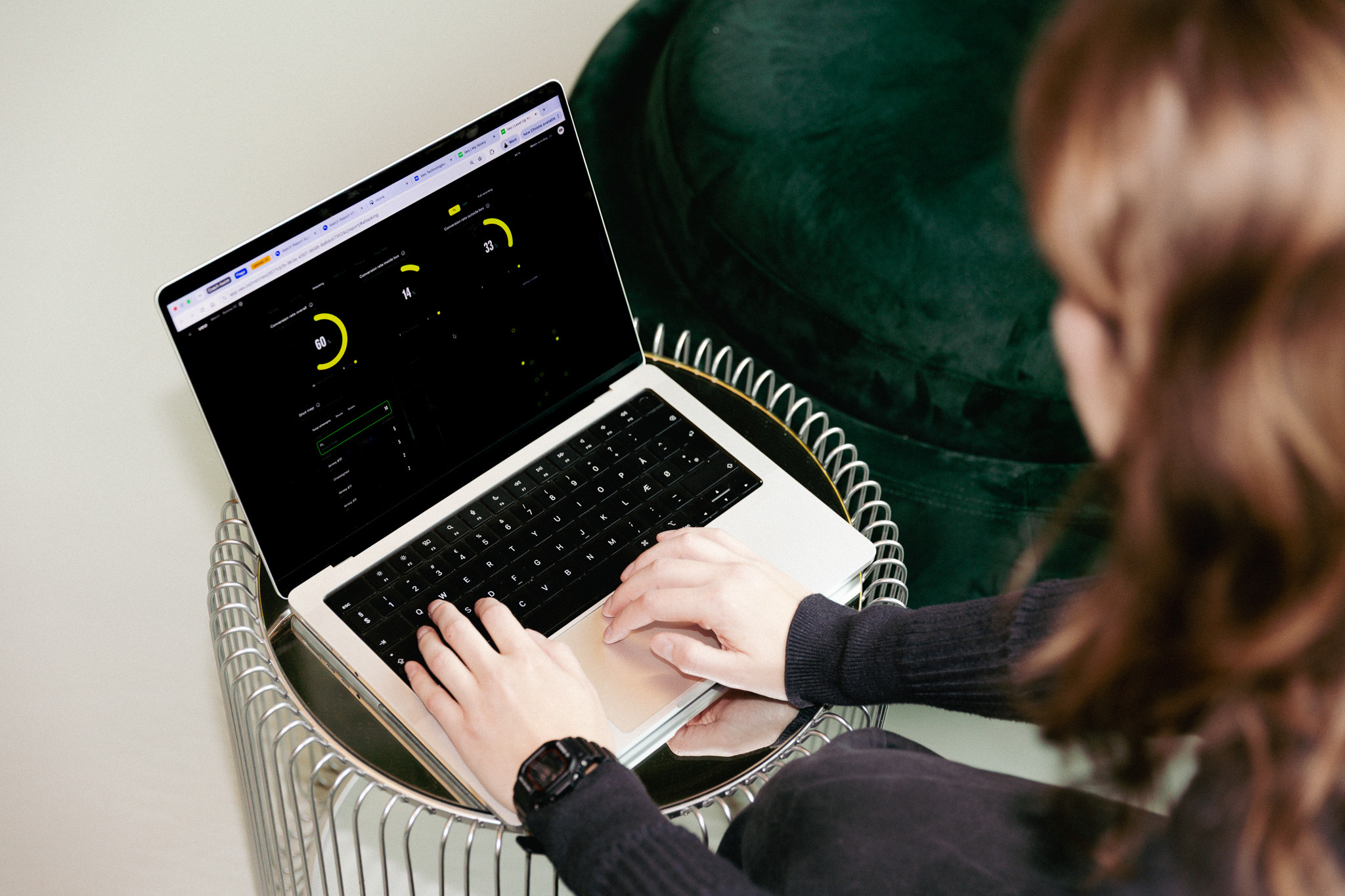
Coaches using Veo Go set it up in under two minutes before a session and let it run. The camera follows the action automatically, so there is no need for a dedicated operator. After training, footage is available on the Veo platform, where coaches can review sessions, clip specific moments, and share them directly with players.
For players aged 10 and above, showing footage beats explaining. A 15-second clip of a player's body shape when receiving is worth ten minutes of verbal instruction. They see it, they understand it, and they change it.
For a complete guide on setting up your camera on match day and in training, see how to film youth matches.
Adapting the session plan by age group
Youth football covers a wide developmental range. A session that works for a U14 team will overwhelm a U8 group. These are the key adjustments:
Adding variety with agility-focused sessions
Once your standard session structure is in place, rotating themes keeps players developing and engaged. An agility-focused week shifts the skill work phase toward coordination and explosive movement. For a full set of drills purpose-built for this, see the guide to fun youth football drills, including ladder sequences, reaction drills, and cone patterns that work for U8 through U14.
Film your next session with Veo Go
Set up in 2 minutes. No camera operator needed. Review every drill and game with your players the same evening.
.jpg)

FAQs
For players aged 8–10, 60 minutes is optimal. For U11–U14 groups, 75–90 minutes allows enough time for skill work and game play without losing concentration. Sessions longer than 90 minutes rarely produce better outcomes for youth players.
Three to five drills across the session is the right range for most youth age groups. More drills mean more setup time and less learning time. Better to run three drills well, with good progressions, than six drills with rushed transitions.
Keep activity time to under 8 minutes for U10 players and under 12 minutes for older groups. Add competition elements (score, time pressure, bonus points). Rotate partners frequently. And give specific feedback rather than generic praise: players notice when a coach pays individual attention.
For youth teams without a dedicated camera operator, an AI-powered camera like Veo Go is the most practical solution. It tracks the action automatically so the coach can focus on the session.
Start with a ball in every player's hands (or feet) from the first minute. Beginners need high repetitions of basic movements: passing, receiving, dribbling. Use the four-phase structure above but keep each drill simpler and shorter than you would for experienced players. Reward effort and improvement, not just outcomes.
%20(1).jpg)
.jpg)