Youth Football Tackling Drills That Prioritise Safety
Frederik Hvillum
Safe tackling techniques and drills for youth football coaches. Proper head position, body contact, and how video review helps identify dangerous habits early.
Safe tackling is not a compromise on effectiveness. The techniques that produce the lowest injury risk in youth football are also the techniques that produce the most reliable tackles. Coaches who teach proper head placement, body position, and contact mechanics build players who tackle better and get hurt less.
This guide covers five progressive tackling drills for youth football, starting from basic stance and contact position through to live-angle tackling at game speed. Each drill is designed to build correct habits before adding contact, and each includes coaching cues that address the most common safety mistakes coaches see in youth players.
Catch tackling technique on camera
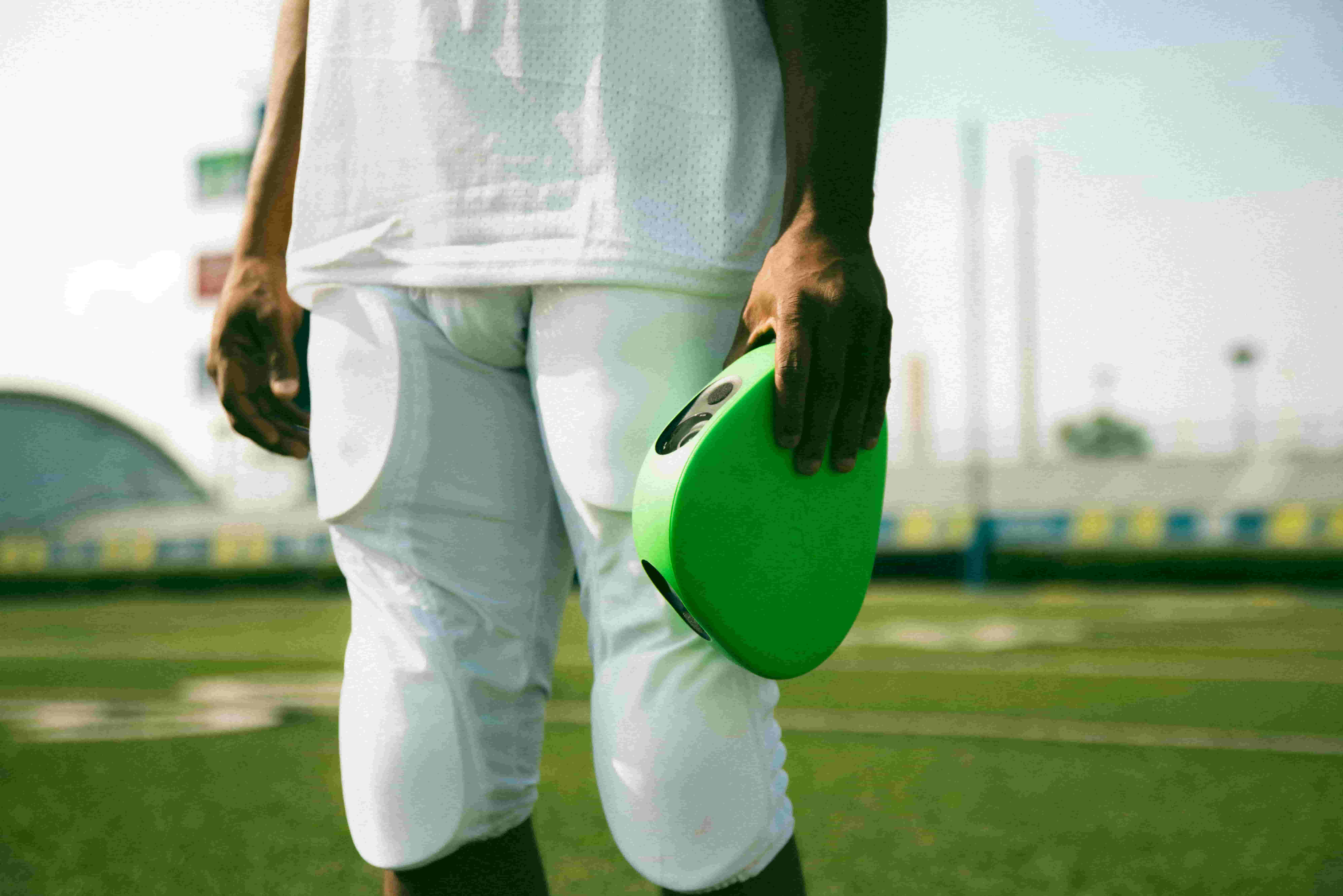
Head position and body contact angle are nearly impossible to assess accurately from the sideline. Veo Cam 3 captures full-field footage so you can review tackling mechanics in slow motion and catch dangerous habits before they become ingrained.
.jpg)
Why head position is the only thing that matters
The most serious injuries in youth football tackling come from leading with the crown of the helmet. When the crown hits first, the force travels directly down the spine. The correct technique puts the head to the side of the ball carrier (cheek to ball, as coaches say), so the forehead is up and the neck is in a safe position through contact.
This is not instinctive. Under pressure and at speed, young players duck their heads. The drills in this guide are designed to build the correct head position at slow speed first, then gradually increase the speed until the habit is automatic. Rushing to live contact before the slow-speed mechanics are correct is where most youth coaching programmes go wrong.
Three rules that apply to every tackling drill:
- Eyes up. The tackler sees what they are hitting before contact. Eyes down means crown first.
- Cheek to the ball. Head goes to the side of the ball carrier, not into them. The face mask does not make contact.
Drive through, not into. The tackle finishes with the legs continuing to drive after contact. A tackler who stops at the moment of impact loses control of the ball carrier.
Drill overview
The drills
Drill 1: Heads-up stance and approach
No contact. Tackler lines up 5 yards from a standing pad or stationary partner and walks through the approach: feet shoulder-width apart, knees bent, back flat, head up with eyes on the target's chest. At the contact zone (1 yard out), the tackler stops and holds position. Coach checks head position and back alignment before repeating at a jog.
Coaching cue: "I should be able to read the front of your helmet when you are at the contact point. If I cannot see your face, your head is down."
What to watch on video: Head and shoulder position in the last two steps before the contact zone. Players who look correct walking through the drill often drop their head at speed. Slow-motion replay from the side makes this obvious.
Drill 2: Fit position hold
Tackler and ball carrier stand face to face, 1 yard apart. On the coach's signal, the tackler moves into the tackle fit position: head to the side (cheek to ball), shoulder pad contact on the thigh pad, hands gripping the back of the jersey, feet pumping in place. Hold for 3 seconds. No drive yet. Repeat 10 times, alternating sides so the tackler practices both left-cheek and right-cheek contact.
Coaching cue: "Your cheek should touch the ball on every rep. If there is a gap between your face and the ball, your head is not where it needs to be."
Age note: This drill is appropriate for U8 and above and should be drilled at every age level at the start of the tackling progression, not just with beginners. Even experienced players benefit from returning to fit position work when their technique regresses under pressure.
Review tackling technique in slow motion
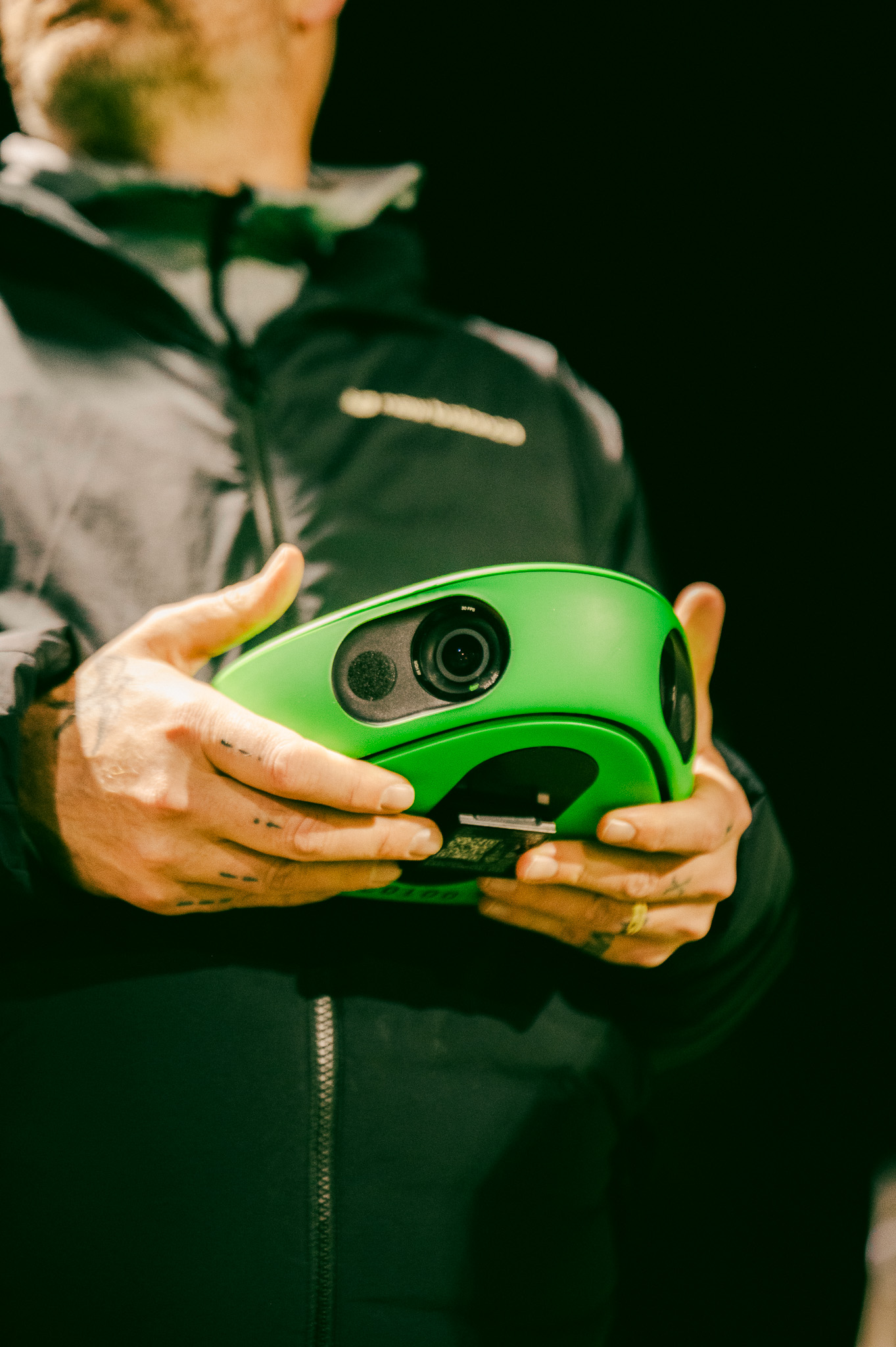
More than 40,000 clubs across 100 countries use Veo to store and share footage, with over 4 million matches filmed on the platform (Veo internal data, 2026). Coaches using Veo Cam 3 identify head position errors in slow motion that disappear at full speed.
Drill 3: Hip roll tackle drill
From the fit position, the tackler drives through contact using the hips. Ball carrier offers light resistance by leaning into the tackler. The tackler fires the hips forward and through, lifting slightly and driving the ball carrier back 2 to 3 yards before releasing. The focus is on hip power rather than shoulder or arm strength. Run at half speed only.
Coaching cue: "Your hips go through the tackle, not into it. If your feet stop at contact, you are arm-tackling. Keep the feet moving after you make contact."
What to watch on video: Whether the feet stop at the moment of contact. This is one of the most common technical errors and one of the hardest to coach live because the coach's attention goes to the upper body mechanics. A side-angle view from Veo Cam 3 shows foot activity clearly through the contact.
Drill 4: Angle tackling progression
Ball carrier runs on a diagonal line from the corner of the field at three-quarter speed. Tackler starts 5 yards away and closes on an angle to meet them. The tackler must adjust their approach to put their head on the correct side (between the ball carrier and the sideline) and make contact with the shoulder. Run 5 reps closing from the left and 5 from the right.
Coaching cue: "Your head goes between the ball carrier and where they are going. If you tackle from behind, the tackle is safe. If you chase from behind, the play gains 20 yards."
Age note: Introduce at U10 and above. Younger players are still building the straight-line tackling mechanics and are not yet ready to adjust an approach angle in real time.
Drill 5: Hawk tackle (shoulder wrap)
The hawk tackle is a modern safe-tackling technique used across levels of the game: instead of wrapping at the waist and lifting, the tackler shoots their near shoulder into the thigh of the ball carrier, wraps both arms, and drives through. No lifting. No shoulder-to-shoulder contact. Ball carrier runs at three-quarter speed. Tackler aims for the thigh pad and drives the shoulder through.
Coaching cue: "Shoulder to thigh, arms around, feet drive. In that order, every time. The shoulder contacts first. The arms do not catch; they secure."
Age note: Introduce at U12 and above. Players need both the physical strength to drive through after contact and the body control to aim the shoulder accurately at three-quarter speed.
What video review reveals about tackling safety
Dangerous tackling habits are hard to catch live because they happen in contact situations where the coach's attention is on the outcome, not the technique. A tackle that brings the ball carrier down looks successful even if the head position was wrong. Over a season, a player who consistently leads with the crown will not develop any observable problem until they do.
Coaches using Veo Cam 3 review tackling reps in slow motion after practice and in slow motion after games. The wide-angle view captures the full contact zone so no tackle is out of frame. When a player's head position is wrong in five out of ten reps, that shows in the footage clearly. The coach can bring the player in, show them the clip, and build the correct habit before it becomes a pattern.
For session structure that gives tackling drills enough time without cutting into skill work, see the youth football practice guide. For a coaching philosophy that puts player development before results, see youth football coaching philosophy. Both resources address the culture that makes safety-first coaching work.
Tackling safety by age group
U8 to U10
Drills 1 and 2 only. No live tackling in practice until the fit position and approach mechanics are correct at walking and jogging pace. Many programmes at this age use flag football to develop football skills without contact, which keeps tackling introduction to game situations only. If your programme uses contact at this age, make the fit position drill a non-negotiable part of every session.
U11 to U12
Add the hip roll and angle tackling drills. Still run drills 1 and 2 at the start of every tackling session as a warmup. Live tackling should be at three-quarter speed until the mechanics are consistently correct. Video review is particularly valuable at this age because players are beginning to tackle in more complex situations and regression under pressure is common.
U13 to U14
All five drills. The hawk tackle is introduced here and should replace older shoulder-lift techniques entirely. Players at this age benefit from watching their own tackling footage between sessions. A player who can identify their own head position error on video makes the correction faster than one who receives only verbal instruction.
For drills that develop the agility and footwork tackling relies on, see fun youth football drills.
Build a safer programme with better footage
Veo Cam 3 records your full session automatically. Review tackling technique, head position, and body contact in slow motion after every practice.

FAQs
The hawk tackle (shoulder wrap) is currently the technique recommended by most youth football safety programmes. The tackler contacts the thigh with the near shoulder, wraps both arms, and drives through without lifting. It eliminates head-to-head contact and reduces the risk of crown-leading, which is the primary source of serious tackling injuries in youth football.
Drill the fit position before any live contact. The fit position teaches the correct head placement at zero speed and builds the muscle memory before the pressure of a real tackle. Players who lead with the crown are usually doing so because they are bracing for contact. Removing the fear of contact through slow, controlled drills is more effective than verbal reminders during live play.
Head position and stance can be introduced from U8 with no-contact drills. The fit position hold (no drive) is also appropriate from U8. Live tackling with any contact force should wait until the no-contact mechanics are correct, which for most players is U10. Many coaches recommend keeping contact minimal or flag-only until U10 to U11.
Yes. Head position errors are very difficult to catch with the naked eye during live play because they happen in under a second during a contact situation. Slow-motion video from a wide-angle camera captures the approach, the contact angle, and the head position clearly. Coaches who review tackling footage regularly catch dangerous habits early, before they become patterns that are hard to change.
Leading with the crown of the helmet is the highest-risk error and the most common. Others include: stopping the feet at contact (loses control of the ball carrier and increases injury risk to both players), arm-tackling without shoulder contact (puts stress on joints rather than muscle groups), and approaching from a straight line rather than an angle (increases the chance of a collision rather than a controlled takedown).
.jpeg)