Youth Football Coaching in the AI Era: Lessons from Surf Nation
Frederik Hvillum
.jpg)
Gary Curneen of Surf Nation on how AI video tools are changing youth football coaching, from opponent analysis to player development and club-wide standards.
Gary Curneen has spent his career thinking about what great youth football coaching actually looks like. As a leading voice at Modern Football Coach and Director of Football at Surf Nation, he has a clear view of where the gap is and what is starting to close it.
Most youth coaches in the United States are working at the limit of their bandwidth. They handle periodization, session planning, player psychology, and parent communication, and then somewhere in what is left of their week, they try to do the analysis work that might actually make the biggest difference.
That analysis layer, the review and reflection that happens after a match, is where Curneen believes the biggest gap in American youth development currently sits. And it is where he thinks AI-powered video tools are beginning to change the picture.
Why youth football coaching is stuck in the edit suite
The problem is not that coaches lack the desire to do analysis. It is that doing it properly has always required a background in video editing or a dedicated analyst on staff. Neither is realistic for most clubs.
"Right now, the biggest opportunities in youth development in the U.S. is strengthening the layer of review and reflection. Coaches are overwhelmed and over-marketed to. They have to handle periodization, psychology, and training, leaving almost zero bandwidth for the back end of the game," Curneen says.
When you automate the clipping and the data, he argues, you free the coach to work in what he calls the technical-tactical space. At clubs like Ajax or PSV, even at the U10 level, the focus is on advanced tactical principles. That level of coaching has historically required analytical support that most youth clubs cannot provide.
AI changes that equation. Tools that automatically generate clips, heatmaps, and pass strings after a match remove the manual work that has kept that kind of analysis out of reach. The coach stops being a video editor and starts being, as Curneen puts it, a tactical architect.
How video analysis corrects a coach's blind spots
There is a version of analysis that most coaches already do. They watch the game, they form impressions, and they bring those impressions into the next session. The problem is that those impressions are formed under pressure, shaped by emotion, and frequently wrong.
"We spend so much time reviewing players, but we need to use objective data to review the coaching staff as well. Objective data changes the language of feedback from subjective feelings to objective football language."
If a coach feels the press was working, Curneen continues, but the data shows a lack of possession control in the middle third, that is a mirror. It challenges the assumption. It creates a different kind of conversation.
That shift in language also changes how coaches communicate with parents. Parents at youth level are increasingly sophisticated. They use terms like transitional moments and press triggers. When a coach can show objective data rather than a subjective opinion, it builds credibility and reduces friction.
How fast should the feedback loop be in youth football coaching?
One of the practical questions around video analysis in youth football is timing. How quickly should players see footage of their own performance? Curneen's view is that speed matters, but not at the cost of player agency.
"In today's world, a 24 to 48 hour feedback window is massive. These players are tech-savvy. They expect high-speed communication. But we have to be careful not to do everything for them. The player needs to be involved in the process to fall in love with it."
His practical framework is what he calls the Rule of Three: start with only three impactful clips. Keep it focused. The goal is not to overwhelm players with everything they did wrong. It is to build a habit of self-analysis that they carry into their next match.
2D tactical maps accelerate that process at youth level. Rather than asking a 14-year-old to derive tactical meaning from a broadcast angle, a top-down view makes the positioning and movement legible. They can see the why behind what happened, not just the what.
Using AI to set coaching standards across a club
For technical directors and club leaders, the challenge is consistency. How do you ensure that the principles being coached at the U12 level align with what the U18 group is working on? How do you identify best practice across a network of affiliates without micromanaging every session?
.jpg)
At Surf Nation, Curneen and his colleagues have moved away from a mandated single model. The context in San Diego is different from the context in Ottawa. What works is a flexible framework, and AI gives them a way to show what that framework looks like in practice.
"AI is the tool that lets us demonstrate best practice. We can take our top-performing clubs and use their AI-generated data to show other clubs what the standard looks like. It allows us to audit the process and the periodization without micromanaging the coach's intuition," Curneen explains.
The data becomes a shared reference point rather than a top-down directive. Clubs can see how their build-up patterns or defensive line height compare to the clubs performing at the highest level, and have that conversation using evidence rather than opinion.
Where the line is between AI and the coach
The question that follows every conversation about AI in football is whether it threatens to automate the parts of coaching that matter most. Curneen's answer is consistent: the data tells you what happened. It does not tell you what to do about it.
"Technology should enhance a coach's ability to connect and communicate, not replace the human component. The AI gives you the data, but the coach provides the soul by knowing when a player needs a tactical correction versus when they need psychological support."
That distinction, he says, is where coaching lives. AI handles the what. The coach handles the why.
His advice to coaches approaching these tools for the first time is to resist the impulse to use everything at once.
"Start small. Don't try to use every data point on day one. Fall in love with your role first, then identify how video can help you achieve your specific goals for those players. Patience is the key to integration," Curneen says.
How AI video analysis works for youth football clubs
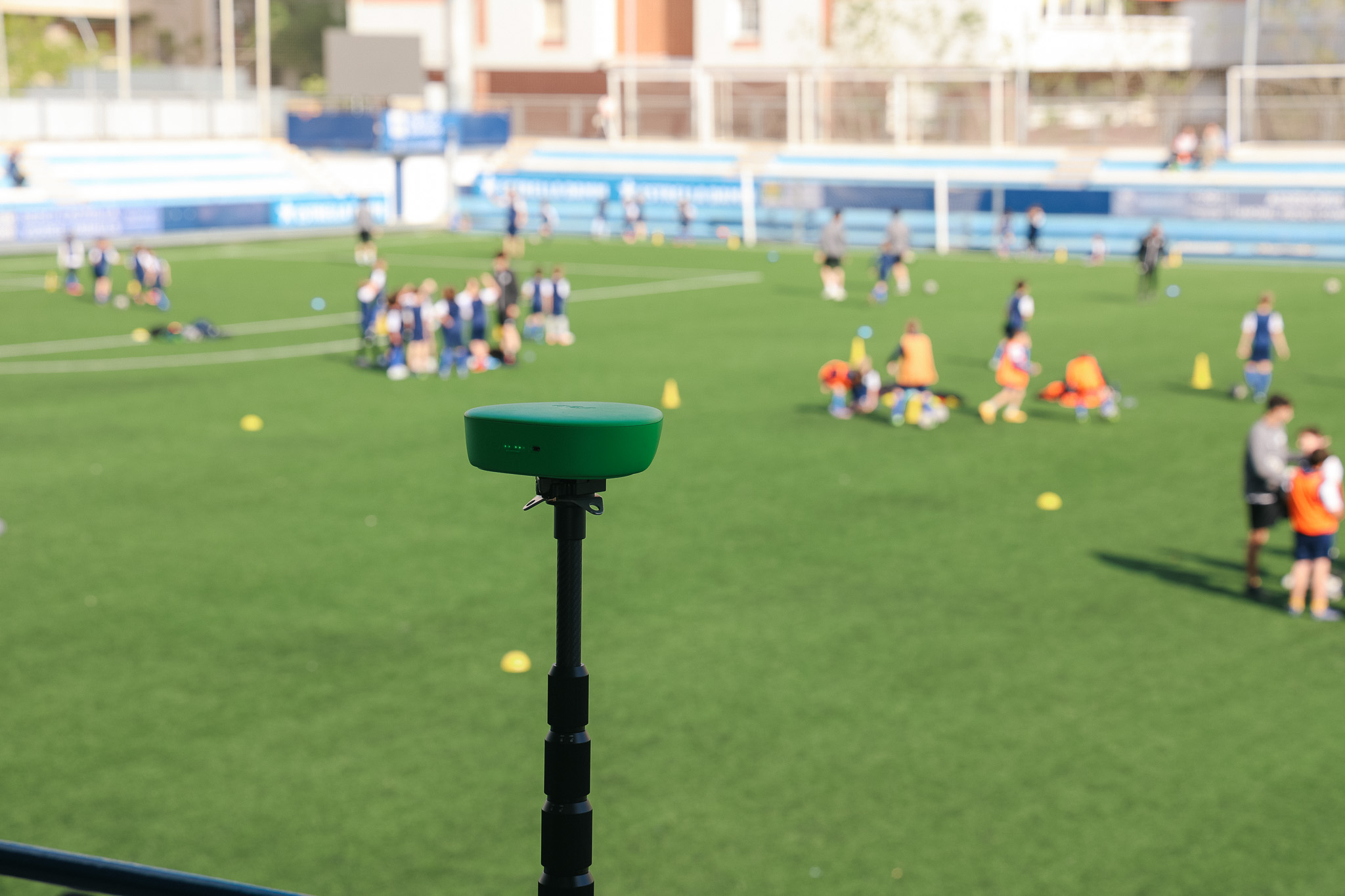
Veo is an AI-powered sports camera system that records matches and training sessions automatically, without a dedicated camera operator. The camera mounts on a tripod at the centerline and uses computer vision to track the ball and follow the action across the full pitch.
After a match, footage uploads to the Veo platform via Wi-Fi and is processed automatically. Coaches access clips, events, heatmaps, and player spotlights through a browser or the Veo app. Analytics Studio provides a summary view of team and individual performance data that can be used for opponent analysis and session planning.
For youth clubs, the practical advantage is that consistent analysis becomes possible without a dedicated analyst. A coach can filter for specific events, build clip packages for individual players or units, and review footage on their own schedule.
Looking for coaching guides?
Read our guide on Youth Football Tactics for Coaches
The best possession drills for youth football coaches

FAQs
Start with a small number of clips, around three per session, focused on moments where the player did something well or has a clear opportunity to improve. Involve the player in the review rather than presenting conclusions. The goal is to build a habit of self-analysis, not to deliver a verdict.
AI tools can automatically clip and tag events from opponent footage, enabling filtering for specific patterns, such as how a team builds from goal kicks or how their press is triggered. This reduces the time required to identify tactical tendencies and allows coaches to prepare targeted sessions without spending hours on manual review.
Technical directors can use AI-generated data from their highest-performing age groups to establish a visual benchmark for what their playing principles look like in practice. Coaches across age groups can compare their own data against that benchmark, creating a shared reference point for discussions about development and style without requiring centralised oversight of every session.
The time saving depends on how much analysis a coach was doing manually before. For a coach who was clipping footage by hand and timestamping events, AI automation can reduce that work from several hours per game to minutes. For a coach who was not doing structured analysis at all, the benefit is access to a level of preparation that was not previously possible within the time available.