Youth Football Tactics for Coaches: A Practical Guide
Veo
Youth football tactics explained for coaches. Formations, pressing, defensive shape, and how to introduce tactical concepts at the right age, with video analysis guidance.
Tactics are the most commonly over-taught and under-applied element of youth football coaching. Coaches who introduce complex formations and defensive systems to eight-year-olds are solving a problem that does not exist yet. Coaches who never introduce any tactical structure to fourteen-year-olds are leaving development on the table. The question is not whether to teach tactics, but when and at what level of complexity.
This guide covers the tactical concepts that are appropriate at each age group, how to introduce them practically, how to use formations without restricting individual development, and how video analysis helps coaches identify whether tactical instructions are actually being applied in match situations.
What age is right for which tactical concepts
The table above is a guide, not a rule. Players within the same age group vary significantly in their cognitive and technical readiness for tactical instruction. A tactically aware U10 player who has played since age five is ready for concepts that a U12 beginner is not. Use age as a starting point and adjust based on what you observe.
Formations at youth level
Formations are a tool for creating collective shape, not a constraint on individual players. A youth coach who spends most of their tactical time telling players to stay in position is using formations incorrectly. The purpose of a formation is to give players a starting reference point, not to restrict where they can go.
U9-U10: The 2-3-1
For 7v7 football, the 2-3-1 is the most development-friendly formation. Two defenders, three midfielders, one forward. It creates natural width through the midfield three, gives defenders a clear responsibility, and avoids the congestion of a 3-2-1 where three defenders create a passive defensive block. The single forward is a realistic starting point for players learning to play with their back to goal.
U11-U12: The 3-3-2 or 3-2-3
For 9v9 football, the 3-3-2 gives three defenders experience at the back four ahead of 11v11 while keeping width in midfield. The 3-2-3 is more attack-oriented and works well for technically strong teams who want to develop wide play. Both formations should be treated as starting shapes rather than fixed positions, with players encouraged to create overloads and support angles as the game demands.
U13-U14: Transitioning to 11v11
At 11v11, the 4-3-3 and 4-2-3-1 are the most common starting formations in youth development. Both provide a balanced defensive structure while creating natural attacking width. The 4-3-3 is simpler to understand and more forgiving of positional errors. The 4-2-3-1 introduces a double pivot in midfield which develops defensive responsibility in midfield players earlier. Choose based on the players you have, not on personal preference for a system.
See whether your formation is holding its shape
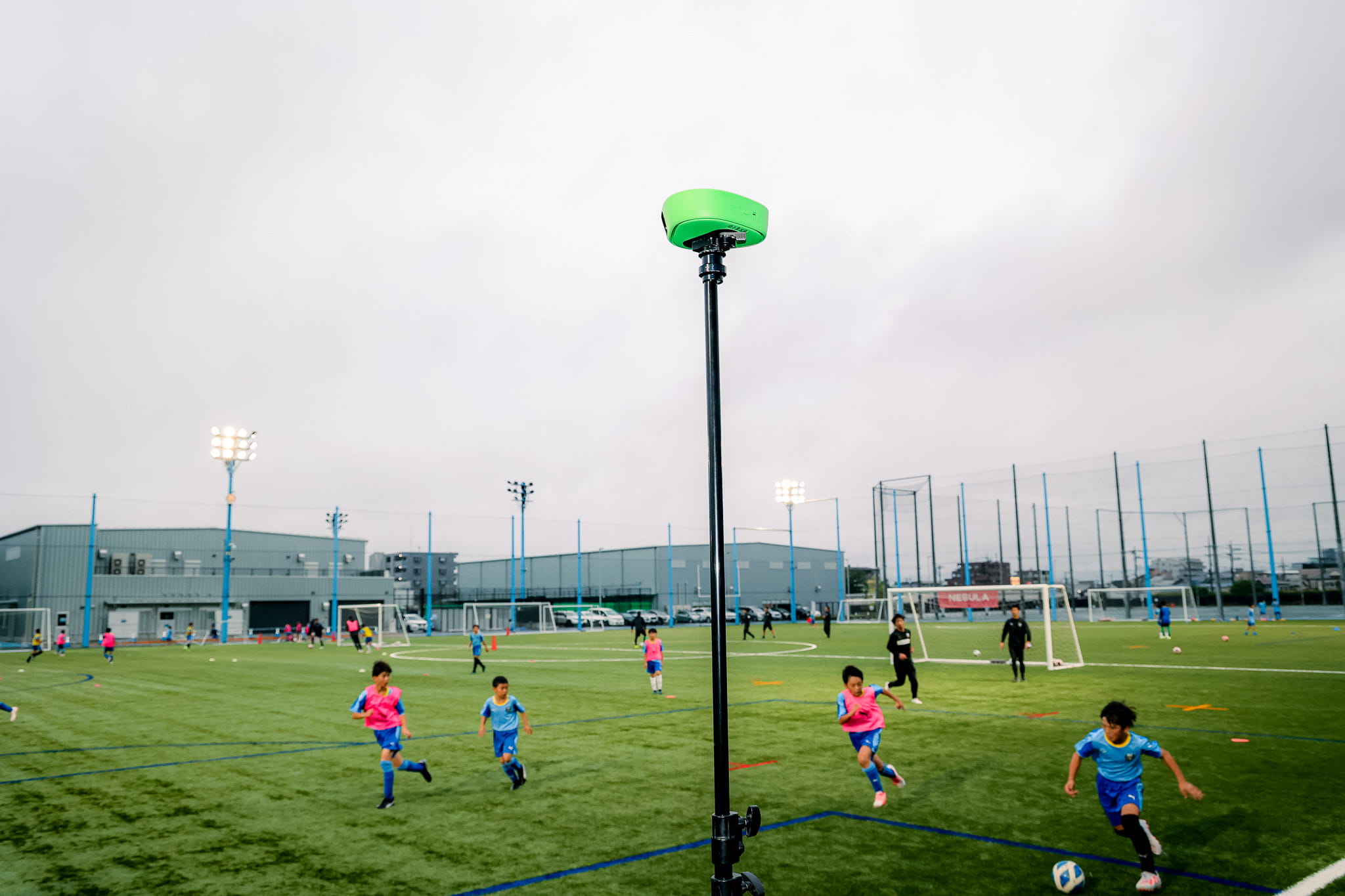
More than 40,000 clubs across 100 countries use Veo to store and share footage, with over 4 million matches filmed on the platform (Veo internal data, 2026). Veo Cam 3 captures the full pitch from above so you can review whether your tactical shape is being maintained in and out of possession.
Pressing: when and how to introduce it
Pressing is one of the most misunderstood tactical concepts in youth football. Most youth teams press reactively, which means individual players chase the ball when they feel like it. Reactive pressing is not pressing. It is disorganised chasing that creates gaps in the defensive shape and tires players without creating turnovers.
Organised pressing requires three things: a shared trigger, a shared direction, and a shared understanding of who covers whom when the press is beaten. Introduce pressing from U10 using the pressing trigger drill covered in the youth training drills guide. At U10, focus only on the trigger. Add direction and cover from U12.
Defensive shape: the four principles
Regardless of formation, effective youth defensive shape rests on four principles that are teachable from U10 onward:
- Compactness. The team defends as a unit. The distance between the defensive line and the midfield line should compress when the opposition has the ball, reducing the space available to play through.
- Cover. Every player defending the ball should have cover behind them. A defender who presses without cover is gambling. A defender who presses with cover can be more aggressive.
- Balance. Players on the opposite side of the pitch from the ball should be positioned centrally, not wide, to prevent the opposition from switching play into open space.
- Delay. When the ball is played behind the defensive line, the recovery priority is to delay the attack long enough for the rest of the team to recover their shape, not to win the ball immediately.
Transition: the moment most youth teams lose the game
Transition is the moment between losing the ball and regaining defensive shape, or between winning the ball and creating an attacking threat. Most youth teams are at their most vulnerable in the 3 to 5 seconds immediately after losing possession, because players are still in their attacking positions and the defensive shape has not yet been established.
Introduce transition awareness from U11. The key concept is immediate reaction: the player who loses the ball presses immediately to delay the counter, while the nearest teammates drop into defensive positions. This is a habit that is very difficult to coach verbally but becomes clear quickly when players watch themselves in match footage. Seeing themselves still in attacking positions while the opposition is already in their half creates a more powerful coaching moment than any verbal instruction.
How video analysis makes tactical coaching more effective
Tactics are the area where the gap between what coaches say and what players do is widest. A coach who explains defensive compactness in a team talk before a match will see their team defend with gaps in the first five minutes. A coach who shows their team the specific moment their shape broke down in the previous match gets a different response.
Coaches using Veo Cam 3 review match footage between sessions and identify two or three specific moments where the tactical instruction was not applied. Those moments become the opening of the next training session. For football possession drills that develop the tactical habits covered here, see the possession drills guide.
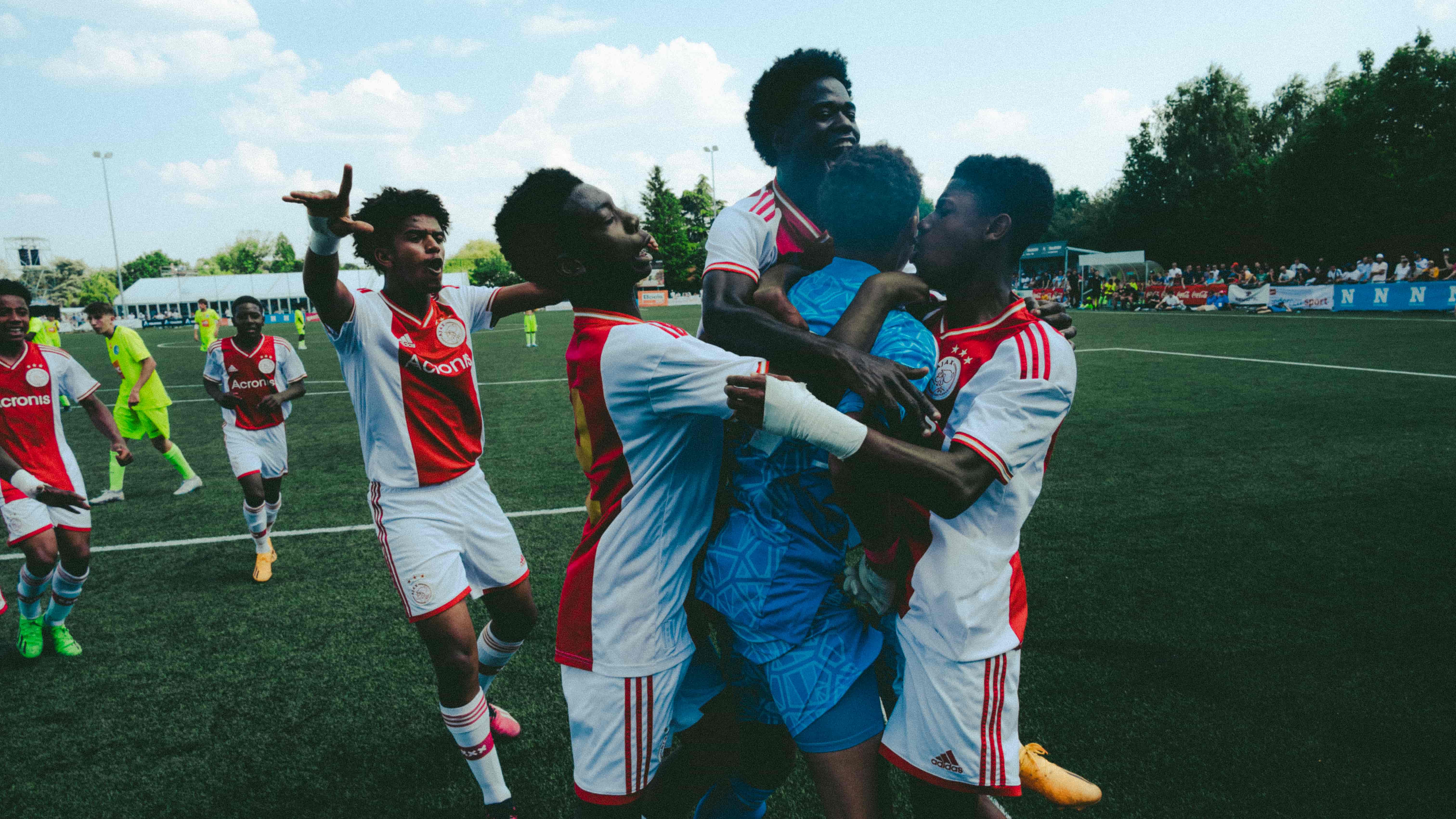
Show players exactly where the shape broke down
Veo Cam 3 records every match automatically. Find the specific transition moment or pressing breakdown and bring it to the next session.
Related reading
- Youth football training drills. Drills that develop the individual skills that make tactical concepts work in match situations.
- Football possession drills. Possession drills that build the collective habits tactical play depends on.
- How to film youth matches. Camera setup for capturing the tactical footage that makes these coaching points land.
.jpg)

FAQs
Introduce spatial awareness and basic support angles from U8. Add simple defensive shape and pressing triggers from U10. Introduce formations and transition concepts from U11 to U12. At U6 to U8, tactical instruction beyond spatial awareness reduces the time available for technical development and individual skill building, which is the higher priority at that age.
There is no single best formation for youth football. The most important criterion is that the formation gives every player a clear understanding of their starting position and responsibility without restricting their movement. For 7v7, the 2-3-1 is the most balanced development format. For 9v9, the 3-3-2 or 3-2-3 both work well. For 11v11, the 4-3-3 is the most commonly used development formation because of its simplicity and attacking width.
Start with the trigger. Agree on one specific cue that initiates the press: a back pass to the goalkeeper, a defender receiving with their back to goal, or a poor first touch. Once every player recognises the trigger, drill the collective response at walking pace before introducing game speed. Players who press without a shared trigger chase individually and create gaps rather than turnovers.
Loss of shape almost always happens in transition, in the 3 to 5 seconds after losing the ball. The player who loses possession presses immediately to delay the counter; their nearest teammates drop into defensive positions. This immediate reaction habit is the most important tactical habit in the game and takes consistent drilling before it becomes automatic. Video footage of the specific moments where shape is lost is the most effective coaching tool for this problem.
Yes. Tactics are the area where verbal coaching has the least impact and video has the most. A player who watches themselves still in an attacking position while the opposition counter-attacks understands the transition concept instantly. A player who watches their team defend with a gap between midfield and defence understands compactness in a way that a diagram on a whiteboard cannot replicate. Reviewing two or three specific tactical moments before each session is more effective than any pre-match team talk.

%20(1).jpg)