Youth Football Training Drills: The Complete Guide
Frederik Hvillum
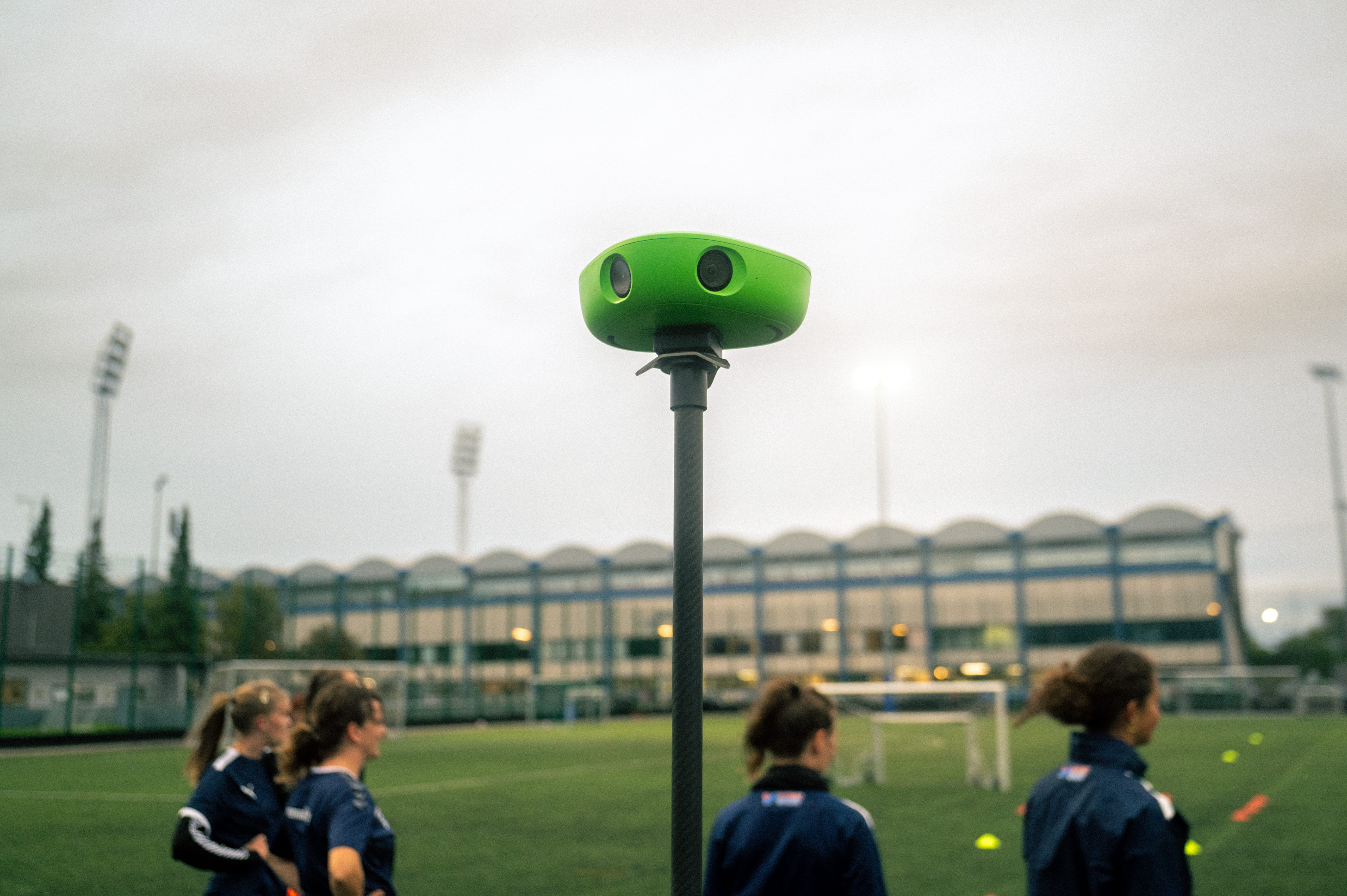
The best youth football training drills for coaches. Passing, movement, defending, and finishing drills for players aged 6 to 14, with session structure included.
Youth Football Training Drills: The Complete Guide
The best youth football training sessions develop technical ability, tactical understanding, and competitive instincts at the same time. Drills that only work on one element in isolation are less effective than drills where players are constantly making decisions, reading teammates, and responding to opponents.
This guide covers six training drills for youth football coaches, structured around the areas that matter most at youth level: passing and possession, defensive shape, pressing, 1v1 defending, and finishing. Each drill includes coaching cues, age guidance, and notes on what video review reveals that live coaching misses.
You can also check our 1v1 Football Drills for Youth: A Complete Coach Guide.
Record your training sessions with Veo Cam 3
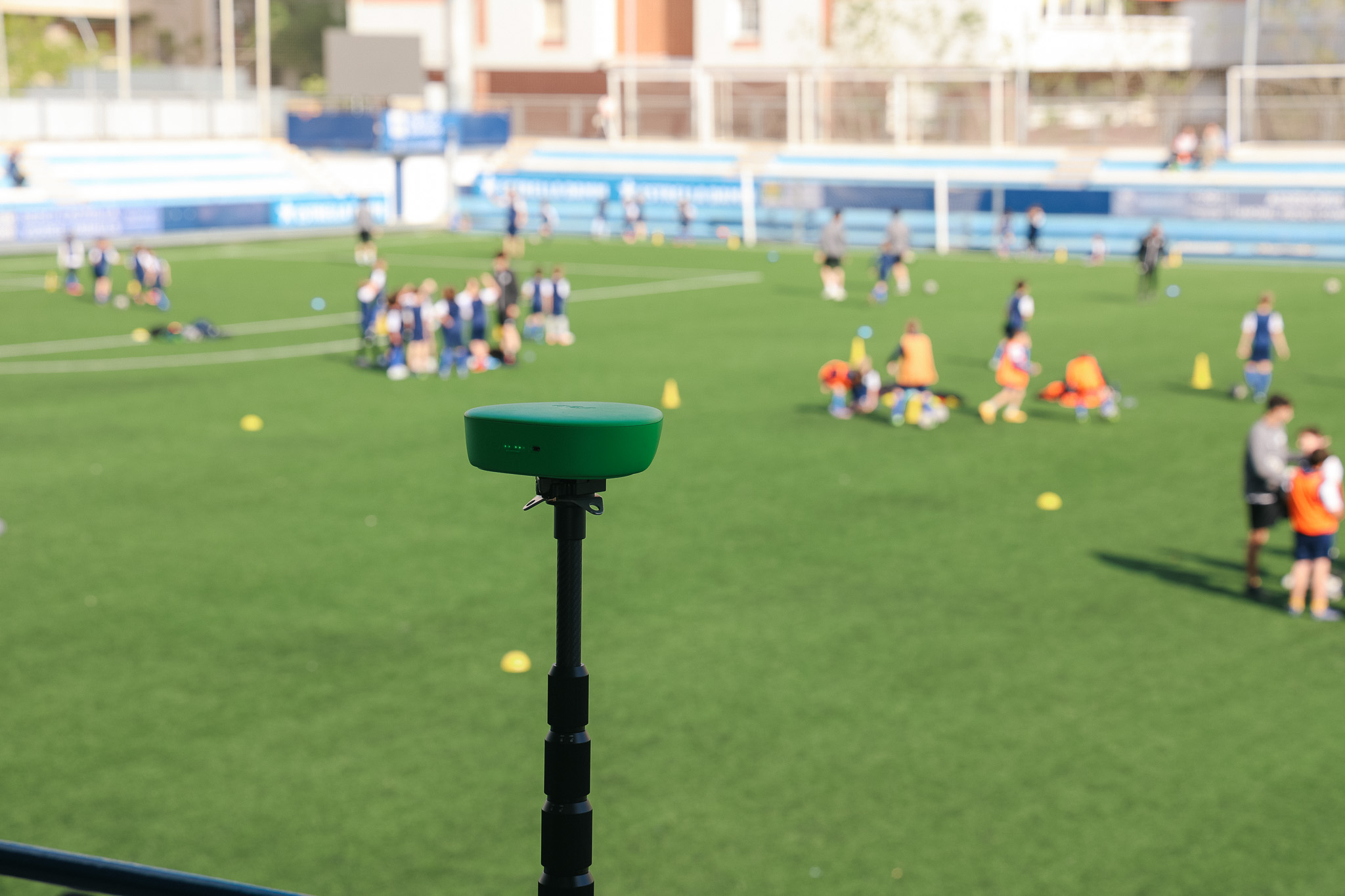
Veo Cam 3 sets up in under 2 minutes and records the full session automatically. Review drill execution and player positioning the same evening.
What youth football training should actually develop
Youth coaches face a consistent tension between developing individuals and winning matches. The coaches who produce the best players over time prioritise technical and tactical development over results at youth level. Players who learn to pass accurately under pressure, defend with correct body position, and make good decisions in tight spaces carry those qualities into every level they play.
The drills below are designed for sessions where development is the goal. They all involve decision-making, they all have a competitive element to maintain engagement, and they all generate footage that is useful for individual and team review.
For how to structure these drills into a complete 90-minute session, see the youth football practice guide.
Drill overview
The drills
Drill 1: Rondo 4v2
Four players form a square approximately 8 metres across. Two defenders work in the middle. The four outside players keep possession using one or two touches. When the defenders win the ball or force it out, the player who lost it and the player who played the ball that was intercepted swap into the middle. Run for 10 minutes with no breaks.
Coaching cue: "Move before you receive. The player without the ball should always be creating an angle. If you are standing still, you are making it harder for your teammate."
What to watch on video: Movement of the players without the ball. Players who only move when they receive the ball are passive in the rondo. The footage shows whether your team creates angles proactively or waits reactively.
Drill 2: Shadow defending
Pairs of players work in a 5x10 metre channel. The attacker walks or jogs forward with the ball. The defender mirrors the attacker's movement, maintaining a distance of 1 to 2 metres, staying goal-side, and keeping their weight slightly back on both feet. No tackling. The focus is entirely on body position, distance, and keeping the attacker in front. Run 5 reps per pair, then switch roles.
Coaching cue: "You are not trying to win the ball. You are making the attacker's options smaller. Stay on your feet, stay between the attacker and goal, and wait."
Age note: Appropriate from U8. Young players instinctively dive in to tackle. Shadow defending builds the patience and body position that makes tackling effective when it does come.
%20(1).jpg)
See defensive shape from above
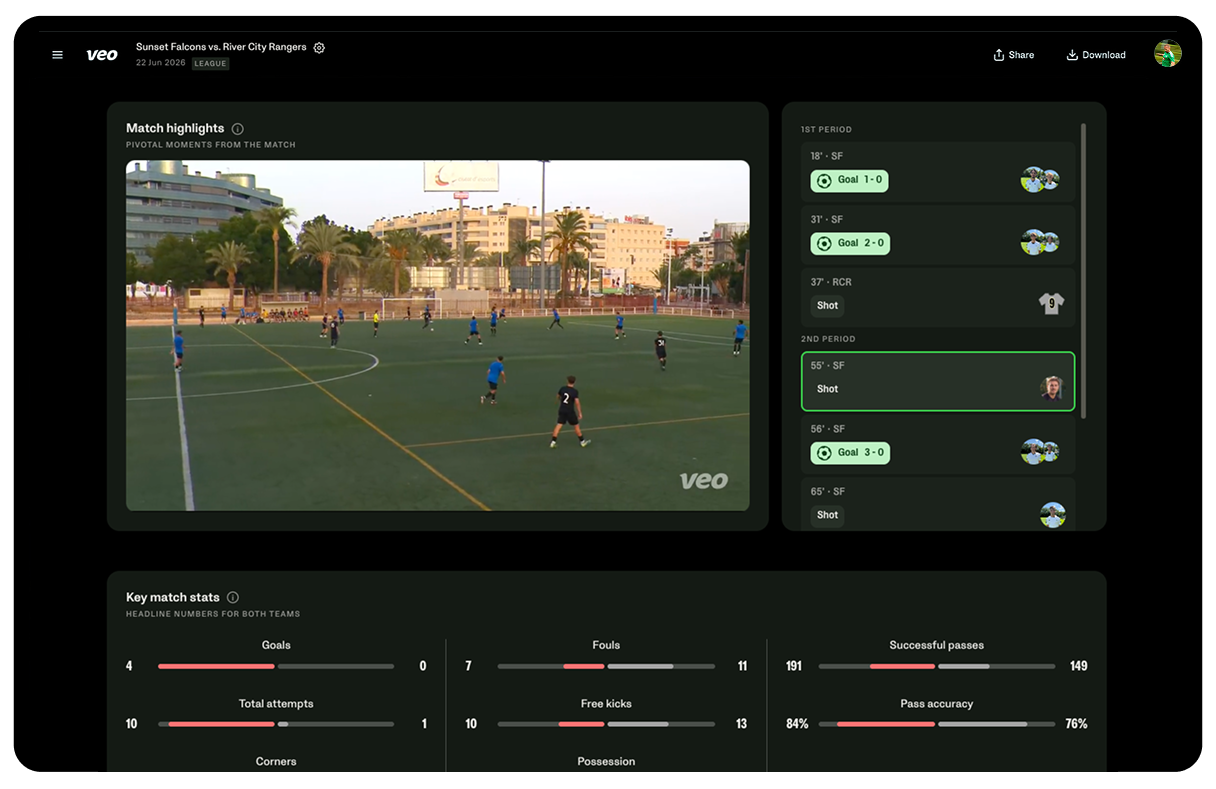
More than 40,000 clubs across 100 countries use Veo to store and share footage, with over 4 million matches filmed on the platform (Veo internal data, 2026). Veo Cam 3 captures the full training area so you can review defensive positioning and pressing shape in detail.
Drill 3: 4 goal game
Set up four small goals (or cone gates) at the corners of a 30x20 metre area. Two teams of four play a normal small-sided game but can score in either of the two goals assigned to them. This means teams must defend two goals simultaneously and attack in two directions, forcing constant scanning and defensive organisation.
Coaching cue: "Which goal are they threatening? Every time the ball changes hands, I want everyone to look up and find our two goals. Defence is not about the ball; it is about the space behind you."
What to watch on video: Team shape when out of possession. The 4 goal format forces defensive compactness in a way a single-goal game does not. Footage from above shows whether your team defends as a unit or as individuals chasing the ball.
Drill 4: Pressing trigger drill
Set up a 20x15 metre area with a goalkeeper and two defenders at one end and three attackers at the other. The coach passes to one of the defenders. That pass is the pressing trigger: the three attackers press immediately as a unit, trying to force a mistake within 5 seconds. If the defenders play out successfully, play continues. If the attackers win the ball, they score. Reset and repeat.
Coaching cue: "Press together, not in sequence. If one player presses and the other two watch, the defender plays around the press. All three move at the same moment."
Age note: Introduce at U10. Collective pressing requires players to read a trigger and react simultaneously, which is a significant cognitive step. Start at walking pace and build to game speed over multiple sessions.
Drill 5: 1v1 defending channel
Set up a 5x15 metre channel with a small goal at each end. Attacker starts at one end with the ball; defender starts 3 metres in front of the attacker. The attacker tries to dribble past the defender and score. The defender tries to prevent a shot or force the ball out of the channel. When the drill ends (goal, save, or ball out), players switch roles.
Coaching cue: "Show the attacker to the side you want them to go. Your body angle is your communication. If you stand square, you invite them to go either way."
What to watch on video: Defender's body angle at the moment of engagement and whether they maintain their shape when the attacker feints. Players who square up or lunge are identifiable in the footage in a way that is almost impossible to see live when you are coaching multiple channels simultaneously.
Drill 6: Finishing from crosses
A server stands on the right or left channel with a supply of balls. Two attackers start inside the penalty area: one on the near post, one on the far post. Server delivers a cross. The near-post attacker makes a run toward the near post; the far-post attacker makes a run to the penalty spot. Both try to finish. Goalkeeper defends. Alternate the crossing side every five balls.
Coaching cue: "Time your run so you arrive at the ball, not before it. A player who arrives too early has to stop and adjust. A player who times the run correctly is already moving forward when the ball arrives."
Age note: Introduce at U12. Timing runs from crosses requires spatial awareness and reading of the ball flight that younger players are still developing. At U10, simplify by making the crosses lower and slower.
Using video to make training stick
Training footage closes the gap between what coaches say and what players hear. A player who is told their defensive body position is wrong hears the correction and tries to adjust. A player who watches themselves defending with the wrong body position sees the problem directly and internalises the fix faster.
Coaches using Veo Cam 3 record training sessions and review footage before the next session. Clips from the rondo that show passive movement, or footage from the pressing drill that shows the team pressing in sequence rather than together, become the starting point for the next session's coaching points.
For goalkeeper-specific drills to run alongside these team sessions, see youth football goalkeeper drills. For the full match day routine that these sessions feed into, see how to film youth matches. To keep younger players engaged between structured drills, see the fun football games for kids guide.
Record every session. Review every week.
Veo Cam 3 sets up in 2 minutes and records automatically. Full session footage ready to review the same evening.

FAQs
The most effective youth football drills combine technical repetition with decision-making. Rondos develop passing and movement under pressure. Small-sided games with multiple goals develop defensive awareness and transition. 1v1 defending channels develop individual defending habits. The best sessions use all three types across the 90 minutes.
Start with individual defending before collective defending. Shadow defending builds correct body position and patience at the individual level. Pressing trigger drills build collective pressing habits at the team level. Both require repetition before players perform them reliably under match pressure. Use video to identify the specific moment where defending breaks down in your team.
Most youth clubs train once or twice per week. At U8 to U10, one session per week is sufficient. At U12 and above, two sessions per week allows one to focus on technical and individual skills and one to focus on tactical and team organisation. Match day is the third session; treat it as a learning environment as much as a competitive one.
Teach the trigger before the press. Players need to know what signal initiates the press: a back pass to the goalkeeper, a defender receiving with their back to goal, a poor first touch. Once the trigger is understood, drill the collective response at walking pace before building to game speed. Players who press individually without a shared trigger work against each other.
Yes. Training footage reveals what coaching live cannot: defensive shape from above, movement of players without the ball, pressing triggers being missed. Players aged 10 and above respond well to watching their own training footage. Short clips of two or three moments, shared before the next session, improve the quality of the following session significantly.

.jpeg)