Fun Football Games for Kids That Coaches Actually Use
Frederik Hvillum
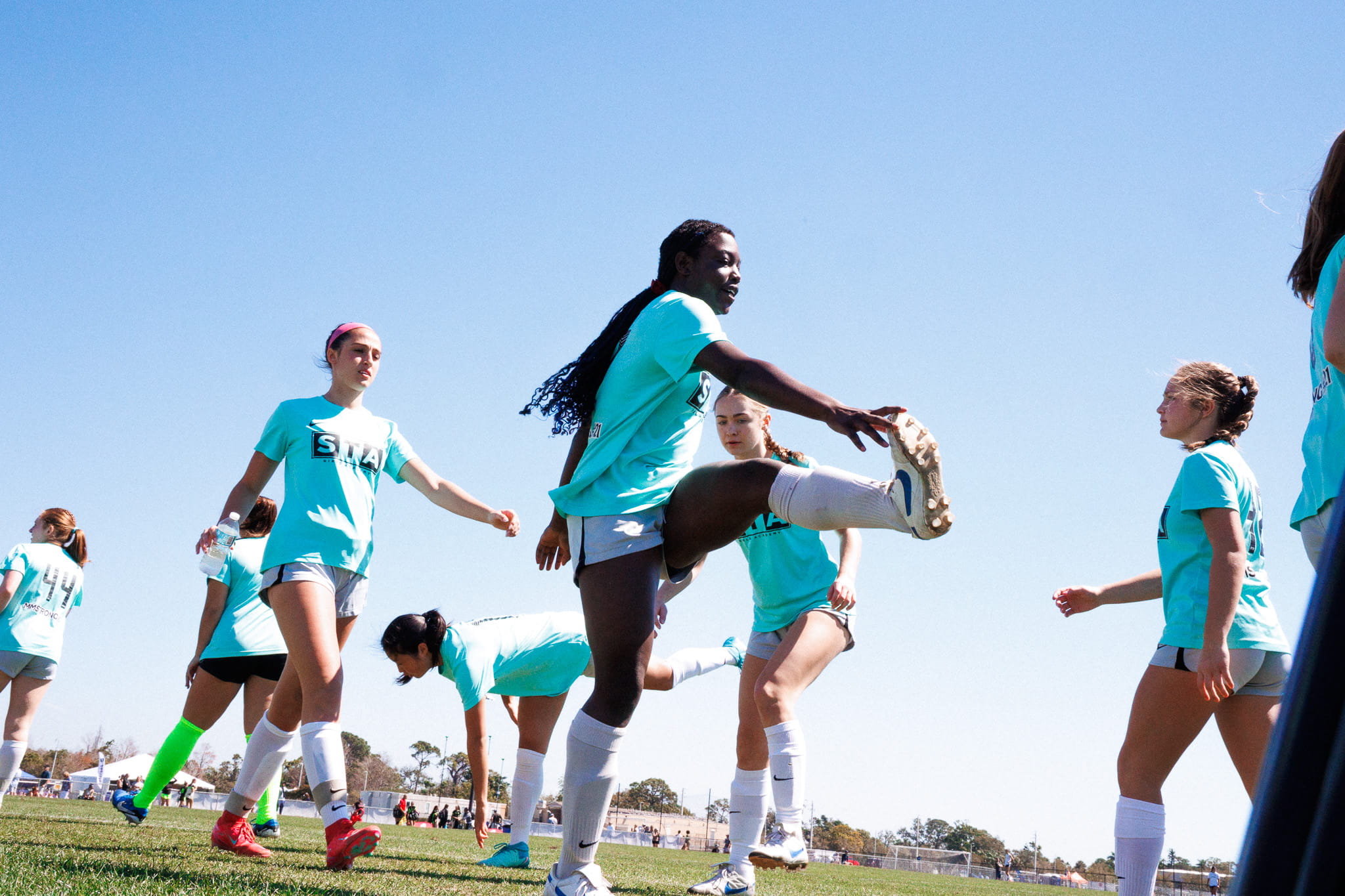
Five fun soccer games for youth players from U6 to U14. Sharks and Minnows, World Cup, gates dribbling and more. Age guidance and coaching cues for every game.
The research on youth sport participation is consistent: children who enjoy practice come back. Children who do not, stop. Fun is not a distraction from development. At U6 to U10 especially, it is the prerequisite for everything else. A player who loves coming to training will get more touches, more repetitions, and more competitive experience across a season than a player who attends reluctantly and disengages the moment the drill becomes difficult.
The five games in this guide are not fillers at the end of practice. They are structured activities that develop real football skills through competitive, enjoyable formats. Each one gives every player on the field a role, creates decision-making pressure, and generates the kind of moments that players talk about on the way home. For the full training session structure these games fit into, see the youth football training guide.
Capture the moments players remember
Veo Go records your full session automatically from a single iPhone. Fun games generate the best clips. Share them with players and parents the same evening.

Why fun games belong in every football practice
The most effective youth football sessions combine deliberate skill work with game formats that feel like play. Pure drill repetition builds technical habits but can reduce engagement over time, particularly in younger age groups. Games that have competitive stakes, clear objectives, and immediate feedback keep intensity high across the full session.
The games below share three qualities that make them worth running regularly. First, every player is active simultaneously: no lines, no waiting. Second, they all create genuine competition: players are trying to win something, which produces the decision-making pressure that drills alone cannot replicate. Third, they are all adjustable: the size of the area, the number of players, and the rules can all be modified to make the game easier or harder depending on the group.
| Game | Players | Age group | What it develops |
|---|---|---|---|
| Sharks and Minnows | 8-20 | U6 and above | Dribbling under pressure, agility, spatial awareness |
| World Cup | 8-20 | U8 and above | Competitive mindset, 1v1 defending, finishing |
| Freeze tag with ball | 8-16 | U6 and above | Close control, awareness, teamwork |
| Gates dribbling game | 8-20 | U6 and above | Dribbling, head up play, scanning |
| Four corner game | 12-20 | U10 and above | Transition, decision making, pressing |
The games
Sharks and Minnows
One or two players are designated as sharks and start without a ball in the middle of a 20x15 metre area. All other players (the minnows) start on one end line with a ball each. On the coach's signal, the minnows dribble to the opposite end line without the sharks kicking their ball out of the area. Any minnow who loses their ball becomes a shark. The last minnow with their ball wins. Run multiple rounds, increasing the number of sharks as the game progresses.
Coaching cue: "Keep your head up. If you are only looking at your ball, you cannot see the shark coming. Head up, ball close."
Age note: The ideal introductory game for U6 and U8. The tag-game format is immediately understood, the competitive stakes are clear, and the dribbling requirement is embedded naturally. At U10 and above, add the rule that the sharks must use only their feet to dispossess minnows.
World Cup
Each player picks a country name and starts with a ball outside a 15x15 metre area. One player starts without a ball as the defender inside the area. Players take turns dribbling into the area and trying to score in a small goal. If the defender wins the ball and kicks it out, they score a point and get to choose who defends next. If a player scores, they are safe. The player with the fewest goals conceded wins. Run for 10 minutes with rotating defenders.
Coaching cue: "Defender: you are trying to win the ball, not just block the shot. Get close, stay on your feet, and pick your moment."
What to watch on video: Attacker body shape when entering the area and whether the defender commits too early. Both are far clearer on video than from the sideline, particularly when multiple rounds are happening simultaneously.
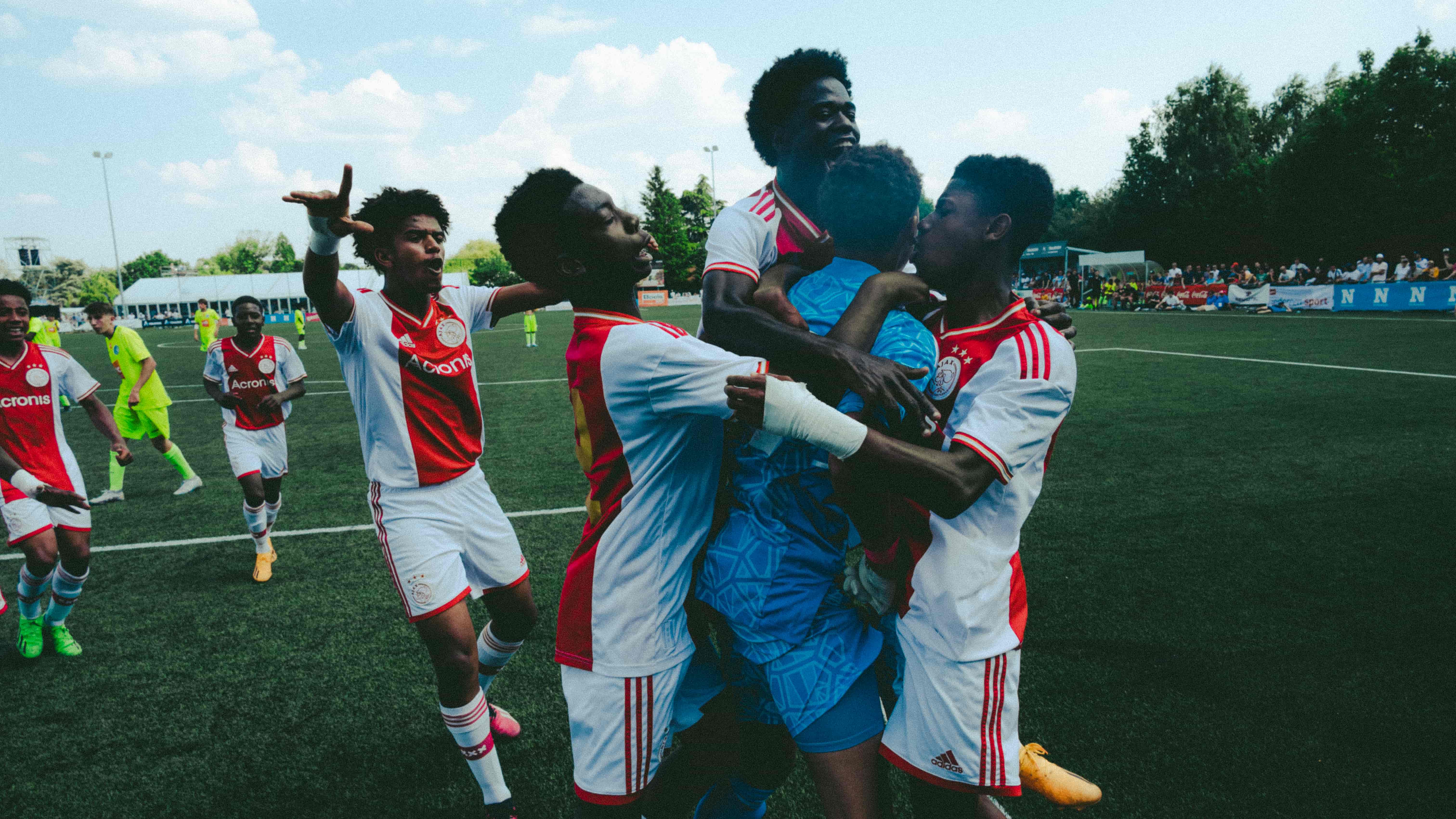
Share the best moments from practice
More than 40,000 clubs across 100 countries use Veo to store and share footage, with over 4 million matches filmed on the platform (Veo internal data, 2026). Veo Go captures every round automatically so coaches can share highlights with players and parents the same evening.
Freeze tag with ball
All players dribble freely inside a 20x20 metre area. Two taggers try to tag other players by touching them with their hand. Tagged players must freeze in place with the ball at their feet. A frozen player is unfrozen when a free player passes their ball through the frozen player's legs. The game ends when all players are frozen, or after two minutes. Rotate taggers every round.
Coaching cue: "Free players, keep scanning for frozen teammates. You win by working together. If you only focus on avoiding being tagged, you will lose every time."
Age note: Appropriate from U6. The rescuing mechanic creates natural teamwork without any instruction from the coach. Players develop the habit of scanning the field because the game rewards it directly.
Gates dribbling game
Set up 8 to 10 small gates (two cones 1 metre apart) randomly across a 25x20 metre area. Each player has a ball. The objective is to dribble through as many gates as possible in two minutes. Players count their own gates. Run three rounds, increasing difficulty by reducing the area or adding one or two players who try to kick balls out of the area. The player who dribbles through the most gates wins each round.
Coaching cue: "Head up, pick your next gate before you finish the one you are going through. The player who plans one gate ahead scores three times as many as the player who picks gates at the last second."
Age note: The best pure dribbling game for any age group. The self-directed format suits U6 to U14 equally. For players who have developed 1v1 skills, see the youth football 1v1 drills guide for more advanced individual challenge formats.
Four corner game
Set up a 25x25 metre area with a small cone goal in each corner. Two teams of five or six compete. A team scores by dribbling through any of the four corner goals, in any direction. There is no fixed attacking or defending end. Teams must attack and defend all four goals simultaneously. Play for 10 minutes with two-minute rounds. Award a bonus point to the team that scores in three different corners within a single round.
Coaching cue: "Find the unguarded corner. There are always two corners being watched and two corners that are open. Find the open one and go."
What to watch on video: Defensive shape and how quickly teams adjust when the ball changes hands. The four-corner format creates fast transitions. Video from above shows whether teams compress defensively as a unit or chase individually, which is the most important habit the game is designed to build.
Using video to get more from fun games
Fun games generate the best footage. The competitive intensity of Sharks and Minnows, the individual battles in World Cup, and the team movement in the four corner game all produce clips that are genuinely useful for coaching and that players want to watch.
Coaches using Veo Go record full sessions automatically and review footage before the next training. Clips from the gates game showing a player dribbling with their head down through every gate become the opening point for the next session's coaching conversation. Clips showing a player scanning ahead and planning their route demonstrate exactly the habit the game is designed to build. Players aged 8 and above respond immediately to seeing themselves on video, particularly when the footage shows them doing something well.
For how fun games fit into a complete 90-minute practice, see the youth football practice guide.
Record your next practice session
Veo Go sets up in under 2 minutes. Records automatically. Share the best clips with players and parents the same evening.
Related reading

FAQs
Sharks and Minnows and the gates dribbling game are the best starting points for U6 and U8 players. Both require every player to have a ball, keep every player active simultaneously, and embed dribbling and awareness skills in a format that feels like play. They also require no tactical explanation: the rules are immediately understood, and the competitive stakes are clear from the first round.
Keep every player active simultaneously: eliminate lines and waiting. Give every drill or game a competitive element so players have something to play for. Use time limits and scoring to create urgency. Vary the games from session to session rather than running the same format every week. The most important thing is that players leave practice wanting to come back, not that they finish every skill on the session plan.
At U6 to U8, fun games should make up the majority of practice time. Structured drill repetition has limited value at these ages because the cognitive and physical development required to execute drills consistently is still forming. At U10 and above, a well-structured session uses both: deliberate drill work to build specific technical habits, and games to apply those habits under competitive pressure.
In the youth soccer World Cup game, each player picks a country name and takes turns attacking a goal against a single defender. Players who score are safe; the defender earns points by winning the ball. The format creates individual 1v1 pressure in a competitive context that players find immediately engaging. It is one of the best formats for developing finishing and 1v1 defending at the same time without formal drill structure.
Fun games generate high-quality footage because the competitive intensity is naturally higher than in formal drills. Video from a full session shows dribbling head position in Sharks and Minnows, defensive decision timing in World Cup, and team shape in the four corner game. Players aged 8 and above respond well to watching clips from games they were just playing, particularly when the footage shows them doing something well.
.jpeg)