Youth Lacrosse Team Drills That Get Everyone Involved
Veo
Five youth lacrosse team drills covering 6v6, box lacrosse, and fast-break exercises. Includes a 75-minute session plan and tips for filming with Veo Cam 3.
Youth Lacrosse Team Drills That Get Everyone Involved
Most youth lacrosse practices follow the same pattern: individual skills, a few positional reps, then a scrimmage if time allows. Players spend a lot of time waiting in lines and not enough time playing together. The drills in this guide fix that.
Each one puts all or most of your roster in motion at the same time. They build the habits that matter most in games: ball movement, transition speed, communication, and trust between positions. This guide covers five team drills for youth lacrosse, a 75-minute session plan, and how to use video to get more out of every rep.
What makes a good youth lacrosse team practice drill?
The best team drills share three qualities. They keep players moving, they replicate game situations, and they require communication to work. A drill where one player acts while eleven watch is not a team drill.
At youth level, the goal is pattern recognition. Players need to see the same situations enough times that their responses become automatic. Drills that are too complex or too abstract produce confusion, not learning. Keep the structure simple, increase the pace gradually, and let the repetition do the work.
The youth lacrosse drills for beginners guide covers the individual foundations each player needs before team drills become productive. If your players are still working on cradling and basic passing, start there first.
What are the best youth lacrosse team drills for practice?
These five drills cover the core team situations your players will face in games. Run them in sequence for a complete session, or pick individual drills to target specific weaknesses.
1. 6v6 Possession Game (15 minutes)
Set up a 40x30 yard field with no goals. Two teams of six compete to complete five consecutive passes without the other team intercepting. When a turnover happens, the other team immediately starts their count from zero.
This drill builds ball movement under pressure. Players learn to create passing lanes, support the ball carrier, and communicate when they are open. The no-goal format removes individual shot-seeking and forces collective play.
Coaching cue: "Move before you receive. If you stand still, you give the defense an easy job."
Progression: Reduce the field size to increase pressure. Add a rule that no player can hold the ball for more than three seconds.
2. Box Lacrosse Drill (15 minutes)
Mark out a 20x15 yard box using cones. Run 4v3 situations inside the box with a small target goal at each end. The attacking team of four has 20 seconds to score before possession resets.
Tight spaces teach quick decisions, off-ball movement, and short passing combinations. Many youth players rely on dodging in open space and struggle when defenders compress the field. Box drills build comfort in traffic.
Coaching cue: "Find the open player, not the open space. Space means nothing without a teammate in it."
Age note: For U10 and younger, increase the box to 25x20 and give attackers 30 seconds. The concept stays the same, the pressure drops.
3. Fast-Break Exercise (15 minutes)
Start with three defenders in their own half and four attackers at midfield. A coach triggers the drill by rolling a ground ball toward the attackers. The four attackers recover the ball and attack the three defenders in a fast-break situation.
This drill replicates the most common scoring opportunity in lacrosse: the numbers-up transition. Young teams often slow down or reset in these moments rather than pushing the advantage. Drilling it builds the instinct to accelerate into space.
Coaching cue: "First step is forward. Always. The defense is not set yet."
Fast-break success depends on midfield transition speed. Pair this drill with youth lacrosse midfield drills to build the engine that creates these opportunities in games.
4. Ride and Clear (15 minutes)
Split your team into a riding unit of five and a clearing unit of six. The clearing team starts with possession behind their own goal. The riding team applies pressure. The clearing team has 30 seconds to move the ball past midfield.
Clearing is one of the most underpracticed skills in youth lacrosse. Teams that cannot clear consistently give up unnecessary turnovers in dangerous positions. This drill builds the outlet routes, communication, and composure that clearing requires.
Coaching cue: "Goalkeeper sets the clear. Everyone else responds to where the pressure is."
For the defensive side of this drill, see youth lacrosse defense drills for positioning and footwork that makes the ride effective.
5. Full-Field Scrimmage with Constraints (15 minutes)
Run a standard scrimmage with one rule added: every goal must involve at least three different players touching the ball in the build-up. Goals from solo efforts or two-player combinations do not count.
This constraint forces ball movement and stops individual players from dominating possession. Coaches can adjust the rule based on what they saw in the earlier drills: if passing was the problem, increase the required touches; if transition was the problem, add a rule that the fast-break counts double.
Coaching cue: "Three touches minimum. Find a way."
How does Veo Cam 3 improve youth lacrosse team practice?
The problem with coaching team drills is attention. A coach watching a 6v6 possession game cannot track all twelve players at once. They see the ball, maybe the immediate area around it, and miss everything happening off-ball. That is exactly where most of the learning is happening.
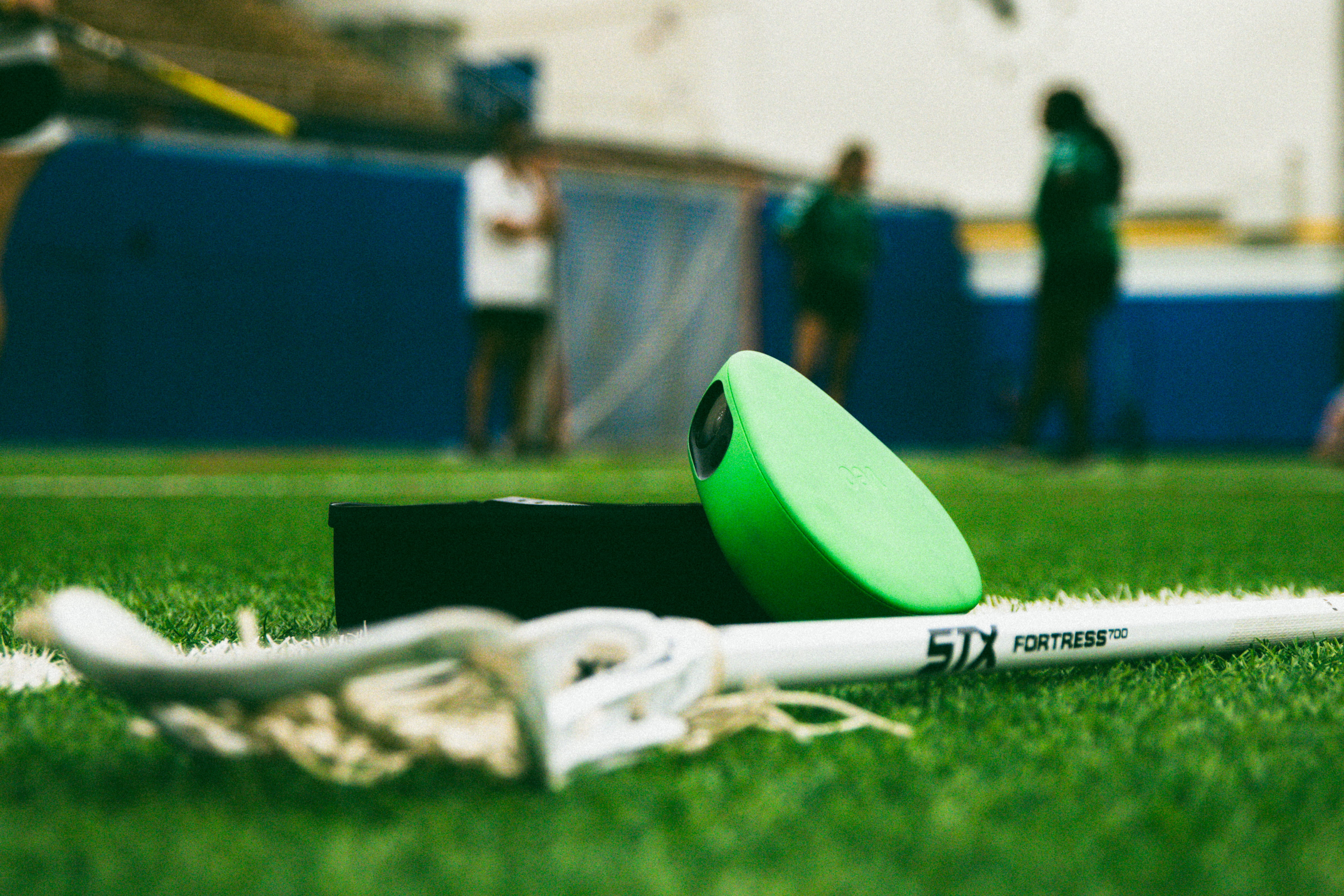
Veo Cam 3 captures the full lacrosse field from a single wide-angle position without a camera operator. The AI tracking follows the ball automatically. After practice, coaches have complete footage of every drill: off-ball movement, defensive shape, transition routes, and positioning decisions that were invisible during the session.
Review sessions change how players understand the game. A midfielder who keeps losing their man off-ball can see it on screen. A defensive unit that keeps leaving gaps on the weak side can watch the pattern repeat across multiple reps. More than 40,000 clubs in 100+ countries use Veo to film and review sessions at every level of the game. Setup takes under two minutes.
More than 40,000 clubs across 100 countries use Veo to store and share footage, with over 4 million matches filmed on the platform (Veo internal data, 2026)
See how Veo Cam 3 gives youth lacrosse coaches the full-field view they need.
What does a complete 75-minute youth lacrosse team practice look like?
This session runs the five drills in sequence, building from structured possession to full-field play.
Add a 10-minute warm-up at the start and a 5-minute cool-down debrief at the end for a complete 90-minute practice. Use the debrief to show one or two clips from the Veo footage if possible, since players absorb feedback better when they can see what the coach is describing.
What are the most common problems in youth lacrosse team drills?
Players clustering around the ball. The most common issue in youth team play. Players follow the ball instead of holding their position. Drill the rule: if the ball is on your side, support it; if the ball is on the other side, get into a position to receive the outlet.
No communication. Players call for the ball in individual drills but go silent in team settings. Require verbal calls in every team drill. If a player receives a pass without a call, the drill restarts.
Transition too slow. Youth teams often pause at turnovers and wait for organization. Drill the instinct to push forward immediately when possession switches.
Goalkeeper not directing the clear. In the ride and clear drill especially, young keepers stay quiet and let the field players figure it out. The keeper has the best view of the field. Build the habit of directing the clear from the first session.

FAQs
Keep transitions between drills under two minutes, keep instructions short, and add competitive elements wherever possible. Counting consecutive passes, timing clears against the clock, and awarding points for goals scored with three-plus touches all add stakes without adding complexity.
At U12 and below, a 50/50 split works well: half the session on individual fundamentals, half on team drills. At U14 and above, shift toward 30% individual and 70% team, since players at that level have enough individual foundation to benefit most from collective repetitions.
Keep review sessions short and specific. Pick one or two clips that show a clear pattern, positive or negative, and show them to the group. Ask players what they see before offering your own analysis. Players who identify problems themselves are more likely to correct them in the next session.
Box lacrosse drills use a smaller, confined space to force quick decisions and short passing. Field lacrosse drills use the full or partial field and emphasize spacing, transition, and long passing. Both have value in youth development. Box drills build comfort in traffic; field drills build transition speed and field vision.
Most of the drills in this guide work with 8-12 players. The 6v6 possession game and box lacrosse drill can run with as few as eight. For ride and clear, you need at least ten. If you have a smaller squad, adjust the numbers and field size to keep the same tactical situation.

.jpg)