Youth Soccer Goalkeeper Drills: A Coaching Guide
Frederik Hvillum
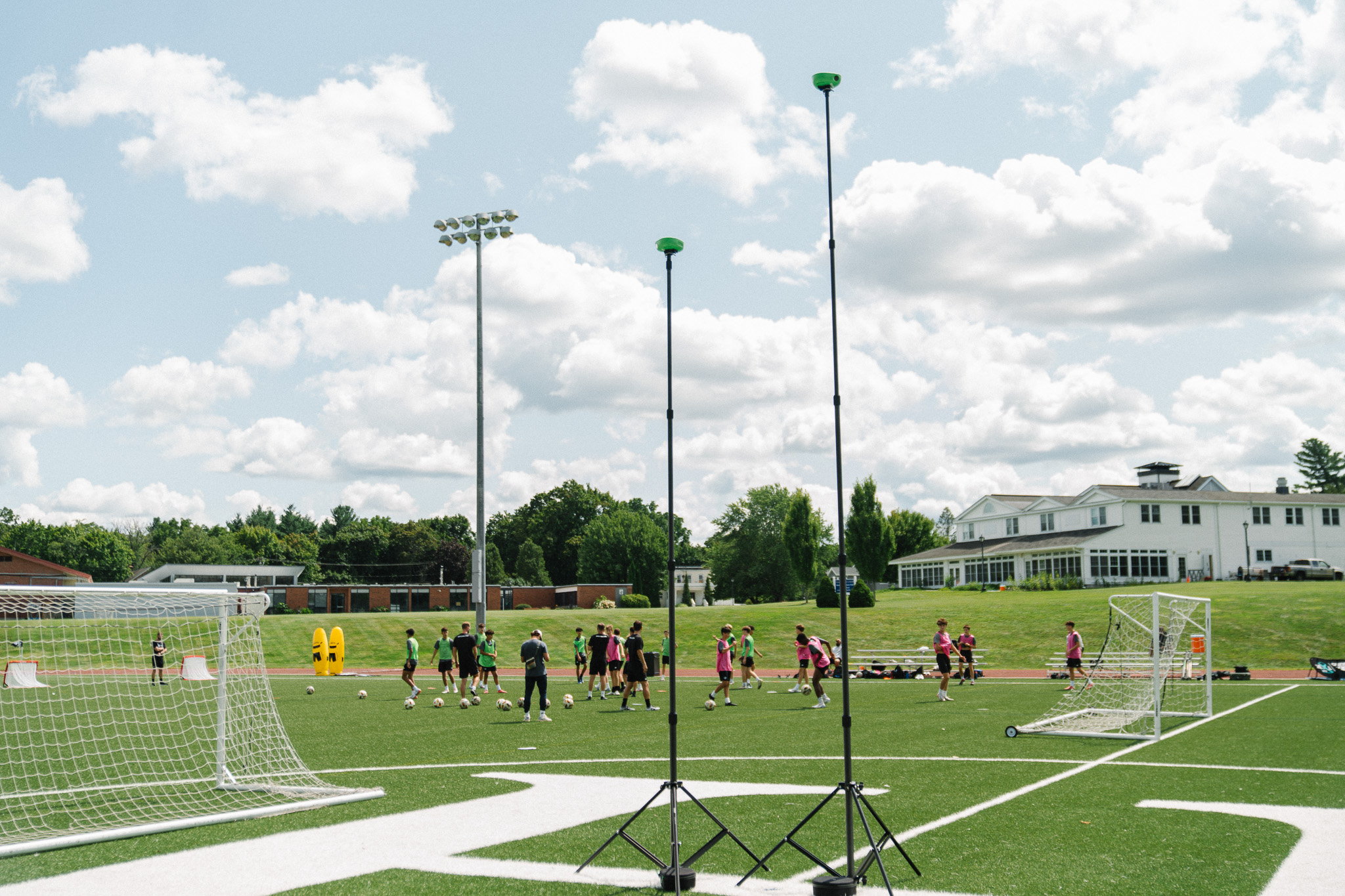
Goalkeeper drills for youth soccer coaches. Positioning, footwork, shot-stopping, and distribution for players aged 6 to 14, with coaching cues for each drill.
Goalkeeping is the most technically specific position in youth soccer, and the most frequently undertrained. Most youth coaches are outfield players by background. They know how to run a passing drill and how to structure a possession game. When it comes to the goalkeeper, the instinct is often to separate them and keep them busy rather than coach them deliberately.
This guide covers six goalkeeper drills for youth soccer coaches, from basic ready position and footwork through to crossing and distribution. Each drill includes coaching cues, age guidance, and notes on what to watch for in the footage. All drills are designed to be run by a coach without specialist goalkeeper coaching experience.
Film your goalkeeper sessions with Veo Cam 3
Positioning errors and footwork habits are nearly impossible to identify from behind the goal. Veo Cam 3 captures the full goal area and penalty box so you can review goalkeeper technique in detail after every session.
.jpg)
What young goalkeepers actually need
At U6 to U8, goalkeeper training is almost entirely about making the position feel comfortable. Young players who are put in goal and told to stop the ball without any instruction develop fear and avoidance habits that are hard to undo later. The priority at this age is confidence with the ball at the hands and feet, not technical precision.
At U10 to U12, the technical foundations become important. Ready position, lateral footwork, angle play, and basic distribution are all teachable at this age and compound quickly over a season. Players who have correct habits at U12 develop far faster at U14 and above than players who are correcting ingrained mistakes.
At U13 to U14, crosses, distribution under pressure, and decision-making can be introduced in realistic situations. The goalkeeper is now playing a role in the team's build-up play, and coaching needs to reflect that.
Drill overview
The drills
Drill 1: Ready position and footwork
The goalkeeper stands in the centre of the goal in the ready position: feet shoulder-width apart, weight slightly forward on the balls of the feet, knees soft, hands in front of the body at roughly hip height. Coach rolls balls to the left and right corners of the goal at walking pace. The goalkeeper steps laterally to meet each ball, picks it up cleanly, returns to the centre, and resets the ready position before the next ball.
Coaching cue: "Step, do not dive. Your first movement is always a step toward the ball. The dive is the last resort, not the first response."
Age note: Appropriate from U6. Keep the balls slow and the distances short. The goal at this age is familiarity with the ready position and the habit of resetting after each save.
Drill 2: Low ball handling
Coach rolls balls directly at the goalkeeper and slightly to either side at increasing pace. Goalkeeper uses the scoop technique for balls on the ground: kneel on one knee, hands together forming a cup behind the ball, scoop into the chest. For balls arriving at pace, the goalkeeper drops to the knee on the side the ball is arriving from and scoops. Run 15 repetitions, alternating sides.
Coaching cue: "Get your body behind the ball. Your hands are the second line of defence. If the ball beats your hands, your body stops it."
What to watch on video: Whether the goalkeeper's body is behind the ball or whether they are reaching with only their hands. Reaching is the most common error at U6 to U10 and is almost invisible to a coach standing behind the goal during the drill.
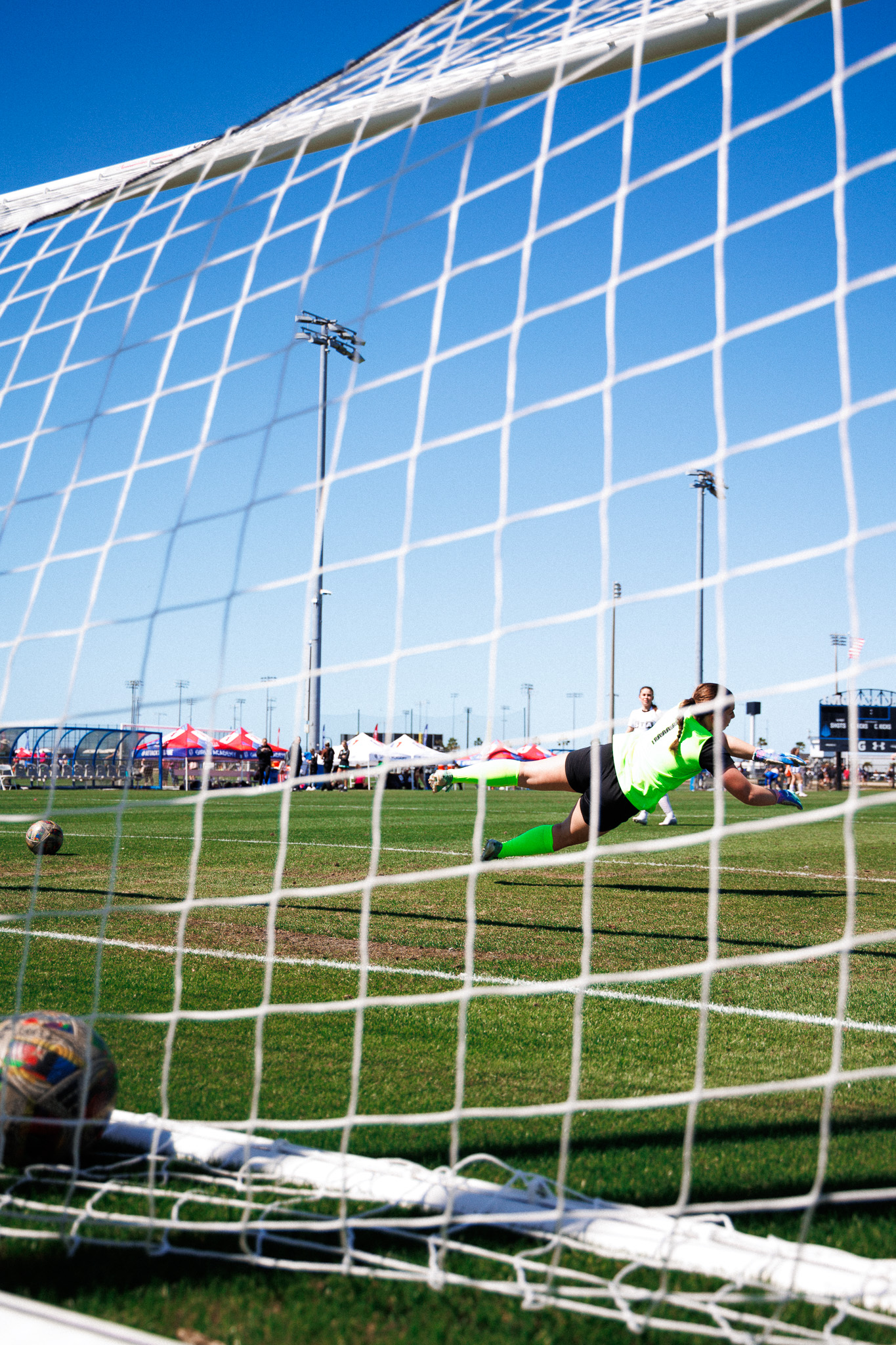
Catch technique errors on camera
More than 40,000 clubs across 100 countries use Veo to store and share footage, with over 4 million matches filmed on the platform (Veo internal data, 2026). Coaches using Veo Cam 3 identify goalkeeper positioning errors that are invisible from the sideline.
Drill 3: Set and react
Goalkeeper stands in the ready position 1 metre in front of the goal line. Coach stands 6 metres away with a supply of balls. On the coach's signal (a clap or a verbal cue), the goalkeeper sets (a small hop to reset the feet) and the coach shoots low to either corner. The goalkeeper dives to save. The set before the shot is the key habit: it loads the legs and makes lateral movement faster.
Coaching cue: "Wait for the set cue before you move. A goalkeeper who moves early is a goalkeeper who gets beaten by the shape of the shot."
Age note: Introduce at U8. The set habit is one of the most important technical foundations in goalkeeping and one of the easiest to ingrain early. Players who do not develop it by U12 tend to guess early on shots for the rest of their career.
Drill 4: Box to post movement
Set up a full-size or age-appropriate goal. Goalkeeper starts on the penalty spot. Coach positions with the ball at various points around the penalty area: central, left channel, right channel, byline. For each position, the goalkeeper moves to the correct angle, cutting off the near post while covering as much of the goal as possible. No shots yet. Coach checks the angle, confirms or corrects, then moves to the next position.
Coaching cue: "Imagine a line from the ball to the centre of your goal. You stand on that line, as far off your line as you can while still getting back for a chip."
What to watch on video: A camera positioned behind the goal looking toward the field shows angle errors clearly. A goalkeeper who looks well-positioned from the sideline may be exposing the far post when seen from behind. This is one of the most valuable uses of match footage for goalkeeper development.
Drill 5: Distribution under pressure
Goalkeeper receives a back pass or a save and must distribute quickly to a target player. Run three variations: a roll-out to a wide player, an overarm throw to a midfielder, and a goal kick to a target in the defensive third. Increase the time pressure across sets by counting to three after the goalkeeper has the ball. The focus is on decision-making speed and accuracy, not power.
Coaching cue: "Look before you catch. When the ball is in the air on its way to you, your eyes should already be finding your options. By the time you have the ball, you should already know where it is going."
Age note: Introduce at U10. At U8 and below, distribution is secondary to handling and positioning. Introduce the roll-out first and add the throw and goal kick progressively.
Drill 6: Cross and claim
Two servers with balls stand on the left and right corners of the penalty area. A striker positions centrally. Coach signals which server to cross. Server delivers a ball into the box. Goalkeeper must call "keeper", come to claim the cross at the highest point, and land safely. Striker applies light passive pressure. Alternate sides. Run 10 crosses per set.
Coaching cue: "Your call is your authority. When you call, everyone moves for you. Call early, call loud, and go for everything you call."
Age note: Introduce at U12 when physical size and coordination are sufficient to challenge for high balls safely. At U10 and below, work on the movement and the call without the pressure of a striker.
Using video to develop your goalkeeper
Goalkeeper coaching is one of the areas where video has the highest return. A coach watching from the sideline during a match sees the goalkeeper in profile. The angle play, the positioning relative to the posts, and the footwork before a save are all partially or completely invisible from that position.
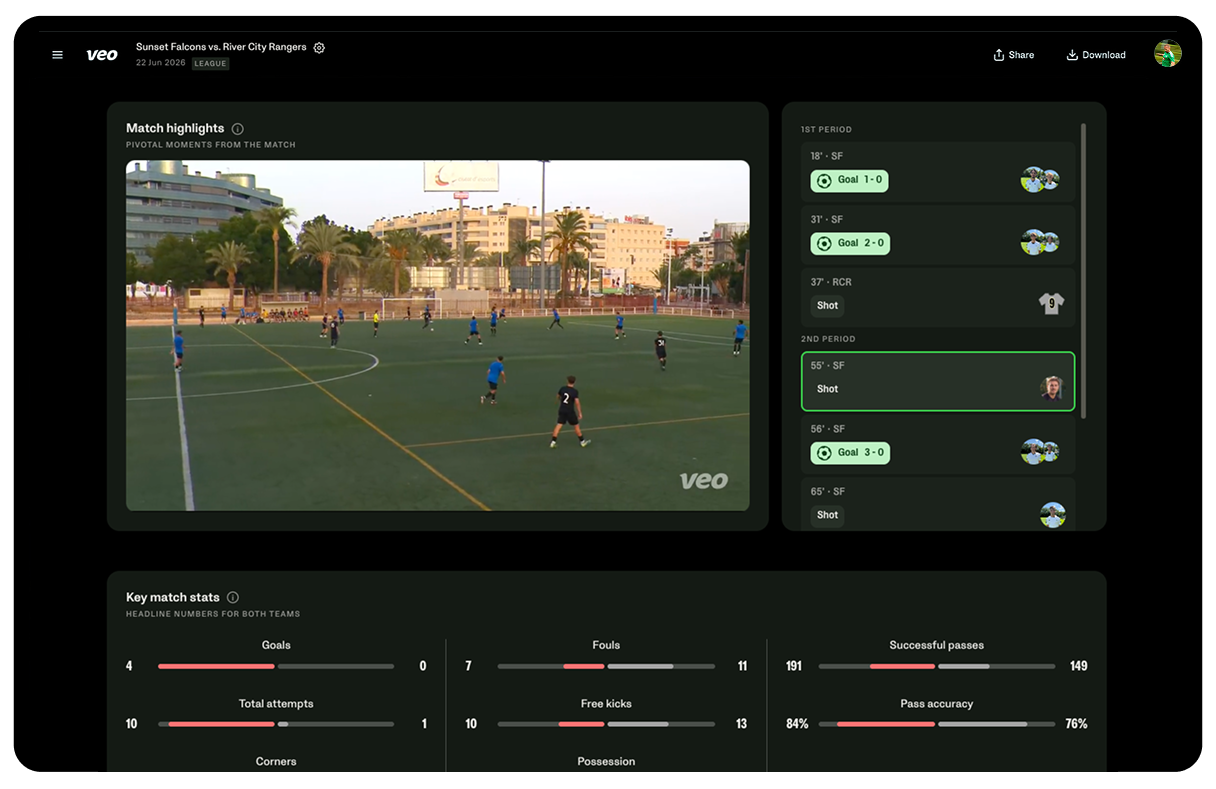
Coaches using Veo Cam 3 review goalkeeper positioning from behind the goal angle in the platform after matches. When a goalkeeper is conceding goals from positions they appeared to cover, the footage usually reveals an angle or positioning error that was not visible live. Showing the goalkeeper the clip closes the feedback loop faster than any verbal description.
For how to integrate goalkeeper sessions into a full training plan, see the youth soccer practice guide. For how to capture goalkeeper footage on match day, see how to film youth matches.

FAQs
At U6 to U8, confidence with the ball and a comfortable ready position are the priorities. At U10 to U12, angle play, lateral footwork, and basic distribution become the focus. At U13 and above, crossing, decision-making on distribution, and communication with the defensive line are the key development areas. Technical precision matters less than correct habits at every age.
Focus on three fundamentals: the ready position, getting the body behind the ball, and angle play. These do not require specialist goalkeeper coaching knowledge to teach and are the foundation of everything that follows. Use video to supplement your coaching: footage from behind the goal reveals positioning errors that are invisible from the sideline.
Basic ready position and low ball handling are appropriate from U6. The priority at this age is making the position enjoyable and building comfort with the ball. Rotate all players through the position at U6 to U8 so no one is labelled as the goalkeeper before they have tried other positions. Dedicated goalkeeper sessions become valuable from U10 when the technical foundations can be taught meaningfully.
Involve them in all possession and passing drills as an outfield player. A goalkeeper who only works in goal during training develops no feel for the game outside the penalty area. Give them specific roles in small-sided games, particularly as a target player or in build-up from the back. A goalkeeper who understands the game as an outfield player makes better decisions with the ball.
Yes, and it has a particularly high return for goalkeepers. Angle play and positioning errors that cause goals are largely invisible to a coach watching from the sideline during the match. Footage from a wide-angle camera captures the full goal area and allows the coach to review the goalkeeper's position relative to the ball and the posts on every shot. Players who watch their own footage identify their positioning errors faster than players who receive only verbal feedback.

.jpeg)