Baseball Drills for 7 Year Olds: A Coach Guide
Frederik Hvillum
.jpg)
The best baseball drills for 7 year olds. Age-appropriate hitting, throwing, catching, and fielding drills that keep young players moving, engaged, and developing.
Seven-year-olds are at the age where baseball either becomes something they love or something they lose interest in. The difference is almost never talent. It is almost always practice: whether it was fun, whether they got enough turns, whether they felt capable when they left.
This guide covers five drills specifically designed for 7-year-old baseball players, along with a complete 48-minute practice plan that keeps every player moving. Each drill is built around three principles: short explanations, high repetition, and immediate success so that every child leaves practice wanting to come back.
Film practice with Veo Go
Veo Go sets up in under 2 minutes and records automatically. Review mechanics and see exactly what your youngest players are working on.
.jpg)
What 7-year-olds can and cannot do in baseball
Understanding development at this age prevents coaches from expecting too much too soon. Seven-year-olds have improving hand-eye coordination but are not yet consistent. They understand simple instructions but lose focus during long explanations. They are competitive but easily discouraged by failure. They respond well to praise and quickly disengage from drills that feel repetitive without a game element.
What works at this age:
- Drills with no more than one coaching cue at a time
- High repetition with immediate feedback
- Competitive games that feel fun rather than instructional
- Praise for effort and specific actions, not just results
- Sessions that end before energy drops
What does not work: long lines, complex instructions, correcting every error, running drills until players are bored, and sessions that prioritise coaching over playing.
Drill overview
The drills
Drill 1: Tee relay
Set up two or three tees with nets or a fence behind them. Players rotate through the tees in teams of three: one player hits, one player retrieves balls from the net, one player waits their turn. Each player takes five swings, then rotates. The relay format eliminates long lines and keeps everyone involved even when they are not hitting.
Coaching cue: "Watch the ball hit the bat. Keep your eye on the ball all the way through the swing."
What to watch: Eyes on contact. Most 7-year-olds pull their head up before contact, which is the single most common cause of missed hits at this age. One coaching cue, repeated every swing, is more effective than a full technique explanation.
Drill 2: Bucket toss catch
Players pair up at 5 metres apart. One player tosses a tennis ball underhand to their partner, who catches it and tosses it back. A bucket of 10 tennis balls sits next to each tosser. Focus on catching with two hands and bringing the ball into the body on contact. Run for 8 minutes, then players switch roles. The underhand toss is slower and more predictable than a thrown ball, which gives 7-year-olds enough time to set their hands correctly.
Coaching cue: "Two hands. Show me your alligator mouth. Top hand comes down on top of the bottom hand when the ball arrives."
Age note: Use tennis balls throughout for this age group. Regulation baseballs move faster than 7-year-olds can reliably track, which produces fear responses rather than catching habits. Tennis balls build the same technique at a speed that produces success.
See every rep in slow motion
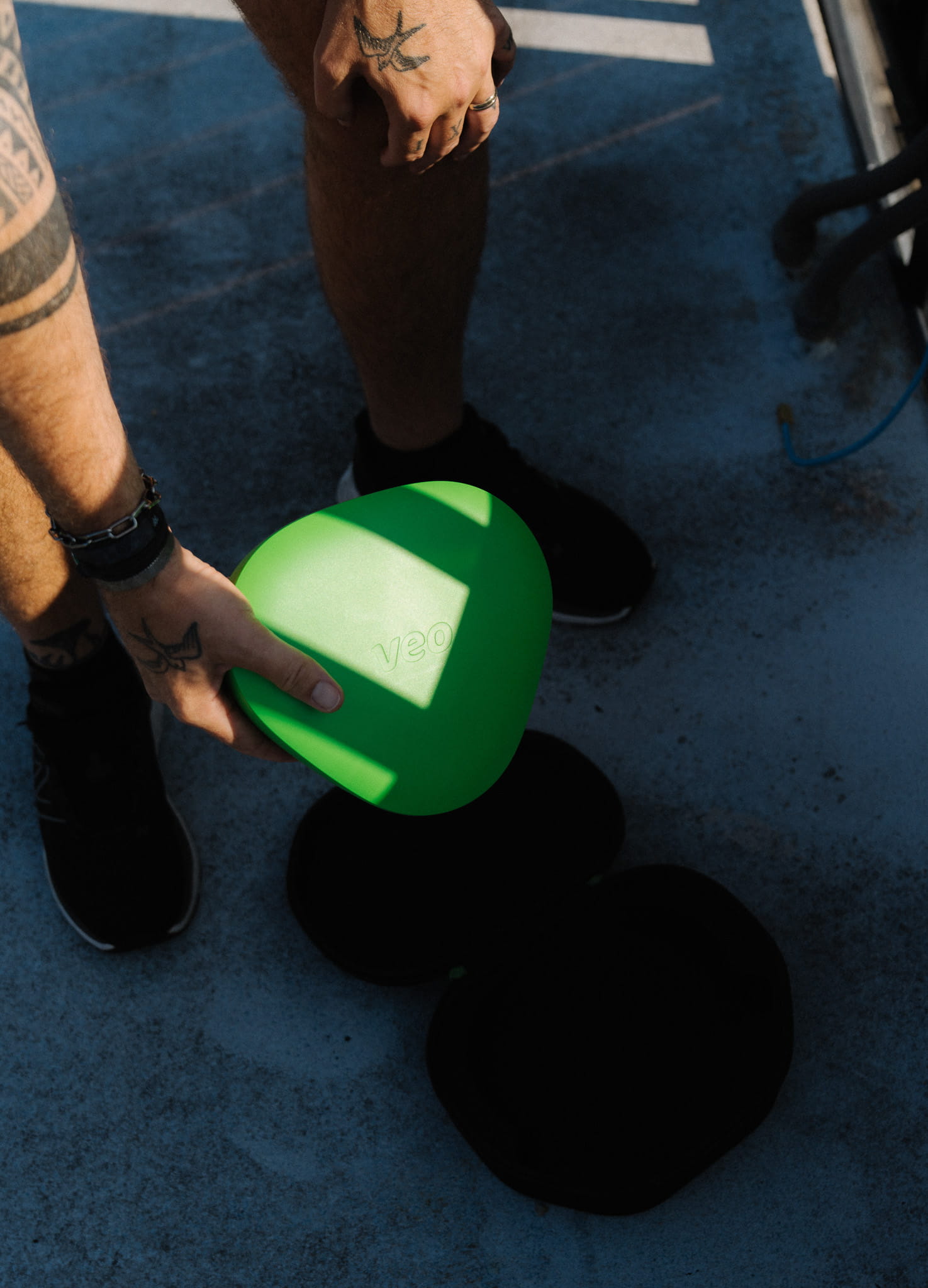
More than 40,000 clubs across 100 countries use Veo to store and share footage, with over 4 million matches filmed on the platform (Veo internal data, 2026). Veo Go captures catching mechanics and swing technique so you can review what actually happened, not just what you thought you saw.
Drill 3: Roll and scoop
The coach stands 5 metres in front of a line of players and rolls tennis balls one at a time to each player in sequence. The player moves to the ball, bends their knees, gets their glove on the ground, scoops the ball, and holds it up to show the coach. No throwing back. The player runs the ball back to a collection bucket next to the coach, then joins the back of the line. Keep the pace fast so no player waits more than 30 seconds.
Coaching cue: "Get your glove on the ground first. Bend your knees and get down to the ball. Do not wait for the ball to come up to you."
Progression: Once players can scoop reliably from a straight roll, vary the angle: rolls to the left, rolls to the right, angled rolls that require lateral movement. The movement element is the most important part of fielding development at this age.
Drill 4: Partner throw warmup
Players pair up at 15 feet apart. They throw back and forth for 8 minutes, focusing on one thing: stepping toward the target. Every throw starts with a step forward on the opposite foot from the throwing hand. The coach walks through the pairs and gives one cue only. No correcting grip, arm angle, or follow-through at this stage. Stepping toward the target is the foundational habit.
Coaching cue: "Step to your partner. Your front foot points at the person you are throwing to. Show me your step before you throw."
Safety note: Keep all pairs throwing in the same direction and keep 15 feet as the maximum distance for this age group during warmup. Longer throws at 7 years old encourage muscling the ball rather than mechanics.
Drill 5: Baserunning relay game
Split players into two teams. Set up a base circuit with cones: home, first, second, third. On the coach's signal, the first player from each team runs the full base circuit and tags the next player in line. The team that completes all runners first wins. Run three rounds. The competitive element maintains energy at the end of practice, and the base running reinforces the habit of running through first base and rounding the other bases.
Coaching cue: "Run through first base. Do not slow down before you get there. Speed up as you hit the bag."
Why it works: Ending practice with a game rather than a drill means players leave with energy and a positive memory of the session. At age 7, the emotional memory of practice matters as much as any technical development that happened during it.
A complete 48-minute practice plan for 7-year-olds
Keep sessions under 60 minutes for this age group. Attention and energy drop significantly after 45 to 50 minutes, and a session that ends while players are still engaged is more valuable than one that runs until they are bored. For how to build on this structure as players get older, see the youth baseball coaching tips guide.
Using video with young players
Video review works differently at age 7 than at age 12. Most 7-year-olds are not yet ready to analyse their own mechanics from footage. What video does at this age is give coaches accurate information about what is actually happening, which is often different from what they think they are seeing while managing a full group.
Coaches using Veo Go review footage after practice to identify the one or two mechanical habits that are most worth addressing in the next session. Trying to correct five things at once at this age produces confusion. Identifying the single most impactful correction and focusing one session's coaching on it produces visible improvement.
For how to set up your camera at youth practice, see how to film youth matches. The same setup principles apply for T-ball and coach pitch as for any other youth sport.
Know exactly what to work on next session
Veo Go records practice automatically. Review footage after the session and identify the one coaching point that will make the biggest difference next time.
.jpg)

FAQs
Tee work, underhand catch drills, ground ball scooping, short-distance throwing, and baserunning games are the five most effective drills for 7-year-olds. All five keep players active, use simple one-cue coaching, and build the foundational habits that carry into older age groups. Use tennis balls wherever possible to increase catch success rate and build confidence.
Use soft training balls or tennis balls for most drills at this age. Regulation baseballs move faster than most 7-year-olds can reliably track during catching and fielding drills, which produces avoidance behaviour rather than technique development. Reserve regulation balls for tee work with a net and for game situations where the pitch is controlled.
45 to 50 minutes is the ideal length. Attention and energy drop significantly after this point. A session that ends while players are still engaged is more effective than one that runs until they are disengaged. End with a game or competitive activity so the final memory of practice is positive energy rather than fatigue.
Keep every player active every minute. Long lines are the fastest way to lose a 7-year-old's attention. Use relay formats where players rotate quickly, competitive games where everyone participates simultaneously, and drills that produce immediate success rather than repeated failure. End practice with something fun and competitive so players leave with energy.
Focus on one thing per drill. At age 7, players can act on one coaching cue reliably. Two cues produce confusion. The most important mechanical habits to build at this age are watching the ball to contact, catching with two hands, bending the knees to scoop ground balls, and stepping toward the target when throwing. Build one habit at a time across multiple sessions rather than trying to correct everything at once.

%20(1).jpg)