How to Get a Soccer Scholarship: The Complete Guide [2026]
Veo

How soccer scholarships work, what coaches look for, and how video footage gives players a competitive edge in the recruiting process. A complete guide for players and families.
Soccer scholarships are significantly misunderstood by most families entering the recruiting process. Full rides are rare. Most scholarships are partial, split among an entire roster, and vary year to year. Understanding what scholarships actually look like, what coaches evaluate, and how to position yourself effectively changes how families approach the process and what they invest in.
This guide covers how soccer scholarships work at every division, what college coaches look for when evaluating recruits, and the specific role video footage plays in getting noticed by programs that might otherwise never see a player perform.
Build your recruiting footage library with Veo Go
Every game filmed automatically. No operator needed. Full footage ready to clip and share with college coaches.

How soccer scholarships actually work
Soccer is an equivalency sport under the NCAA, which means coaches have a fixed pool of scholarship money to distribute across the roster however they choose. They are not required to give full scholarships. Most awards are partial, and amounts change from year to year as roster needs shift.
The practical implication is that chasing a full scholarship at an NCAA D1 program is not a realistic goal for most players. The more useful question is which division and which specific programs represent the right athletic and academic fit, then pursuing those programs aggressively with strong video and consistent outreach.
What college soccer coaches evaluate
College coaches evaluate recruits on four factors. Understanding which of these video addresses directly is important for building a recruitment strategy.
Athletic profile
Speed, athleticism, size, and physical presence relative to the level the coach is recruiting for. This is assessed quickly. A coach who watches 30 seconds of footage knows whether a player's physical profile is in range for their program. Video from a consistent elevated camera position shows this clearly. Footage filmed from pitch level by a parent does not.
Technical quality
First touch, passing range, shooting technique, defensive ability. These are evaluated from game footage, not training clips. Coaches want to see technique under real match pressure, not in staged situations. A highlight reel built from consistently filmed game footage shows technical quality in context.
Tactical intelligence
Positioning, decision-making, off-ball movement, and reading of the game. This is where the full-field panoramic view from Veo footage creates a genuine advantage. A coach reviewing wide-angle footage can see whether a player is in the right position before they receive the ball, whether they press intelligently without the ball, and whether their movement creates space for teammates. These qualities are invisible in follow-cam footage that only shows ball-contact moments.
Character and competitive mentality
Work rate, reaction to mistakes, communication with teammates, and intensity across a full 90 minutes rather than just highlight moments. These qualities show up in full game film in a way they never do in a highlight reel. A coach who watches 20 minutes of full-game footage from two or three different matches forms a different impression than one who watches a three-minute highlights video.
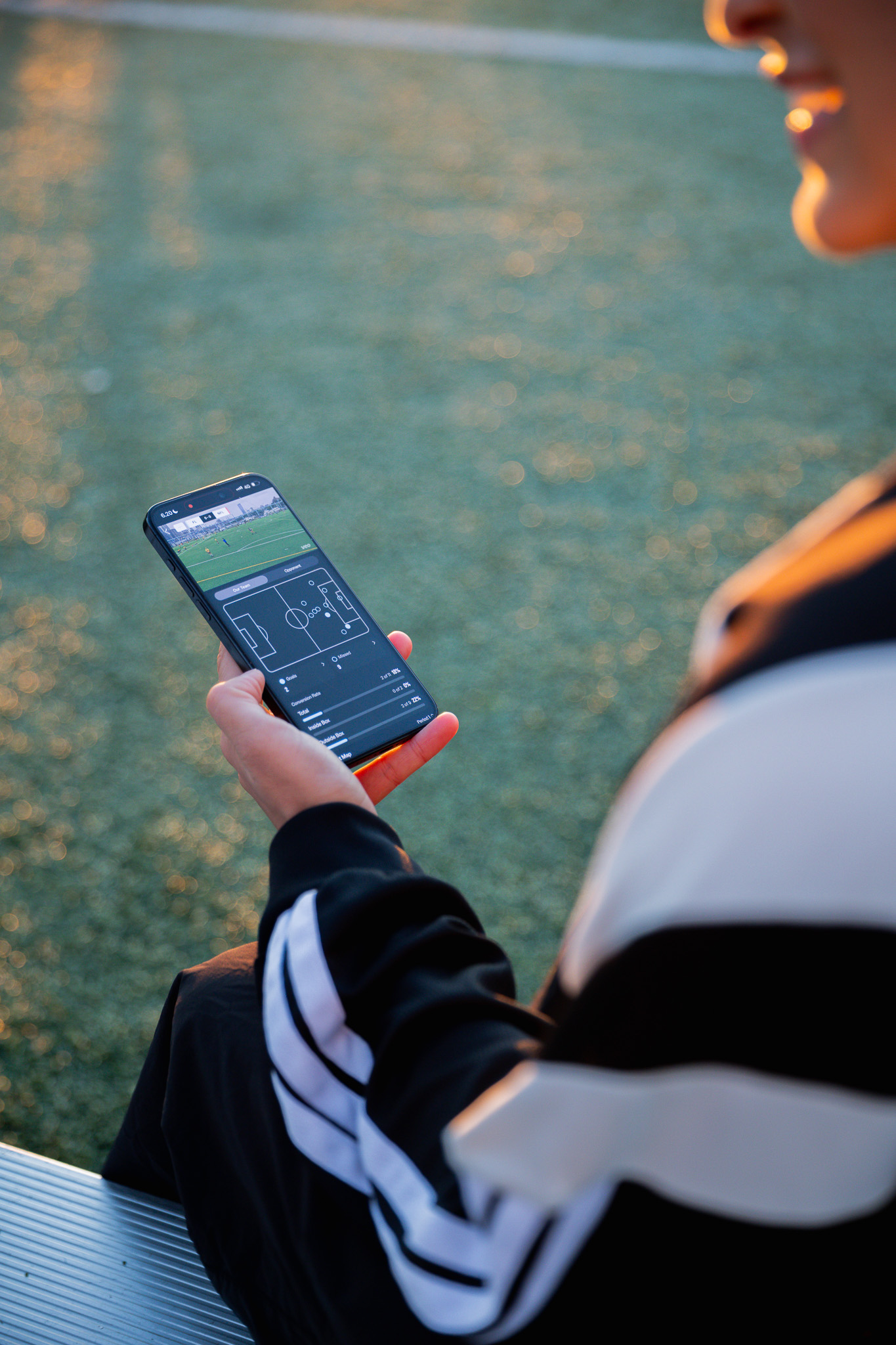
More than 40,000 clubs use Veo to build recruiting footage libraries
More than 40,000 clubs across 100 countries use Veo to store and share footage, with over 4 million matches filmed on the platform (Veo internal data, 2026).
Why video footage is the most important recruiting tool
College coaches cannot attend most games of most prospects. The evaluation process is built on video. A player who cannot share footage when a coach asks loses momentum in the conversation. A player who shares a direct link to a well-structured highlight reel alongside accessible full game film gives a coach everything they need to advance the conversation.
Three things that separate effective recruiting footage from ineffective footage:
- Full-field context. Wide-angle footage that shows positioning and off-ball movement gives coaches the tactical information they need. Follow-cam footage that only shows ball-contact moments does not answer the questions coaches are asking about decision-making and positioning.
- Consistency across games. A season library of consistently filmed games is more valuable than a single polished showcase session. Coaches want to see performance patterns across multiple matches, not one exceptional game that may not represent the player's typical level.
- Accessible sharing. A direct link that plays in any browser removes friction. Coaches evaluate many players. A link they can click immediately is used. A file they need to download, convert, or log in to watch is often not.
For a complete guide to building a recruiting video from your footage library, see how to create a college recruiting video.
The recruiting timeline
College soccer recruiting moves earlier than most families expect. The key milestones:
- Freshman and sophomore year. Start filming every game consistently. Attend showcases and high-level tournaments where college coaches scout. Build the footage library. NCAA D1 coaches begin tracking players informally from this age.
- Sophomore year. Begin researching target programs. Build an athlete profile on a recruiting platform. Start sending introductory emails to coaches at programs that fit your athletic and academic profile.
- Junior year. The most active year for recruiting communication. College coaches can contact recruits directly after September 1 of junior year for most sports. This is when having an established footage library makes the biggest difference.
- Senior year. Official visits, scholarship offers, and commitments. Players who have done the outreach work in sophomore and junior year arrive at senior year with conversations already in progress.
How to reach college coaches
The most effective outreach is a short, specific email that includes a direct link to your footage. Under 150 words. Coach's name spelled correctly. One specific thing about their program. Your graduation year, position, club team, and GPA. A direct link to your highlight reel. Your club coach's contact details.
Follow up every four to six weeks with something new: a recent clip, a tournament result, an improvement you have made. Coaches notice players who demonstrate development over time.
For a detailed outreach guide including email templates and follow-up timing, see how to get noticed by college coaches.

FAQs
Soccer is an equivalency sport, meaning coaches divide a fixed pool of scholarship money across their roster. Full scholarships are rare. Most awards are partial. At NCAA D1 level, men's programs have 9.9 scholarships to distribute across a full roster. The realistic goal for most players is a partial scholarship at a program that is the right athletic and academic fit, not a full scholarship at the highest possible division.
Athletic profile, technical quality, tactical intelligence, and competitive character. The first two are assessed quickly from footage. The last two are most visible in full game film reviewed across multiple matches. Players who provide coaches with both a highlight reel and accessible full game film give coaches a complete picture. Players who only send highlight reels leave the most important questions unanswered.
Start filming consistently from freshman year. Begin research and initial outreach in sophomore year. The most active outreach period is junior year, when coaches can contact recruits directly. Players who arrive at junior year with two seasons of consistent footage and an established list of target programs are significantly better positioned than players who start the process in junior year.
Film every game automatically with Veo Go or Veo Cam 3 to build a consistent footage library. Send short, specific emails to coaches at target programs with a direct link to your highlight reel. Follow up every four to six weeks with updated footage or tournament results. Attend showcases and tournaments where coaches scout. The combination of consistent footage and persistent, professional outreach produces results over time.
No. NCAA D3 programs do not offer athletic scholarships. D3 schools can offer merit-based and need-based financial aid, which can be substantial, but it is not tied to athletic performance. Many players receive excellent financial aid packages at D3 schools that are comparable in total cost to a partial athletic scholarship at a D1 or D2 program. D3 programs are worth evaluating based on academic fit and financial aid offer regardless of the absence of athletic scholarships.