The Scholar-Athlete: Khalab Blagburn on Playing Without Professional Dreams, Academic Excellence, and Why Football Still Matters
Frederik Hvillum
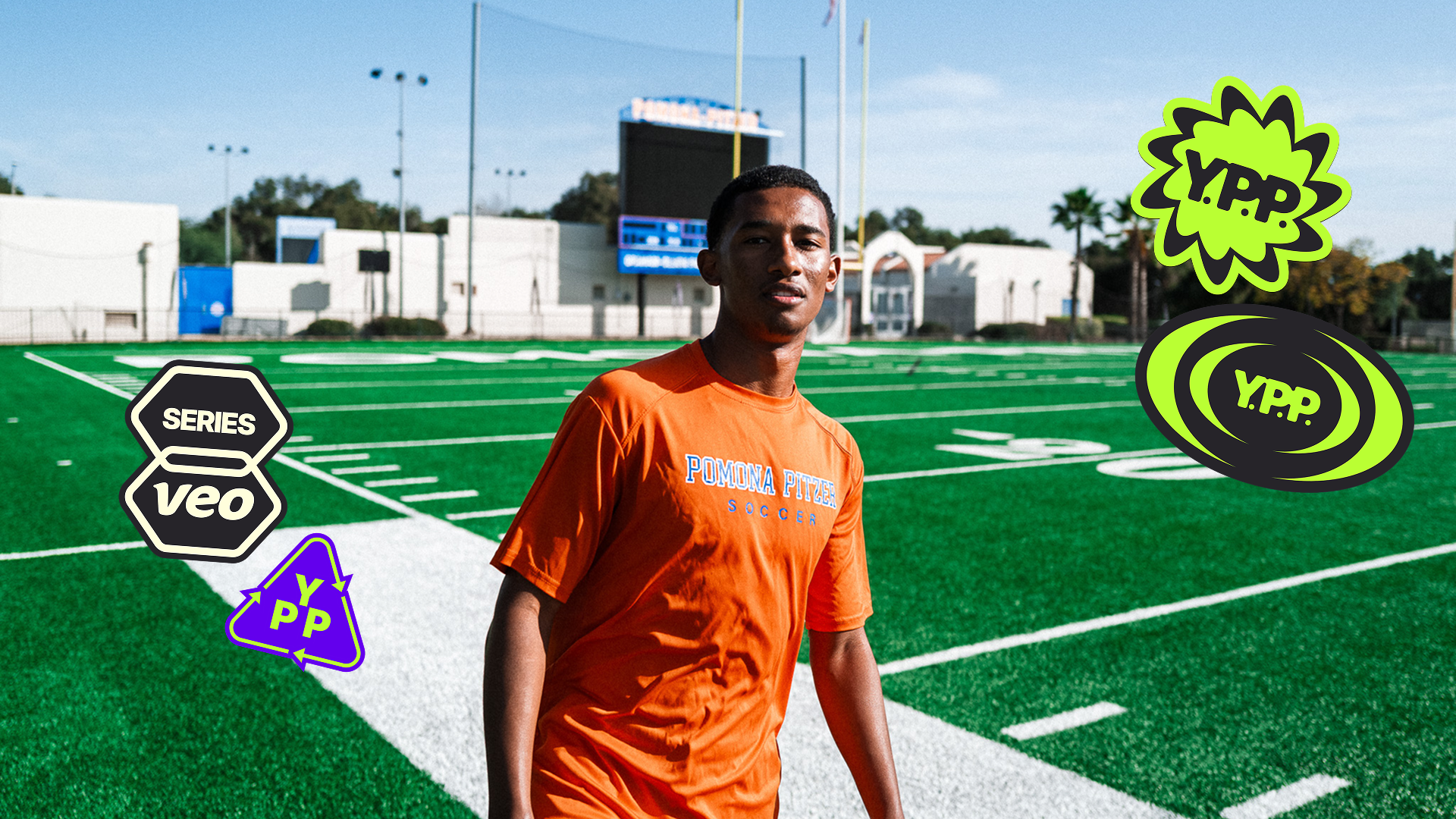
When Pomona College right back Khalab Blagburn chose Division III football, it made perfect sense to him. As he enters his final season, the cognitive science researcher and varsity athlete shares why he continues to play seriously despite knowing he'll never go professional.
At 20 years old, Khalab "KB" Blagburn has already made peace with a reality that crushes many young footballers: he will never play professionally. There will be no draft day. No signing bonus. No academy contract. And yet, as he prepares for his fourth and final season with the Pomona Pitzer Sagehens, he wouldn't have it any other way.
"When you dedicate so much of your time to a craft in this way, it's kind of hard to let go," Blagburn explains. "I want to see how good I can get at this point. I love pushing myself physically, and this is the way I've been doing that for so long."
His journey from Washington, D.C. to California's Division III football scene represents something rarely celebrated in modern sports culture: the choice to play seriously without professional aspiration. In an age where youth athletes specialize early and abandon sports the moment elite pathways close, Blagburn's commitment to improvement for its own sake feels quietly radical.
The Washington Roots
Blagburn grew up in the nation's capital, where he tried various sports, but football was the one that stuck. Family influence and a passion for the game shaped his early years, though the path to playing collegiately wasn't straightforward.
"I went to a very academically inclined school," he recalls of Sidwell Friends, the prestigious preparatory institution in northwest D.C. "There wasn't really a support system for thinking about being a college athlete. It wasn't a priority for me in terms of my application process."
He captained his high school team, learning to balance expectations in a unique environment where some teammates saw football as pure recreation while others harbored division one ambitions. "Being able to balance expectations for the experience was definitely a learning experience," he reflects.
The leadership role taught him something essential about development: it happens at different speeds for different people, and that's exactly as it should be.
Walking On and Staying Put
When Blagburn arrived at Pomona College in California, he didn't have a guaranteed roster spot. He walked onto the varsity team as a freshman, an unusual position for someone who had captained his high school squad.
"I really didn't know what to expect," he admits. "I was definitely surprised to see the quality of my teammates and the teams we were playing against. It's definitely very competitive."
Division III football occupies an unusual space in American athletics. It's not the glamorous world of Division I programs featured on ESPN, nor does it offer athletic scholarships. What it does offer is something increasingly rare: the opportunity to play serious, competitive football while prioritizing academic and personal development.
"I found that, unlike other disciplines where you have to dedicate yourself through blood, sweat, and tears, sports—especially football—has this unique quality of putting the physical on the line in a way that's different from anything else," Blagburn explains. "The anxiety I feel from playing isn't the same as I can find in any other part of my life."
Last season, he started 12 of 16 games at right back, logged a season-best 90 minutes in three matches and played 1,076 minutes overall. The team had a very successful season with a 10-5-3 record.
The Research Perspective
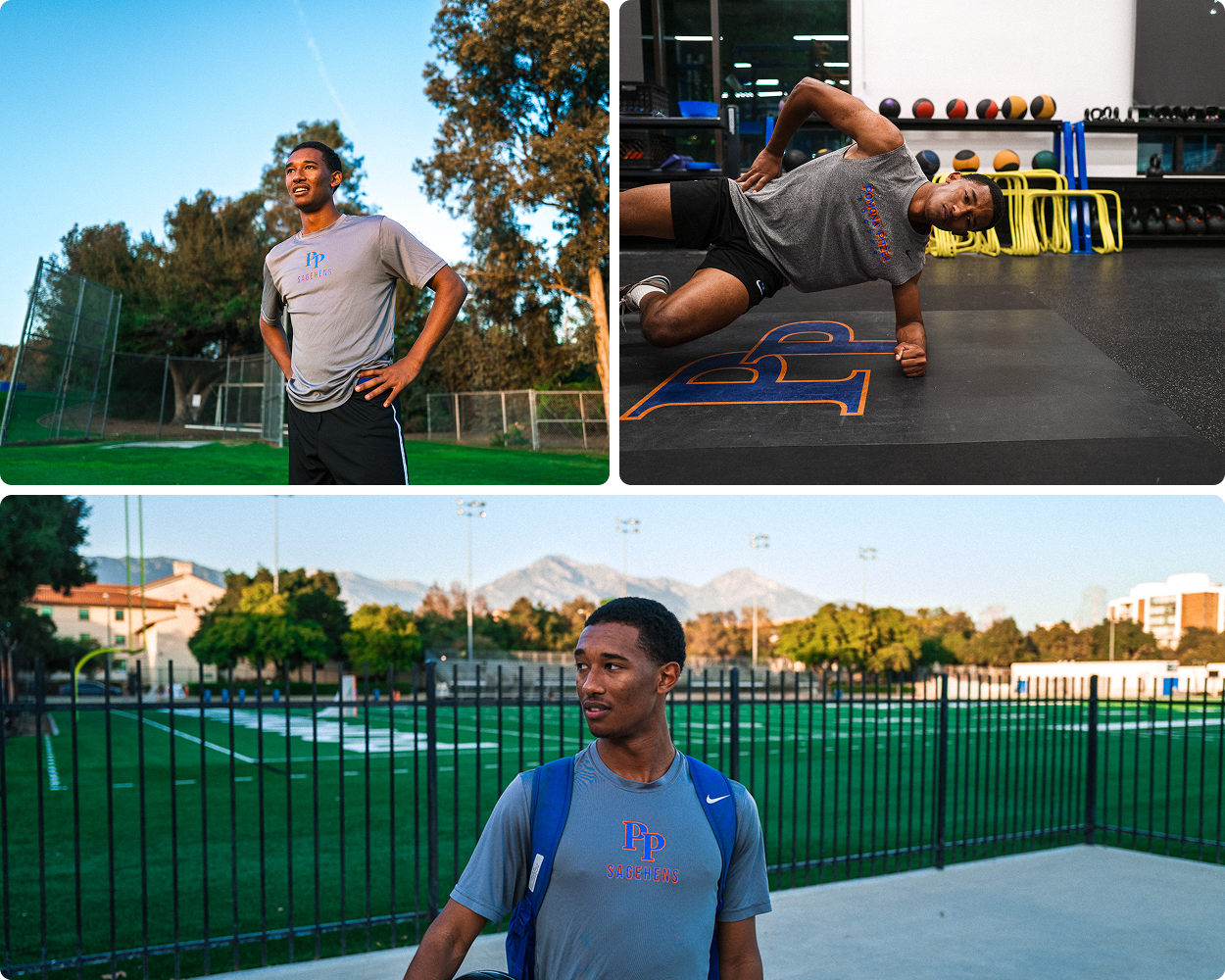
While competing for Pomona, Blagburn is simultaneously pursuing studies in cognitive science and statistics. His research focus, how children allocate effort, persist through challenges, and form beliefs about their own abilities, mirrors the very questions every athlete must answer.
During his time at Yale's Leonard Learning Lab, he studied how environmental factors shape children's motivation and persistence. The irony isn't lost on him: studying development while experiencing it creates a unique lens on his own football journey.
"From a cognitive science perspective, our memory is horrible," he explains when discussing video analysis. "As humans, we really don't have the best memory, especially in a high-intensity sports environment. You really can't expect yourself to recall the positioning of your teammates, your opponents. The emotions of the situation make it quite hard."
This researcher's eye extends to how he approaches mistakes. "I'll be talking to my teammates the day after a game about moments, and I'm like, 'Oh, when did that happen?' I do not remember that. And it'll be me who had possession of the ball."
The academic work has fundamentally shaped how he views his own development. "I think inherent to what I study is the question of persistence and effort allocation, how we decide what's worth investing in. That calculation has definitely changed since high school."
The Cultural Foundation
Blagburn's identity as the son of an African-American father from Washington, D.C., and an Eritrean mother informs how he approaches the game in ways both subtle and profound.
"Having the stories of enduring tough times from both my father's and my mother's side really creates this motivation," he explains. "When you're on the pitch, it's 90 minutes, and you're so fatigued—I've developed this mantra: do it for your ancestors."
The perspective grounds him. "It's a privilege to be able to spend my time playing a game with a ball and two goals for an hour and a half. My ancestors endured unimaginably difficult things. With their strength, I know I'm more than capable of playing football. Their sacrifices give me this privilege, so why not make the most of it? In the grand scheme of things, a full field run to get back on defense in the last five minutes is minuscule."
As a member of Pomona's Black Student Union - co-president in High School - and active member of the East African Students Association, Blagburn carries multiple identities onto the pitch. "Having that perspective on where my people have been allows me to see what a privilege it is to live the life I'm living. It creates a motivation to make the most of the opportunity I've been given."
Video as Development Infrastructure
For a Division III program, consistent video analysis isn't guaranteed. When it's available, it becomes transformative.
"The film is really invaluable from the simple fact that we can't remember things that well," Blagburn says. "I'll forget moments that happened during games. My teammates will mention something, and I won't remember it at all."

Video creates opportunities for team learning that transcend individual performance. "We watch film together and see, 'Okay, this is what happened.' We approach it as a learning opportunity for all of us because it very well could've been me who conceded that goal in that same position."
The technology also reveals truths that raw emotion obscures. "In the moment, the focus is on the loss. But you can look at the video and see it actually wasn't that bad, just a couple of things here and there."
For Blagburn, video analysis embodies the Division III ethos. Improvement matters. "It helps all of us get through those moments where there are struggles. Coming from that team standpoint really helps."
The Question Nobody Asks
In a culture obsessed with professional outcomes, Blagburn represents something unusual: an athlete who's chosen to play seriously at a level with no professional reward. The choice confuses people.
"I think the Division III environment is a little different," he acknowledges. "There's this level of intensity, but it's also kind of just doing it because we love it. We really just enjoy playing."
When asked what he'd lose if he stopped playing tomorrow, his answer is immediate: "Life would just feel a little more dull. I don't get the same feeling that I feel when I'm walking onto the field with the referees, standing in line, waiting for the match to start. That's a feeling I haven't found in any other part of my life."
The absence of professional pressure creates space for a purer relationship with development. "Unlike getting good grades, which is important, there's something about the physical commitment, the team-first mentality. It's different."
Balancing Two Worlds
A typical week for Blagburn involves early morning training sessions, full academic course loads in cognitive science and statistics, team practices, matches, and research commitments. The schedule would overwhelm many, but he sees the balance as essential.
"Pomona creates an environment where I'm able to balance both and continue doing what I love while exploring other passions," he says. "That's what makes this level work for me."
His high school capstone project, interviewing Spanish-speaking staff members to share their often unheard stories, revealed an interest in elevating voices that typically go unrecognized. Now, as he pursues work aimed at improving educational systems for underserved communities, football provides a parallel lesson in development.
"The players on my team come from completely different backgrounds, different skill levels, different aspirations. But we're all working toward improvement. That collective development matters."
“That's when I feel like I'm a footballer."
When asked about his future with football, Blagburn doesn't hesitate. "I plan to keep playing as long as I can. Obviously, I know physically I'm going to decline. But I've seen people in their 60s still have a smile on their face because of what the sport means to them and the role it's played in their lives."
He references his father's warnings about playing pickup games with younger players: "'Be careful, you're gonna get hurt because they don't know how to move their bodies.' That's gonna be me soon, maybe not as quick as I used to be, but that's the plan."
The commitment extends beyond personal enjoyment. "The friends I've made through this sport have been amazing. It's socially important to keep that going."
His favorite moment on the pitch reveals everything about how he approaches the game. It wasn't a spectacular goal or crucial save but winning a penalty in a rivalry match during his freshman year after walking onto the team. "To be able to contribute to the team first year after walking on, it was really special."
When asked when he most feels like a footballer, his answer cuts deeper: "It's walking out to the field, standing for the national anthem. That moment feels like, you know, the Champions League. That's the peak. That's when I feel like I'm a footballer."
Professional Without the Profession
As Blagburn enters his final season with Pomona Pitzer, he's already thinking beyond his last match. His research into how children persist through challenges will likely inform his future work improving educational access for underserved communities. Football will continue, just in different forms.
"I want every opportunity to play as much as I can," he says simply.
For the thousands of young athletes who'll face the same crossroads, talented enough to play collegiately but not professionally, Blagburn's journey offers a different narrative. Development doesn't require a professional endpoint to matter. Improvement doesn't need external validation to be worthwhile. And playing with love for the game, surrounded by teammates who share that commitment, can be its own reward.
"Do it for your ancestors," Blagburn reminds himself during those final, exhausting minutes of matches. It's a mantra that works for 90-minute football games and four-year academic journeys alike.
In his case, honoring that legacy means running as hard in the final season as he did in the first. Not because a scout is watching, but because the work itself matters.
That's the kind of development story that deserves to be seen.
The Young Player Portfolio is our series dedicated to the players nobody told you about, yet. Real athletes, real journeys, documented from the ground up. Different journeys, same mentality.
Sacha Serog broke his fibula at Werder Bremen's U21s. Then he trained alone for a year and made a USL League Two squad just because he wanted to.
Penelope Vineyard didn't plan to be a goalkeeper either. Read how one half of a recreational game changed everything.
Lexi Goodman NASA Tophat goalkeeper tore her ACL during what was supposed to be an easy game. Six months in, she's still the most positive person in the room.



%20(1).jpg)