Youth Basketball Dribbling Drills That Build Real Ball Handlers
Veo
Five youth basketball dribbling drills covering stationary ball handling, cone circuits, two-ball work and 1v1 pressure. Age guidance for U6 to U14 with coaching cues.
A player who can only dribble with their dominant hand, and only in a straight line, is easy to defend. Every coach knows it. The problem is that most youth basketball dribbling drills reward the behaviour coaches want to eliminate: players repeat their comfortable hand and their comfortable direction, and the gap between their two hands compounds with every practice.
This guide covers five youth basketball dribbling drills for players aged 6 to 14. Each drill targets a specific element of ball handling: mechanics, direction changes, ambidextrous development, attacking with the dribble, and protecting the ball under pressure.
What makes dribbling difficult to develop at youth level
Natural dribbling and basketball dribbling are different skills. Natural dribbling is low, slow, and controlled by looking at the ball. Basketball dribbling requires the player to keep their eyes up, use both hands at game speed, and protect the ball from a defender without breaking their movement pattern.
The two most common problems are fixation on the dominant hand and looking at the ball under pressure. Both habits develop without deliberate practice and both become harder to change the longer they are left.
Dribbling connects directly to team play. Players who can handle the ball in traffic create the passing lanes and driving opportunities that the youth basketball team drills guide is built around. Dribbling skill is the tool; team drills teach when to use it.
What are the best dribbling drills for youth basketball players
These five drills build ball-handling competence progressively, from basic mechanics through to live competitive pressure.
| Drill | Focus | Duration |
|---|---|---|
| Stationary Ball Handling | Dribble mechanics, hand position, eyes up | 10 min |
| Cone Dribbling Circuit | Change of direction, speed dribble, control | 10 min |
| Two-Ball Dribbling | Ambidextrous development, coordination | 8 min |
| Attack Dribble into Finish | Driving to the basket with live defender pressure | 12 min |
| 1v1 Full-Court Dribble | Reading defenders, protecting the ball in traffic | 10 min |
1. Stationary Ball Handling (10 minutes)
Players stand with feet shoulder-width apart and dribble continuously with the right hand for 30 seconds, then the left hand for 30 seconds. Between sets, they alternate one dribble right, one dribble left, without stopping. Eyes must stay fixed on a point on the wall. Run four full sets.
This drill builds the foundational habit that all other dribbling depends on: keeping your eyes up. Players who can dribble without looking at the ball in a stationary setting have already eliminated the most damaging habit in youth basketball.
Coaching cue: "Pick a spot on the wall and stare at it. If I can see your eyes move to the ball, start the count again."
Age note: Appropriate from U6 with a size 5 ball. At U6 and U8, focus only on dominant hand control before introducing the off-hand.
2. Cone Dribbling Circuit (10 minutes)
Set up six cones in a line, 1.5 metres apart. Players dribble through with the right hand going out and the left hand coming back. On the return, they accelerate through the last two cones with a speed dribble before coming to a controlled stop. Repeat four times, then switch which hand leads.
This drill builds change of direction dribbling and the transition from control dribble to speed dribble. The cone circuit forces quick direction changes, shifts between control and speed, and requires both hands to function across the full run.
Coaching cue: "Push the ball ahead on the speed section. The dribble should be out in front of you, not under your body."
3. Two-Ball Dribbling (8 minutes)
Players dribble two balls simultaneously: both balls hit the floor at the same time for 30 seconds, then alternate for 30 seconds. Start stationary, then add slow walking movement after two sets. Run for 8 minutes.
Two-ball dribbling is the most efficient drill for closing the gap between a player's dominant and non-dominant hand. Because both hands work simultaneously, the off-hand receives as many repetitions as the dominant hand in every set.
Coaching cue: "The ball that goes out of control is telling you which hand needs more work."
Age note: Introduce at U10. At U8, add off-hand stationary work first before combining both balls.
4. Attack Dribble into Finish (12 minutes)
Players start at the top of the key. A passive defender stands two steps in front. The player attacks the basket with one hard dribble past the defender and finishes at the rim. Alternate between attacking left and right. After three minutes, make the defender active but non-contact. Run for 12 minutes total.
This drill connects dribbling to scoring. The passive-to-active progression teaches players to read a defender's body position before they drive rather than committing to a direction before the defender sets.
Coaching cue: "Look at the defender's feet before you go. Their feet tell you which side is open."
The finishing mechanics at the basket connect to the youth basketball shooting drills guide. Players who drive confidently but finish poorly waste the dribbling advantage they have created.
5. 1v1 Full-Court Dribble (10 minutes)
A ball handler starts at one baseline. A defender starts one metre behind them. The ball handler dribbles the full length of the court while the defender applies continuous pressure, trying to force the ball handler to their weak hand. No contact, no steals: the defender positions and shadows only. Switch roles after each length. Run for 10 minutes.
Full-court dribble pressure is the most game-realistic drill in the sequence. Players who revert to looking at the ball or defaulting to their strong hand under sustained pressure are telling the coach exactly what to address next.
Coaching cue: "If the defender forces you right, dribble right. Show them you can handle it. Then switch back when they overcommit."
What to watch on video: Which hand each player uses at the halfway point when fatigue and pressure both increase. This is the moment where real ball-handling habits reveal themselves.
How Veo Cam 3 helps coaches develop youth basketball dribbling
Dribbling mechanics are difficult to assess from the sideline during live practice. A coach watching one player cannot simultaneously watch all five players on the floor, and the most revealing moments happen at game speed.
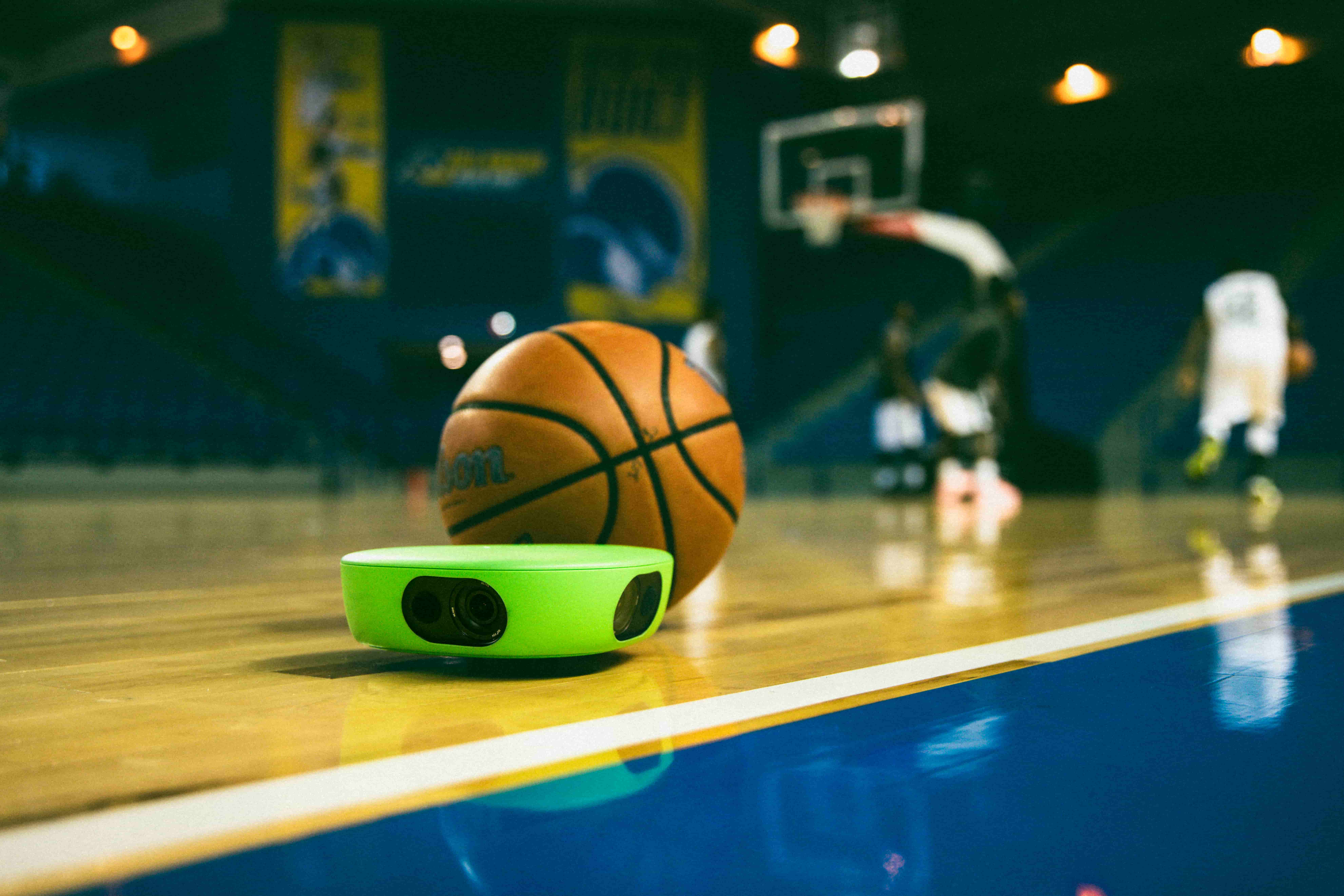
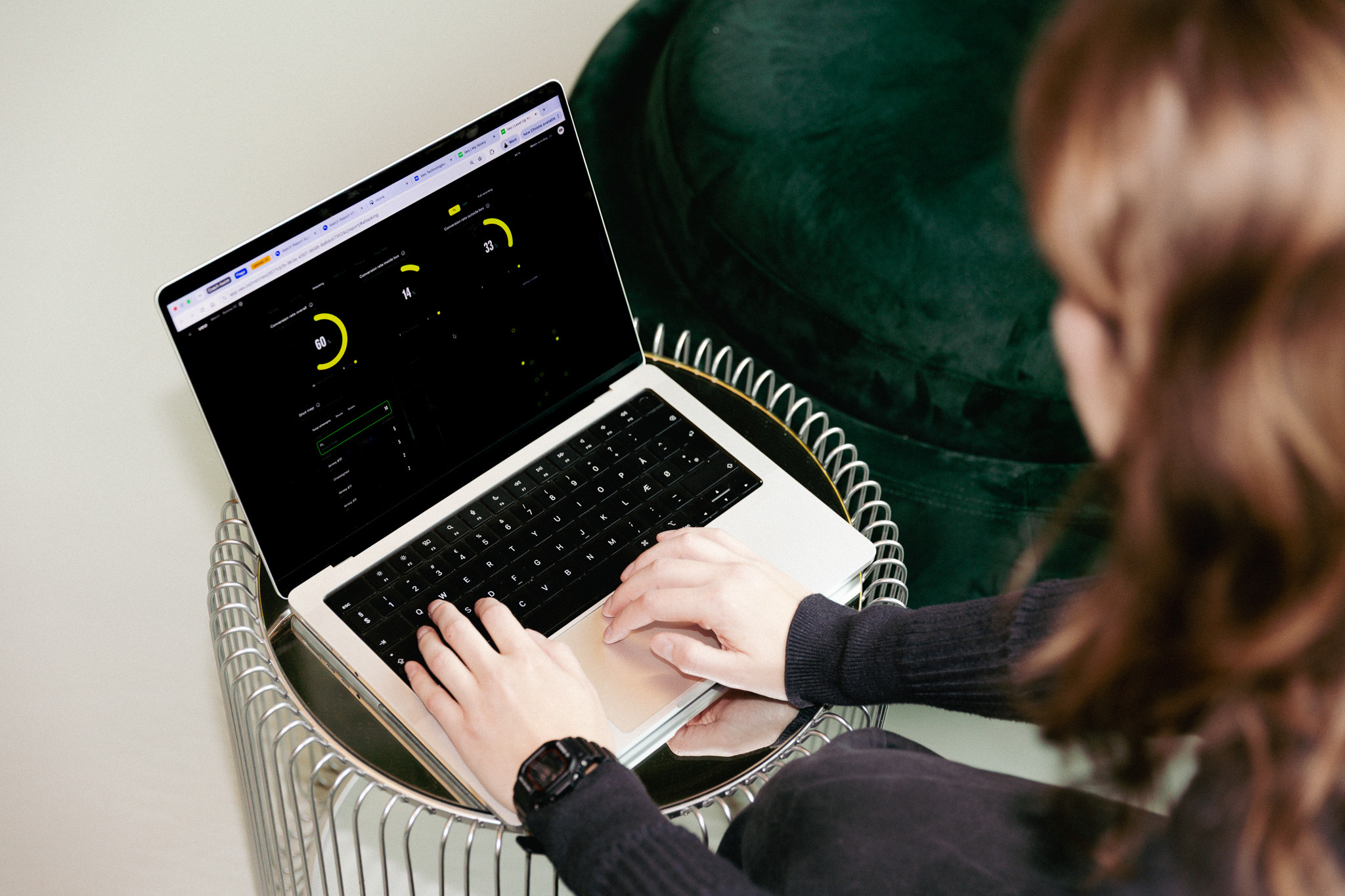
Veo Cam 3 records the full court automatically. After a session, coaches can review each player's head position, hand selection, and body angle during every drill. A player who looks at the ball in the stationary drill but appears to have eyes up in the cone circuit is showing mechanical inconsistency that only becomes clear in the footage.
For conditioning that supports the sustained dribbling effort the 1v1 full-court drill demands, see the youth basketball conditioning drills guide.
More than 40,000 clubs across 100 countries use Veo to store and share footage, with over 4 million matches filmed on the platform (Veo internal data, 2026)
Veo Cam 3 captures dribbling mechanics across the full court so coaches can review which players favour their dominant hand under pressure.

FAQs
Stationary ball handling is the most important starting drill because it builds the correct hand position and ball control before adding movement. The cone dribbling circuit develops change of direction and speed control. The two-ball drill develops ambidextrous dribbling that makes players unpredictable to defenders. All three should feature in every dribbling session.
Basic stationary ball handling can start at U6 with an age-appropriate ball size. Cone dribbling circuits are appropriate from U8. Two-ball dribbling and the attack dribble into finish are appropriate from U10. The 1v1 full-court drill introduces competitive dribbling and is best introduced at U12.
Start with stationary ball handling drills while the player watches a fixed point on the wall or ceiling. Once they can dribble consistently without looking down, add movement through cones. The habit of eyes-up dribbling builds through repetition at low speed before being challenged at game pace. Players who look at the ball in drills look at the ball in games.
Veo Cam 3 captures the full court automatically, allowing coaches to review dribbling mechanics, hand position, and head position after practice. The footage shows which players are looking at the ball during drills, which players favour their dominant hand under pressure, and where ball-handling breakdowns occur during the attack dribble sequences.
Most ball-handling breakdowns under pressure come from two causes: the player looks at the ball when a defender approaches, which takes their eyes off the play and causes hesitation, or the player defaults to their dominant hand as soon as pressure arrives, making them predictable and easy to defend. Both habits are best identified and corrected through video review of competitive drills.
%20(1).jpg)
.jpg)