Youth Basketball Team Drills That Teach Team Play
Veo
Five youth basketball team drills covering passing lanes, backdoor cuts, and pick-and-roll basics. Includes a session plan and video tips with Veo Cam 3.
Youth basketball players improve fastest when they work on individual skills. But teams win games by moving the ball, creating space, and making decisions together. The gap between individual skill and team play is where most youth programs lose games they should win.
This guide covers five basketball team play drills that build passing lanes, backdoor cuts, and pick-and-roll basics for players aged 8 to 14. Each drill gives every player on the floor a role. It also covers how video helps young players see the floor the way coaches see it from the sideline.
Why do youth basketball teams struggle with team play?
The most common problem is that players follow the ball. When the ball moves right, every player drifts right. When the ball goes to the corner, four players crowd the corner. This leaves the weak side of the floor empty and the defense with an easy job.
Teaching team play at youth level is not about running complex plays. It is about building two habits: move without the ball, and pass to the open player rather than the closest player. Every drill in this guide targets one or both of those habits.
For individual shooting mechanics and footwork that underpin team play, see the youth basketball shooting drills guide. Players who can shoot off a pass are far more dangerous in team situations than players who need to catch and create their own shot.
What are the best youth basketball team play drills for practice?
These five drills build team concepts progressively, starting with basic passing structure and finishing with a constrained scrimmage where all the concepts apply.
1. Passing Lane Drill (10 minutes)
Set up two lines of players at the top of the key. The ball starts with one player. A defender stands between them and the next player in line. The passer must read the defender and find the passing lane before throwing.
This drill builds the habit of reading the defense before passing. Most youth players decide where to pass before they receive the ball. Making them wait and read the defender slows that instinct down and replaces it with decision-making.
Coaching cue: "See the defense first. Then pass."
Progression: Add a second defender so the passer must choose between two options. Reward quick, accurate decisions with a point system.
2. Backdoor Cut Drill (10 minutes)
Position one player at the top of the key with the ball and one player on the wing. The wing player takes two steps toward the ball as if calling for a pass. When the defender follows, the wing cuts hard to the basket for a backdoor pass and layup.
The backdoor cut is the most reliable scoring opportunity in youth basketball because defenders at this level always follow the ball. Teaching players to use that habit against the defense builds court intelligence that stays with them as they develop.
Coaching cue: "Sell the catch first. Make the defender think you want the ball, then go."
Age note: For U10 and younger, remove the defender and let players work the timing of the cut and pass without defensive pressure first.
3. Three-Man Weave (10 minutes)
Three players line up across the baseline. The middle player starts with the ball, passes to one side, runs behind the receiver, and continues to the opposite wing. The receiver passes ahead and follows the same pattern. The sequence continues until the group reaches the other end for a layup.
The three-man weave builds passing ahead of the dribble, running lanes, and transition speed. It also requires all three players to stay in motion simultaneously, which is the core habit of team play.
Coaching cue: "Pass and run. Never stand still after the ball leaves your hands."
4. Pick-and-Roll Basics (15 minutes)
Start with two players: a ball handler at the top of the key and a screener on the wing. The screener sets a screen on the ball handler's defender. The ball handler uses the screen to drive toward the basket. The screener rolls toward the basket as the defense reacts.
Run this at walking pace first so players understand the timing and angles. Speed up gradually. The ball handler must make the decision to shoot, pass to the rolling screener, or kick out to a teammate based on what the defense gives them.
Coaching cue: "Screener, set the screen and go. Ball handler, read what the defense does."
The pick-and-roll is one of the most used actions in basketball at every level. For context on how this fits into a broader development pathway, see the youth basketball coach certification guide, which covers the USA Basketball development framework for introducing team concepts at each age group.
5. 5v5 Constraint Scrimmage (15 minutes)
Run a standard half-court scrimmage with one rule: no player can score twice in a row. After scoring, that player must pass to a teammate before shooting again. This prevents dominant players from taking over and forces ball movement on every possession.
Coaches can adjust the constraint based on what the earlier drills revealed. If backdoor cuts were not happening, add a rule that rewards backdoor scores with two points. If pick-and-rolls were being ignored, require every possession to involve a screen.
Coaching cue: "Find the open player. The shot will come."
How does video help youth basketball players understand team play?
The hardest part of coaching team basketball to young players is that they cannot see what the coach sees. A coach watching from the sideline sees all five players, the spacing between them, and where the open man is. A player with the ball sees the defender in front of them and the closest teammate.
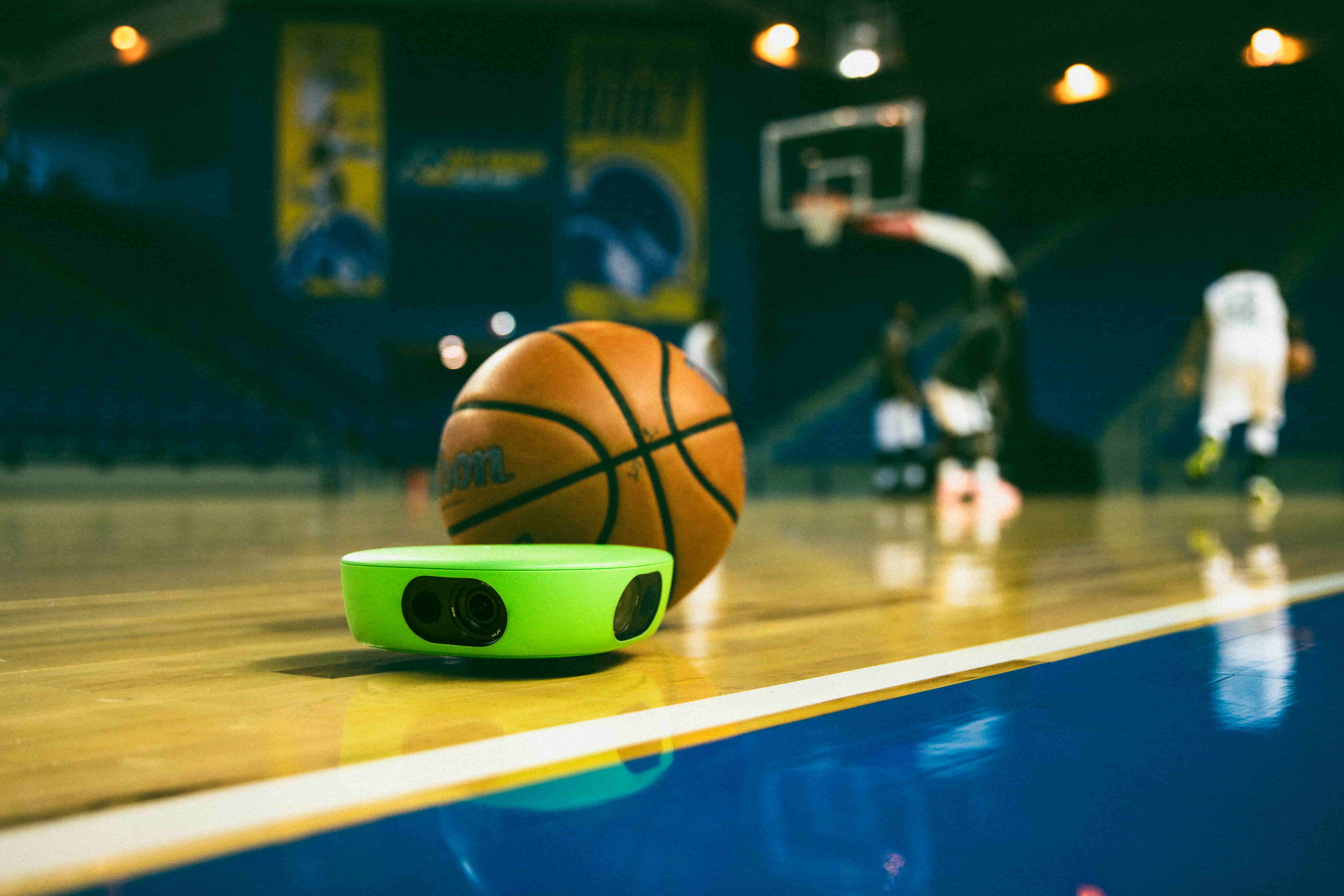

Veo Cam 3 captures the full basketball court from a single wide-angle position without a camera operator. The AI tracking follows the ball automatically. After practice, coaches can show players the footage from the same elevated angle they use when coaching, which means players finally see what the coach sees.
In a pick-and-roll drill, a player can watch themselves on screen and see that the roller was open for three seconds before the pass came. In a scrimmage, a player can see that the weak-side corner was empty every time they drove. That visual evidence changes how players process the game. More than 40,000 clubs in 100+ countries use Veo to film and review sessions at every level of sport.
More than 40,000 clubs across 100 countries use Veo to store and share footage, with over 4 million matches filmed on the platform (Veo internal data, 2026)
See how Veo Cam 3 gives youth basketball coaches the full-court view they need.
What does a complete youth basketball team play practice session look like?
This 60-minute session runs the five drills in sequence, building from individual passing reads to full team play.
Add a 10-minute warm-up before the session and use the final five minutes to show one or two clips from the Veo footage. Keep the review short and specific. Ask players what they notice before offering analysis.
What are the most common mistakes in youth basketball team drills?
Standing still after passing. Players pass and watch. Drill the habit of cutting, screening, or relocating immediately after every pass.
Calling for the ball instead of moving to get it. Youth players wave their hands and expect the pass to come to them. Reward players who create their own passing opportunity through movement.
Setting soft screens. Young players stop near the defender rather than making contact. A screen that does not slow the defender down is not a screen. Teach the correct stance and angle from the first session. For dedicated drill work on screen mechanics, see the basketball screening drills guide.
Ball handler ignoring the roller. In pick-and-roll situations, ball handlers often drive past the screen and forget the roller exists. Drill the habit of looking at the roller immediately after using the screen.

FAQs
Basic team concepts like passing to the open player and moving without the ball can start at U8. More structured concepts like the backdoor cut work well from U10. Pick-and-roll basics are best introduced at U12 and above, once players have enough individual control to execute the timing.
The passing lane drill and backdoor cut drill work with as few as four players. The three-man weave needs exactly three. Pick-and-roll basics work with two players and a defender. The constraint scrimmage needs ten. For smaller squads, run the scrimmage as 3v3 or 4v4 and adjust the court size.
Use constraints that make individual dominance less effective. The no-consecutive-scoring rule in the scrimmage is one example. Another is requiring a set number of passes before any shot attempt. These rules level the playing field and force every player to engage with the team concepts.
The wide-angle lens captures the full court, which means players can see all five of their teammates and all five defenders simultaneously in the footage. That full-court view is what makes spacing visible. Players who watch their own team drill footage consistently start to recognize patterns in their own positioning within a few sessions.
Individual drills isolate a specific skill, like shooting form or dribbling technique, and remove the complexity of other players. Team drills add decision-making, timing, and communication on top of those individual skills. Both are necessary. The most effective practice sessions use individual drills to build the tools and team drills to teach players when and how to use them.
.jpg)

.jpg)