Zone Defense for Youth Basketball Players That Actually Works
Veo
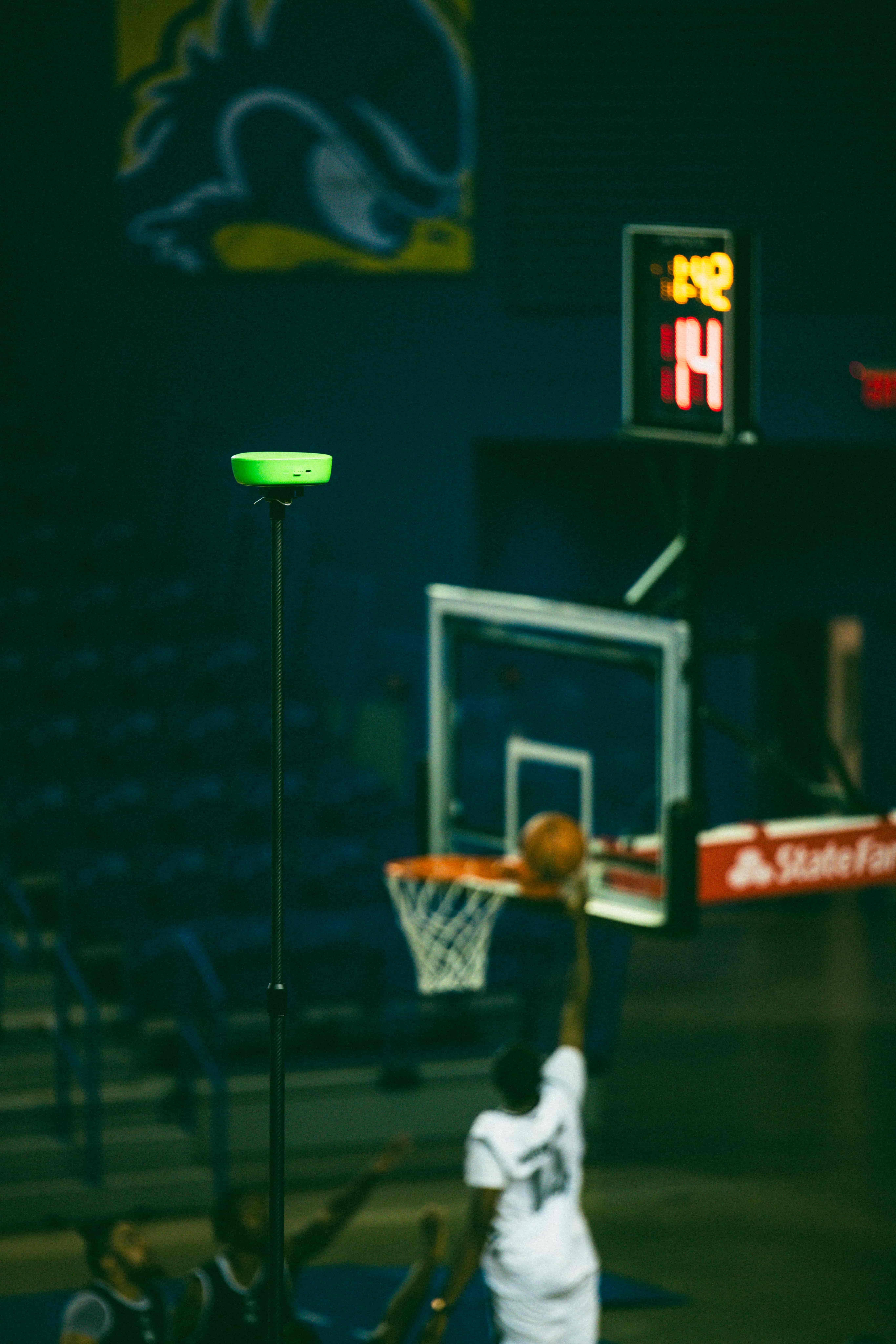
Five zone defense drills for youth basketball covering 2-3 positioning, shell drill, skip pass defence and high-low coverage with age guidance for U10 to U14.
Zone defense is often the first tactical concept coaches introduce in youth basketball. It is easier to explain than man-to-man, requires less individual defensive ability, and gives coaches a way to manage teams with wide skill gaps. The problem is that zone is usually taught too quickly, without the positional walk-through and rotation drilling that makes it function under game conditions.
This guide covers five zone defense drills for youth basketball players aged 10 to 14. Each drill builds one component of an effective 2-3 zone: understanding positional assignments, rotating as the ball moves, recovering on the skip pass, defending the high-low post entry, and applying the zone in live game situations.
What makes zone defense difficult to teach at youth level
The difficulty with zone defense is not the concept. Most youth players understand fairly quickly that they are responsible for a space rather than a player. The difficulty is the rotation: when the ball moves, every player in the zone must move simultaneously in a coordinated pattern. If one player stays too long in their starting position, a gap opens that the offence can exploit.
The two most common zone breakdowns in youth basketball are the skip pass recovery and the high-low post combination. Both require defenders to react to a pass they are not directly guarding. Building the habit of tracking both the ball and potential pass targets while in zone coverage takes structured repetition before it becomes automatic under game pressure.
Zone defense works best when players have the conditioning to maintain active defensive positions throughout the game. The youth basketball conditioning drills guide covers the lateral movement and stance endurance that zone defense requires over a full session.
What are the best zone defense drills for youth basketball players
These five drills build zone defense competence progressively, starting from positional understanding and finishing in live game conditions.
| Drill | Focus | Age / Duration |
|---|---|---|
| Zone Positioning Walk-Through | Teaching zone assignments without opposition, building spatial awareness | U10+ / 10 min |
| Shell Drill | Rotating zone coverage as the ball moves around the perimeter | U10+ / 12 min |
| Skip Pass Attack | Defending the skip pass and recovering to new zone positions | U12+ / 12 min |
| High-Low Zone Attack | Defending flash cuts into the high and low post areas | U12+ / 10 min |
| Zone Live Scrimmage | All zone concepts applied in game conditions with coaching stoppages | U12+ / 15 min |
1. Zone Positioning Walk-Through (10 minutes)
With no offence on the court, place five defenders in their 2-3 zone starting positions. A coach holds the ball and moves it slowly around the perimeter. As the ball moves, defenders walk to their correct positions. The coach stops at each position and checks all five players are in the right place before moving again.
This drill is the essential first step for any team learning zone defense. Players who cannot identify their correct position when the ball is stationary will not find it when the ball is moving at game pace.
Coaching cue: "Every time the ball stops, freeze and check your position. You should know exactly where you are supposed to be before the ball moves again."
Age note: Appropriate from U10. At U8, focus exclusively on man-to-man fundamentals before introducing zone concepts.
2. Shell Drill (12 minutes)
Four offensive players at the top, two wings, and one corner. Five defenders in the 2-3 zone. A coach passes the ball around the perimeter at pace. Defenders rotate to their correct positions on each pass. No driving, no shooting: ball movement and rotation only. Run 12 minutes with coaching stoppages.
The shell drill is the most important zone defense drill because it trains the rotation pattern at ball-movement speed. Players who can only rotate at walking pace will lose the rotation under game-speed ball movement.
Coaching cue: "Move on the pass, not after the catch. If you wait until the ball arrives at its new position, you are already one step too slow."
What to watch on video: Whether all five players rotate on the pass or whether one or two lag behind. The overhead footage makes late rotations immediately visible.
3. Skip Pass Attack (12 minutes)
Offensive players at the top and both wings. The top player skips the ball directly to the weak-side wing, bypassing the zone rotation. The two weak-side defenders must sprint to close out before the receiver can shoot. Run 5 minutes each side, then add a second skip to the corner.
The skip pass is the most reliable way to attack a 2-3 zone at youth level. This drill builds the sprint closeout habit that prevents the skip pass from creating open shots.
Coaching cue: "Sprint to the receiver, not the ball. When the skip pass leaves the passer's hands, you should already be moving."
Age note: Introduce at U12. Skip pass recovery requires reading the passer's intention before the ball is released.
4. High-Low Zone Attack (10 minutes)
An offensive player at the high post (free-throw line) and another at the low post. A perimeter player passes to the high post, who looks to feed the low post. The two bottom defenders must communicate: one covers high, one covers low. Run 10 minutes with continuous possession reset.
High-low action is the most consistent way to attack inside a 2-3 zone. This drill forces defenders to call their assignments before the ball arrives.
Coaching cue: "Call it before the ball gets there. One of you takes the high, one takes the low. If neither calls it, both will go to the same player."
The team communication built here connects directly to the off-ball awareness that youth basketball team drills develop across all defensive patterns.
5. Zone Live Scrimmage (15 minutes)
Five defenders in the 2-3 zone against five offensive players. The coach calls a stoppage any time the zone breaks down, points to the rotation error, and replays the possession from that point. Run for 15 minutes.
The stoppage-and-replay format is the most effective way to cement zone habits. Stopping at the exact moment of the breakdown and immediately correcting it gives players the strongest connection between the error and the correct response.
Coaching cue: "When I stop play, freeze exactly where you are. I want to show you what you did, not what you should have done in the abstract."
How Veo Cam 3 helps coaches teach zone defense
Zone defense is a five-player pattern that is almost impossible to assess accurately from the sideline. A coach standing at ground level can watch one or two defenders at a time. Zone breakdowns almost always involve the positioning of two or more players simultaneously.
Veo Cam 3 records from above and captures all five defenders in every frame. After a session, coaches can pause any moment of the shell drill or the live scrimmage and see every player's position relative to the ball simultaneously.
For developing the individual ball-handling skills that make attacking a zone more difficult for opponents, see the youth basketball dribbling drills guide.
More than 40,000 clubs across 100 countries use Veo to store and share footage, with over 4 million matches filmed on the platform (Veo internal data, 2026)
Veo Cam 3 gives youth basketball coaches the overhead view they need to diagnose zone rotation breakdowns after every session.

FAQs
The 2-3 zone is the most widely used zone defense at youth level because it protects the paint, is relatively simple to teach, and does not require the individual on-ball defensive ability that man-to-man demands. The 1-3-1 is more aggressive and generates more turnovers through trap situations but requires better communication and is more appropriate from U12.
Basic zone positioning can be introduced at U10 through the walk-through and shell drill. Live zone defense in competitive situations is appropriate from U12, when players have enough spatial awareness and communication habits to execute rotations during a game. At U8 and below, individual man-to-man fundamentals should take priority.
Start with the positioning walk-through at no speed, showing each player their starting position and the zones they are responsible for. Once players understand their starting assignment, introduce the shell drill to practice rotating as the ball moves. Add opposition only after rotations are reliable at walking pace. The most common early teaching mistake is adding live opposition before players have learned the rotation pattern.
Zone defense is vulnerable to accurate perimeter shooting, skip passes across the zone, and offensive players who understand how to use the high-low post. At youth level, the most common exploitation is the skip pass to a corner player whose nearest zone defender is on the other side of the paint. Teaching players to sprint to close out on the skip pass is the most important zone defensive skill.
Veo Cam 3 records the full court automatically from above, which is the only angle that shows all five defensive players simultaneously. Zone defense breakdowns almost always involve the positioning of two or more players simultaneously, which is impossible to assess from the sideline. After a session, coaches can pause any moment and see exactly where every defender is positioned relative to the ball and the basket.


%20(1).jpg)
.jpg)