How Grassroots Football Found Its Missing Piece
Frederik Hvillum

For years, grassroots coaches tried to remember 90 minutes of action while standing at pitch level. Junior Premier League founder Martin Brock explains how recording matches changed everything about youth development.
"I can't now think of how you could actually have a development process for a team without having video analysis involved," says Martin Brock, founder of the Junior Premier League.
Brock discovered this truth after years of coaching without cameras, trying to remember every missed run and positioning error across 90-minute matches. The visual record transformed how young players understood their game and how coaches structured their training. Just years ago, giving every grassroots player access to the same analysis tools as academy prospects seemed impossible. Now it's the new standard for serious youth development.
This challenges the assumption that elite-level development tools belong only in professional academies.
The Junior Premier League's Video Revolution
Martin Brock has been leading the Junior Premier League for over fifteen years, building one of England's most respected youth football ecosystems. His experience spans grassroots coaching to creating competitive pathways for thousands of young players across multiple countries. The JPL has grown from a regional concept to an international operation, maintaining its core mission: providing serious development opportunities for players outside professional academy systems.
Before founding the JPL, Brock spent years coaching youth teams, experiencing firsthand the limitations that grassroots coaches face. He understood the gap between what coaches wanted to provide and what they could actually deliver with limited time and resources.
The JPL serves communities where football is serious but resources are limited. Brock's teams needed better development tools, but traditional video analysis systems were built for professional clubs with dedicated staff and budgets. The clubs had passionate coaches and committed families, but lacked the technological infrastructure that made academy development so effective.

This challenge reflects a broader issue in youth sports: how to provide every player with the same development opportunities that elite academies offer their prospects. The coaches were already good. They just needed the right tools.
Standing Pitchside, Trying to Remember Everything
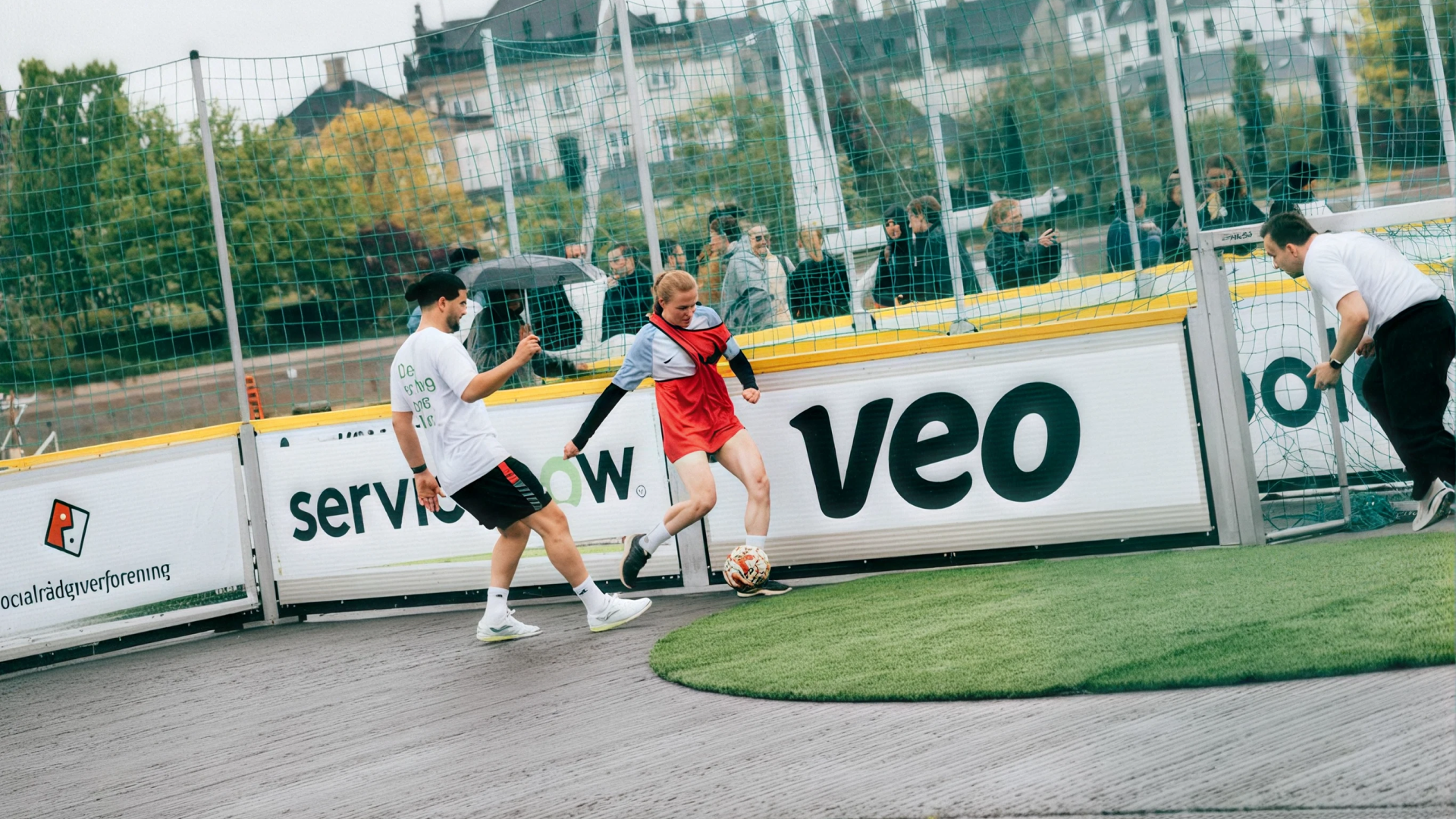
Before video became accessible, Brock faced the fundamental limitation of coaching from ground level. "You were talking about someone at pitch level, trying to impact a game, trying to impact a player, and it's impossible," he explains. "In an ideal world, they would sit up in a stand and look down on the game, trying to get a more whole view of the field, but they can't do that. Kids' games aren't played in big stadiums where you can sit up."
The physical limitation created a tactical one. From pitch level, a coach can only watch a fraction of what's happening. They focus on the player with the ball, maybe one or two supporting players, but miss the movement happening across the rest of the field. Critical positioning errors go unnoticed. Successful runs off the ball remain unseen.
The coaching approach was reactive and incomplete. "It's very off the cuff. You're just shouting at a player, 'Do this, do this, do this,'" Brock says. "And when you're looking at that player, you're not looking at what's happening over here." The coach becomes like a director trying to manage a play while watching through a keyhole. They can influence what they can see, but they're blind to most of the action.
After matches, coaches relied entirely on memory to build training plans. "You're trying to remember that kid didn't run at that point, that kid's not pushing up," Brock says. "When they're at under-16 and it's a 90-minute match, it's almost impossible." A coach might recall three or four key moments from a game, but ninety minutes contains hundreds of teachable moments for each player.
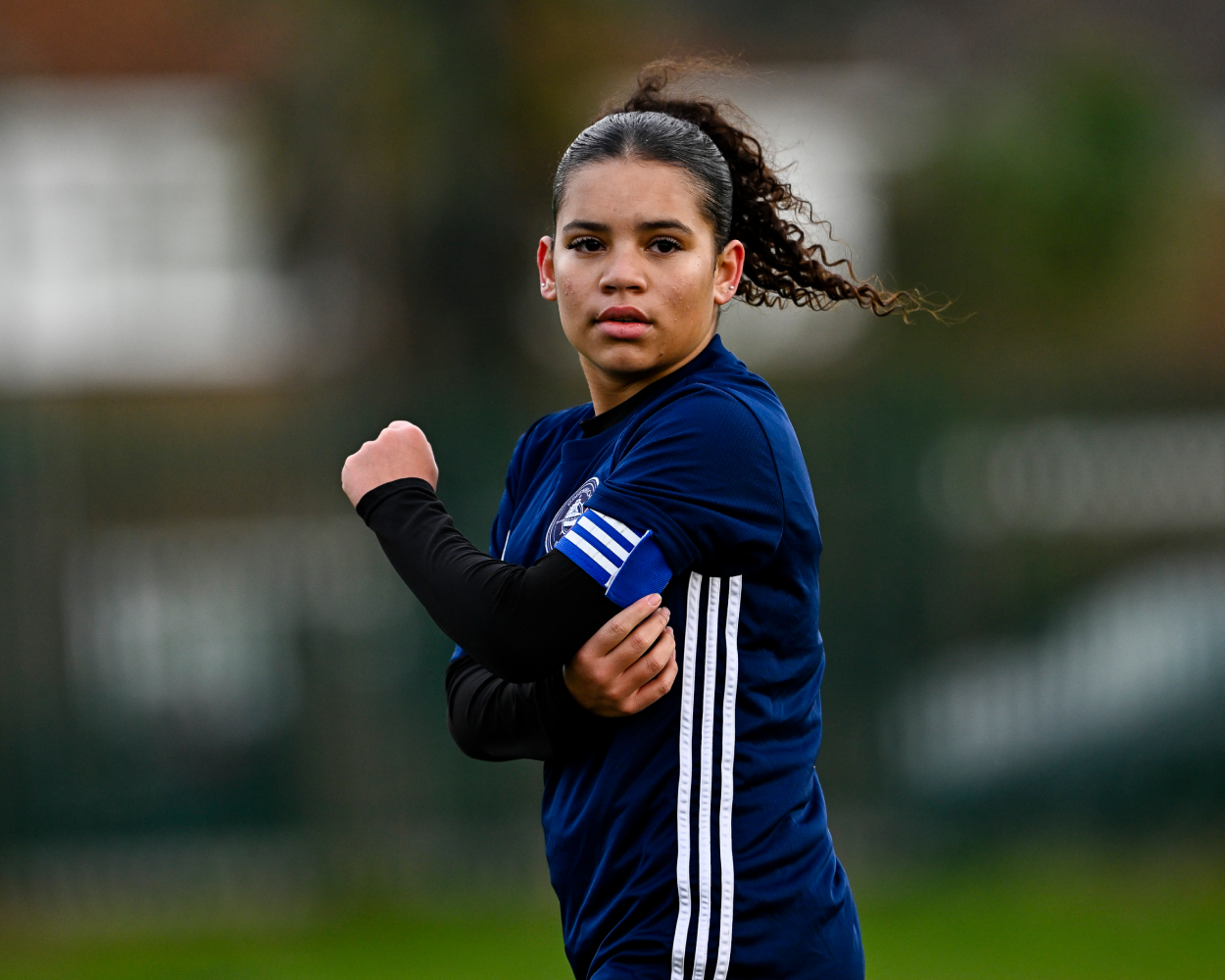
The memory problem compounded with every game. By the time the next training session arrived, specific details had faded. "After a game, trying to remember what each player did wrong, what they did right. It's impossible," Brock says. Coaches knew generally who played well and who struggled, but couldn't provide the specific, actionable feedback that drives improvement.
Without visual records, players received generic feedback rather than specific, actionable coaching. "You hope you had a good coach, you hoped he was going to develop your player," Brock says about the parent perspective. "There was a lot of hope involved." Development happened slowly, inconsistently, and depended heavily on a coach's ability to recall isolated moments from complex games.
The best coaches adapted by simplifying their focus. They'd concentrate on one or two tactical elements per game, knowing they couldn't track everything. But this meant systematic development took much longer, as teams could only work on a limited number of areas at once.
From Memory to Method
The JPL partnership with Veo transformed how coaches approached their work. "All of a sudden, coaches had at their fingertips this ability to watch a game, watch where the ball was going, watch what all players were doing, not just the one closest to the ball," Brock says. The elevated perspective that had been impossible from the touchline was suddenly available to every coach, reviewed at their own pace.

The shift went beyond just recording matches. It fundamentally changed coaching methodology. "You had a shift from very off the cuff coaching to suddenly, 'Okay, I can watch the game as a whole, and I can build a plan for every player in the team,'" Brock explains. "You got a much more rounded development plan coming from that, which was impacting every player. It ramped up development massively."
Coaches discovered they could work differently during matches. Instead of trying to remember everything while also managing substitutions, dealing with parents, and making tactical adjustments, they could focus on what mattered in the moment. "I don't have to try and remember everything. I can focus on what I can impact in the game, and then post-game I've got this amazing tool," Brock says.
The post-match analysis became the primary development tool. Coaches could review games multiple times, focusing on different aspects each viewing. One watch might focus on defensive shape. Another might track an individual player's positioning throughout the match. A third might analyze transition moments. "You can build a structure around development now," Brock says, "not just work on little bits of stuff in coaching sessions."
The technology gave coaches professional-level capabilities without requiring professional-level resources. "You've made the coach's life a lot easier and also more professional, because they now have the same tools as the academy coaches at all the professional clubs," Brock says. A grassroots coach working evenings after their day job could now provide analysis that matched what players would receive at elite academies.
Features that seemed minor created major impacts. Automatic highlighting meant coaches didn't spend hours reviewing footage to find relevant moments. "You can focus on areas of play, highlight moments in the game," Brock explains. "They can send those moments to players as learning experiences and go, 'Look, this is what I'm talking about when I said you didn't make that run.'"

The visual reference eliminated the translation problem between coach and player. "They can go, 'Clip, clip, clip,' and it's that visual representation that a lot of players will learn more from, because they're seeing it and going, 'Okay, I get what the coach is going on about,'" Brock says.
Parents noticed the difference immediately. Families could see concrete evidence of development rather than hoping their child was improving. "If I were taking my son or daughter to a football team, I'd be using as one of my determination questions: Do they have video?" Brock says. "That tells me the coach is serious about development, because he's going that extra step to really, really analyze post-game what's happened."
The league-wide impact became visible in match quality. "I've seen in the JPL, the standard of play is getting better and better," Brock says. "It's not a shock to me that often they've got the technology, because you can see that's allowing the coach to develop them as a team." Teams that embraced video analysis showed tactical sophistication that previously took years to develop. They understood shape, spacing, and collective movement because they'd seen themselves play from the optimal viewing angle.
The transformation extends beyond technical development. Players gained confidence from understanding their game at a deeper level. Coaches built trust with families by showing concrete evidence of progress. Clubs differentiated themselves by offering professional-standard development tools. The entire ecosystem was elevated because the missing piece was finally in place: the ability to see and understand the game from the coach's ideal perspective.
The JPL's experience suggests video analysis isn't just helpful for grassroots development. It's becoming essential. As Brock puts it simply: "I can't now think of how you could actually have a development process for a team without having video analysis involved." The coaches who embrace this reality are seeing their teams develop faster, play smarter, and achieve more. The ones who haven't are increasingly falling behind.
Brock's experience shows how visual feedback transforms grassroots football development. Want to see what video analysis can do for your program? Veo experts are standing by to help you get started.