Youth Basketball Development: How Pro Skills Is Changing the Game
Frederik Hvillum
Chris Goodrum of Pro Skills Basketball on why youth basketball development has lost its way, and how video analysis is helping coaches put player growth back at the centre.
Chris Goodrum has spent 25 years coaching basketball. As COO of Pro Skills Basketball, a development-first club operating across 25 cities in the United States, he has a clear diagnosis of what has gone wrong in American youth basketball and a clear idea of what it takes to fix it.
Youth basketball in the US has a culture problem. Not a talent problem. Not a coaching problem. A culture problem. The metrics that matter have drifted away from development and toward performance, and the consequences show up years later when players plateau or disappear from the game entirely.
Pro Skills Basketball was built specifically to push back against that drift. Goodrum, who spent two decades at the YMCA of Greater Charlotte before joining PSB, describes the mission in plain terms: change the culture of youth basketball by keeping the main thing the main thing.
What youth basketball development actually means
The founders of Pro Skills Basketball, Logan Kazmoski and Brendan Winners, played professionally overseas after their college careers at Davidson. What they saw in the European academy model changed how they thought about player development.
"Soccer, from its inception, has been an academy model. Basketball in the US has never been an academy model. We are swimming upstream, but we are doing it proudly." Goodrum says. The upstream current he describes is a grassroots basketball culture built around highlights, winning records, and the prestige of playing for the best team, regardless of whether a player is actually developing. PSB's approach is the opposite.
That means positionless basketball. It means not pigeon-holing a big kid at 12 because he might not be big at 16. It means teaching players that the team is the star and that making winning plays for your teammates is more valuable than scoring.
"We've got coaches that have played at the highest levels. The focus is on development. Not on the outcomes of the game or what happens in those four quarters, but what happens over the next four, six, eight, ten years of someone's life," Goodrum explains.
Why game film matters for youth basketball coaching
Game film has been standard at the professional and college level for decades. At youth level, it has been harder to access, inconsistent in quality, and rarely used for the kind of structured analysis that actually drives development.
Before Veo, PSB was using Baller TV. The economics were straightforward but painful: a subscription with a limited number of download credits per month, at a cost of around $14 to $15 per additional credit. With four or five teams playing eight to twelve games a month, that cost stacked up fast.
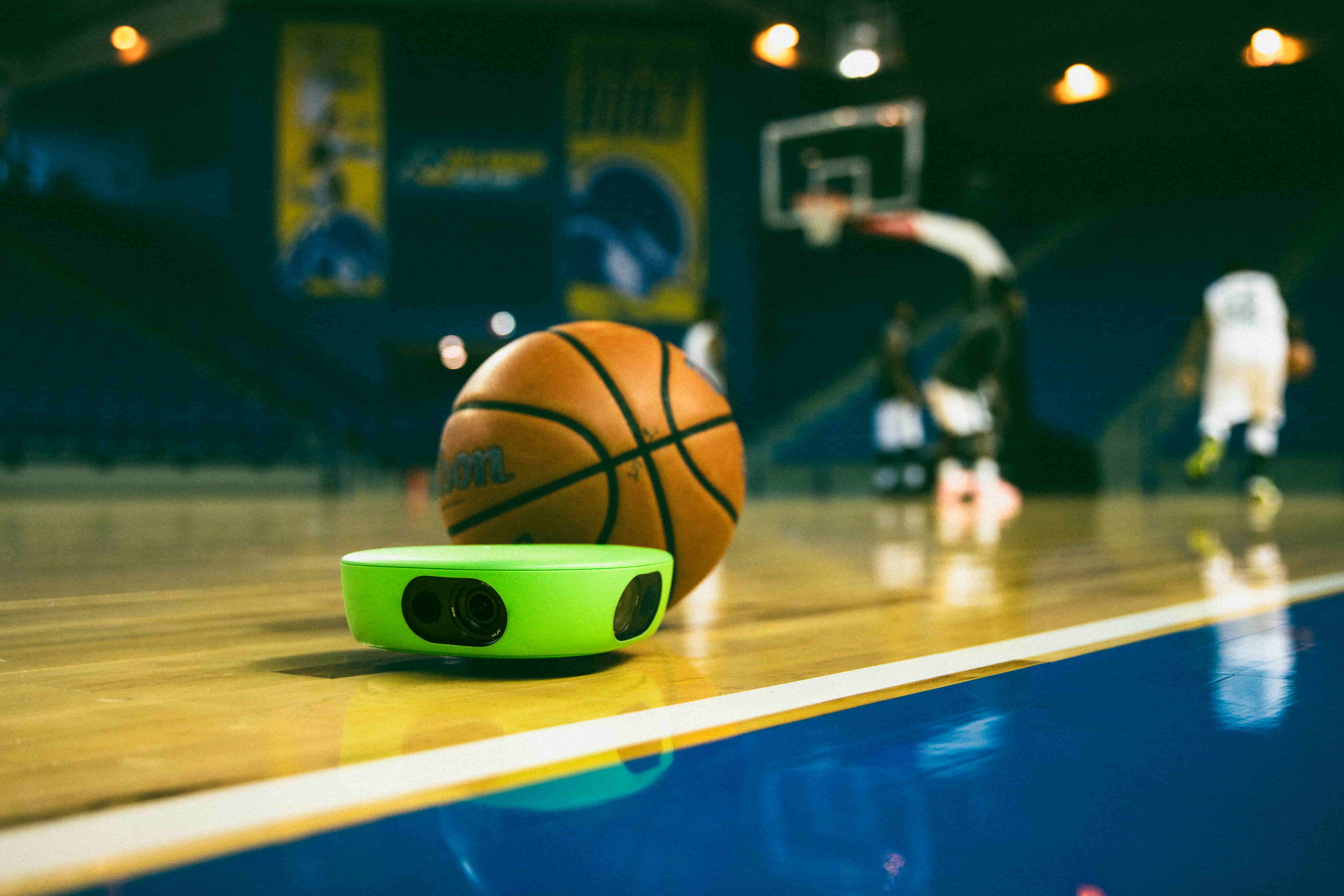
"The issue is that because we're trying to get game film for quite a few teams, you run out of download credits and then you've got to pay per credit. And there were times where games were choppy, games didn't start on time, the video quality wasn't the best. It was hard to want to use that when we're trying to represent kids and put them in a position to get recruited," Goodrum says, adding that the question they had to answer honestly was what the goal actually was. The goal was to put kids in a position to be looked at as recruitable athletes. That required the best quality game film available.
How Pro Skills uses video analysis across 25 cities
PSB currently has nine teams across seven cities using Veo: Tampa, Charlotte, DC, Indianapolis, Portland, Richmond, and Philadelphia. The use cases vary by city and by age group, but the common thread is using footage to shift the focus from outcome to process.
In Charlotte, players come in thirty minutes before practice for a film session. Coaches clip specific moments and use them to work on spacing, decision making, and game pacing. Crucially, the sessions are not just for players.
"We're talking to the coaches about their decision making in certain parts of the game. Walk us through what you were thinking. If we saw a team doing something specific, why didn't we call a timeout or make some modifications. We're using it in that aspect as well," Goodrum explains.
Portland and Tampa have gone further, using footage to document coaching practices and share them across the organization. A city director records a session showing the energy, the body language, how coaches engage with kids, how feedback is kept short and then play resumes. That clip goes to other coaches as a reference for what PSB coaching looks like in practice.
Giving players ownership of their own development
Every PSB player is invited into the Veo clubhouse. Every player has access to their own game film. The effect on engagement has been immediate and, to Goodrum, telling.
"After tournaments, players are texting us asking when it's going to be uploaded. They're like, I'm trying to watch the film, I'm trying to make clips. I don't have one testimonial. I've just got a community of excitement and gratefulness. The fact that they're engaging and using it is all I need to know we made the right decision," Goodrum says.
Parents have access too. Some ask to be added to the clubhouse so they can follow their child's season. But the parent feedback Goodrum values most is subtler than engagement statistics.

The parent who just wants to watch the game
"People ask me why I don't shoot video of my kid playing. My response is I want to be a parent and watch. There are so many parents who feel obligated to view their child's game through a screen, recording through their iPad, having to keep moving it. We've created a space for parents just to be parents and not have to worry," Goodrum says.
That shift is small and practical. It is also, in its way, a statement about what youth sports are for. The game is supposed to be watched. The development is supposed to be felt. When a parent is behind a lens for ninety minutes, they are missing both.
The bigger picture: changing the culture of youth basketball
PSB's long-term ambition is to build a model that changes not just how individual clubs operate, but how youth basketball is understood across the country. Goodrum describes a future where footage from all 25 cities sits in a single shared space, accessible to college coaches, parents, and the players themselves.
"All of our videos across all 25 cities of all of our teams in one spot creates a place for college coaches to go to. And it creates a place for parents to go to, for family members, for grandparents, for aunts and uncles to watch their loved ones," Goodrum says.
The analytical infrastructure is still being built. PSB currently partners with Sports Visio for deeper analytics, which requires uploading footage to Veo and then transferring it separately. Goodrum's vision is a single platform where all of that happens in one place.
The underlying philosophy does not change regardless of what the tools can do. Development first. The team is the star. The wins follow.

FAQs
Footage is as useful for coach development as it is for player development. Clips of well-run sessions can be shared across a coaching network as a reference standard. Game footage can be used in staff meetings to discuss in-game decision making, timeout usage, and tactical adjustments. Some organisations record coach training sessions to distribute to staff who were unable to attend in person.
College coaches typically want to see full game footage, not just highlight reels, to evaluate a player's decision making, effort, and consistency across different game situations. Clubs that film consistently and maintain accessible footage libraries give their players a significant advantage in the recruitment process. High quality footage that can be shared via a direct link is the standard coaches expect.
Video analysis gives coaches and players an objective record of performance that supports structured feedback sessions, opponent preparation, and individual skill review. At youth level, it also develops the habit of self-analysis: players who review their own footage regularly build a more accurate understanding of their game and take greater ownership of their development.
The academy model prioritises long-term player development over short-term results. Common in European soccer, it focuses on technical and tactical fundamentals across age groups, with competitive games used as a development tool rather than the primary measure of success. ProSkills Basketball is one of the few US youth basketball organisations explicitly built on this model.