Amputee Football Video Analysis: How England Prepare for the World Cup
Frederik Hvillum
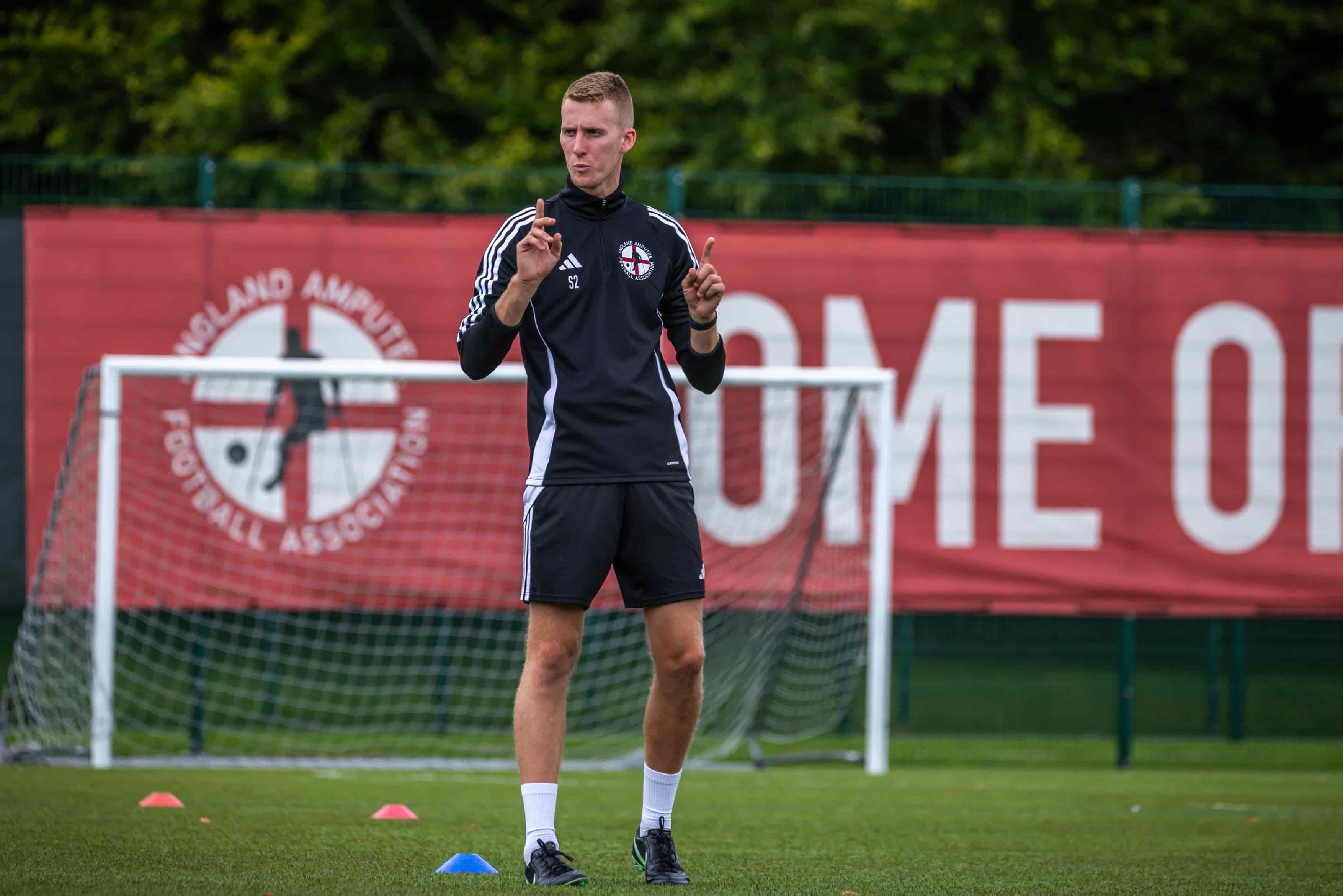
Tom England coaches the England Amputee Football Association. Here is how video analysis has changed how they prepare, train, and compete at international level.
Tom England is the first team coach for the England Amputee Football Association, working alongside manager Gary Marheineke. He also coaches at Luton Town's community trust and holds a UEFA B license. He has used Veo across multiple coaching environments and brings that experience directly into England's preparation for international competition.
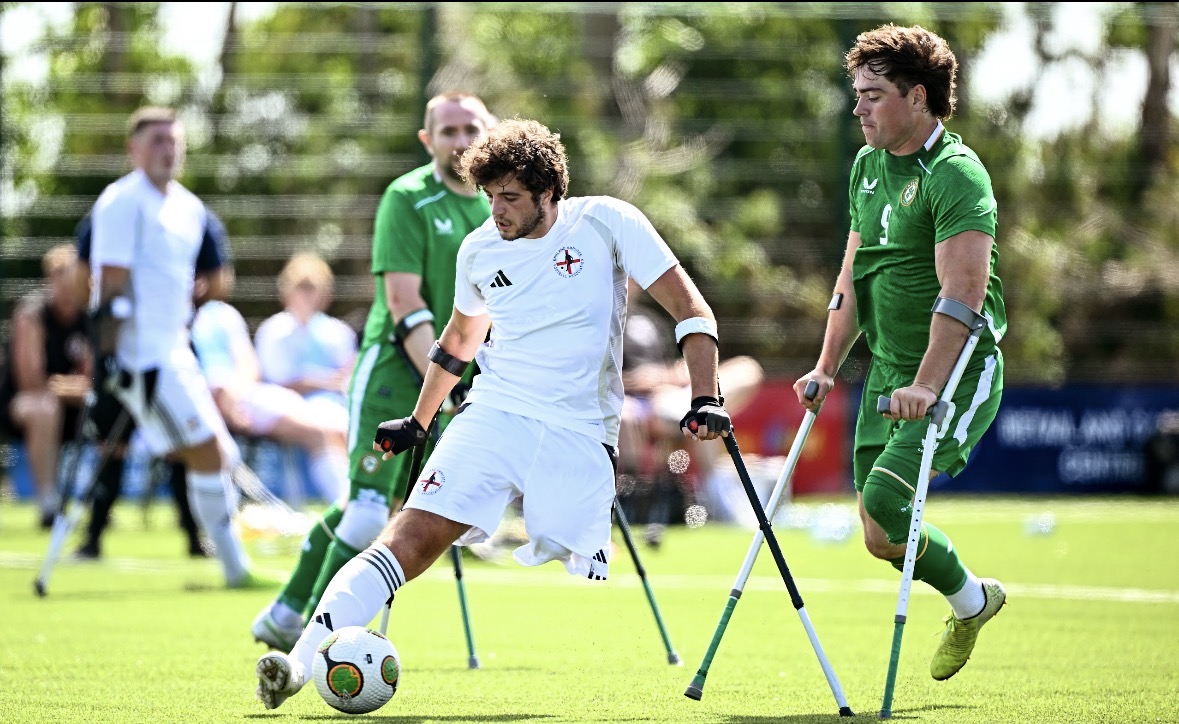
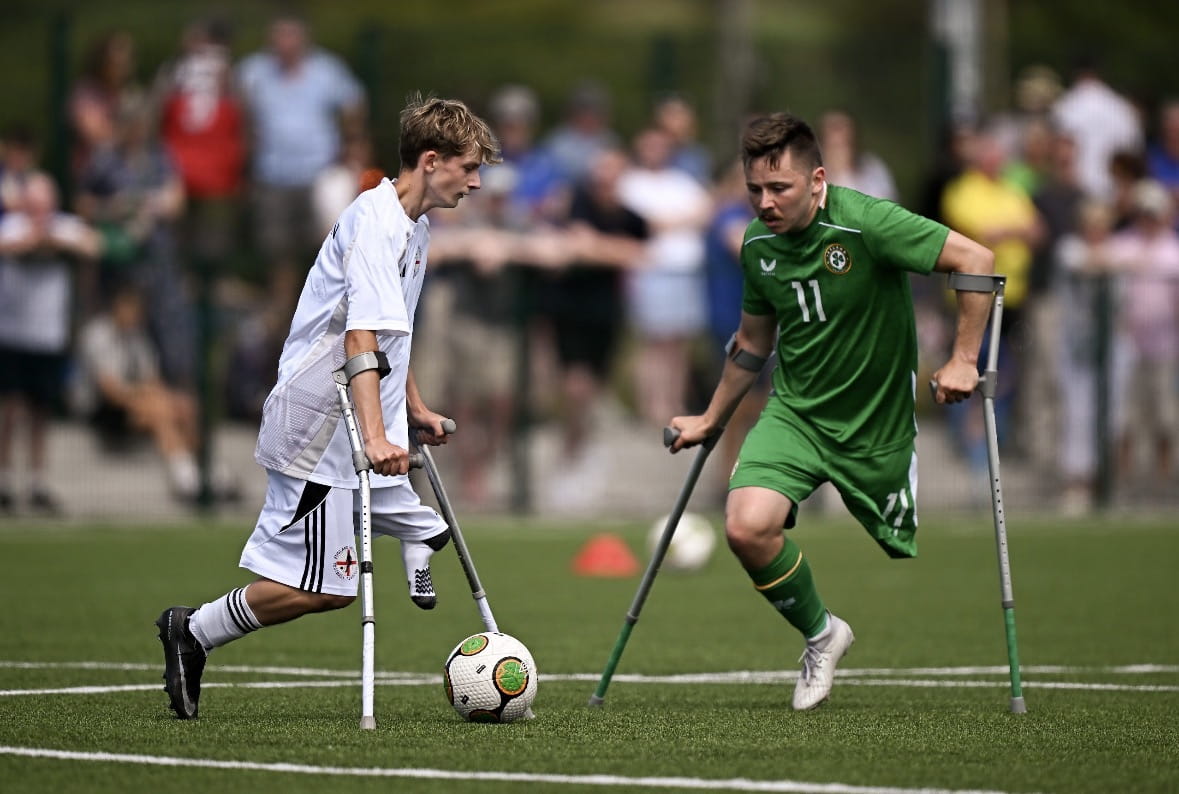
Amputee football is not a simpler version of the game. It is a highly specialised form of football that demands exceptional technical quality, tactical discipline, and physical strength. Players on crutches have remarkable upper-body power and strike the ball with the outside of the foot, the inside, or the laces, whatever the situation demands, with precision that takes years to develop.
Getting that quality onto the pitch at a World Cup requires preparation. And, as England's coaching staff have found, preparation requires video.
What amputee football video analysis has to account for
Understanding how video analysis works in this context starts with understanding how the game itself works. Amputee football is played 7v7 on a 9v9 pitch with no offsides. Goal kicks must bounce before crossing the halfway line or a free kick is awarded. Goalkeepers, who play on two legs, are confined to the penalty area. Players cannot rest their stumps on the ground during a shot or pass, because that gives them momentum from a second point of contact.
The physical constraints change the tactical picture significantly. Moving sideways on crutches is genuinely difficult. Forward and backward movement is easier. That shapes England's defensive setup and how they ask players to position themselves in and out of possession.
"We've shifted from a low block to a mid block because it keeps us compact but gets us higher up the pitch, closer to the opposition's goal. The low block worked in the Nations League, but you can't rely on the other team putting it in their own net again," England says, referring to an earlier game England won without registering a shot on goal.
Understanding that tactical logic is where video analysis becomes essential. The camera sees the whole pitch. The coach on the touchline does not.
Why video is the only tool that shows the full picture
One of the most consistent observations from coaches who use video analysis is the gap between what they see from the sideline and what the footage shows. In amputee football, that gap is especially significant because the team structure depends on every player maintaining their position relative to the ball at all times.
"On the sideline we've got two eyes, and we're focused on a certain player or unit. Being able to see it as a whole means we can then affect the person on the far right side when the ball is on the left. Being able to see the full game in one actually lets us pick out little bits we wouldn't have seen within the game," England explains.
The stop-and-start capability of video review is where the tactical coaching happens. England describes freezing a frame to show the team structure at a specific moment: where everyone is positioned, what the player pressing the ball has done, and what that means for the space left behind. That conversation is impossible without the footage.
"If someone goes and presses too early and just allows space behind us, they're out of the game. We can stop and freeze it in that frame. Now this is the overview. This player pressed, and we got no success from it because, what happened was space opened up behind us. That's what we can show," England says.
This is the same principle that applies across football at every level. Read how video analysis gives coaches the full picture that the sideline cannot.
How visual learning shapes the analysis sessions
England is clear about why video works particularly well with this group of players: they are visual learners. Telling them what happened is not enough. Showing them changes the conversation entirely.
"It's really hard to put something into words if you don't see it. If we show them a clip of us building out from the back and say we can do this and this, then through the use of the video we can actually show them what it looks like. Stopping and starting it is a really important tool, especially at international level where reviewing games and putting out a plan is such a key part of the game," England says.
The analysis sessions are not one-way. England involves players directly: asking defenders what they noticed about their own positioning, asking midfielders what the forwards did, asking the group to analyse opposition nations they may face. The footage creates a shared language that makes those conversations substantive rather than impressionistic.
"We get them involved. It's not just us delivering. We want them to have their voice, their view on it. Some of them will go away and watch the game back themselves. They'll go and watch other nations back because they want to gain an edge on the opposition and on their own performance," England says.
The footage is more than analysis
The footage has a dimension beyond the tactical picture, and England is direct about how important it is. These players are representing England at a World Cup. They have trained for years, overcome significant personal challenges, and earned their place at the top level of their sport. The footage captures that.
"Some of them have now got kids and are starting families. They can now show what their moments look like, which comes away from the analysis side. I think it's a really important thing about the video and the footage we have: we can keep memories and be able to show their memories," England says.
That connection between the analytical value of video and its value as a record of something meaningful is part of what makes the tool matter to the players. When they ask when the video is dropping after a training session, it is not only because they want to review their positioning. They want to see what they did.
"To them, representing England at amputee level, that's their honor. That's them playing for their national team. That's not them playing for England mainstream because they're amputee footballers. And I think that's the real key for them: I've got to the top level of where I can get to," England says.
The emotional significance of footage for players at every level is something coaches across sport recognise. See how CP football coaches are using video analysis to develop their players.
Preparing for the World Cup in Mexico
England are heading to the World Cup with a clear plan for how they'll use video during the tournament. The coaching staff train once a month, so they record every training session and every pre-tournament game. They play against pan-disability teams because there are not enough amputee teams locally, but the footage still gives them material to work with.
At the World Cup, the aim is to turn around footage between games quickly enough to hold a team meeting before the next match. A game at five in the evening, a review before a noon kickoff the following day. That requires both the footage and the analysis to be ready in a short window.
"The focus we have is being able to capture their moments. Go out and do the analysis session with the players, get clips together within the games that were good, but also watch something back that we can put into perspective as a view rather than just words," England says.
For clubs and national teams preparing for tournaments, read how automatic event tagging transforms post-match analysis workflow.
The future of the sport
England describes a program that is entirely volunteer-run. No one in the coaching staff gets paid. They are driven by a shared belief that the sport deserves to grow, that the pathway from junior camps starting at age six to the senior World Cup squad should be well maintained, and that the recently established women's team represents an important new dimension.
"We've got a really nice pathway in terms of juniors from the age of six all the way up to the male team. And now with the introduction of the women's team as well, it's not just a focus on the men's team,” England says.
The ambition is to make it sustainable, to reach the point where coaching staff are paid, and the program has the infrastructure it needs to compete at the highest level consistently.
"We all have in common a real passion and drive for the sport and want to get it to the top level where we in the future it might have the money to make it full-time jobs and a really sustainable England programme," England says.
How Veo supports disability football programmes
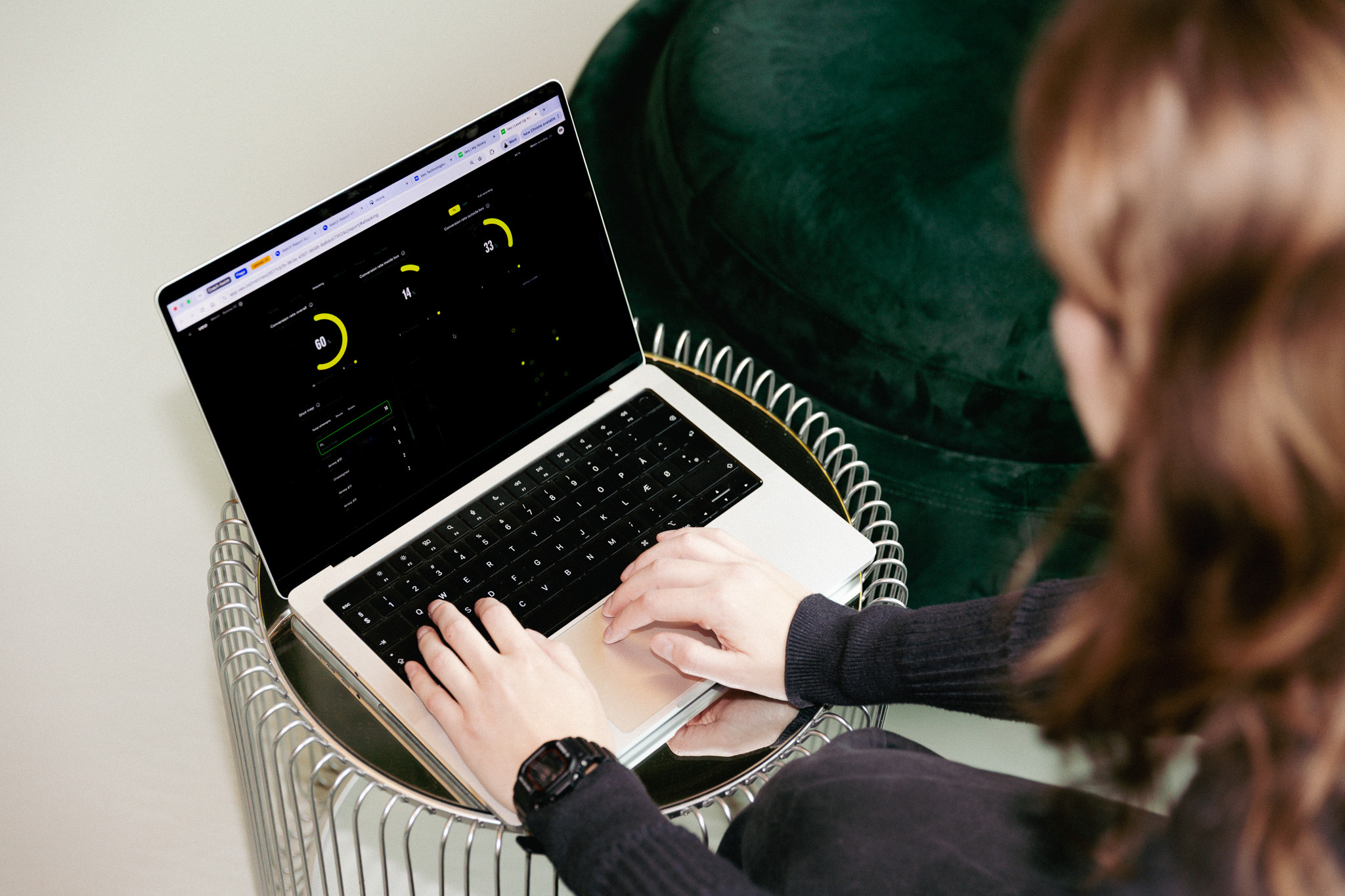
Veo is an AI-powered camera system that records matches and training sessions automatically, without a dedicated camera operator. The camera is positioned on a tripod and uses computer vision to track the ball and follow play across the full pitch, providing the elevated panoramic view that sideline observation cannot offer.
After a session, footage uploads automatically to the Veo platform, where coaches can review clips, share highlights with players, and use stop-and-start functionality to conduct detailed analysis sessions. For programmes that train infrequently, every session that is recorded and reviewed adds to the analytical picture that informs tournament preparation.
In 2022, Veo followed the USA Amputee national team at the World Cup in Istanbul, Türkiye.
You can follow The England Amputee Football Association on Facebook, Instagram, and X.

FAQs
Video analysis in amputee football follows the same principles as in any form of the game: footage provides an objective record of performance that coaches and players can review together. The elevated, wide-angle view is particularly valuable because it shows the positioning of all players simultaneously, which is harder to track from the touchline when attention is focused on specific individuals or units.
Coaches review both possession and out-of-possession phases. In possession, they analyse how players build up from the back, how they create and finish, and how individual body shape and first touch technique affects the team's ability to keep the ball. Out of possession, they look at how the team structures its press, mid-block, and low block, and how individual decisions affect the shape of the whole unit.
Amputee football is played 7v7 with no offsides, which changes the defensive picture significantly. Moving laterally on crutches is difficult, so teams position players to keep the ball in front of them and use forward-sideways movement rather than side-stepping. Body shape matters differently: players must play to their single foot, making first touch technique more precise because there is no back foot to adjust to. Goalkeepers are confined to the penalty area because they play on two legs.
When a national squad only trains once a month, every session that is recorded contributes to the analytical picture available for tournament preparation. Footage from training and pre-tournament games builds a library of evidence about team structure, individual technique, and tactical patterns. At a tournament, footage from one game can be reviewed and used to prepare for the next within hours, giving coaches specific evidence to work from rather than impressions formed under the pressure of live competition.
Players engage with footage both analytically and personally. Analysis sessions work best when players are actively involved: sharing their observations, reviewing their own positioning, and watching opposition footage to identify patterns they can exploit. Beyond the analytical value, footage of international competition carries significant personal meaning for players who have reached the top level of their sport, giving them a record of moments they can share with their families and look back on.

%20(1).jpg)
.jpg)