How To Improve Lacrosse Skills — 8 Drills With Video
Veo
.jpg)
Want to improve your lacrosse skills? These 8 coach-tested drills cover stick work, footwork, passing, and shooting — with video tips for faster progress. Ages U10 to U18.
Most players plateau because they repeat the same drills without knowing what to look for. Improving your lacrosse skills comes down to three things: deliberate repetition, targeted feedback, and knowing which gaps to close first. This guide covers eight coach-tested drills that build real skill across stick work, footwork, passing, and shooting. This guide shows you how video makes every session more effective.
What separates players who improve from players who plateau
Repetition alone does not produce improvement. Players who get better share three habits:
- They practice the same skill in different situations, not just in isolation.
- They get specific feedback from a coach, a teammate, or by watching themselves back on video.
- They know what good technique looks like, so they can spot the gap between where they are and where they want to be.
The last point is where most players fall short. Without a reference point, it is hard to know what to fix. Video solves this. Watching your own footwork, hand position, or release angle, even on a phone, gives you data that a coach standing on the sideline cannot always catch in real time.
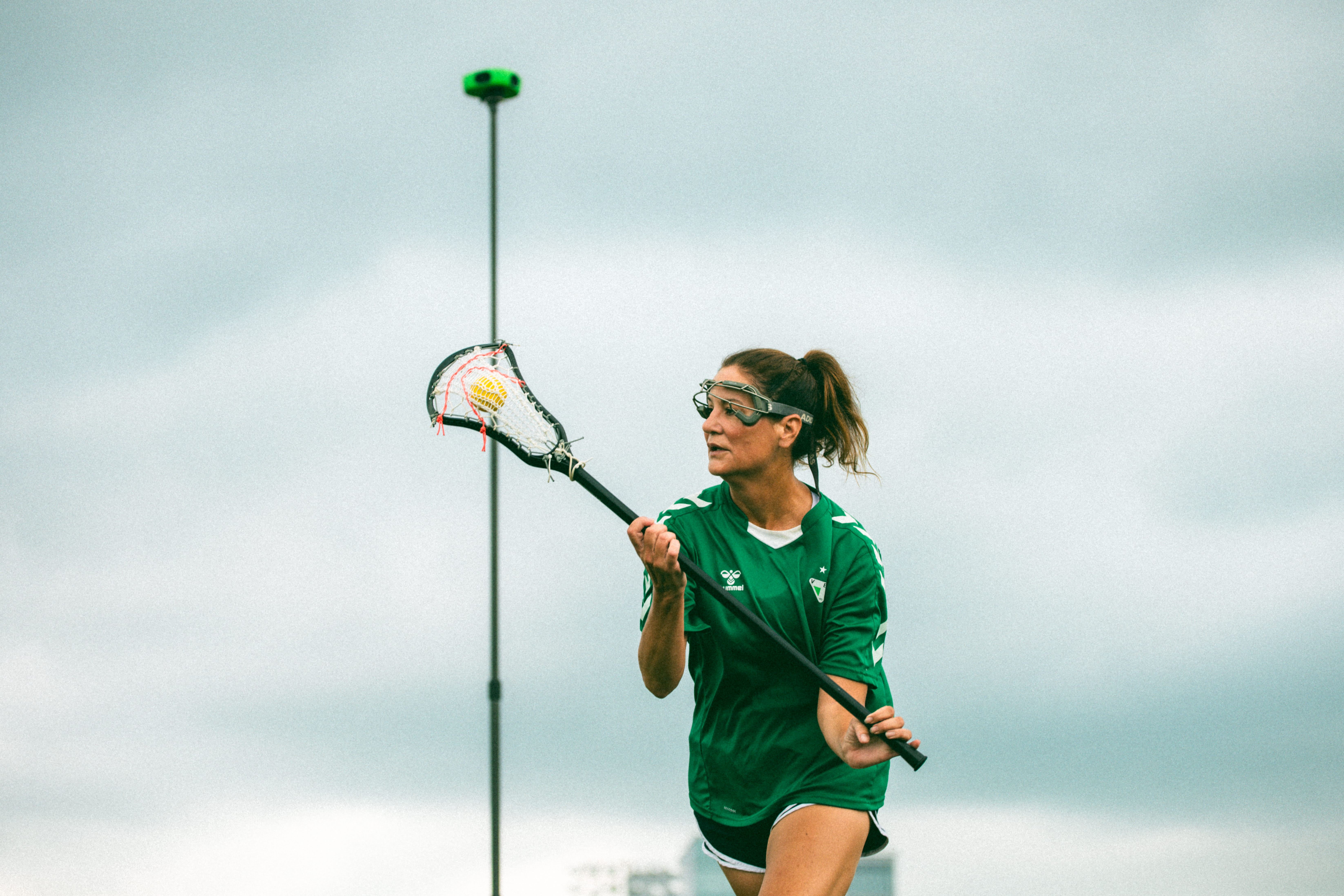
Film your lacrosse training with Veo Go
Record your sessions with just an iPhone, then watch back to catch what you miss in the moment.
The 8 drills
1. Wall ball
Wall ball is the foundation of stick work in lacrosse. Ten minutes a day with consistent mechanics builds hand-eye coordination faster than any other drill.
Setup: find any solid wall and mark a target at chest height. Stand 10 to 15 feet away.
Coaching cue: release the ball as it reaches the top of your stick. Any later and accuracy drops.
What to watch on video: film from the side. Check that your top hand drives through the throw and your bottom hand pulls at the same time. Players who plateau usually have one hand doing both jobs.
Age note: U10 upwards. Younger players should start at 8 feet and build distance as control improves.
2. Box footwork
Footwork decides whether a player can get into position to make a play. This drill trains lateral movement, pivoting, and acceleration.
Setup: place four cones in a square, roughly 3 to 4 feet apart. Move through the box in a set pattern: lateral shuffle, sprint, backpedal, shuffle. Then switch direction.
Coaching cue: stay low and keep your weight forward. Players who stand upright slow down on direction changes.
What to watch on video: film from above if possible, or from the end of the box. Look at whether the player crosses their feet on the lateral shuffle. That single habit costs half a step on every change of direction.
Age note: U10 upwards. Add the stick in hand for U14 and above.
3. Two-hand passing gate
Most players have one dominant throwing hand. This drill forces equal work from both sides.
Setup: pair up players. Place two cones 12 to 15 feet apart to create a gate. Players pass through the gate, alternating dominant and off-hand throws. Every pass must go through the cones to count.
Coaching cue: your off-hand will feel wrong. That is expected. Focus on contact point and follow-through, not power.
What to watch on video: film from behind the passer. Check that the top hand is placed above the middle of the stick. Players who grip too low lose control immediately.
Age note: U12 upwards. Younger players should complete wall ball off-hand work before this drill.
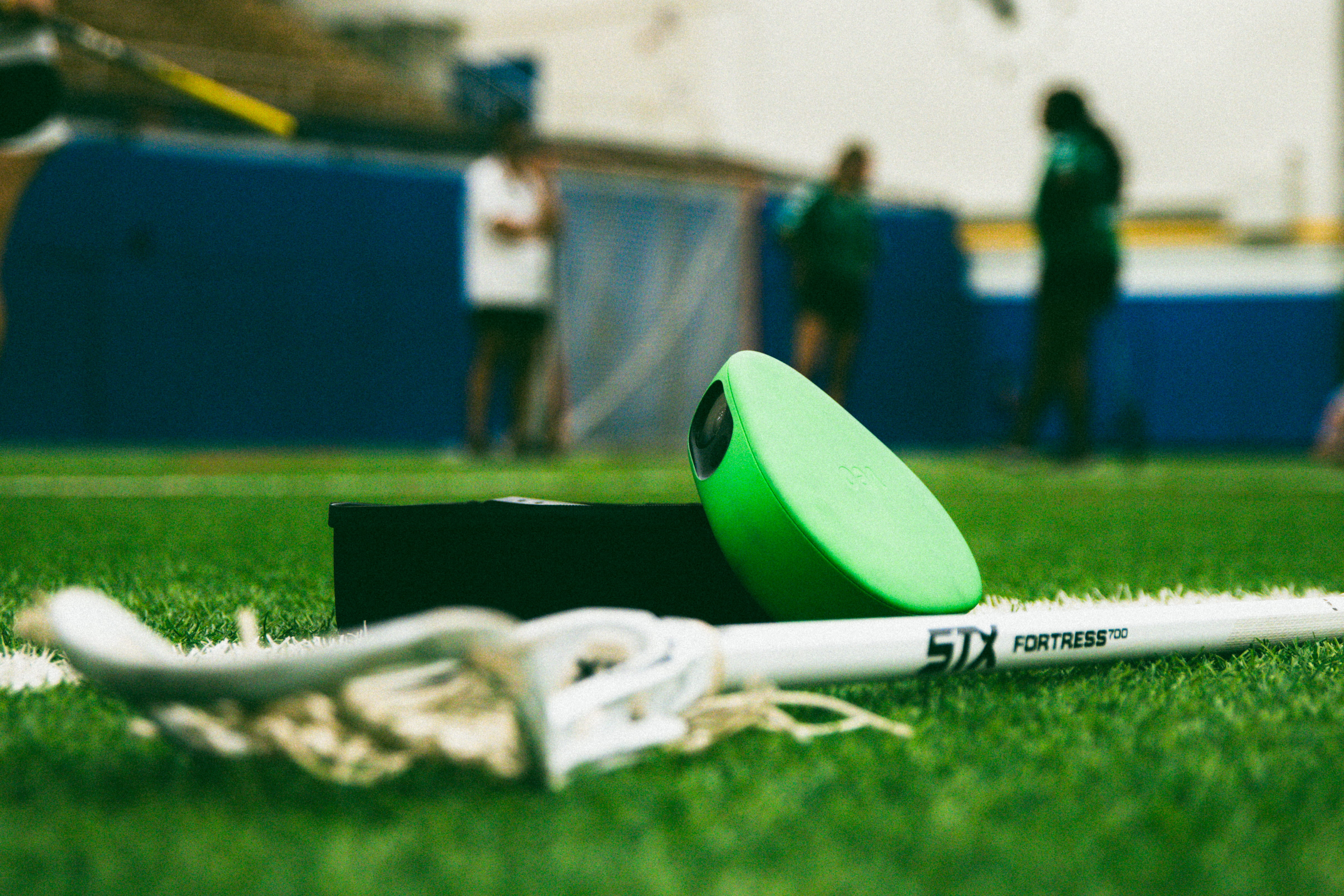
Record your drills and watch them back
More than 40,000 clubs across 100 countries use Veo to store and share footage, with over 4 million matches filmed on the platform (Veo internal data, 2026).
4. Ground ball scramble
Ground balls win or lose close games. Players who practice body positioning and stick angle under pressure consistently out-compete players who rely on athleticism alone.
Setup: roll or throw a ball 10 to 15 feet out. Two players race from the same starting point to get possession. The player who reaches the ball second must fight for it.
Coaching cue: lead with your outside shoulder and bend your knees before you reach the ball. Standing upright to scoop is the most common mistake.
What to watch on video: film from a wide angle so you can see both players arrive at the ball. Look at stick angle on the scoop. If the pocket is parallel to the ground, most scoops will fail.
Age note: U10 upwards. For younger players, use a stationary ball before adding competition.
5. Dodge and shoot
Attack players need to execute dodge moves and get a shot off in one continuous motion. This drill builds that connection.
Setup: place a cone at the top of the crease. Player drives toward the cone, executes a dodge at the cone, and shoots immediately. Alternate between face dodge and split dodge.
Coaching cue: your shot should happen within two steps of the dodge. Players who reset and then shoot give the defense time to recover.
What to watch on video: film from behind the goal. You want to see the stick angle on the dodge and the hip rotation into the shot. Both happen fast. This is exactly where video catches what the eye misses.
Age note: U14 and up. U12 players can practice the dodge alone before adding the shot.
6. Split dodge circuit
The split dodge is the most useful dodge in lacrosse at any level. This circuit trains it under decision-making pressure.
Setup: place three defenders at different spots around the crease. Player drives at the first defender, executes a split dodge, and immediately reads which of the remaining two defenders has left space. The player drives to that space and shoots.
Coaching cue: sell the drive before the dodge. A dodge with no commitment before it gives the defender no reason to step in.
What to watch on video: film from directly above if possible, or from the end line at height. You want to see the angles the player creates after the dodge. Most players cut back toward where they came from instead of opening up space.
Age note: U14 and up.
7. Shooting on the move
Standing shots are the easiest shots in lacrosse. Game situations rarely give you a standing shot. This drill trains power and accuracy while moving at game speed.
Setup: player starts at midfield and drives toward the goal at full speed. A feeder passes from the crease to the player in stride. Player catches and shoots in one motion without slowing down.
Coaching cue: catch the ball into your shot. Your hands should already be moving into the shooting position as the ball arrives.
What to watch on video: film from the side at goal height. Look at release angle. Players who release too late produce upward shots that go wide. The ideal release happens just before the front foot hits the ground.
Age note: U12 and up. Younger players should master catching in stride before adding the shot.
8. Film review session
Video analysis is a training tool, not just something coaches use at elite level. Players who watch themselves back improve faster because they can see errors they cannot feel.
Setup: record your training session with Veo Go. After practice, watch 15 minutes of footage and pick one specific skill to focus on: stick hand position during wall ball, footwork at ground balls, or release angle on shots. Write down one thing to fix before the next session.
Coaching cue: watch yourself the way you would watch a professional player. Notice what the best reps look like, then identify which part of the movement is different on your worst reps.
What to look for on video: hand position during wall ball, body angle on ground balls, stick height at catch, hip rotation in the shot. One clean observation per session is more valuable than a long list.
Age note: all ages. Younger players benefit from watching with a coach who guides what to look for.
How video makes every drill more effective
Every drill above includes a video note. That is deliberate. The gap between what a player thinks they are doing and what they are actually doing is where most improvement lives.
A coach can tell a player their top hand is gripping too low. The player nods and adjusts for ten seconds. Then they revert. When the same player watches themselves on video, the grip error is obvious in a way verbal feedback rarely is.
Veo Go turns any iPhone into a coaching camera. Set it up on a tripod before practice, record your session, and review it after. You do not need to watch everything. Five minutes on one specific drill, looking for one specific detail, is enough.
For more on how to structure your lacrosse training sessions, read Lacrosse Drills For Beginners. For clearing and transition work, see our guide to Lacrosse Clearing Drills.

FAQs
The two-hand passing gate drill is the most targeted off-hand training available. Pair up players, mark a gate with two cones, and require every pass to go through the gate with the off-hand. The constraint forces correct technique faster than open passing practice.
Yes. Players who watch themselves on video identify technique errors that verbal coaching alone rarely fixes. The reason is simple: most players have an inaccurate picture of what they are doing. Video corrects that picture. Focus on one specific skill per review session rather than watching everything.
Cradling, catching, and basic passing form the foundation of every other skill in lacrosse. A player with reliable stick control can develop dodges, shooting, and defensive technique. A player without it cannot. Start with wall ball every day and progress to passing gates with a partner.
Most players with consistent practice see clear improvement in stick skills within three to six months. Footwork and game-reading take longer because they depend on live play as much as drills. The players who improve fastest practice deliberately and watch themselves on video.
Daily wall ball is the single most effective habit for improving stick skills. Ten focused minutes a day with correct mechanics produces faster results than longer sessions with poor form. Add video review once or twice a week to identify what your hands are doing wrong.

.jpeg)