From Grassroots to Wembley: How Kinetic Foundation Uses Video to Give Every Player a Fighting Chance
Frederik Hvillum
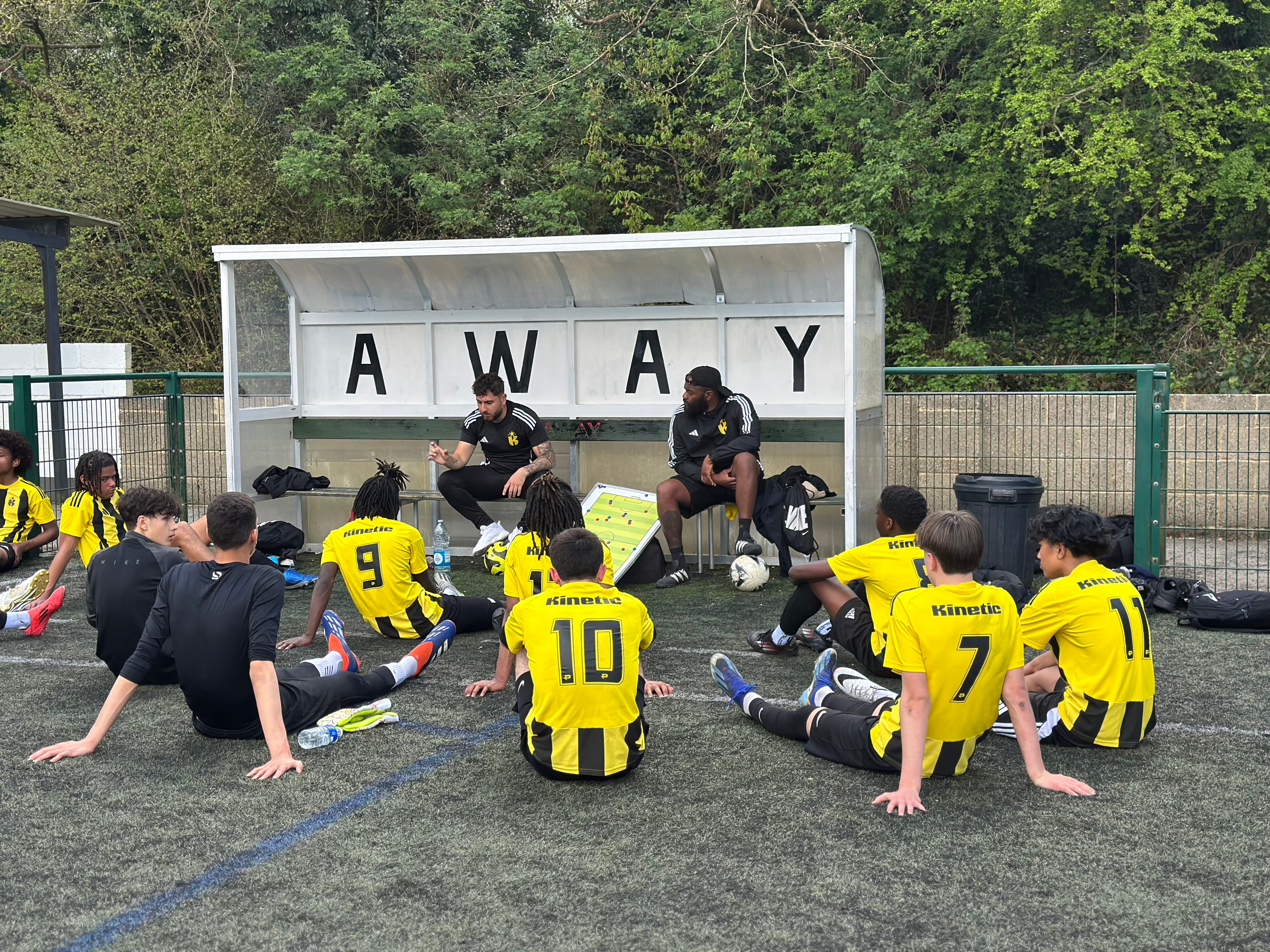
How Kinetic Foundation uses Veo video analysis to give grassroots players the same tools as professional academies, and how it helped two players reach the professional game.
Errol Mundle Smith grew up playing grassroots football in South London. He was never the most technical player in the group. He did not play at the highest youth level. At 17, he went into the professional game. At 20, he is playing for England Under-20s and featuring regularly for Norwich City's first team, including a fifth-round FA Cup appearance.
Adam Flemming, Academy Manager at Kinetic Foundation, has watched this kind of trajectory enough times to know what changes it. Video analysis, he says, gave Errol an extra five to ten percent. In professional football, five to ten percent is the difference between a career and a near-miss.
"He wasn't necessarily the most technical, but he listened whenever he was given feedback. He really locked in to get a better understanding of his game," says Adam Flemming, Academy Manager at Kinetic Foundation.
The gap professional clubs closed decades ago
For thirty years, professional academies have used video analysis as a core coaching tool. Every training session gets reviewed. Every game gets broken down. Players watch themselves back. Coaches build development conversations around footage. The feedback loop is tight and continuous.
Grassroots football, for most of that time, operated without it. Kinetic Foundation runs a full-time Academy programme across nine schools in South and North London, with a further two to three community training locations. None of those players had access to the same tools as the academies up the road. Not because the coaches were less committed. Because the technology was not accessible to them.
Kinetic made a deliberate decision to close that gap. They wanted their players to arrive at professional trials with the same preparation that academy players take for granted. Video analysis, Flemming explains, is as much a part of that preparation as any technical drill.
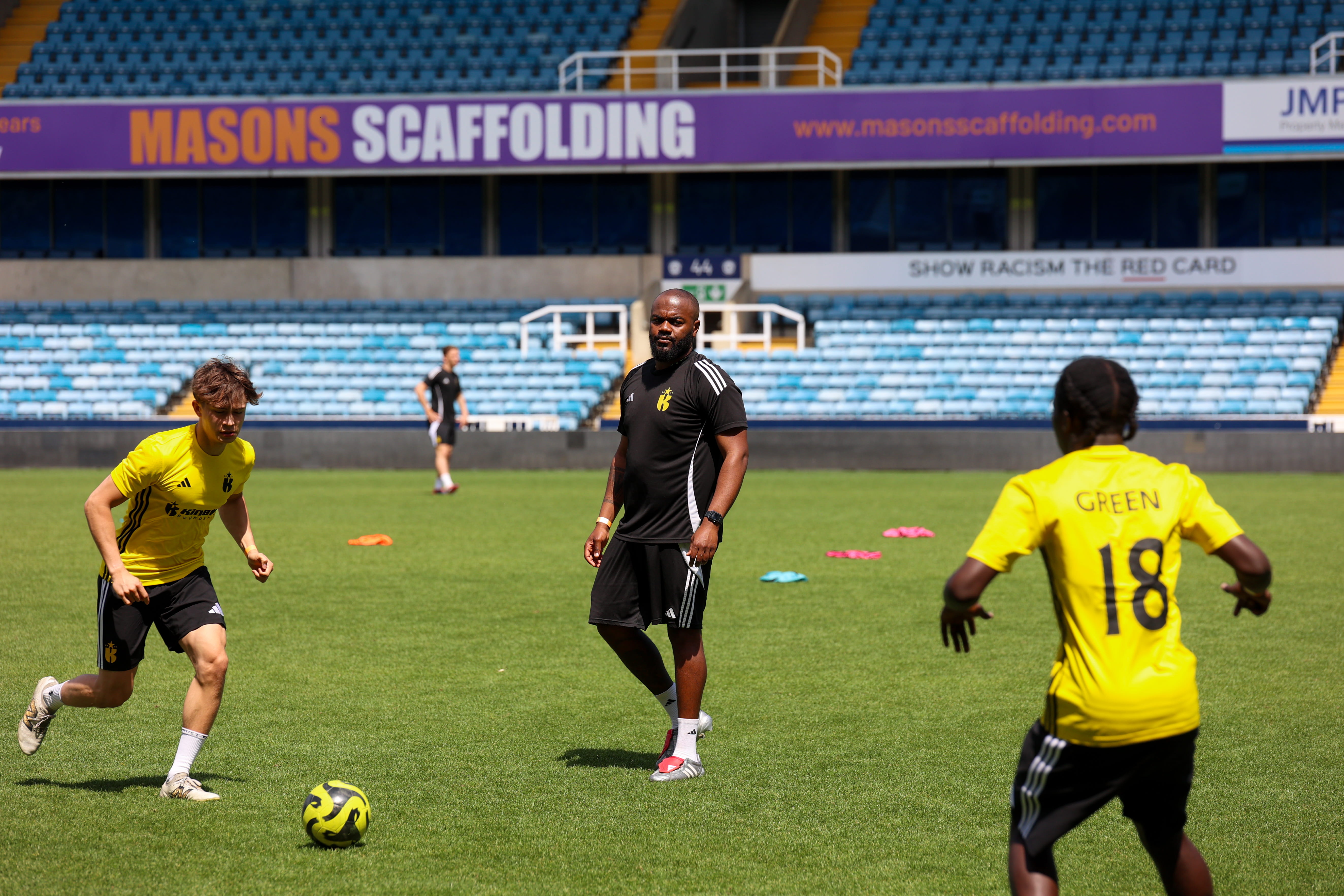
"Access to video analysis adds an extra seven to fifteen percent to a footballer's development, from age seven to men's football," says Flemming.
What the footage actually shows
Kinetic runs Individual Learning Plans for every player on their programme. Two hundred to three hundred players. Each player has three strengths and three weaknesses documented, supported by footage examples.
The footage does something verbal feedback alone cannot do: it shows players what they look like from outside. Flemming is direct about the gap between a player's perception of a game and what the camera sees.
There might be players who need to see their mistakes to correct them. Others can be told, but it is harder. Watching something from a different lens, being able to review it together, creates a common ground for the coaching conversation.
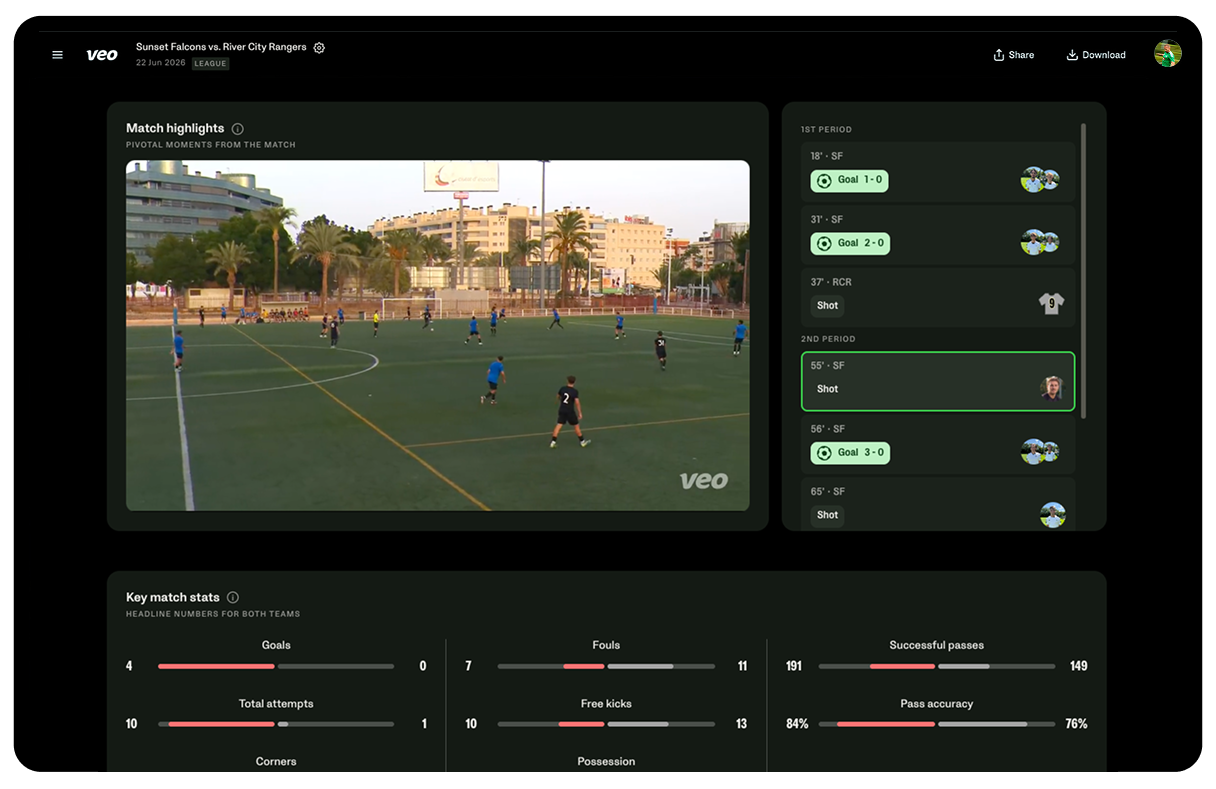
He uses the platform's letter-code clipping system to tag moments as they happen. Pressing A clips the ten seconds either side of a defending one-v-one. He sends players filtered playlists. They review clips before the next session. The feedback loop that professional clubs have built over thirty years now runs in Kinetic Academy.
The goal that got Manchester City's attention
George Brooke was a centre midfielder who ended up playing left back. One FA Cup game attracted attention. A club from the north of England noticed him. When they asked for footage, Kinetic sent it.
The footage showed them more than one game. They saw George across multiple matches, different situations, different pressures. He went on trial at Manchester City. Then Nottingham Forest. Then a circuit of clubs that ran across his first year at college.
Flemming describes it simply: from Southeast London to Manchester, off the back of sharing footage.
Not all of those trials led somewhere. But the footage opened the door. Without it, the door stays closed. A scout who watches a player once, from the stands, does not get to form that picture.
"If a club wanted to look at my left back, we had access to that footage straight away. We could show their strengths, their weaknesses, what they could use," says Flemming.
The goal nobody predicted going viral
Kinetic clips moments for social media too. They work with their social team every week. Flemming has learned something counterintuitive about what gets traction: the goals they think are unbelievable rarely go as far as a simple one-v-one or a nutmeg on the touchline.
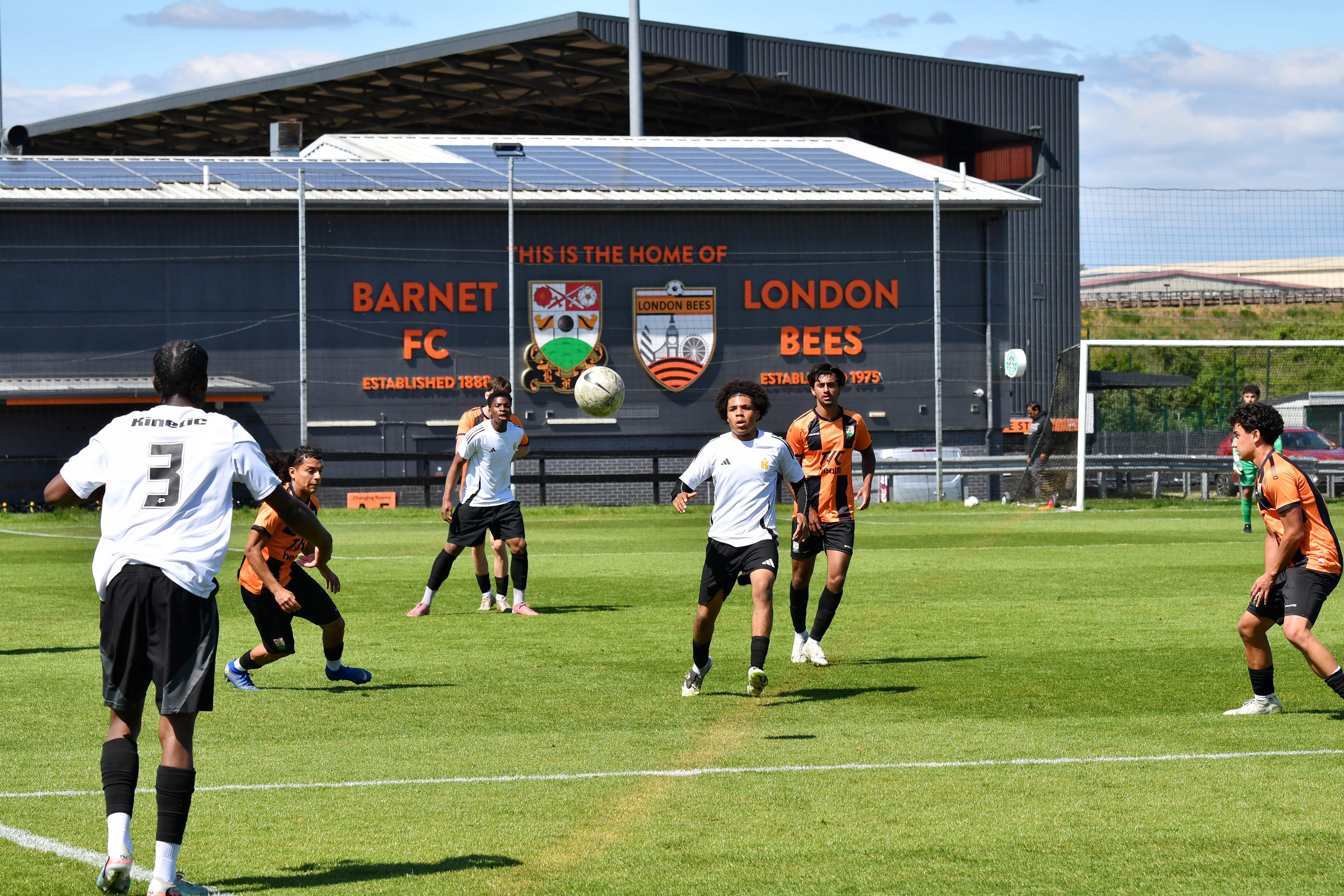
One clip stood out. A player fell over chasing the ball and kept going, running on hands and feet to stay in contact with play. Veo shared it globally. The caption said something like, when you want to win so bad you turn into a cat.
Flemming laughs at the memory. The clip took five seconds to tag. Two minutes to clip and send. The platform did the rest.
Careers beyond the pitch
Kinetic is honest with its players about the mathematics. 0.05% of the population becomes a professional footballer. The programme exists to develop the person as much as the player.
Four or five ex-students have come back to complete analysis internships. They left the programme, saw what they liked, and decided to study analysis. The football industry, Flemming points out, employs far more analysts than it did twenty years ago. A club that once had one analyst now has a defensive analyst, an offensive analyst, a player tracking specialist. The roles exist. Kinetic players are qualified for them.
"The further the game develops, the more use there'll be for analysis. We're giving players access to something others might not get at grassroots level," says Flemming.
What Veo made possible
The infrastructure Kinetic runs does not require a video analyst on staff. Flemming clips during sessions. Players filter their own playlists. Coaches review footage at two times speed on the train home. The platform replaced a process that used to require dedicated staff, significant hardware, and days of turnaround.
Errol Mundle Smith reviewed his own footage. He watched himself make decisions at game pace. He adjusted. He improved. He went into professional football with a picture of his own game that his peers at higher-level academies had been building for years. In three years, he went from grassroots South London to representing his country.
Flemming describes the counterfactual carefully. He is not claiming the footage made it happen. He is saying it contributed five to ten percent. At the level where careers are decided, five to ten percent does not go unnoticed.



.jpeg)