NYC Footy started with one permit. Now it has 1,000 teams.
Frederik Hvillum
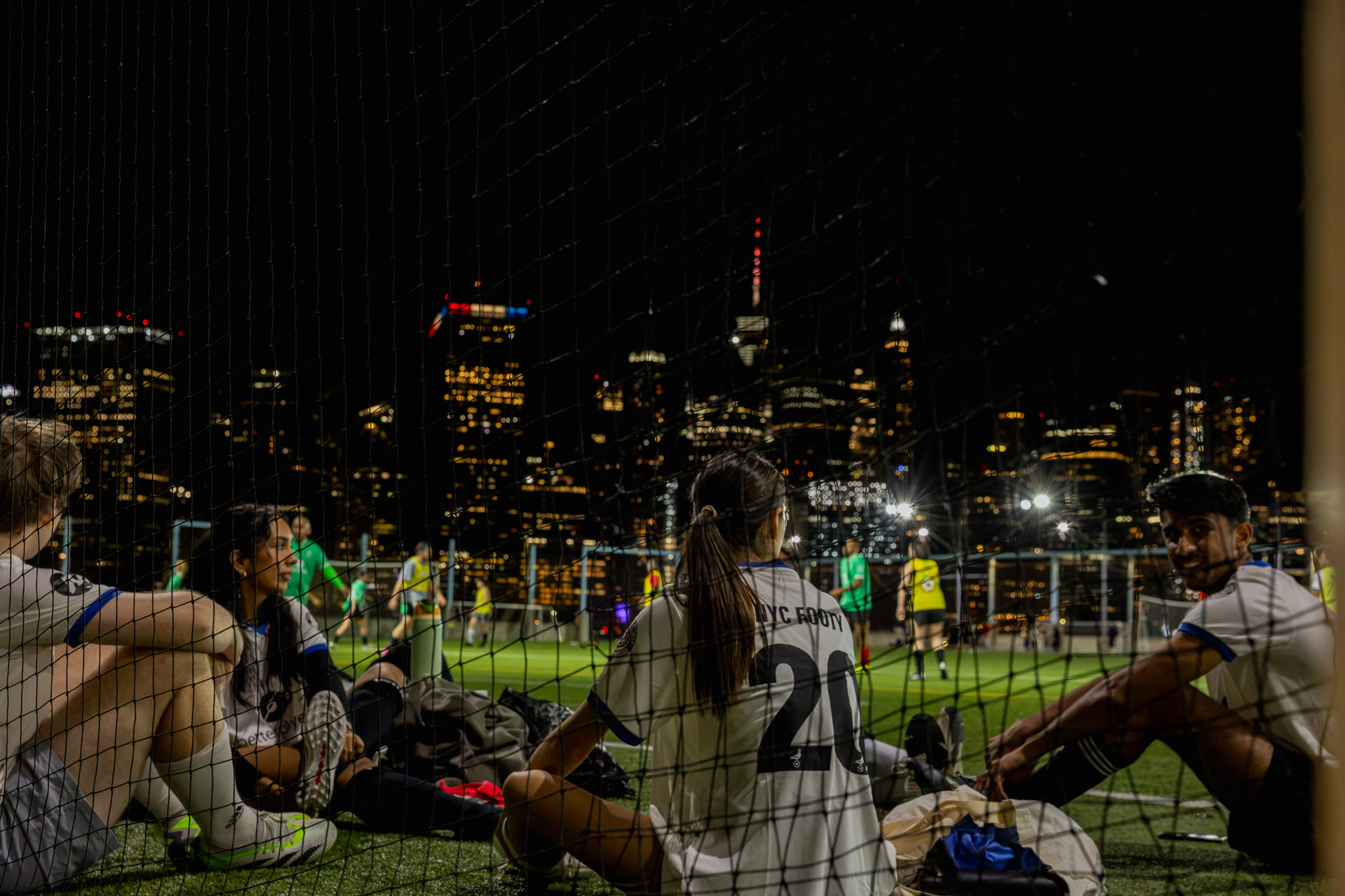
The Footy League has 1,000 mixed-gender teams and leagues for total beginners. Now it's competing with New York for lit fields and running football all night.
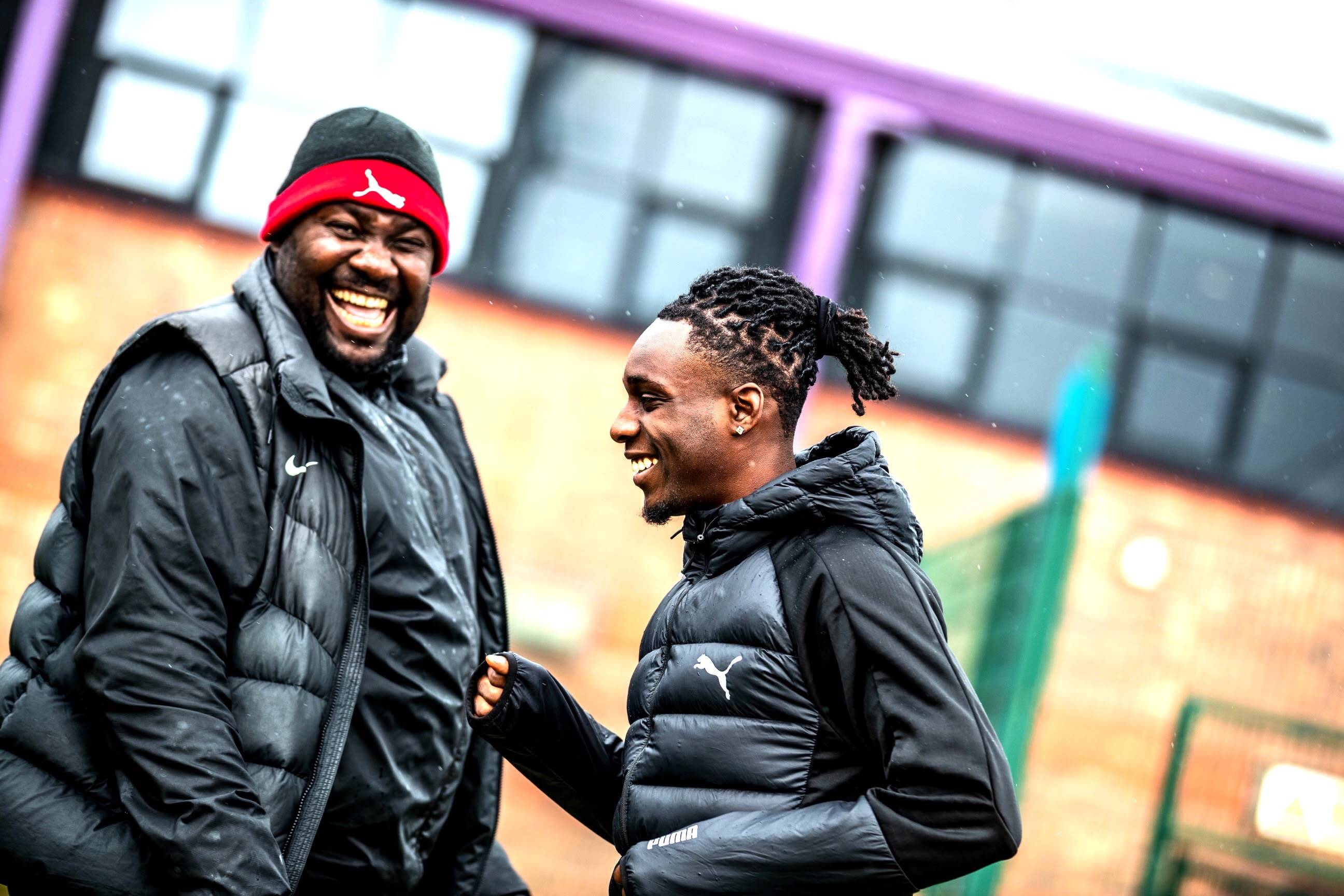
Gerardo Cueva, co-founder and COO of The Footy League, moved to New York 20 years ago for a job in the music business. He knew one person in the city, and that person played on a football team.
"He was like, hey, come join my football team. You love football," Cueva says. "And I was like, I've never played soccer before, but I'll join your soccer team because I don't know anybody." The coed team included people from finance, music, fashion, and the TSA, and they became his first friends in New York. x
Tarek Pertew, co-founder and CEO, was on the same team, brought along by a college friend. In 2011, tired of waterlogged balls, thick T-shirts, and a league that forgot to schedule its playoff game, they started their own. They called it NYC Footy.
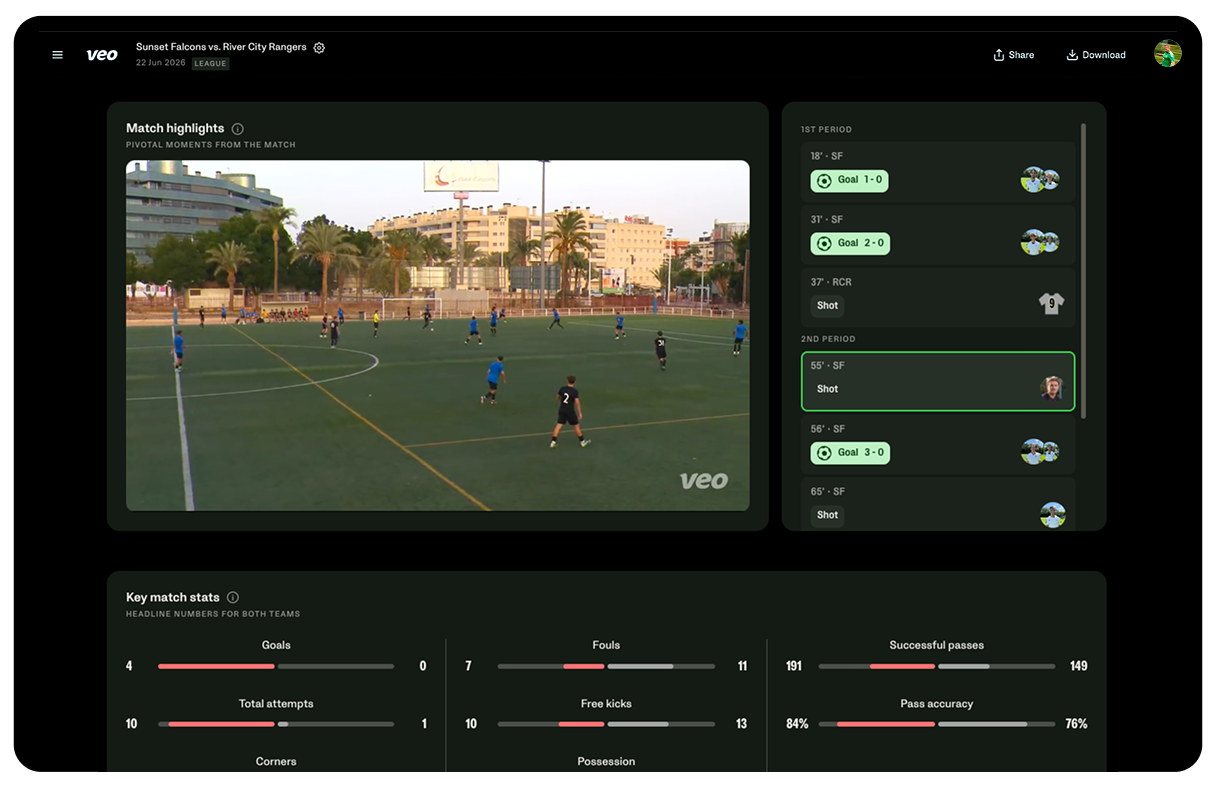
Veo spent time with the league this fall, filming the founders and recording league games. The league is built on a belief Veo shares: that anyone who wants to play should get a proper game.
Mixed gender, no exceptions
Every league The Footy League runs is mixed gender. It has never run a men’s league or a women’s league, and both founders say they have had to defend that decision.
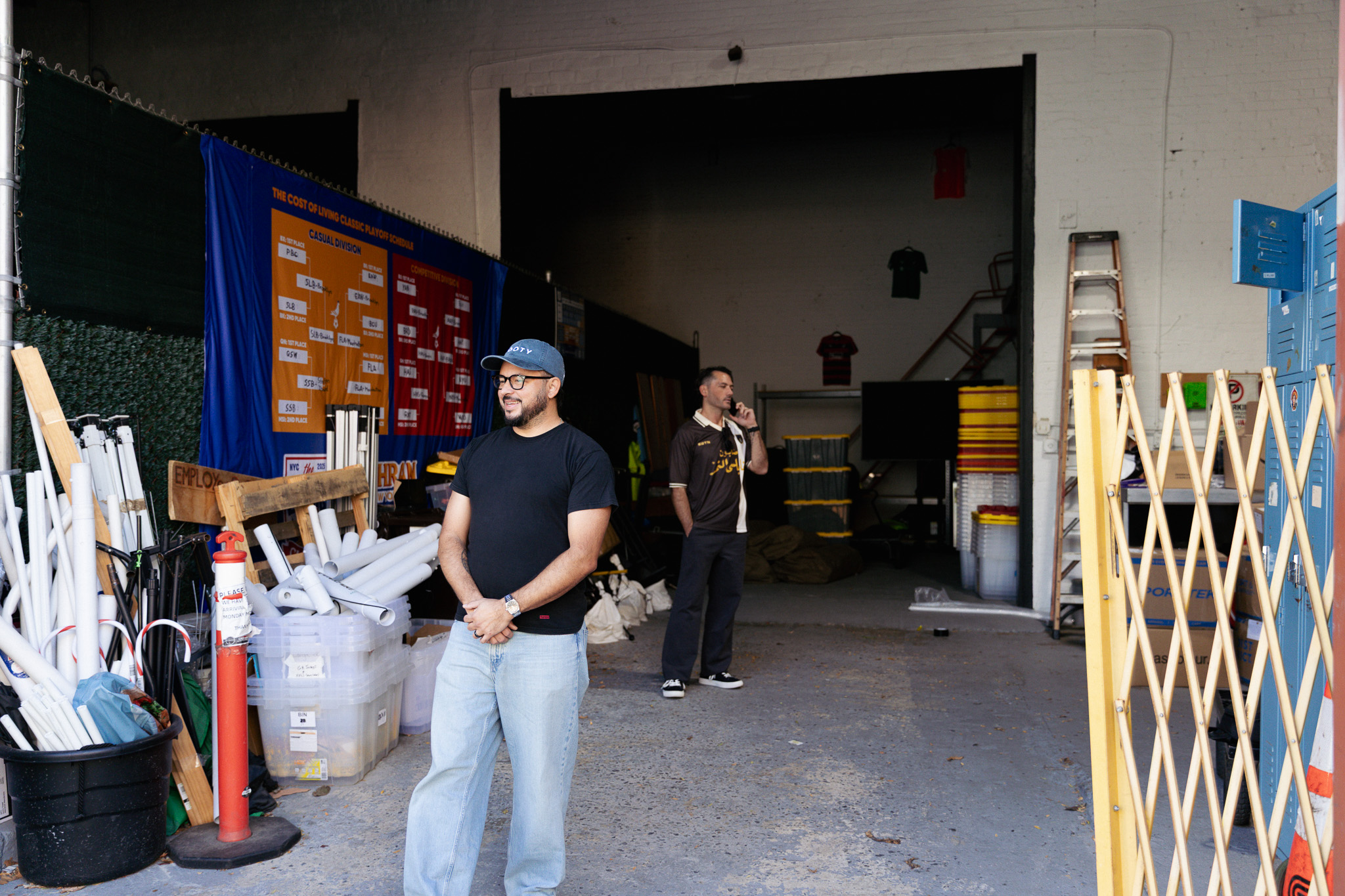
Both had played in men’s leagues before. “It’s just a different experience. There’s nothing wrong with it,” Pertew says. “But if you really want to be a part of a community, then you can’t restrict anybody.” He wants a league that everybody can play in, “and in particular one that doesn’t prevent someone who hasn’t played football before from participating.”
For Cueva, it goes back to the coed team that gave him his first friends in New York. “The mixed gender requirement really enforces that sense of open community where everybody is welcoming, feels safe,” he says. Men’s leagues, he adds, tend to be more aggressive. “I get hurt if you slide tackle me.”
The rule has cost them time. When the league launched in Miami, enough men signed up to fill seven teams straight away, and people asked why the league didn’t just start a men’s league. “It would have been easier,” Cueva says. “We probably could have started it quicker.” Two years later, Miami has 30 teams across six leagues.
A professional game at an amateur level
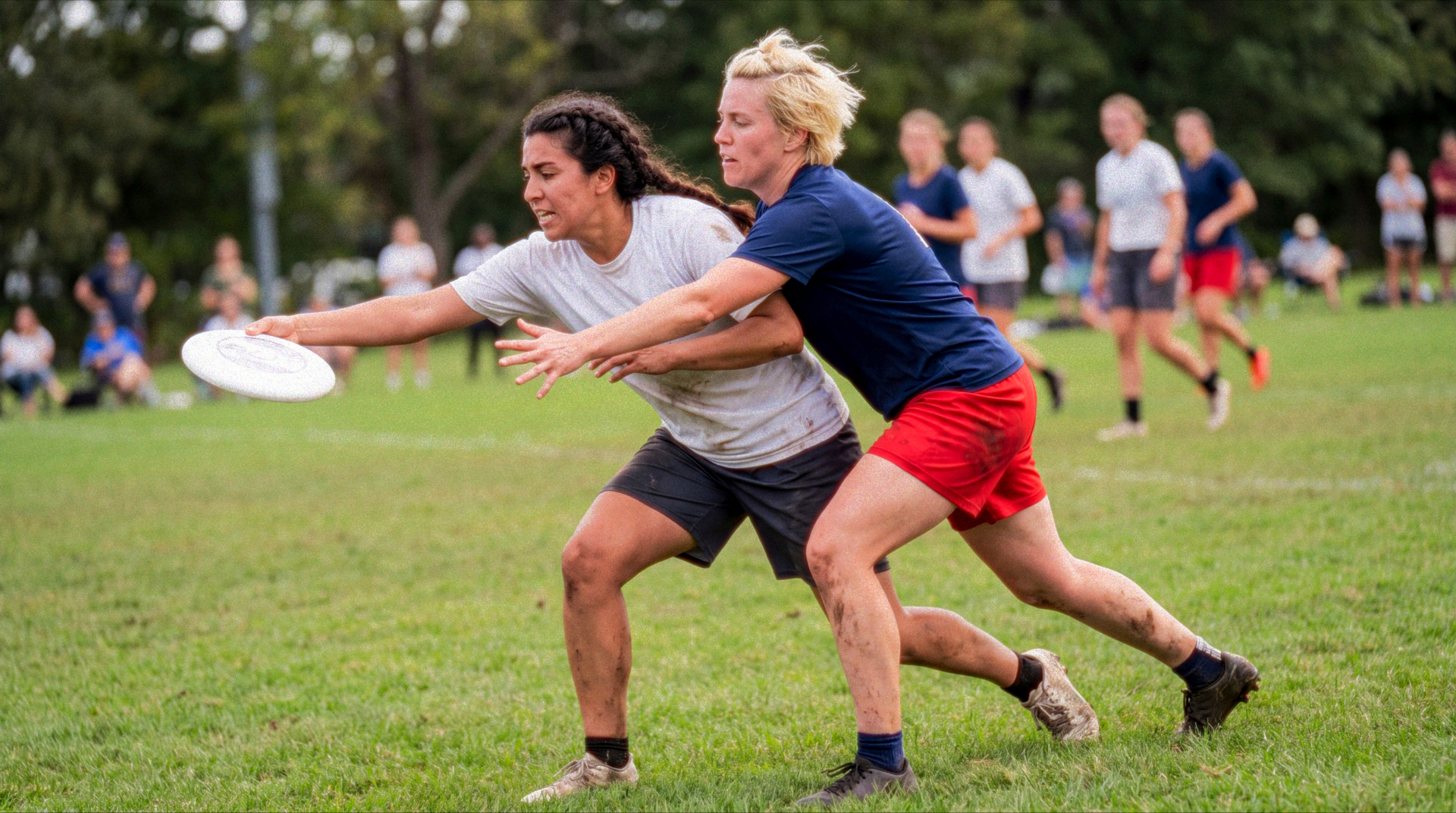
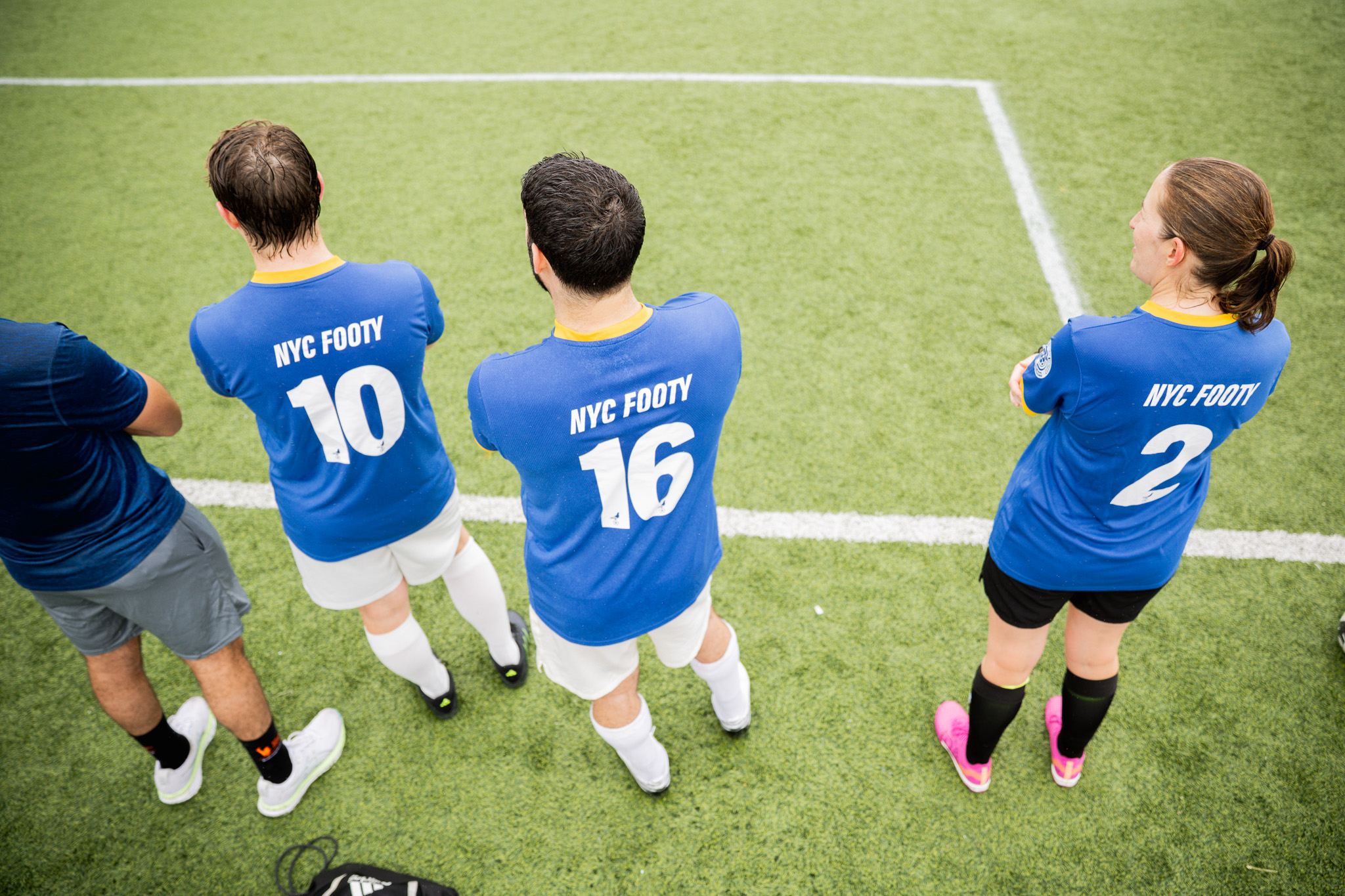
Walk past a Footy League game, and you will know what it is. Every player wears a league jersey, and the referee wears a referee's uniform.
On a single Sunday in New York, 130 games are played by 260 teams, and more than 100 referees work across the city. The founders say it is the largest football league in the country.
The fastest growth has come from beginners. The league's New to football program is for people who have never kicked a ball, and the referee stops the game every couple of minutes to show players what to do. Anyone who can't afford to play can email the league. "If you have the courage to email us and tell us you're in a pickle, we're going to get you on the field," Pertew says.
Five percent of the fields have lights
This fall, 1,000 teams signed up across The Footy League's markets, and most New York leagues sold out during the early-bird window. The problem is where to put them. In the fall, when the sun sets as early as 4:30 p.m., the city runs short of fields.
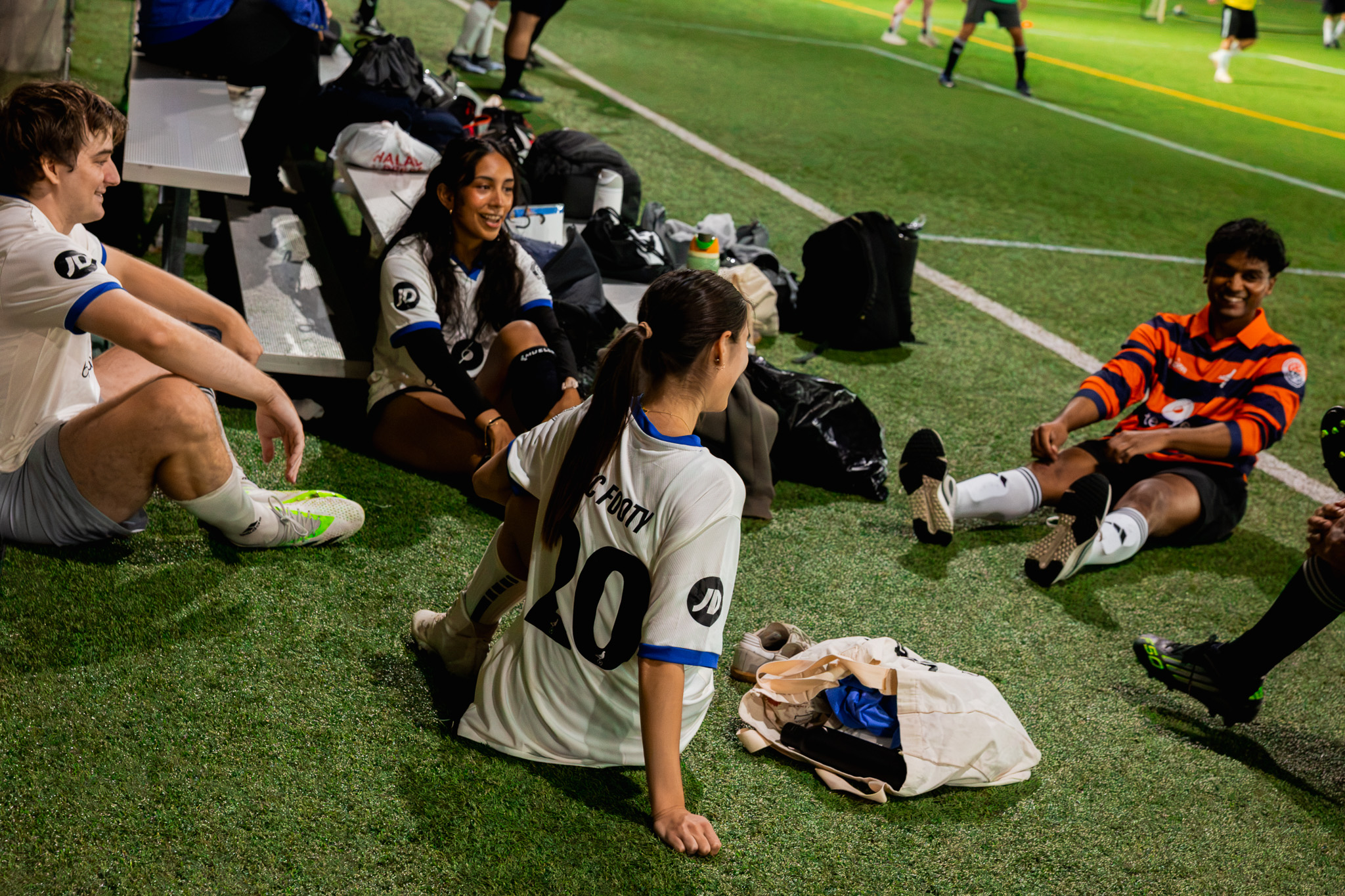
Pertew has spent years digging into the numbers. New York has more than 6,000 sports facilities, and 5 percent of them have lights. Football has about seven times the demand of baseball and softball during its priority season, but half as many places to play.
"Our analysis shows that if you light a field in New York, you will gain almost 1,300 playable hours across a year," he says. "That's more than all of our playable hours in fall, and we're one of the biggest permit holders in New York. One field."
He has testified at hearings, written to the Parks Department and talked to Fox 5, Gothamist and New York Magazine. His plan is to light the fields until 10 p.m., with youth teams first, an hour of open play for families after work, and adult leagues until close.

Pertew recently got a pilot for temporary lights running at Robert Moses Playground, after years of pushing. The goal now is to make it work and expand it, and a growing list of council members, starting with Council Member Alexa Avilés in Brooklyn, have offered their support.
Football all night with the mayor
The World Cup this summer gave him a test case. The mayor's office asked The Footy League to run open play on one field in every borough, lit around the clock and staffed through the night with goals, balls and someone to organize the games. Mayor Zohran Mamdani had played in the league for several seasons before taking office.
On the first night, nobody came. "We were sitting there quietly next to our goals and not a soul was there," Cueva says. Then the mayor turned up to play in Astoria with his social media team, and by the next week the fields were full.
Over 35 days, 6,000 players signed up. Many worked late shifts. "It could be restaurant workers. It could be people who work late shifts and want to get off their shift at midnight and be able to play a little football," Pertew says.

The city is now extending the late-night fields, open until 2 a.m., through to next year’s Women’s World Cup. The city still has five fields in a city with more than 6,000 sports facilities, and they are for open play, much of it late at night. The leagues need lit fields in the evening, when most people can play, and many still go dark in the fall.
“It doesn’t stop my advocacy work of getting lit fields so that people can still play till 10 p.m. on these fields throughout the boroughs,” Pertew says. “But it’s certainly a victory.”
Street Soccer USA made a similar bet in the same city when it took its tournament to Times Square and put grassroots players on New York’s biggest stage.
Eight markets and counting
The Footy League now runs in eight markets, from Miami to Denver, and expects to be in 100 within five years. The point is to get people playing. Pertew also knows that, with enough people playing, the next American star could come from one of its fields.
"There's real latent talent, people that have got God's gift of the foot and they don't even know it yet because they haven't even tried it," he says.
Cueva's job is to give them somewhere to try. "If you show me a patch of grass, it's not a football field, we'll turn it into a football field," he says. "We got these pop-up goals. We got cones. We'll get the football game going."