Best Camera for Ultimate Frisbee: Record Every Cut and Score Automatically [2026]
Veo
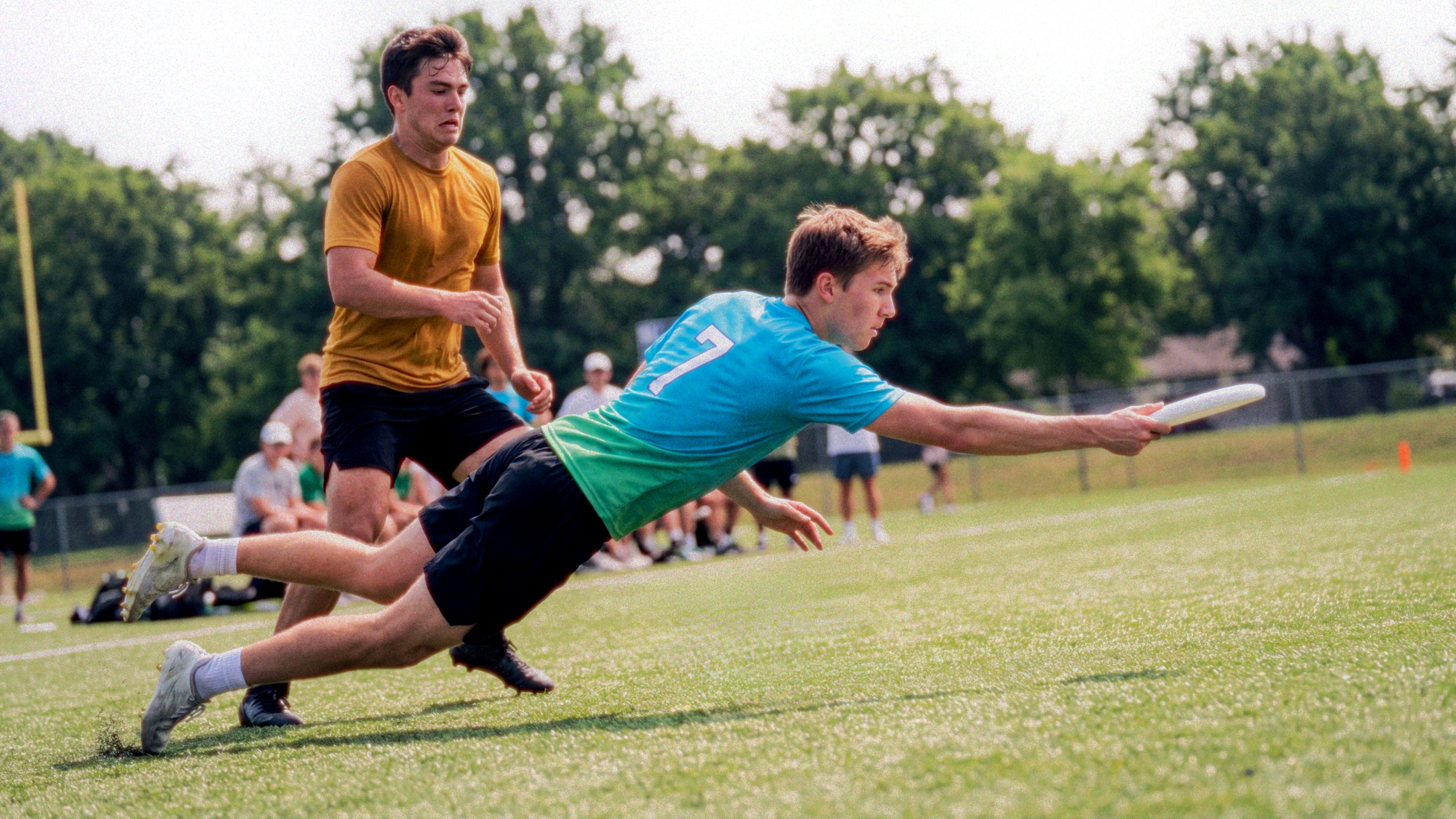
The best camera for filming ultimate frisbee games and practices. Field positioning, automatic tracking, and how Veo Cam 3 covers the full field without an operator.
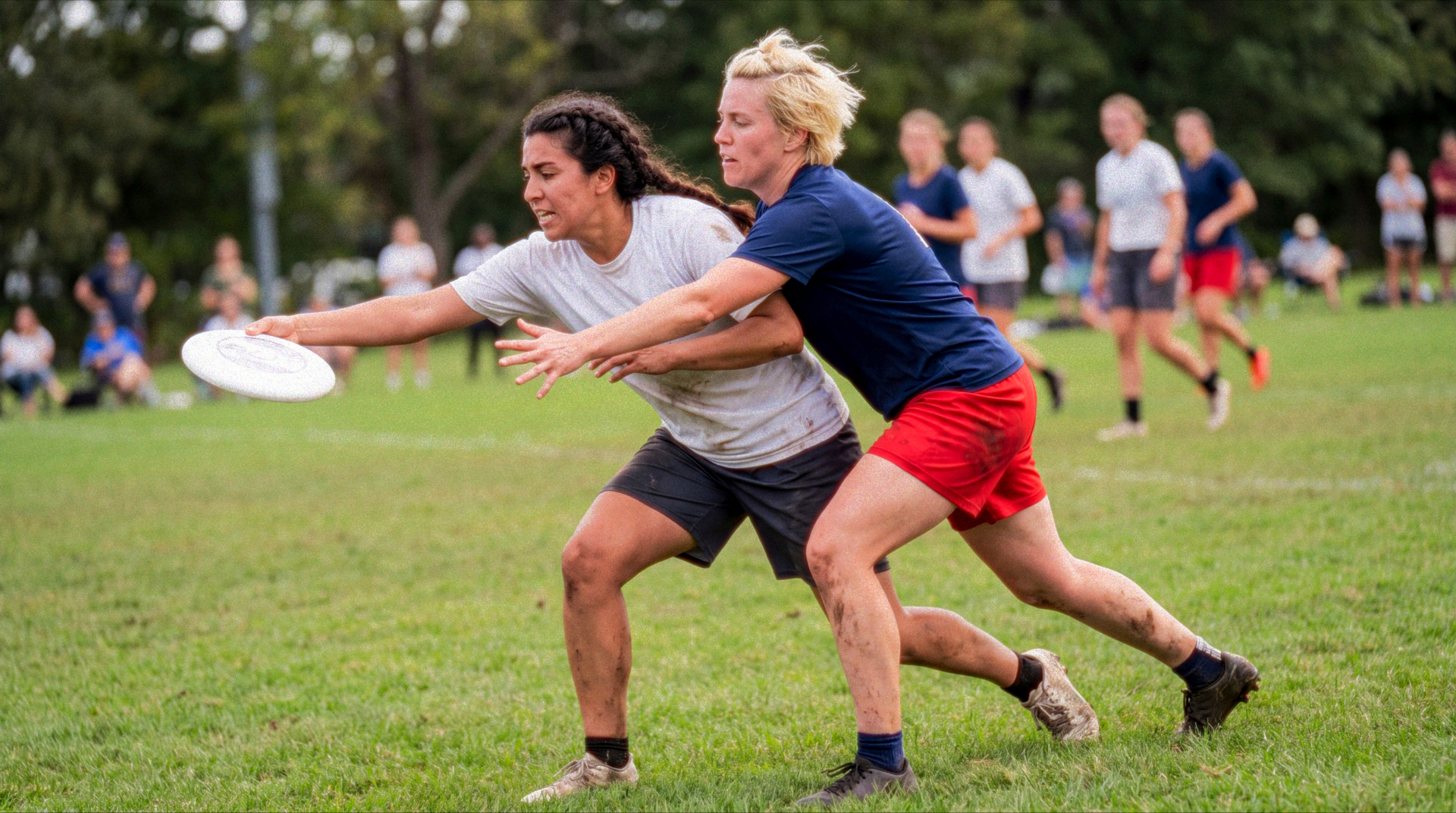
Ultimate frisbee programs have historically filmed games the same way: someone holds a phone at one end zone and follows the disc as best they can. The result is footage that covers roughly a third of the field, misses most off-disc movement, and depends entirely on the person filming staying focused for 90 minutes instead of watching the game.
Veo Cam 3 changes that. Positioned at midfield elevated, it covers the full 70-yard field automatically, records every cut, every handler reset, and every score without anyone operating the camera. Columbia High School in South Orange, New Jersey, the birthplace of ultimate frisbee, made the switch and described the result simply: it does a really great job. For the full story, see how Columbia High School elevated ultimate frisbee with Veo.
Record your ultimate frisbee games automatically with Veo Cam 3
Full field covered from midfield. No operator needed. Set up in under 2 minutes at any field.
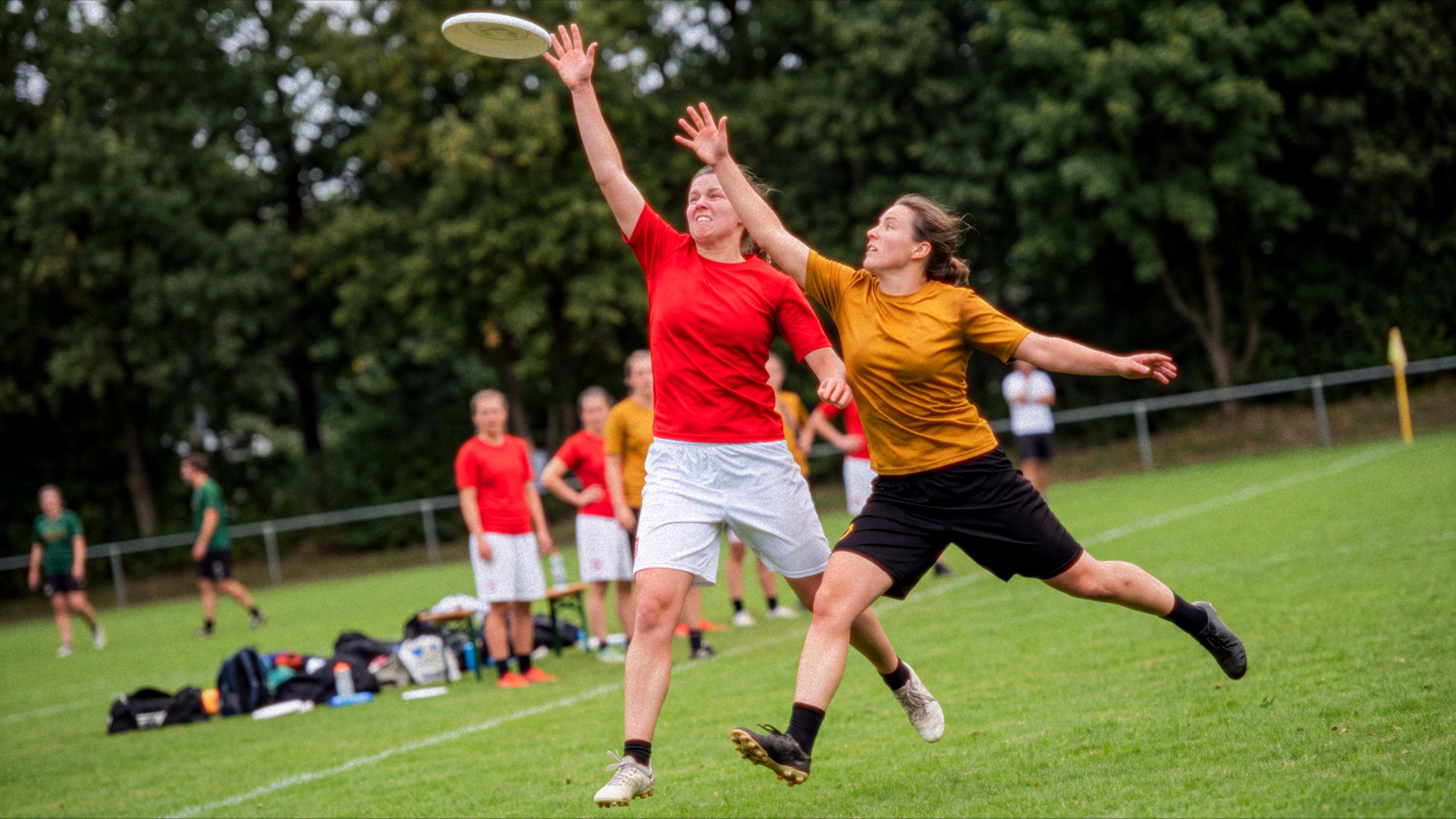
Why ultimate frisbee is difficult to film manually
Three characteristics of ultimate make a manual camera operator a poor solution for consistent game footage:
The field is large and play moves fast
A standard ultimate field is 70 yards long with 20-yard end zones, 40 yards wide. Play moves from end zone to end zone continuously without stoppages. A camera operator following the disc from one end zone misses everything happening in the other half of the field. Stack positioning, handler spacing, and defensive resets are all invisible from an end zone position.
Off-disc movement is most of the game
In ultimate, the player with the disc has ten seconds to throw. Everything that determines whether that throw succeeds is happening off the disc: cuts timing, stack spacing, defensive positioning, and handler movement. A camera following the disc captures the throw and catch. It misses the cut that created the space and the defensive positioning that forced the reset.
Ultimate is self-refereed
Ultimate frisbee is a self-refereed sport at most levels. Disputes about whether a disc was in or out, whether a foul occurred, or whether a player was in bounds are resolved by the players themselves. Video from a consistent elevated midfield position provides an objective reference for these calls that a hand-held phone filming from the sideline cannot.
Camera setup for ultimate frisbee
One position covers the full field for ultimate frisbee coaching and game review:
Midfield elevated
Position the Veo tripod at the centre of the sideline, elevated as high as possible. From this position, the wide-angle lens covers both end zones and the full 40-yard width of the field simultaneously. Both stacks are visible, handler spacing is clear, and cuts from the back of the stack to the front are fully captured.
Setup: Extend the tripod fully. Position at the sideline midfield. Open the Veo app, connect via Bluetooth, check both end zones are visible in the preview, and press record. The camera runs unattended for the full game.
Best for: Full game coaching review, stack analysis, handler movement, defensive positioning, and transition from defence to offence. The single most useful position for ultimate frisbee from one camera.
End zone elevated
An end zone position elevated behind one goal line captures cutting angles, disc flight into the end zone, and receiving technique more clearly than the midfield position. This is useful as a secondary camera for teams that want to analyse their red zone offence and defence in detail.
Best for: End zone offence and defence analysis, catching technique, and layout plays. Misses the other half of the field entirely.
For most ultimate programs, the midfield elevated position produces the most complete game coverage from a single camera. Start with midfield and add an end zone camera if red zone analysis becomes a specific coaching priority.
How to set up Veo Cam 3 for an ultimate frisbee game
- Arrive before the pull. Set up the camera before the game starts. Check the frame in the Veo app to confirm both end zones are fully visible.
- Extend the tripod fully. Height determines field coverage. Maximum height gives the widest view of both stacks.
- Position at midfield. Centre of the sideline, as close to the middle of the 70-yard field as possible.
- Connect and record. Open the Veo app, connect via Bluetooth, and press record. The camera tracks automatically from this point.
- Stop and upload. After the final point, stop recording in the app and connect to Wi-Fi for automatic upload to your Veo account.
What coaches do with ultimate frisbee footage
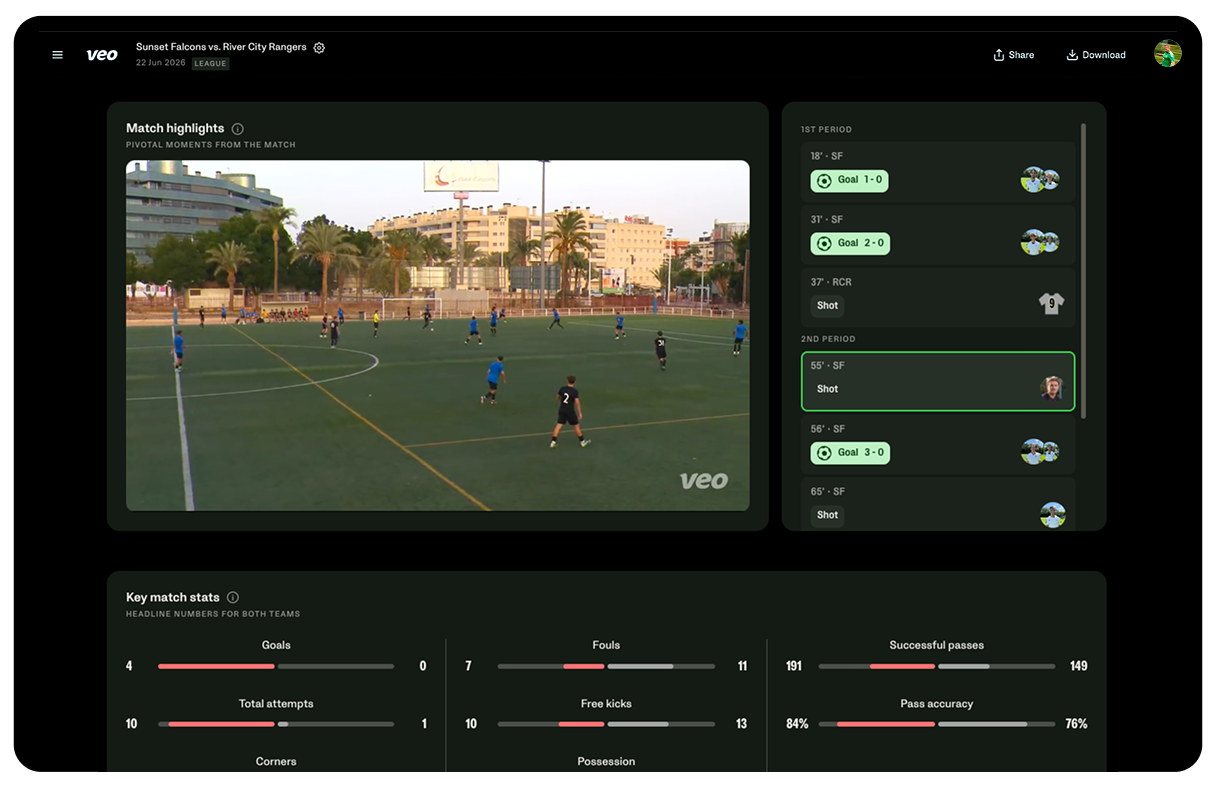
After upload, two views are available in the Veo Editor: the full-field panoramic view and the AI-generated follow-cam. For ultimate frisbee coaching, the panoramic view is the primary tool. Three specific uses:
- Stack review. The panoramic view shows the full stack at every point in the possession. Coaches can see whether the stack is maintaining correct depth and spacing, whether players are timing their cuts correctly, and whether the handlers are creating the right angles for resets.
- Defensive positioning. Marking intensity, force direction, and help defence positioning are all visible in the full-field view. A coach reviewing whether the team is executing a force-forehand defence consistently can see all seven defenders simultaneously throughout every possession.
- Individual player clips. Cut two to three clips per player each week showing specific habits. A cutter whose timing is consistently early, a handler who telegraphs their reset throw, a defender who loses their mark in transition. Share clips via a direct Veo link before the next practice.
For more on how to build a video review workflow across youth sports programs, see the complete guide to recording youth sports.

FAQs
Veo Cam 3 is the best camera for ultimate frisbee because it covers the full field automatically from a midfield elevated position without anyone operating it during the game. The wide-angle lens captures both stacks, all off-disc movement, and both end zones simultaneously. Columbia High School, the birthplace of ultimate frisbee, uses Veo to film both practices and competitions.
The midfield elevated position on the sideline gives the widest coverage of the full field. Position the Veo tripod at the centre of the sideline, elevated as high as possible. This captures both end zones and the full 40-yard width of the field simultaneously, covering all stack movement and handler positioning throughout the game.
Yes. Veo Cam 3 is designed to cover a standard ultimate frisbee field from a single midfield position when elevated correctly on a tall tripod. The wide-angle lens captures both end zones and the full field width simultaneously. The full-field panoramic recording preserves everything that happened across the field, with an AI-generated follow-cam tracking the disc alongside it.
The full-field panoramic view is the primary coaching tool for ultimate. It shows stack positioning, cut timing, handler spacing, and defensive force direction across the full field simultaneously. Coaches use the Veo Editor to clip specific possessions and share them with players before practice. The follow-cam view is used for individual technique review and highlight clips.
Yes. Veo Cam 3 records training sessions with identical setup and footage quality. Many ultimate programs film their practices to review timing drills, handler-cutter combinations, and defensive marking pressure under controlled conditions. Practice footage is particularly valuable for individual technique review because the slower pace of drills gives clearer visual evidence of habits than game footage at full speed.