Video Analysis in School Sport: What PADSIS Has Learned
Frederik Hvillum
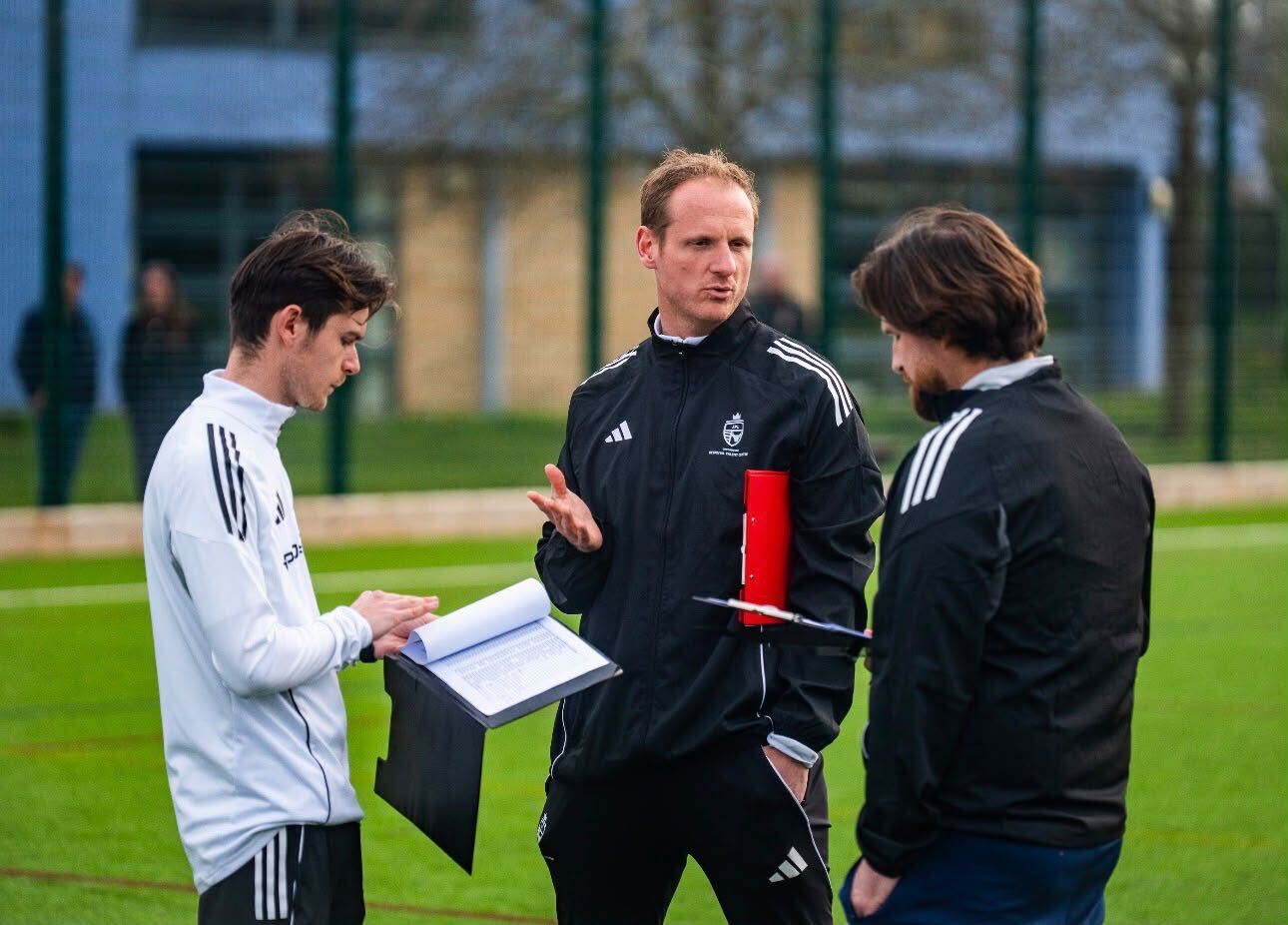
Chris Dossett of PADSIS and Gareth Hamer, Head of Football at Northern College, on how video analysis in school sport is changing what is possible for every pupil.
Chris Dossett is Chair of PADSIS, the network of over 300 Directors of Sport in independent schools, and spent 32 years as a PE teacher and 20 as a Director of Sport. Gareth Hamer is Head of Football and a PE teacher, with 16 years across grassroots, academy, and education. Both have watched video analysis move from a professional luxury to a practical tool in school sport.
Not long ago, filming a school sports match meant a teacher standing on the touchline with a handheld camera, going home, downloading the footage onto a laptop, and spending hours clipping it manually in Windows Movie Maker. If they were lucky, they had software that could help. Usually they did not.
That picture has changed completely. The question now is not whether schools can use video analysis, but how well they are using it and for whom.
How video analysis in school sport became available to everyone
The most significant shift, according to Dossett, is not the technology itself but what it has made possible for every pupil regardless of ability or team.
"The major change is now it truly is available to every single pupil. Whether you're playing in the U12 D netball or hockey or rugby team, whether you're doing your A-level coursework, whether you're playing for the 1st XI hockey team, whether you want to work on your individual skills or your team play, whether you want the excitement of a highlights video at the end of the year, or whether you want to use your video to get you to your next step — whether that be a club team or university — the evolution has meant that truly it is for everyone," Dossett says.
That inclusivity matters in a school context in a way it does not at a professional club. A first team squad of fifteen players is one small part of a school's sporting population. The pupils on the C team, the pupils in the analysis role rather than the playing role, the pupils doing A-level PE coursework: all of them can now engage with footage in a way that was previously impossible without significant resources.
This mirrors what is happening in grassroots sport more broadly. Read how video analysis is making elite tools available at every level of sport.
Time is the resource every PE teacher needs most
Ask any teacher what they need more of, and the answer is the same. Not equipment. Not facilities. Time.
"Every single Director of Sport and teacher, if you ask them what you could give them more of, it would be time. It wouldn't be money, it wouldn't be more players — it's time, because they want to do their job to the best of their ability, and a lot of the time they're getting swamped with things," Dossett says.
The practical arithmetic is straightforward. A teacher filming a game manually, going home, downloading the footage, clipping it in a basic video editor, and preparing something for the following Monday's session is spending hours on work that contributes indirectly to the pupils' development. That is time not spent designing better sessions, working individually with players, or managing the twenty other things a Director of Sport handles in a week.
Hamer describes the specific change that AI-powered capture has made to that workflow.
"With Veo specifically, the upload speed: you watch a game, connect it to the Wi-Fi, it automatically uploads, and before you know it within half an hour to an hour, you've got it there and it's ready to go. That's not saying you're going to watch it on a Saturday evening after a game, but actually it's on the system ready to review. Has it increased speed? Yes. Has it increased the opportunity to work with players because you're not spending time watching video as much? It gives you the time to work with players and involve them," Hamer says.

From coach-led to pupil-led: how analysis sessions are changing
The shift in who drives the analysis process is one of the more significant changes Dossett has observed. When footage required hours of manual preparation, the coach was necessarily the one who had watched it, understood it, and presented it. Now, pupils can access their own clips directly.
"Before the coach would lead this, now once it's out there you can have message boards, pupils can comment to each other on their own clips, or when you've got your analysis session coming up after the game, it's far more interactive and far more pupil-led. And if it's pupil-led, that means they've understood it better. If you tell them something, they might understand it, but odds are slim. Whereas if they've worked it out for themselves, then that's the winner," Dossett says.
Hamer describes what this looks like in practice at Northern College. Last week, a coach in the 16A watched footage back, showed it on a screen in the classroom, and then took the group outside for 40 minutes on the grass. The connection between what they saw on screen and what they worked on physically is what makes the analysis useful rather than academic.
"You're able to connect from pitch to classroom and back to pitch," Hamer says.
Individual tracking and what it means for every pupil in the squad
One of the more recent developments that both Dossett and Hamer point to is individual player tracking: the ability to automatically generate a sequence of every moment a specific player was involved in across a game, without any manual clipping.
For school sports, this has a particular significance. A pupil who plays 60 minutes in a match and touches the ball eight times has eight moments that can be reviewed, discussed, and learned from. Without automatic tracking, finding those eight moments in 60 minutes of footage requires someone to watch the whole game and note the timestamps.
"Number seven: being able to watch those clips back, share those, view those correctly, and talk about certain positional elements. But it also allows you to dive into a wider context by using the AI tools to ask questions," Hamer says.
Dossett connects this individual visibility to something broader than performance development: the experience of belonging in school sport.
"When you see the U13 C team getting excited that their game is being videoed today — even if they just watch it back afterwards, that's excitement enough. We all like watching ourselves on telly. The best schools are using it holistically and inclusively, which enhances the feeling of belonging in school sport," Dossett says.
The evidence that players at every level engage more deeply when they have access to their own footage is consistent across sports. See how grassroots football clubs are using individual video to develop players.
Video analysis as a career pathway, not just a coaching tool
One dimension of video analysis in schools that is rarely discussed is what it prepares pupils for beyond sport. Dossett is direct about the connection between analytical skills developed on the pitch and what employers are looking for.
"If we look at what businesses are looking for nowadays when you're 25 or 30: analysis, communication, decision making, data, AI. Those skills are equipping you for future life, whether or not you ever play football or rugby again. That's where we can be better with sport: highlighting the benefits to pupils that go far beyond physical activity on the pitch," Dossett says.
He also describes something that has emerged in some of the best schools he has visited: pupils whose formal role is analytical rather than playing. A pupil who is not selected for the first team but contributes to analysis sessions, learns to use the tools, understands tactical principles, and develops communication skills in a sports context is building something real.
"I know in schools now, we actually have some pupils where that is one of their roles within school — so they can get involved in analysing games, scoring cricket, videoing football or rugby. And of course, that is now a career path and something that you can do at university," Dossett says.
Sports scholarships and the limits of the highlight reel
For older pupils in independent schools, video footage has become part of how they present themselves to universities, particularly in the United States. Dossett is clear-eyed about what this means and where the limits are.
"Where I do think it plays a role is when leaving school and going to university, particularly US universities. The ability to put something together to share your skillset is very powerful. But it can't be the be-all and end-all where you recruit someone purely on a 10-minute highlight package," Dossett says.
His concern is about the gap between what a highlight reel shows and what a pupil actually is. At younger ages especially, he is cautious about sports scholarships that rely too heavily on footage of a 10 or 11-year-old whose development over the next seven years is impossible to predict from any clip.
What he values more is the long view: a pupil whose progression across eight to ten years of school sport is documented, visible, and meaningful. A pupil who arrived at prep school hesitant about sport and leaves having rowed at Henley. A pupil who never made the first team but developed into a thoughtful analyst and communicator. Those stories are what school sport is actually for.
One tool, many sports
Independent school sport departments run across ten or more sports simultaneously. A Director of Sport who invests in a solution for football but has to use something different for hockey, rugby, netball, and lacrosse is managing multiple systems, multiple workflows, and multiple sets of teacher training. The argument for a single tool that works across all of them is straightforward.
"It stops the hierarchy. In the past, maybe boys' sports — particularly rugby — would have been the dominant sport in schools, whereas now truly it can be used for all those sports. That inclusive nature is really, really important," Dossett says.
Hamer raises the next challenge directly: AI analytics that currently work well for football need to extend to rugby, lacrosse, hockey, and netball for the full value to be realised across a school's programme. For a teacher who is strong in football but coaching hockey to a senior squad, being able to ask analytical questions of the footage and receive meaningful answers changes what is realistic.
The same principle applies in field hockey. Read how Hockey Wales is using video analysis to develop coaches and players at grassroots level.
Parent engagement and the value of being present
For families whose children play sport, one of the practical realities of school fixtures is that many games happen at times and places that are genuinely difficult to attend. Live streaming addresses that directly.

"As a parent, one of the greatest joys you have in life is watching your child play sport, be in the school musical, or sing. If you can't get there for one reason or another, the fact that you can watch your son or daughter play and then speak to them on the phone that night or weekend... watching your children play is one of the greatest joys you have as a parent. The more we can enable that, it's got to be better," Dossett says.
Hamer describes watching parents message coaches during a tournament in the Southwest to find out when games were starting and where to find the live stream, because they were watching from London and Yorkshire. That reach is new.
Where school sport is heading
Dossett's view of where school sport needs to go is grounded in purpose rather than performance. The question he keeps returning to is what characteristics a pupil leaving school in 2040 should have, and what role sport plays in developing them.
"Without doubt, it has to be more purpose-led and values-driven. Through sport, we can encourage belonging, confidence, relationships, and well-being. We need to focus not just on sport, but physical activity, physical literacy, well-being, and inclusion. Our job as teachers is to develop good people. If they're good at netball, hockey, or rugby, that's a bonus," Dossett says.
The biggest opportunity he identifies is not a technological one. It is the conversation with senior school leadership about what sport actually contributes to every pupil's development, not just the pupils on the first teams. Video analysis, used well, is part of the evidence base for that conversation. It shows what is happening, who is progressing, and what the programme is producing beyond wins and losses.
How Veo supports school sports departments
Veo is an AI-powered camera system that records matches and training sessions automatically, without a dedicated camera operator. The camera is placed on a tripod at the halfway line and uses computer vision to track the ball and follow play across the full pitch.
After a session, footage uploads automatically via Wi-Fi to the Veo platform, typically within 30 to 60 minutes of the game ending. Teachers can access individual player tracking, share clips with pupils, run live streams for parents, and use the footage for A-level PE coursework, sports scholarship applications, and coaching development. A single camera works across football, rugby, hockey, netball, lacrosse, and other field sports.

FAQs
AI-powered camera systems remove the need for a dedicated analyst by automating the recording, upload, and basic analysis process. A camera placed at the halfway line records the full match automatically, and individual player tracking generates clip sequences for each player without manual work. Teachers can review footage, share clips with pupils, and conduct analysis sessions without specialist knowledge or hours of video editing.
Video analysis is as valuable for C team players as for first team players, because development is measured relative to where each pupil started, not against an absolute standard. Individual tracking means every pupil in a squad has their own clips regardless of how many times they touched the ball. Schools are also using analysis roles — where pupils contribute analytically rather than physically — as a pathway for pupils who may not be strong players but develop real skills in data, communication, and tactical understanding.
Yes. Video footage of a pupil's own performance across a season provides concrete evidence for A-level PE performance components and analysis tasks. Teachers use footage to support moderation and assessment, and pupils use their own clips to demonstrate development over time. The ability to review specific moments, freeze frames, and annotate footage makes the analytical requirements of A-level coursework significantly more accessible.
For university applications, particularly to US universities, a well-compiled video package showing consistent performance across multiple matches is more persuasive than a brief highlight reel. University coaches can review full games at their own pace, assess a player's decision-making and positioning rather than only their best moments, and make more informed judgements about potential. The footage should be presented as part of a broader application that includes academic performance and personal characteristics, not as a standalone showcase.
Live streaming allows parents, family members, and club coaches to watch school sport fixtures in real time from any location. The camera uploads the live feed automatically during the match. Families who cannot attend because of distance, work commitments, or timing can watch on their phones or computers and follow up with the pupil directly after the game. For schools with parents spread across a wide geography, live streaming significantly extends the reach of the school sports programme beyond those who can physically attend.