From Zero Coverage to Total Access: How Video Transformed Football in Castilla-La Mancha
Frederik Hvillum
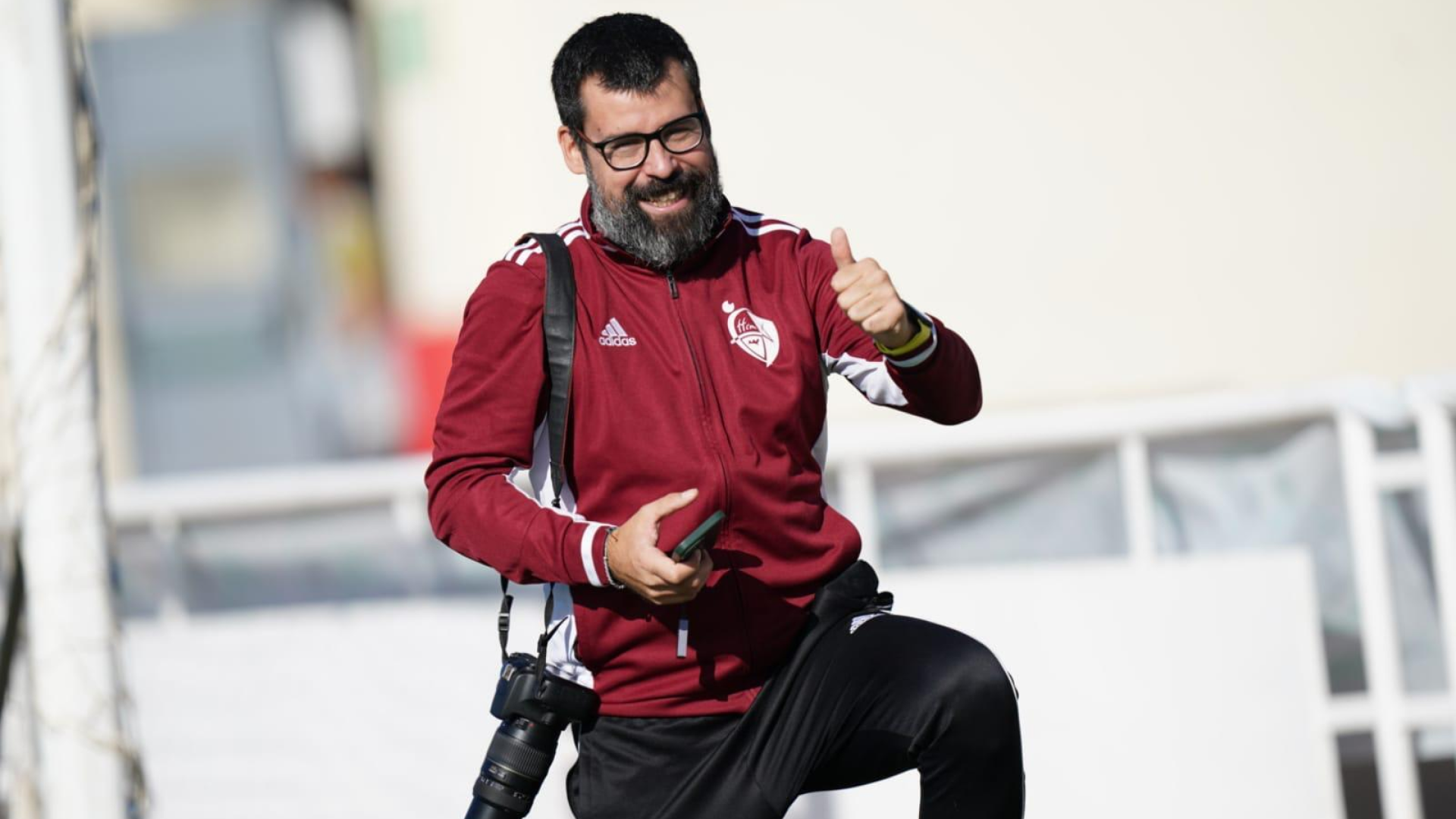
When Juan Pablo Fernández took over communications at Spain's Castilla-La Mancha Football Federation in 2020, youth football coverage meant written match reports and a handful of photos. Today, his two-person team broadcasts matches that draw 1,000+ concurrent viewers, with entire classrooms watching their schoolmates compete hundreds of kilometers away. This is the story of how automated cameras transformed regional football across one of Spain's most geographically challenging territories.
"Before, we were filming nothing. Now we film everything," says Juan Pablo Fernández, Communications Director at the Castilla-La Mancha Football Federation. "We went from families reading match reports on our website to 1,000 people watching live from schools, bars, and homes across the region."
That shift represents more than just numbers. It reflects a fundamental change in how regional football operates across one of Spain's most geographically dispersed territories, where families often face four-hour drives to watch their children compete in national championships.
This challenges the assumption that professional-level sports broadcasting requires professional-level resources and personnel.
Juan Pablo Fernández has been leading communications at the Castilla-La Mancha Football Federation since 2020. Originally trained as a teacher and social worker, he also pursued training in social media and digital marketing. As a referee, he started creating video content to showcase the referee's perspective. When the current federation president took office and found no communications department, Juan Pablo's combination of educational background, digital skills, and football knowledge made him the natural choice to build one from scratch.
The Geography Problem
Castilla-La Mancha presents particular challenges for sports coverage. The region spans five provinces across central Spain, with teams and families spread across hundreds of kilometers. When regional selections advance to national championship phases held in distant territories like Galicia, Catalonia, or Andalusia, many families simply can't attend due to travel costs or work commitments.
Before Juan Pablo's team established systematic video coverage, following youth football in the region meant relying almost entirely on written match reports and a handful of photos posted to the federation website. Video existed sporadically, created by individual clubs with whatever equipment they could afford, but nothing approached consistent documentation. "You had to trust the written summary to know what happened in a match," Juan Pablo says. "There was no way to actually see your child play unless you were physically present at the field."
Learning to Broadcast During Lockdown
The pandemic forced an unexpected breakthrough. When COVID restrictions barred spectators from grounds but permitted matches to continue, the federation faced a choice. They could maintain the status quo of written reports, or they could attempt something they'd never done systematically: live broadcasting. "We thought it was a good idea that football should continue," Juan Pablo says. "So we found ourselves needing to show these final phases to people somehow."
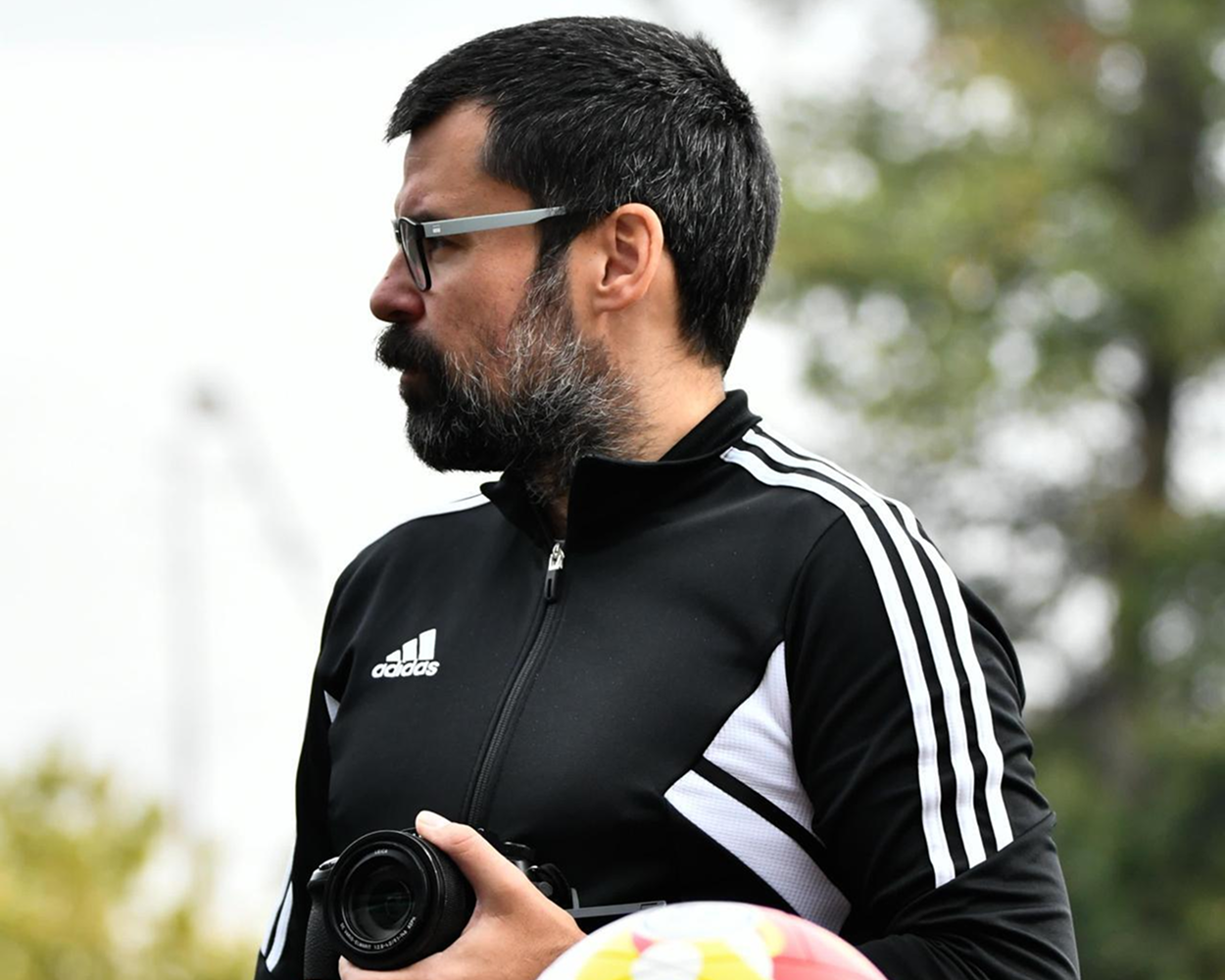
His team taught themselves how to produce live broadcasts through YouTube tutorials. They recruited local commentators known throughout Castilian-Manchegan football. The results surprised everyone. "We had a great time, honestly," Juan Pablo says. "The atmosphere we created, going to fields with our two microphones and a camera, all wearing masks, it was quite an experience."
But those early broadcasts revealed their limitations quickly. Professional production requires personnel. Lots of personnel. Camera operators, directors, audio technicians, and commentators. The federation didn't want to pull staff from other departments for weekend coverage. They needed a solution that matched their ambition without multiplying their headcount.
Veo's automated cameras changed everything. "For us, it was a boom," Juan Pablo says. "Not just qualitatively, also quantitatively." The federation could now broadcast any championship that the Spanish federation wasn't already covering by simply positioning a camera and starting the recording.
The impact showed most clearly during national championships. When Castilla-La Mancha's under-14 and under-16 futsal teams competed recently, morning matches regularly drew 1,000 concurrent viewers. Juan Pablo's team traced many of those views back to schools and institutes. "It would be tutorial time, physical education class, or whatever, and 25 kids would be watching the match through a projector," he says. "Twenty or twenty-five classmates, watching their schoolmate compete."
The technology transformed coaching practices, too. Regional selection coaches now request Veo cameras for training sessions, not just matches. After evening training camps, coaches receive the footage and spend their nights creating analysis clips. By morning, they have specific video examples ready to share with players. "In futsal especially, having those images available as quickly as possible, for them it's essential," Juan Pablo says.
The federation now produces weekly highlight packages that regularly reach 30,000 to 40,000 views. These condensed videos, typically running 90 seconds to 2 minutes, match how people actually consume sports content today. "I don't read match reports anymore," Juan Pablo says. "I watch the highlights, and that tells me how the match went, which team dominated, what happened." Veo's automatic highlight generation helps the two-person team manage the workload.
When Players Run to the Camera
Access to video has shifted how players interact with their sport. When regional selections score goals now, players often run first to the Veo camera rather than to the sideline photographer. They've internalized that the camera captures moments they'll watch repeatedly. "They're aware they're being filmed," Juan Pablo says. "Later, they consume that content themselves. They watch it, rewatch it. If I'd had that opportunity when I was young, to see and enjoy my own matches, I definitely would have watched more than a few."

The federation's systematic video coverage has had an unexpected side effect. When Juan Pablo's team visits fields for official matches now, they increasingly find clubs already have their own Veo cameras installed. Those cameras serve practical purposes beyond highlights. Clubs can now challenge referee decisions by submitting video evidence. Previously, contesting a red card required committing someone to film entire matches with a phone. Automated coverage removes that barrier.
The communications director envisions video access expanding to the region's top territorial division, Primera Autonómica Preferente. "I've always said I'd like the possibility that someday all the teams had their cameras," he says.
That ambition comes despite the extra work for his two-person department. But Juan Pablo sees past the workload to the opportunity. Every match video draws people to the federation's website. Players study themselves. Coaches analyze opponents. Scouts identify talent. "It's an unimaginable fountain of resources," he says, "the simple fact of recording a match."
The federation recently held a selection camp for its youngest age group: under-10 players. The camp ran from 9:30 AM until 3:00 PM, featuring 20 different matches. A Veo camera captured everything. "The coach is super detailed," Juan Pablo says. "He uses it to make the first filter for the under-10 regional selection. Nine-year-old kids." Some of those children, staying overnight at the federation's residence, spend their first night away from home. Some can't tie their own shoelaces yet. But they're documented, analyzed, and developed with tools that would have seemed impossibly sophisticated just a few years ago.
For Juan Pablo, that progression captures what video has meant to Castilian-Manchegan football. "For us, it meant a qualitative and quantitative leap," he says. "Being able to broadcast championships, especially for families who couldn't travel. The leap is allowing us to reach much further, to offer content that you had to dig for."
Regional football has fundamentally changed when nine-year-olds generate professional-level video analysis, when local non-federated leagues see value in documentation, and when 25 classmates watch their schoolmate compete four provinces away through a classroom projector.
Read more about how to accelerate commercialization with Veo Cameras here.

.jpg)


.jpg)