Lacrosse Recruiting Timeline for Parents [2026]
Veo

The lacrosse recruiting timeline grade by grade: when coaches can contact recruits, when to start filming, and what scouts look for at each stage.
The lacrosse recruiting timeline starts earlier than most parents expect and follows its own calendar. Division I coaches generally cannot start recruiting conversations until September 1 of a player's junior year, yet some programs have been known to line up commitments years before that. A family that learns the calendar in sophomore year is already behind a family that learned it in eighth grade.
This guide walks through the lacrosse recruiting process grade by grade. It answers the two questions parents ask most: when should we start filming, and what are scouts looking for at each stage? For the money side of the process, see how lacrosse scholarships work at every division.
Start building the footage library scouts ask for
Veo Cam 3 films every lacrosse game automatically from midfield, with no operator. Full footage is ready to clip the same evening.

Why the lacrosse recruiting timeline is different
Most college sports follow a common contact calendar. Lacrosse does not. For Division I programs, coaches generally cannot initiate recruiting contact with a prospect until September 1 of the player's junior year. That rule changes when families should expect to hear from coaches, and it makes much of the generic advice online wrong for lacrosse.
Two things follow from it. First, the contact rule limits what coaches can start, but it does not stop a player from introducing themselves and sharing footage earlier. Second, programs and club pipelines still identify prospects well before the contact window opens, particularly in women's lacrosse. A player with no footage and no list of target programs enters junior year with less to work with.
Rules also differ by division and change from year to year. Check the current NCAA recruiting calendar for your player's class year and for each division you are considering before you plan outreach.
The lacrosse recruiting timeline grade by grade
8th grade and earlier
For most families, nothing needs to happen yet beyond learning how the calendar works. Elite club players may be on a coach's radar through national-level events, but a player who loves the game and develops in a good club environment is doing the right work. Footage from club games can start now if the player competes at a high level, because early footage shows development over time.
Freshman year
This is the year to build habits. Play as many competitive games as possible, keep grades strong, and film every game. The footage library begins here. A player who has two full seasons of film by the time recruiting becomes active has a clear advantage over one who starts filming in junior year.
Sophomore year
Research programs across all divisions and build a target list of 20 to 30 schools that fit the player's athletic level and academics. Use the full-season footage to build a first highlight reel. Send short introductory emails with a direct link to the footage. Coaches may not be able to start a conversation yet, but they can still watch. For outreach templates and timing, see how to get noticed by college coaches.

More than 40,000 clubs use Veo to build recruiting footage libraries
More than 40,000 clubs across 100 countries use Veo to store and share footage, with over 4 million matches filmed on the platform (Veo internal data, 2026).
Junior year
This is the most active year. From September 1, Division I coaches can start initiating contact, so replies, calls, and requests for film arrive quickly. Update the highlight reel after every season and major tournament, and keep full-game film ready to send the same day a coach asks for it. A coach who waits a week for footage often moves on to the next prospect.
Senior year
Official visits, offers, and commitments happen now. Families that did the work in sophomore and junior year arrive with conversations already in progress. Keep footage current, because coaches still compare final candidates on recent film. Compare financial aid packages across divisions, including Division III, where aid is merit and need based rather than athletic.
When to start filming for lacrosse recruiting
Start in freshman year, or earlier for players already competing at a high level. Coaches want to see consistency across a season, how a player handles a tough game, and how they have developed over time. None of that can be rebuilt later from a handful of clips.
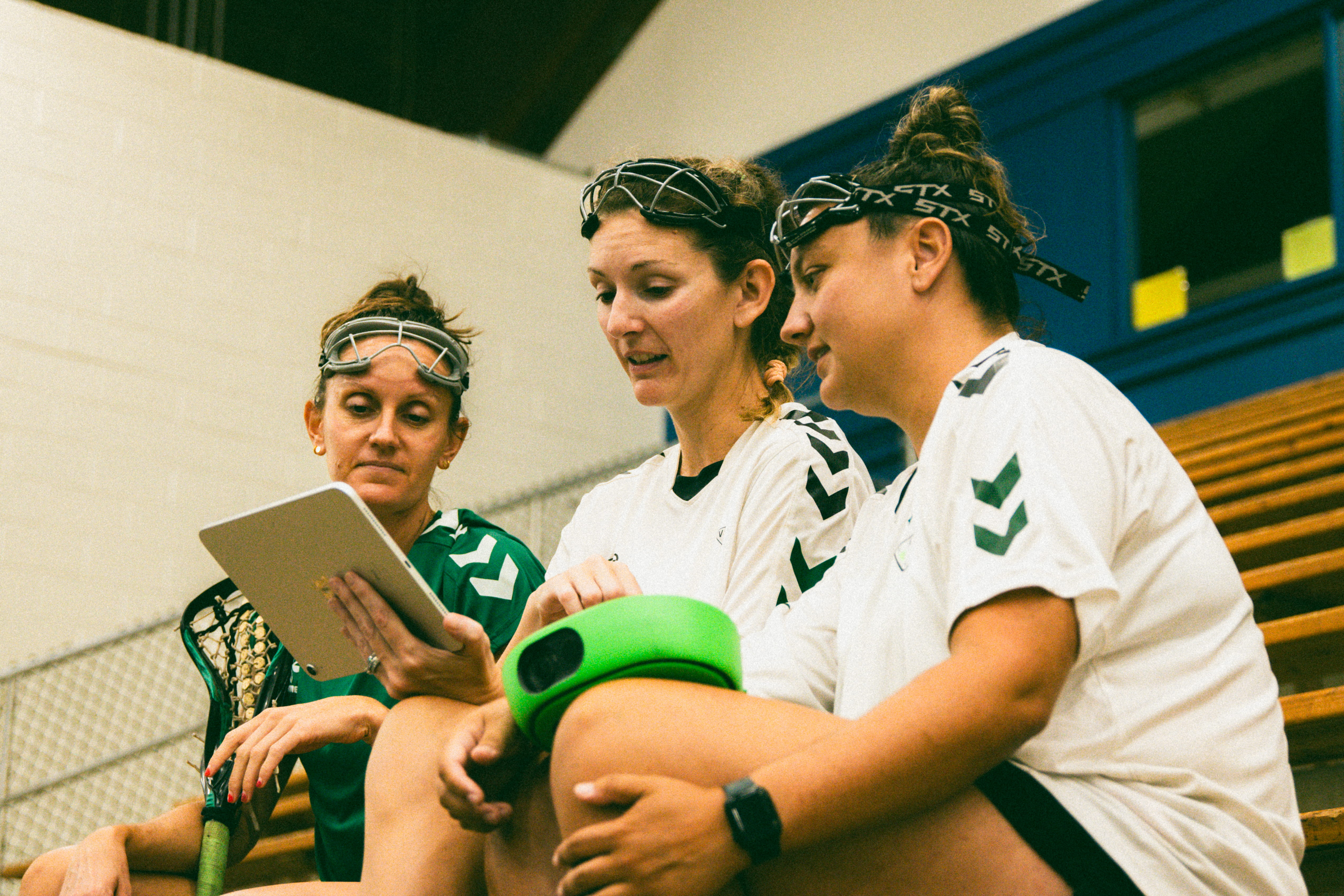
Veo Cam 3 records the full field from a single midfield position without an operator. For lacrosse, Veo also detects goals, shots, face-offs, and free positions automatically and creates clips from them, so the first pass of a highlight reel is already assembled when the footage uploads. Players can then add their own clips in the Veo Editor and share a direct link. For camera setup, see the best camera for lacrosse.
What lacrosse scouts look for at each stage
What a scout wants to see changes as the player moves through high school.
- Early on, athletic profile and fundamentals. Speed, size, stick skills, and ground ball effort. Scouts use early film to decide whether a player is worth tracking.
- Mid-stage, position-specific skill. Dodging and shooting for attack, two-way play and transition for midfield, slide timing for defense, and save technique and outlet passes for goalies.
- Junior and senior year, lacrosse IQ and consistency. Off-ball movement, clearing and riding decisions, and how a player responds after a mistake. Wide-angle film from midfield shows all ten players at once, which makes these qualities visible in a way that close-up highlight clips do not.
A highlight reel opens the door, and full game film is what coaches ask for next. Players who have both ready can move at the coach's pace. For more on building the reel, see how to create a college recruiting video.
What parents can do each season
- Fall. Confirm the camera routine for the season and check the recruiting calendar for your player's class year.
- Winter. Review the previous season's footage with your player and clip the strongest moments while the games are fresh.
- Spring. Send updated reels to target programs and follow up with coaches who responded.
- Summer. Pick showcases and camps where target coaches will be present, and send a reminder email with a footage link before each event.
For lacrosse-specific features and setup, visit the Veo lacrosse page.
Film every game this season
Veo Cam 3 sets up in under 2 minutes at any lacrosse field. No operator. Every game recorded and ready to clip.

FAQs
The lacrosse recruiting timeline runs from early development in middle school through commitments in senior year. The key anchor is September 1 of junior year, when Division I coaches can generally start initiating contact. Before that, players build a footage library, research programs, and introduce themselves with short emails. After it, the process moves quickly through visits, offers, and commitments.
Division I coaches generally cannot initiate recruiting contact until September 1 of a player's junior year. Rules differ by division and change over time, so check the current NCAA recruiting calendar for your player's class year. Players can usually introduce themselves and share footage before that date, even when coaches cannot start a conversation.
Start in freshman year, or earlier for players competing at a high level. Coaches want to see consistency across seasons and development over time, and that needs a library built across several years. Filming every game automatically with Veo Cam 3 builds the library without anyone running a camera.
Scouts look at athletic profile, position-specific skill, lacrosse IQ, and character over a full game. Off-ball movement, clearing and riding decisions, and reaction to mistakes are most visible in wide-angle film of full games. A short highlight reel gets a coach's attention, and full game film helps them decide.
No, but a late start leaves less to work with. Junior year is the most active period, and coaches can start contacting recruits from September 1. A player who begins then can still build a reel from the current season, contact programs, and attend showcases. Players who filmed earlier have more film to send and more programs already aware of them.